
Enterprise NMR Quantum Computer for Business Research
2026.11.05 · Blog enterprise NMR quantum computer
An enterprise NMR quantum computer can help businesses explore quantum technology through real hardware experiments, employee training, and early-stage research. By using nuclear magnetic resonance (NMR) to control quantum states, these systems provide an accessible way to study quantum operations without the complex cryogenic infrastructure required by superconducting quantum computers.
For companies building quantum capabilities, NMR platforms offer a practical starting point. They help technical teams understand quantum computing principles, test small-scale algorithms, and evaluate potential research directions before investing in more advanced hardware.
Why Are Enterprises Exploring NMR Quantum Computers?
Quantum computing is attracting interest across industries, including finance, pharmaceuticals, materials science, and artificial intelligence. However, many businesses are still at the stage of understanding the technology and identifying relevant applications.
An NMR quantum computer provides a practical environment for this exploration.
Unlike software simulators, which reproduce quantum operations on classical computers, NMR platforms use physical quantum systems. Users can control quantum states, perform gate operations, and observe experimental results.
This creates several opportunities for enterprise teams:
-
Build internal quantum computing knowledge through hands-on experiments.
-
Introduce engineers and researchers to quantum programming.
-
Explore fundamental quantum algorithms on real hardware.
-
Develop early research projects with measurable experimental outcomes.
-
Demonstrate quantum technology to clients, partners, and stakeholders.
For organizations that are new to quantum computing, these activities can help turn a broad technology interest into a structured development program.
What Can an Enterprise NMR Quantum Computer Be Used For?
NMR quantum computers are most useful when businesses need accessible hardware for learning, experimentation, and early research. Their practical value depends on the scale and objectives of each project.
Quantum Computing Training
A successful quantum initiative requires people who understand both quantum theory and its practical implementation.
NMR systems allow employees to work with real quantum states and operations. They can explore:
-
Qubit initialization and measurement.
-
Single-qubit and multi-qubit gate operations.
-
Quantum superposition and entanglement.
-
Quantum circuit construction.
-
Basic quantum algorithms.
These experiments can support internal training programs for software engineers, physicists, data scientists, and innovation teams.
Instead of relying entirely on theoretical courses, employees can observe how quantum operations behave on physical hardware.
Algorithm Testing and Prototyping
Before exploring more advanced quantum processors, development teams need to understand how quantum algorithms are constructed and executed.
NMR platforms can support small-scale experiments involving algorithms such as:
-
Deutsch and Grover algorithms.
-
Quantum Fourier Transform.
-
Bernstein-Vazirani algorithm.
-
Basic quantum simulation circuits.
These experiments help developers understand circuit design, gate sequences, measurement results, and the relationship between theoretical outputs and real hardware behavior.
However, NMR systems have limited qubit counts and are not intended to execute large-scale industrial optimization workloads. Their value lies in algorithm exploration and foundational testing.
Research and Technology Exploration
Businesses working with universities or establishing internal quantum research teams may need a flexible experimental environment.
An NMR quantum computing platform can support research into quantum control, spin dynamics, pulse sequences, and quantum information processing.
More open systems also allow researchers to adjust experimental parameters and investigate hardware-level behavior.
This is particularly useful for organizations that want to connect quantum computing concepts with practical engineering and experimental science.
Technology Demonstrations and Collaboration
Quantum computing can be difficult to explain through presentations alone.
A physical NMR system gives companies a way to demonstrate quantum operations in a visible and interactive environment.
It can support:
-
Customer technology demonstrations.
-
Innovation workshops.
-
Corporate research events.
-
University-industry collaboration.
-
Internal technology awareness programs.
These activities help stakeholders understand what quantum hardware can currently do and where further development is needed.
How to Choose an NMR Quantum Computer for Enterprise Use
Selecting an NMR quantum computer requires more than comparing qubit counts. Businesses should consider how the system will be used, who will operate it, and what level of experimental access is required.
Match Hardware Capabilities to Project Goals
Different NMR platforms serve different purposes.
-
Portable systems are suitable for introductory training, demonstrations, and basic quantum computing activities.
-
Desktop systems provide more flexibility for programming and multi-qubit experiments.
-
Laboratory platforms support deeper experimental work, including quantum control, signal acquisition, and research-oriented projects.
The right choice depends on whether the priority is employee training, algorithm exploration, or hardware-level research.
Evaluate Software and Programming Access
Software accessibility directly affects how easily teams can use a quantum computing system.
Consider whether the platform supports:
-
Graphical programming for beginners.
-
Python-based quantum programming.
-
Custom quantum circuit design.
-
Pulse sequence editing.
-
Access to experimental parameters and measurement results.
For technical teams, open programming and hardware control can be particularly valuable because they allow users to move beyond predefined demonstrations.
Consider Installation and Operating Requirements
One practical advantage of NMR quantum computers is their room-temperature operation.
Unlike superconducting systems, they do not require millikelvin dilution refrigeration. This can simplify laboratory planning and reduce infrastructure requirements.
Before purchasing, businesses should still evaluate available workspace, power requirements, network access, software compatibility, and user training needs.
Check Technical Support and Future Development
A quantum computing program is an ongoing investment in technical knowledge.
Businesses should evaluate the availability of installation guidance, training materials, software updates, and technical support.
They should also consider whether the supplier offers additional platforms that can support more advanced research as internal capabilities develop.
NMR vs. Superconducting Quantum Computers for Enterprise Needs
NMR and superconducting quantum computers use different physical approaches. Choosing between them depends on the intended research activities and the level of computational capability required.
Operating Environment
NMR quantum computers use nuclear spins controlled through radio-frequency pulses. They can operate at room temperature without specialized cryogenic refrigeration.
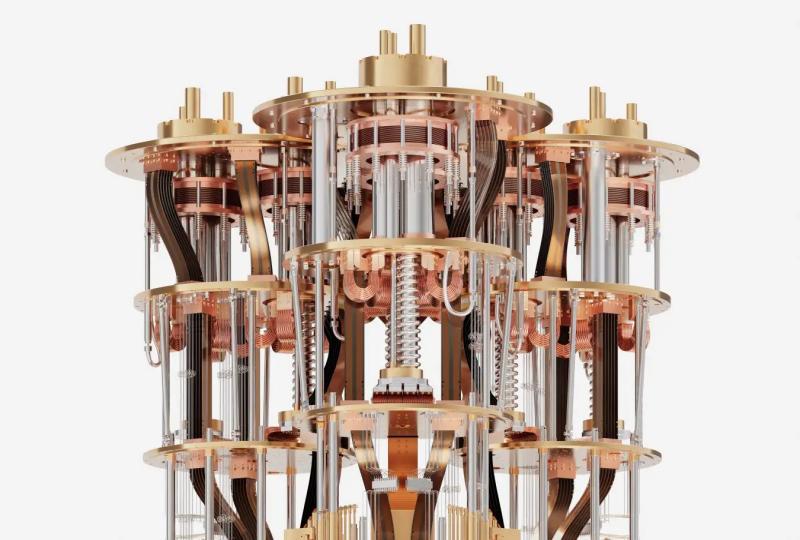
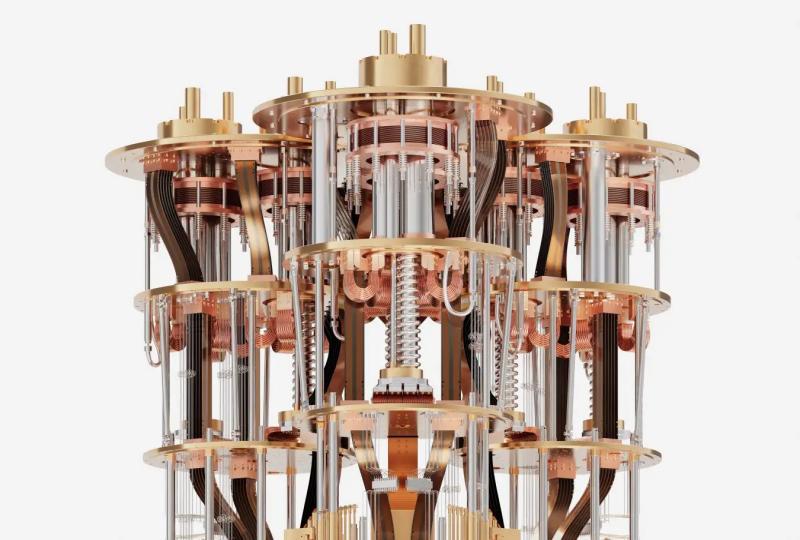
Superconducting quantum computers use superconducting circuits and typically require extremely low operating temperatures. Their deployment involves more complex infrastructure, including dilution refrigerators and precision microwave control systems.
Hardware Capabilities
NMR platforms generally have relatively small qubit counts. They are useful for demonstrating quantum operations, teaching algorithms, and conducting foundational experiments.
Superconducting systems are designed to support larger and more complex quantum processors. They are more relevant to advanced research involving multi-qubit operations, quantum simulation, and fault-tolerant computing development.
Research and Business Objectives
The two approaches serve different stages of quantum technology development.
-
Choose NMR when the priority is quantum training, fundamental experiments, and small-scale algorithm exploration.
-
Consider superconducting hardware when the project requires more advanced quantum processor development, larger qubit systems, or industrial-oriented research.
For businesses building a long-term quantum strategy, these technologies do not necessarily compete. An NMR platform can help establish foundational knowledge before a team moves toward more advanced quantum hardware.
Building an Enterprise Quantum Computing Program with SpinQ
At SpinQ, we provide NMR quantum computing platforms for practical quantum education, experimentation, and research exploration. Our product range covers different levels of hardware access, allowing organizations to select a platform based on their technical objectives.
NMR Platforms for Different Enterprise Needs
Our NMR product portfolio includes several configurations:
-
SPINQ Gemini Mini and Gemini Mini Pro: Portable two-qubit NMR quantum computers for introductory training, quantum demonstrations, and basic algorithm experiments.
-
SPINQ Triangulum II: A three-qubit desktop NMR quantum computer supporting programmable quantum operations, custom quantum algorithms, and open pulse sequence editing.
-
SPINQ Gemini Lab: A laboratory-oriented experimental platform supporting pulse-level, gate-level, and algorithm-level activities, with additional flexibility for research-oriented experiments.
These options allow companies to build quantum computing programs around different levels of technical experience and experimental requirements.
Extending Research Toward Superconducting Quantum Computing
When research objectives move beyond small-scale experiments, businesses may need more advanced quantum hardware.
SpinQ also develops superconducting quantum computing systems and quantum processing units. These platforms address different technical requirements, including larger processor architectures and more advanced quantum hardware research.Our SPINQ Taurus superconducting quantum computer integrates quantum processors, cryogenic infrastructure, control and measurement electronics, and software into a unified system.
This broader hardware portfolio gives research organizations and enterprise teams options for exploring quantum computing at different levels of technical complexity.
Conclusion
An enterprise NMR quantum computer can provide a practical foundation for businesses exploring quantum technology. It supports employee training, small-scale algorithm experiments, technical demonstrations, and early-stage research without requiring the infrastructure of a superconducting quantum system.
The best platform depends on the organization's goals, technical experience, and research requirements. If your company is planning a quantum computing training program or exploring real-hardware experiments, contact SpinQ to discuss an NMR quantum computing solution suited to your needs.
.jpg)
Featured Content