
How a 2-Qubit Portable NMR Quantum Computer Works
2026.11.11 · Blog 2-qubit portable NMR quantum computer
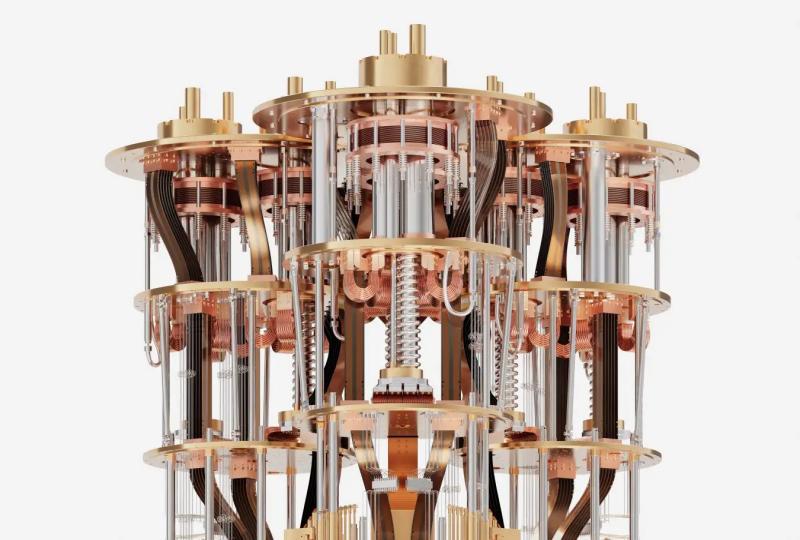
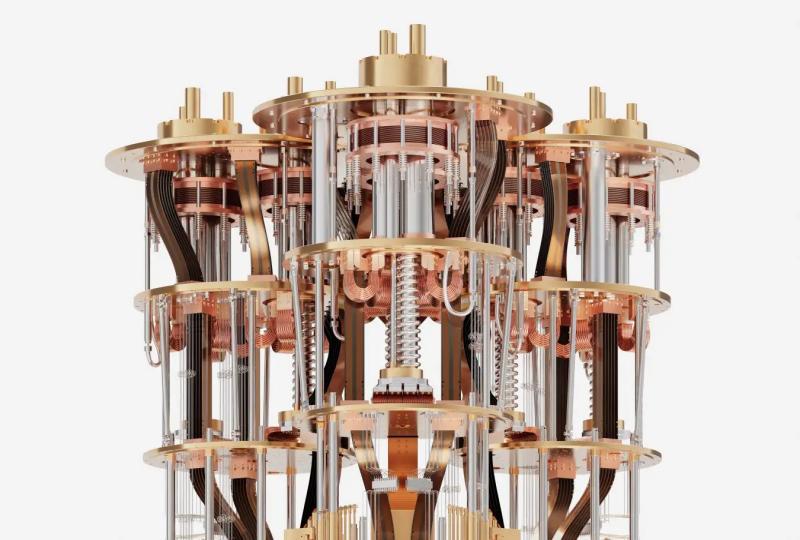
A 2-qubit portable NMR quantum computer is a compact hardware platform that uses nuclear magnetic resonance (NMR) to control two nuclear-spin qubits and perform quantum computing experiments. It allows users to explore quantum gates, entanglement, and small-scale quantum algorithms through real hardware operations.
Unlike quantum computing software simulators, an NMR quantum computer uses physical nuclear spins to represent and manipulate quantum information. Its portable design also makes it easier for universities, laboratories, and educational institutions to introduce hands-on quantum computing experiments without building a complex research facility.
For institutions beginning their quantum computing programs, a two-qubit platform offers a practical way to connect theoretical knowledge with experimental experience.
What Is a 2-Qubit Portable NMR Quantum Computer?
A 2-qubit portable NMR quantum computer combines two key characteristics: it uses two nuclear spins as qubits and integrates the hardware into a compact system.
Each nuclear spin can represent a quantum bit, or qubit. Through controlled magnetic fields and radiofrequency (RF) pulses, the system can manipulate these qubits and perform quantum operations.
The three main concepts behind this type of device are:
-
Two qubits: The system uses two controllable quantum bits, allowing users to study single-qubit operations, two-qubit gates, and quantum correlations.
-
Portable design: Integrated hardware and control components reduce the space and infrastructure needed for experimental use.
-
NMR technology: Nuclear magnetic resonance provides a physical method for controlling nuclear spin states and detecting their responses.
For example, SpinQ's Gemini Mini and Gemini Mini Pro are designed as portable two-qubit NMR quantum computing platforms. They bring quantum experiments into a more accessible hardware environment for education and introductory research.
A two-qubit system has four computational basis states: |00⟩, |01⟩, |10⟩, and |11⟩. These states form the foundation for exploring two-qubit quantum circuits and interactions.
How Does a Portable NMR Quantum Computer Work?
An NMR quantum computer uses the magnetic properties of atomic nuclei to represent and manipulate quantum information. Its operation involves preparing nuclear spin states, applying RF pulses, controlling interactions between qubits, and analyzing the resulting signals.
Preparing Nuclear Spin Qubits
Certain atomic nuclei have an intrinsic property called nuclear spin. When placed in an external magnetic field, their spin states can occupy different energy levels.
For a spin-1/2 nucleus, two energy states can represent the computational basis states |0⟩ and |1⟩.
In conventional liquid-state NMR systems, the magnetic field creates a small population difference between these energy levels. This produces a net magnetization that can be manipulated and detected.
Preparing a suitable initial state is an important part of the experiment. Traditional liquid-state NMR quantum computing may use pseudopure-state techniques to reproduce the measurement behavior of a pure quantum state within an ensemble.
Controlling Qubits with RF Pulses
After preparing the initial state, the system uses radiofrequency pulses to manipulate nuclear spins.
An RF pulse applied at an appropriate resonance frequency can rotate a nuclear spin state. By adjusting the pulse duration, amplitude, phase, and frequency, users can perform different quantum operations.
Common single-qubit operations include:
-
X gate: Rotates the qubit state around the X axis of the Bloch sphere.
-
Y gate: Rotates the qubit state around the Y axis.
-
Z gate: Changes the relative phase between the computational basis states.
Combining these operations allows users to construct quantum circuits and investigate how quantum states evolve.
Performing Two-Qubit Operations
A two-qubit quantum computer also needs to control interactions between its qubits.
In liquid-state NMR, nuclear spins within a molecule can interact through scalar coupling, commonly known as J-coupling. This interaction provides a mechanism for implementing two-qubit quantum gates.
By combining RF pulses with controlled periods of spin evolution, researchers can perform operations such as controlled-NOT (CNOT) gates.
These operations are essential for studying entanglement and building quantum circuits that involve interactions between two qubits.
Measuring Experimental Results
After quantum operations are completed, the system needs to collect and analyze experimental signals.
In NMR, the nuclear spin system produces a detectable response following RF excitation. This signal is commonly called free induction decay (FID).
Signal processing, including Fourier transformation, helps identify resonance frequencies and characterize the spin system.
In conventional ensemble-based NMR quantum computing, measurements generally capture the collective response of many molecules rather than individually reading out isolated nuclear spins.
This provides an experimental way to observe the effects of quantum operations and compare measured results with theoretical predictions.
What Can You Do with a 2-Qubit Quantum Computer?
A two-qubit system provides a useful environment for exploring the fundamental operations of quantum information processing. Although it cannot support large-scale quantum algorithms, it can demonstrate several important quantum computing concepts through real hardware experiments.
Explore Single-Qubit and Two-Qubit Gates
Quantum gates are the basic operations used to manipulate quantum information.
With a two-qubit NMR platform, users can investigate how single-qubit gates change individual spin states and how two-qubit gates create interactions between qubits.
For example, a CNOT gate changes the target qubit depending on the state of the control qubit. This conditional operation is a fundamental building block for quantum circuits.
By combining different gates, students can construct simple circuits, examine their outputs, and understand how quantum algorithms are implemented.
Demonstrate Quantum Entanglement
Quantum entanglement is one of the defining features of quantum mechanics. It describes a situation in which two or more quantum systems share correlations that cannot be explained by treating them as independent systems.
A two-qubit platform can be used to prepare and investigate Bell states, which are important examples of maximally entangled two-qubit states.
One example is:
[
|\Phi^+\rangle=\frac{|00\rangle+|11\rangle}{\sqrt{2}}
]
This state represents a coherent superposition of two correlated basis states.
Users can study the preparation and measurement of entangled states and investigate Bell inequality experiments. These activities help connect abstract quantum mechanics concepts with observable experimental results.
Run Small-Scale Quantum Algorithms
Two-qubit hardware can also demonstrate selected quantum algorithms.
For instance, the Deutsch algorithm introduces the concept of quantum parallelism and shows how quantum operations can help distinguish between different types of functions.
A small-scale Grover search demonstration can illustrate how amplitude amplification increases the probability of measuring a target state.
These experiments are valuable for understanding quantum circuit design and algorithmic principles. Their purpose on a two-qubit educational platform is to demonstrate how quantum algorithms work, not to establish practical quantum advantage over classical computers.
Why Use a Portable NMR Quantum Computer for Education?
Quantum computing education requires more than explaining superposition, entanglement, and quantum gates. Students also need opportunities to see how quantum states are prepared, controlled, and measured.
A portable NMR quantum computer helps bridge this gap by bringing physical quantum experiments into teaching laboratories and classrooms.
Gain Experience with Real Quantum Hardware
Software simulators are useful for learning quantum circuits, but they do not fully reproduce the process of controlling a physical quantum system.
With an NMR platform, students can work with actual nuclear spin states, apply control pulses, and observe experimental signals.
This helps them understand the relationship between quantum theory, hardware control, and experimental results.
Simplify Experimental Deployment
Traditional quantum computing research systems may require specialized infrastructure, complex equipment, and extensive technical support.
Portable NMR platforms integrate key experimental components into a more compact configuration. This can reduce the space and setup requirements for institutions introducing quantum computing experiments.
Depending on the system configuration, integrated operation and control interfaces can also make routine experiments more accessible to users with different levels of technical experience.
Support Different Learning Levels
A two-qubit platform can support a range of learning activities, from introductory quantum mechanics demonstrations to more advanced quantum circuit experiments.
Students can progress through topics such as:
-
Nuclear spin and magnetic resonance.
-
Quantum state preparation and measurement.
-
Single-qubit and two-qubit gates.
-
Quantum superposition and entanglement.
-
Basic quantum algorithms.
SpinQ also supports quantum computing education through experimental hardware and learning resources that connect theoretical instruction with practical activities.
Is a 2-Qubit Portable NMR Quantum Computer Enough for Your Laboratory?
The right quantum computing platform depends on the institution's teaching objectives, research requirements, and expected experimental complexity.
A two-qubit portable NMR quantum computer is particularly suitable for institutions that want to introduce hands-on quantum computing without immediately investing in a more complex experimental setup.
It can support:
-
Introductory quantum computing courses.
-
Demonstrations of quantum gates and entanglement.
-
Small-scale quantum algorithm experiments.
-
Undergraduate laboratory activities.
-
Practical training in quantum information processing.
However, a two-qubit system has clear limitations. Its qubit count restricts the complexity of quantum circuits and algorithms that can be implemented. It is not designed to replace larger research processors or support large-scale fault-tolerant quantum computing.
When Should You Consider a 3-Qubit NMR Platform?
If your laboratory plans to explore more complex quantum circuits and multi-qubit operations, a three-qubit platform may be a better fit.
For example, SpinQ's Triangulum II provides a desktop NMR quantum computing platform with three qubits. It offers additional experimental possibilities for institutions looking to extend their quantum computing activities.
The choice between a two-qubit portable system and a three-qubit desktop system should therefore depend on the depth of experimentation required, available laboratory resources, and long-term teaching or research plans.
You can explore our NMR quantum computer installation and platform comparison to better understand the differences between these configurations.
Conclusion
A 2-qubit portable NMR quantum computer provides an accessible way to explore real quantum computing operations through nuclear magnetic resonance. By controlling two nuclear spins, users can investigate quantum gates, entanglement, and selected quantum algorithms in a compact experimental environment.
Although a two-qubit platform is not intended for large-scale quantum computation, it offers meaningful value for quantum computing education, laboratory training, and introductory research.
At SpinQ, we develop NMR quantum computing platforms to help institutions connect quantum theory with hands-on experiments. Whether you are establishing a quantum computing teaching laboratory or expanding your existing experimental resources, contact our team to discuss a suitable solution.
.jpg)
Featured Content