
Commercial Quantum Computers: What Can You Buy Today?
2026.11.11 · Blog commercial quantum computer
Commercial quantum computers are available today in several forms, including on-premise hardware, quantum processors, cloud-accessible systems, and educational platforms. However, these systems serve different purposes. Some are designed for advanced research and hardware development, while others support quantum computing education, algorithm testing, and early-stage application exploration.
For businesses, universities, and research institutions, choosing a commercial quantum computer involves more than comparing qubit counts. Hardware architecture, control capabilities, software compatibility, deployment requirements, and technical support all influence whether a system meets a specific objective.
What Is a Commercial Quantum Computer?
A commercial quantum computer is a quantum computing system or hardware solution developed and supplied for use by external customers. It may be purchased, installed, accessed through a cloud service, or integrated into an organization's existing research environment.
Unlike a laboratory prototype built primarily to test a new physical concept, a commercially supplied system generally comes with a defined hardware configuration, operating interfaces, technical documentation, and some form of customer support.
Commercial quantum computing products can include:
-
Complete quantum computers with integrated processors and control systems.
-
Quantum processing units (QPUs) supplied as hardware components.
-
Control and measurement systems used to operate quantum processors.
-
Cloud-based services that provide remote access to quantum hardware.
-
Educational quantum computers designed for hands-on experiments and training.
Commercial-grade hardware does not automatically mean that a system can perform large-scale, fault-tolerant quantum computation. Its capabilities depend on the underlying technology, system configuration, and maturity of the hardware.
What Types of Commercial Quantum Computers Are Available?
Commercial quantum computing is not based on a single hardware architecture. Different technologies use different physical systems to represent and manipulate quantum information.
Superconducting Quantum Computers
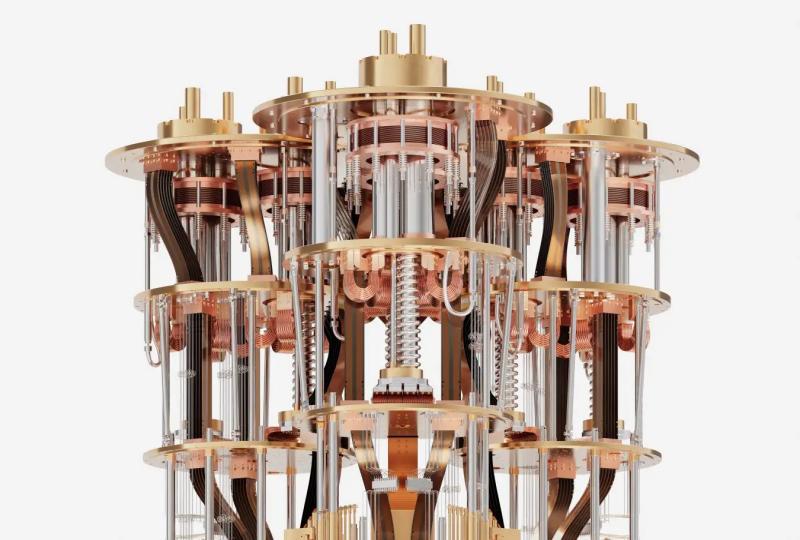
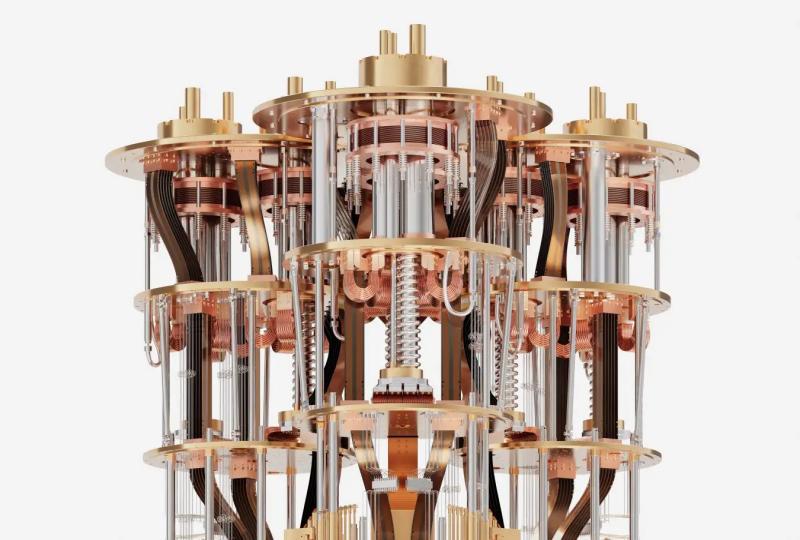
Superconducting quantum computers use electrical circuits made from superconducting materials to create and control qubits. These circuits operate at extremely low temperatures, where they exhibit quantum behavior suitable for information processing.
Microwave signals are used to manipulate qubit states, while carefully designed coupling structures enable interactions between qubits.
Superconducting systems are an important direction in quantum hardware development because they support fast quantum gate operations and can be manufactured using techniques related to advanced semiconductor fabrication.
However, operating these systems requires specialized infrastructure, including dilution refrigeration, microwave electronics, and precise control and measurement equipment.
Commercial superconducting quantum systems are relevant to organizations working on:
-
Quantum processor development and testing.
-
Quantum gate and circuit experiments.
-
Quantum algorithm research.
-
Hardware benchmarking and characterization.
-
Advanced quantum computing laboratories.
At SpinQ, we develop superconducting quantum computing hardware for research and industrial exploration. Our superconducting quantum computing systems include solutions designed around quantum processors and the supporting hardware required for system operation.
NMR Quantum Computers for Education and Experimental Research
Nuclear magnetic resonance (NMR) quantum computers use nuclear spins as physical qubits. By applying magnetic fields and radiofrequency pulses, users can manipulate nuclear spin states and perform quantum operations.
Compared with superconducting systems, conventional liquid-state NMR platforms can operate without the extreme cryogenic infrastructure required by superconducting quantum processors.
Their compact configurations make them useful for institutions introducing practical quantum computing experiments into classrooms and laboratories.
Typical activities include:
-
Quantum state preparation and measurement.
-
Single-qubit and two-qubit gate operations.
-
Quantum superposition and entanglement demonstrations.
-
Small-scale quantum algorithm experiments.
-
Practical training in quantum information processing.
NMR quantum computers are particularly valuable for education and introductory experimental research. They are not intended to replace large-scale quantum processors or provide the same computational capabilities as advanced industrial research systems.
SpinQ's NMR quantum computing platforms support hands-on learning and experimental activities for universities, schools, and research institutions.
Other Quantum Hardware Architectures
Beyond superconducting circuits and NMR, several other technologies are being developed and commercialized.
Trapped-ion quantum computers use electrically charged atoms confined by electromagnetic fields. Laser or microwave signals manipulate their quantum states and enable interactions between qubits.
Photonic quantum computers use individual particles of light to carry quantum information. Their development involves precise optical components, photon sources, detectors, and specialized measurement techniques.
Neutral-atom quantum computers use individually controlled neutral atoms, often arranged in optical traps or optical tweezers. These systems are being explored for creating larger arrays of interacting quantum bits.
Each architecture has different strengths and engineering challenges. There is no single technology that is currently the best choice for every research or business objective.
Cloud-Based Quantum Computing Services
Buying a complete quantum computer is not the only way to access quantum hardware.
Cloud-based quantum computing services allow users to submit quantum circuits to remote processors through online interfaces and programming tools. The hardware is operated by the service provider, while customers access available resources over the internet.
This model offers several advantages:
-
No need to purchase and maintain a complete quantum system.
-
Access to different hardware platforms through remote services.
-
Easier collaboration between geographically distributed teams.
-
Opportunities to test quantum algorithms before investing in dedicated hardware.
Cloud access is often a practical starting point for organizations exploring quantum computing. However, users may have limited control over hardware configuration, calibration, scheduling, and system-level operations.
For institutions that need direct access to hardware, control electronics, or experimental parameters, an on-premise system may be more suitable.
What Can Businesses and Research Institutions Do with Commercial Quantum Computers?
Commercial quantum computers are being explored across several technical fields. Their current value is often found in research, proof-of-concept experiments, and hybrid computing workflows rather than replacing conventional computing systems.
Explore Molecular and Materials Simulation
Quantum systems naturally represent certain physical behaviors that are difficult to model efficiently using classical methods.
Researchers are investigating quantum algorithms for molecular simulation, chemical reactions, and material properties. These approaches may eventually help scientists study complex molecular systems and explore new materials.
For pharmaceutical researchers, this could support investigations into molecular structures and interactions. For materials scientists, quantum simulation may provide new ways to study electronic structures and material behavior.
However, practical applications still depend on hardware quality, error rates, available qubits, and algorithm efficiency. Many useful simulations remain beyond the capabilities of current noisy quantum processors.
Test Optimization and Financial Algorithms
Many business problems involve finding suitable solutions among a large number of possible combinations.
Examples include supply chain planning, resource allocation, scheduling, and portfolio optimization.
Quantum computing research explores whether quantum algorithms can improve certain optimization workflows. Researchers may use quantum approximate optimization algorithms and other approaches to investigate these problems.
For financial institutions, potential research areas include portfolio construction, risk analysis, and optimization under complex constraints.
At present, these applications should be treated as research and validation opportunities. A quantum computer does not automatically outperform classical optimization software, and the value of each approach needs to be evaluated against suitable classical benchmarks.
Develop Quantum AI and Hybrid Computing Workflows
Quantum computing and artificial intelligence are also being explored together.
Quantum machine learning research investigates whether quantum circuits can contribute to selected machine learning tasks, including data representation, classification, and optimization.
In practical development, quantum processors are often considered as part of hybrid workflows. Classical computers handle data processing and general computation, while quantum hardware executes selected quantum circuits.
This approach allows developers to investigate quantum methods without expecting quantum processors to replace conventional CPUs or GPUs.
For businesses, hybrid computing provides a way to experiment with quantum algorithms while maintaining compatibility with existing computing infrastructure.
How to Choose the Right Commercial Quantum Computer
Selecting a commercial quantum computer requires matching the system's capabilities with the organization's actual goals.
A university building an introductory quantum computing laboratory has different requirements from a research team developing quantum processors or a company testing quantum algorithms.
The following factors can help guide the selection process.
Define Your Application Requirements
Start by identifying what the system needs to accomplish.
For example:
-
Education: Prioritize accessible operation, learning resources, and practical quantum experiments.
-
Fundamental research: Consider hardware control, measurement capabilities, and experimental flexibility.
-
Quantum processor development: Evaluate QPU architecture, fabrication quality, and characterization tools.
-
Industrial exploration: Consider algorithm compatibility, system access, and integration with classical computing workflows.
A clearly defined objective helps prevent unnecessary investment in hardware features that do not support the intended work.
Evaluate Qubit Count and Connectivity
Qubit count is an important specification, but it should not be considered in isolation.
The way qubits connect and interact also affects the quantum circuits a system can execute. Connectivity influences circuit design, gate scheduling, and the number of additional operations required to implement certain algorithms.
Other relevant performance indicators include gate fidelity, coherence time, measurement accuracy, and error characteristics.
A system with more qubits is not necessarily more useful for every application. Hardware quality and the ability to control the qubits reliably are equally important.
Understand the Hardware Architecture
Different quantum technologies have different operating requirements.
Superconducting systems require cryogenic infrastructure and sophisticated microwave control. NMR platforms use magnetic resonance and RF control to manipulate nuclear spins. Trapped-ion, photonic, and neutral-atom systems have their own specialized hardware requirements.
Consider the available laboratory space, technical expertise, operating environment, and long-term maintenance requirements before selecting an architecture.
Check Control and Measurement Capabilities
A quantum processor needs more than qubits. It also requires reliable systems to initialize, manipulate, and measure quantum states.
Control and measurement equipment directly influence the quality of quantum experiments.
For organizations developing or operating quantum hardware, it is important to evaluate pulse generation, signal acquisition, calibration, measurement accuracy, and system integration.
SpinQ provides quantum control and measurement systems to support the operation and experimental development of superconducting quantum hardware.
Consider Deployment and Integration
Decide whether the organization needs a complete on-premise system, an individual quantum processor, or remote access through a cloud service.
On-premise hardware offers more direct access to the experimental environment but may require installation, infrastructure preparation, and technical personnel.
Cloud services reduce the need for local hardware management, although access and control depend on the provider.
The right deployment model depends on how frequently the system will be used and how much control users need over the underlying hardware.
Evaluate Software and Technical Support
Hardware capabilities are only part of the overall system.
Programming interfaces, software tools, documentation, training resources, and technical support all influence how effectively users can work with a quantum computer.
Before purchasing, check whether the platform supports the programming languages and experimental workflows your team intends to use. Also consider installation assistance, maintenance arrangements, training, and future hardware upgrades.
How Much Does a Commercial Quantum Computer Cost?
There is no universal price for a commercial quantum computer. Costs vary significantly depending on the hardware architecture, system configuration, performance requirements, and delivery model.
Several factors influence the overall investment.
-
Hardware configuration: Qubit count, processor design, and system complexity affect the equipment cost.
-
Control electronics: Specialized signal generation, measurement, and control systems may be required.
-
Cryogenic infrastructure: Superconducting quantum systems require low-temperature operating environments, adding substantial infrastructure requirements.
-
Software and services: Programming tools, licensing, cloud access, and technical support may contribute to ongoing costs.
-
Installation and integration: On-site deployment, system commissioning, training, and maintenance should be included in the budget.
Educational NMR platforms, individual QPU components, and complete superconducting quantum systems serve different purposes and have very different cost structures.
Instead of comparing products based only on their initial purchase prices, organizations should evaluate the total cost of ownership. This includes infrastructure, operation, training, maintenance, and future expansion.
For an accurate estimate, request a quotation based on the intended application, required configuration, and deployment environment.
How Is SpinQ Supporting Commercial Quantum Computing?
At SpinQ, we develop quantum computing hardware and related solutions for education, research, and industrial exploration. Our product portfolio covers different stages of quantum computing development, from hands-on learning platforms to superconducting quantum hardware and supporting control systems.
Superconducting Quantum Computing Systems
Our superconducting quantum computing solutions support research and development involving quantum processors and integrated hardware systems.
These platforms provide an environment for investigating superconducting qubit control, quantum operations, and system-level integration.
NMR Quantum Computing Platforms
For universities and educational institutions, our NMR quantum computers provide accessible hardware for practical quantum computing experiments.
They help students and researchers explore nuclear spin manipulation, quantum gates, and small-scale quantum algorithms through physical experiments.
Quantum Hardware and System Support
Developing a quantum computing system also involves processor design, fabrication, testing, control, and measurement.
SpinQ's broader capabilities cover quantum hardware and supporting technologies, helping customers address different requirements throughout their quantum computing projects.
Whether an institution is establishing a teaching laboratory or developing a more advanced quantum hardware research environment, the appropriate solution depends on its technical objectives and deployment needs.
Conclusion
Commercial quantum computers are available through different hardware architectures and delivery models. Superconducting systems, NMR platforms, cloud-based services, and other emerging technologies each address different requirements in quantum computing education, research, and industrial exploration.
Choosing the right system requires looking beyond qubit count. Hardware architecture, control and measurement capabilities, software compatibility, deployment conditions, and long-term support all contribute to the value of an investment.
At SpinQ, we provide quantum computing hardware and related solutions for institutions and organizations exploring this field. If you are planning to purchase quantum computing equipment, establish a laboratory, or develop a quantum hardware project, contact our team to discuss your requirements and identify a suitable solution.
.jpg)
Featured Content