
How Does a Superconducting Quantum Processor Really Work?
2026.10.15 · Blog superconducting quantum processor
A superconducting quantum processor uses engineered electrical circuits to create and manipulate quantum bits, or qubits. It prepares quantum states, executes quantum gates, and measures the results to perform quantum computations.
However, a processor’s capabilities depend on more than its qubit count. Its circuit architecture, control signals, measurement accuracy, and operating environment all influence performance. Exploring a complete superconducting quantum computer also helps researchers understand how processing hardware and supporting systems work together to enable quantum experiments.
What Is a Superconducting Quantum Processor?
A superconducting quantum processor is a chip built from superconducting circuits that operate at extremely low temperatures. These circuits use quantum energy levels to represent and manipulate information.
Its main components include:
-
Qubits: Physical elements that encode quantum information.
-
Josephson junctions: Circuit components that provide the nonlinear behavior needed to create controllable qubit energy levels.
-
Coupling structures: Connections that allow selected qubits to interact.
-
Readout circuits: Components that help determine qubit measurement outcomes.
-
Control interfaces: Connections that deliver signals and coordinate operations.
Unlike classical bits, qubits can exist in superposition states and become entangled with other qubits. Quantum gates manipulate these states to perform computational operations.
How Does a Superconducting Quantum Processor Work?
A quantum processor executes a circuit through several coordinated stages.
1. Qubit Initialization
Before computation begins, the system prepares qubits in defined starting states, commonly the state represented by |0⟩.
Initialization is important because errors introduced at this stage can affect subsequent operations.
2. Microwave Control and Quantum Gates
Control electronics send carefully calibrated microwave pulses to the processor. The pulses manipulate qubit states according to the instructions in a quantum circuit.
-
Single-qubit gates change individual qubit states.
-
Two-qubit gates create interactions between qubits and can generate entanglement.
-
Pulse parameters, including frequency, amplitude, phase, and duration, influence the operation performed.
The software specifies the intended operations, while the control system translates them into physical signals.
3. Quantum Measurement
After the circuit executes, readout hardware measures the qubits. In many superconducting architectures, measurement relies on detecting changes in the microwave response of coupled readout resonators.
Because one execution provides a single measurement outcome, researchers typically repeat a circuit many times to estimate probabilities and evaluate experimental results.
What Determines Superconducting Quantum Processor Performance?
Qubit count alone cannot establish how effectively a processor executes a quantum circuit. Researchers should consider several connected performance indicators.
Coherence Time
Coherence time describes how long quantum information retains relevant properties before noise and environmental interactions degrade it.
-
T1 measures energy relaxation.
-
T2 characterizes the loss of phase coherence.
-
Longer coherence can provide more time for quantum operations, but its value depends on gate duration and circuit depth.
Quantum Gate Fidelity
Gate fidelity measures how closely an implemented operation matches its intended behavior under a specified evaluation method.
Higher fidelity can help reduce errors, particularly in circuits containing many operations. Researchers should evaluate single-qubit and two-qubit gates separately and consider performance across repeated experiments.
Readout Accuracy and Connectivity
Two additional factors affect practical performance:
-
Readout accuracy determines how reliably the system distinguishes measurement outcomes.
-
Qubit connectivity determines which qubits can interact directly and how many additional operations a circuit may require.
Together, these factors influence circuit execution, error accumulation, and the types of experiments a processor can support.
What Challenges Affect Processor Scalability?
Increasing the number of qubits also increases the demands on fabrication, control, calibration, and system integration.
Fabrication and Noise
Variations in materials and circuit parameters can cause qubits to behave differently. Electromagnetic noise and unwanted interactions can further affect performance.
Consistent fabrication and careful environmental control help researchers achieve more predictable device behavior.
Calibration and Crosstalk
Larger processors require more complex control and calibration procedures. Signals intended for one qubit may also affect nearby components, creating crosstalk.
Automated calibration and coordinated control can help manage these challenges, but the hardware must still be characterized under relevant operating conditions.
A compatible quantum control and measurement system is therefore an important consideration when evaluating a processor and its laboratory infrastructure.
Cryogenic and System Integration Requirements
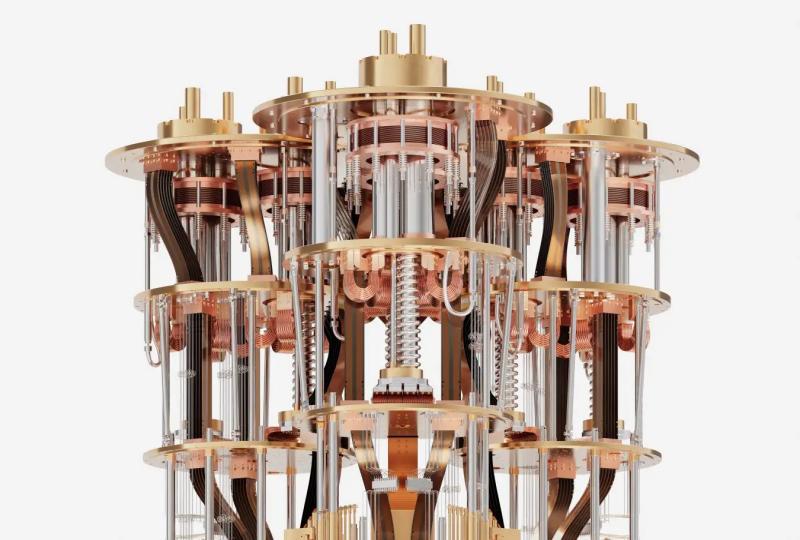
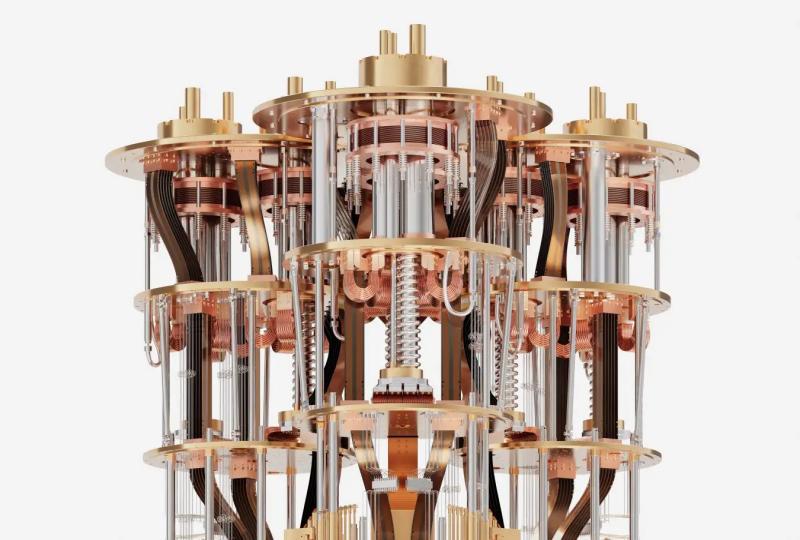
Superconducting processors typically operate in dilution refrigerators at millikelvin temperatures. Scaling up may increase demands on:
-
Cryogenic cooling and thermal management.
-
Microwave signal delivery and readout.
-
Control channels and synchronization.
-
Software, data acquisition, and system maintenance.
The processor and its supporting equipment must work together to produce reliable experimental results.
How Does Quantum Error Correction Improve Reliability?
Quantum error correction aims to protect quantum information by encoding it across multiple physical qubits and identifying error patterns through measurements.
Physical Qubits and Logical Qubits
Physical qubits are the actual hardware elements. Logical qubits are encoded states designed to provide greater resistance to errors.
Building logical qubits requires additional physical resources, reliable operations, and repeated measurements. A higher physical qubit count alone does not guarantee fault-tolerant computation.
Why Repeated Error Correction Matters
Error-correction protocols require coordination between quantum operations, readout hardware, and classical processing.
Researchers must evaluate whether the system can maintain reliable performance over repeated cycles, not just isolated operations. Gate quality, measurement accuracy, and timing all contribute to the effectiveness of error correction.
How Should Researchers Evaluate a Superconducting Quantum Processor?
Selecting a processor begins with matching its capabilities to the laboratory’s research objectives.
Match Hardware to Experimental Needs
Researchers should assess:
-
Qubit count and connectivity for target circuits.
-
Gate fidelity and readout accuracy.
-
Calibration access and experimental control.
-
Software interfaces and data access.
-
Compatibility with available cryogenic and control infrastructure.
For laboratories exploring superconducting hardware, the SPINQ® QPU C Series Superconducting Quantum Processing Unit is one product reference to consider. Researchers should confirm the specifications, supported operations, interfaces, and configuration of the particular model against their experimental requirements.
Evaluate the Complete Research Environment
A processor is only one part of a working quantum computing platform. Before selecting a system, laboratories should clarify:
-
Which hardware and software components are included.
-
What additional equipment or integration is required.
-
How calibration and experimental data are accessed.
-
What installation, maintenance, and technical support are available.
Universities planning dedicated research facilities can also review this overview of superconducting quantum computing systems for universities when considering the relationship between processor hardware and laboratory infrastructure.
What Is the Future of Superconducting Quantum Processors?
Future progress will depend on coordinated improvements across hardware and system design.
-
More consistent fabrication can reduce device variation.
-
Better control and calibration can improve experimental repeatability.
-
Improved cryogenic and readout systems can support more complex processors.
-
Advances in quantum error correction can help develop more reliable logical qubits.
-
Standardized benchmarking can make performance comparisons more meaningful.
The key challenge is translating improvements in individual components into dependable performance across complete circuits and repeated experiments.
Conclusion
A superconducting quantum processor prepares quantum states, applies controlled gates, enables interactions between qubits, and measures the resulting outcomes. Its practical capabilities depend on the combined performance of the chip, control electronics, readout hardware, and cryogenic environment.
For researchers, evaluating coherence, gate fidelity, readout accuracy, connectivity, and system integration provides a more complete picture than considering qubit count alone. Matching these capabilities to specific experimental goals is essential when selecting quantum hardware for research and development.
.jpg)
Featured Content