
Superconducting Quantum Computing Review: Progress and Challenges
2026.10.14 · Blog superconducting quantum computing review
Superconducting quantum computing is a leading approach to building quantum processors, but its progress depends on more than increasing qubit counts. Coherence time, gate fidelity, readout accuracy, connectivity, and quantum error correction all influence computational performance.
For researchers and laboratory decision-makers, a useful superconducting quantum computing review must explain both the technology's achievements and the engineering challenges that affect real-world experiments. Understanding these factors helps researchers evaluate hardware capabilities, identify technical limitations, and determine which systems best support their research objectives.
What Determines Superconducting Quantum Computing Performance?
Superconducting quantum computers use electrical circuits made from superconducting materials to create qubits. These circuits can be controlled with microwave signals to perform quantum operations.
However, the number of physical qubits alone does not determine a processor's usefulness. Researchers must evaluate several interconnected performance indicators and consider how they affect the execution of complete quantum circuits.
Coherence Time and Gate Fidelity
Coherence time describes how long quantum information retains its essential properties. Two important measurements are (T_1), which characterizes energy relaxation, and (T_2), which describes phase coherence.
Gate fidelity measures how accurately a quantum operation performs its intended transformation. Both single-qubit and two-qubit gates matter, although two-qubit operations often introduce additional control challenges.
Long coherence times cannot compensate for inaccurate gates, and high gate fidelity does not guarantee stable system performance. Researchers should assess these metrics together under clearly documented experimental conditions. Gate duration also matters because operations must generally be completed before accumulated errors significantly affect the desired result.
Readout Accuracy and Qubit Connectivity
Quantum readout converts information about a qubit's state into a measurable signal. Inaccurate measurements can compromise experimental results even when preceding operations perform well.
Connectivity also matters because restricted interactions between qubits may require additional operations to execute a circuit. These operations can increase execution complexity and introduce more opportunities for errors.
Consequently, evaluating a processor requires more than comparing individual specifications. Circuit performance, calibration stability, and measurement reliability provide a broader picture of its capabilities.
Why Benchmarking Methods Matter
Performance figures are meaningful only when their measurement methods and experimental conditions are understood. For example, gate fidelity measured using randomized benchmarking may not be directly interchangeable with estimates derived from other protocols.
Researchers should examine the benchmark used, the number and types of gates tested, and whether the reported results represent average or best-case performance. They should also consider how measurements change with circuit depth and repeated execution.
A consistent benchmarking framework makes comparisons more useful and helps laboratories identify which improvements are relevant to their research goals.
What Limits Superconducting Quantum Computing Scalability?
Scaling superconducting processors requires improvements in materials, fabrication, control electronics, and system integration.
Materials and Cryogenic Infrastructure
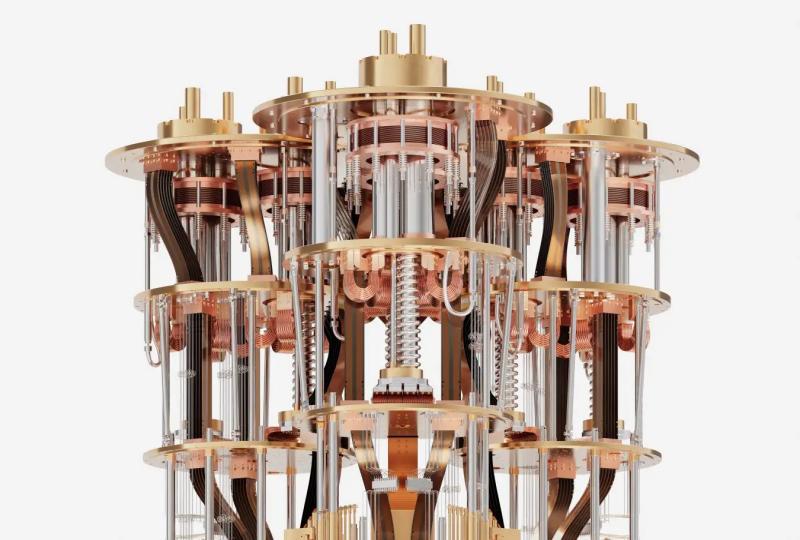
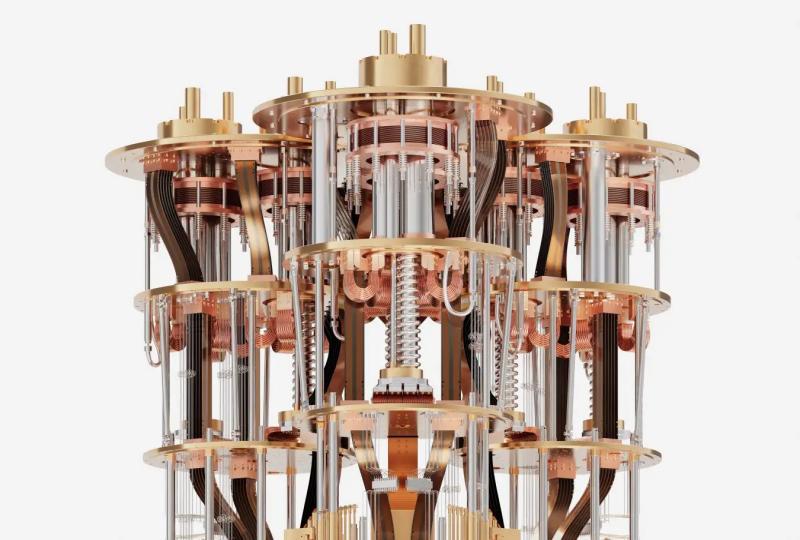
Superconducting qubits typically operate at millikelvin temperatures inside dilution refrigerators. Their performance can be affected by material defects, unwanted electromagnetic interactions, fabrication variability, and environmental noise.
As processor size increases, researchers must also manage more control and readout channels, wiring, heat loads, and calibration parameters. These requirements make system engineering an essential part of scalability.
Understanding superconducting quantum chip architecture can help researchers examine how chip design and hardware integration influence the development of larger quantum systems.
Calibration and System Stability
Each qubit may require specific operating parameters, while unwanted interactions can cause crosstalk between neighboring devices. Calibration procedures help researchers compensate for these effects, but the workload can grow substantially with system complexity.
For research laboratories, repeatable measurements, accessible calibration tools, and reliable control workflows are important considerations. A processor's practical value depends partly on how consistently researchers can operate it and reproduce experimental results.
Researchers should also distinguish peak performance from sustained operational performance. A result achieved after extensive optimization may not fully represent how easily the system supports repeated experiments or changing circuit configurations.
How Does Quantum Error Correction Support Scalability?
Quantum error correction aims to protect quantum information by encoding it across multiple physical qubits and detecting errors through carefully designed measurements.
Physical Qubits and Logical Qubits
Physical qubits are individual hardware components. Logical qubits encode information across multiple physical qubits to provide protection against certain errors.
This process introduces overhead because researchers need additional qubits, repeated measurements, and classical processing. The resources required depend on the error-correcting code, hardware error rates, connectivity, and target reliability.
Surface codes are one prominent approach, using local interactions and repeated stabilizer measurements to identify error patterns. However, demonstrating error detection or improved logical performance does not automatically establish a fully fault-tolerant quantum computer.
Progress depends on reducing physical errors while maintaining reliable operations across the complete system. Researchers must also consider whether the additional hardware and processing requirements are practical for the intended computational workload.
The Importance of Repeated Error-Correction Cycles
Error correction must operate repeatedly throughout a computation. Each cycle involves measurements, syndrome interpretation, and decisions about how to manage detected errors.
The reliability of this process depends on the combined performance of quantum gates, measurement hardware, classical decoding, and control timing. A successful isolated demonstration is therefore different from maintaining reliable logical information over many consecutive cycles.
This distinction helps researchers evaluate error-correction progress without assuming that every improvement in physical qubits immediately translates into scalable computation.
How Should Research Labs Evaluate a Superconducting Quantum Computer?
Choosing a system begins with defining the intended experiments. Device characterization, multi-qubit gate research, and quantum error-correction studies may require different hardware capabilities.
Match Hardware to Research Objectives
Before selecting a system, laboratories should assess:
-
Qubit configuration and available connectivity.
-
Gate performance, readout capabilities, and calibration access.
-
Cryogenic requirements and microwave control infrastructure.
-
Software interfaces, experiment automation, and data access.
-
Installation, maintenance, technical support, and expansion options.
These factors help researchers determine whether a system matches their experimental objectives and available infrastructure.
For teams investigating superconducting hardware, the SPINQ® QPU C Series Superconducting Quantum Processing Unit is a relevant product direction to evaluate. Its specific configuration and documented capabilities should be checked against the laboratory's requirements.
Consider the Complete Experimental Environment
A superconducting processor operates as part of a broader system that includes cryogenics, control electronics, measurement hardware, and software. Compatibility between these components affects experimental workflows and long-term maintenance.
Laboratories should clarify which components are included, which require separate procurement, and what technical support is available during installation and operation. This helps establish realistic expectations for infrastructure, staffing, and ongoing system maintenance.
It is also useful to evaluate how experimental data can be exported, how calibration settings are managed, and whether researchers can adapt control sequences to their investigations. These details affect day-to-day usability and the flexibility of a laboratory's research program.
Laboratories planning a complete installation should evaluate system integration alongside processor specifications. Our guide to superconducting quantum computing systems for universities explores the relationship between superconducting hardware and research applications.
The appropriate solution depends on the experiments being conducted, the required level of hardware access, and the laboratory's engineering capabilities.
What Is the Future of Superconducting Quantum Computing?
The future of superconducting quantum computing depends on advances in hardware performance, system integration, and quantum error correction. Several research directions are particularly important:
-
Improved materials and fabrication: Reducing material defects and fabrication variability can help improve qubit coherence and achieve more consistent device performance.
-
More efficient quantum control: Better control electronics, calibration methods, and signal processing can reduce operational complexity and improve the repeatability of quantum experiments.
-
Scalable system integration: Advances in cryogenic infrastructure, wiring, readout electronics, and modular architectures will be essential as processors become more complex.
-
Progress in quantum error correction: More reliable physical operations and repeated error-correction cycles are necessary to develop logical qubits capable of supporting increasingly demanding computations.
-
More reliable experimental workflows: Improved automation, benchmarking, and data analysis can help researchers reproduce results and evaluate processor performance under consistent conditions.
These developments are interconnected. Increasing qubit counts alone will not guarantee useful large-scale computation. Sustained progress in superconducting quantum computing will depend on combining reliable hardware, effective control systems, and practical error-correction techniques.
Conclusion
Superconducting quantum computing has made important advances, but its future depends on more than building larger processors. Coherence time, gate fidelity, readout accuracy, connectivity, calibration stability, and quantum error correction must work together to support reliable computation.
For research laboratories, selecting an appropriate system requires matching hardware capabilities to experimental goals and evaluating the complete operating environment. Consistent benchmarking and reproducible experiments are equally important for assessing progress. By considering processor performance, system integration, and long-term research requirements together, researchers can make better-informed decisions about superconducting quantum computing and its continued development.
.jpg)
Featured Content