
How a Modular Superconducting Quantum Chip Architecture Scales from QPU to System
2026.09.14 · Blog modular superconducting quantum chip architecture
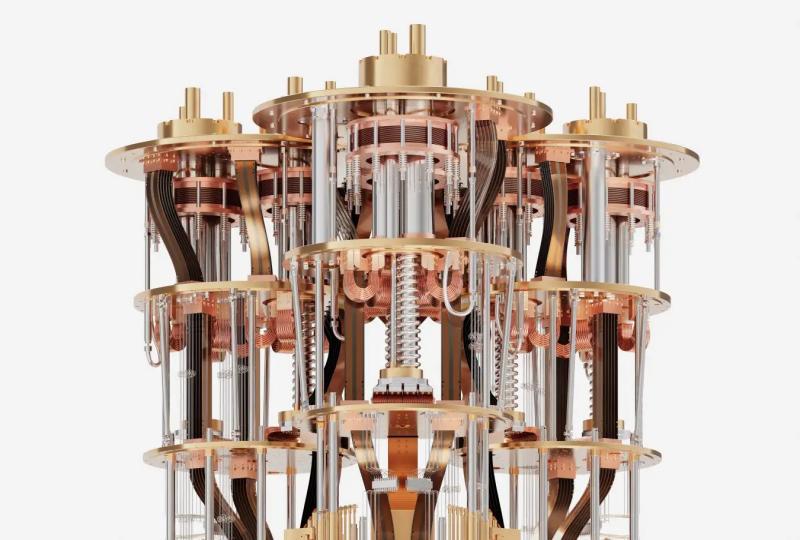
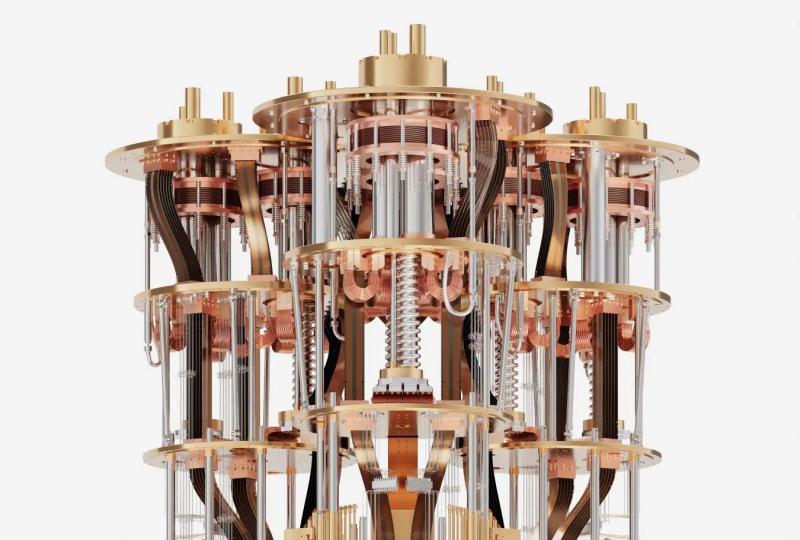
A modular superconducting quantum chip architecture is not defined by qubit count alone. It is a coordinated hardware framework in which the quantum processing unit, coupling network, control and measurement electronics, cryogenic interfaces, and software workflow are designed to operate as one scalable system.
This systems-level approach gives research teams a practical way to begin with targeted device validation or small-scale algorithm experiments, then expand control capacity, measurement throughput, and processor scale without rebuilding the full experimental stack. The key is to treat every layer—from qubit layout to low-temperature RF integration—as part of the same engineering architecture.
Why Modular Architecture Matters in Superconducting Quantum Computing
Superconducting quantum processors operate at millikelvin temperatures and depend on precisely shaped microwave signals, low-noise measurement chains, and stable thermal integration. As the number of qubits grows, each of these requirements becomes more tightly coupled to the others. A modular architecture helps maintain that coordination by establishing defined interfaces between the QPU, cryogenic hardware, control electronics, and higher-level software.
Rather than treating the quantum chip as an isolated component, a modular design makes it possible to evaluate hardware performance, add channels, refine calibration workflows, and integrate larger processors through a controlled expansion path.
-
Superconducting QPUs Define the Computing Layer
The superconducting quantum processing unit, or QPU, is the computing core of the architecture. Superconducting qubits are nonlinear microwave circuits built around Josephson junctions. Their quantized energy spectrum provides two computational basis states, |0⟩ and |1⟩, while the junction-induced nonlinearity enables selective quantum control.
At the QPU layer, qubit count is only one design variable. A usable processor must also provide an appropriate connectivity model, stable frequency allocation, sufficient coherence, verified gate performance, and physical interfaces that support reliable low-temperature installation. These characteristics determine whether a processor is suitable for proof-of-concept experiments, calibration development, quantum simulation, or larger system research.
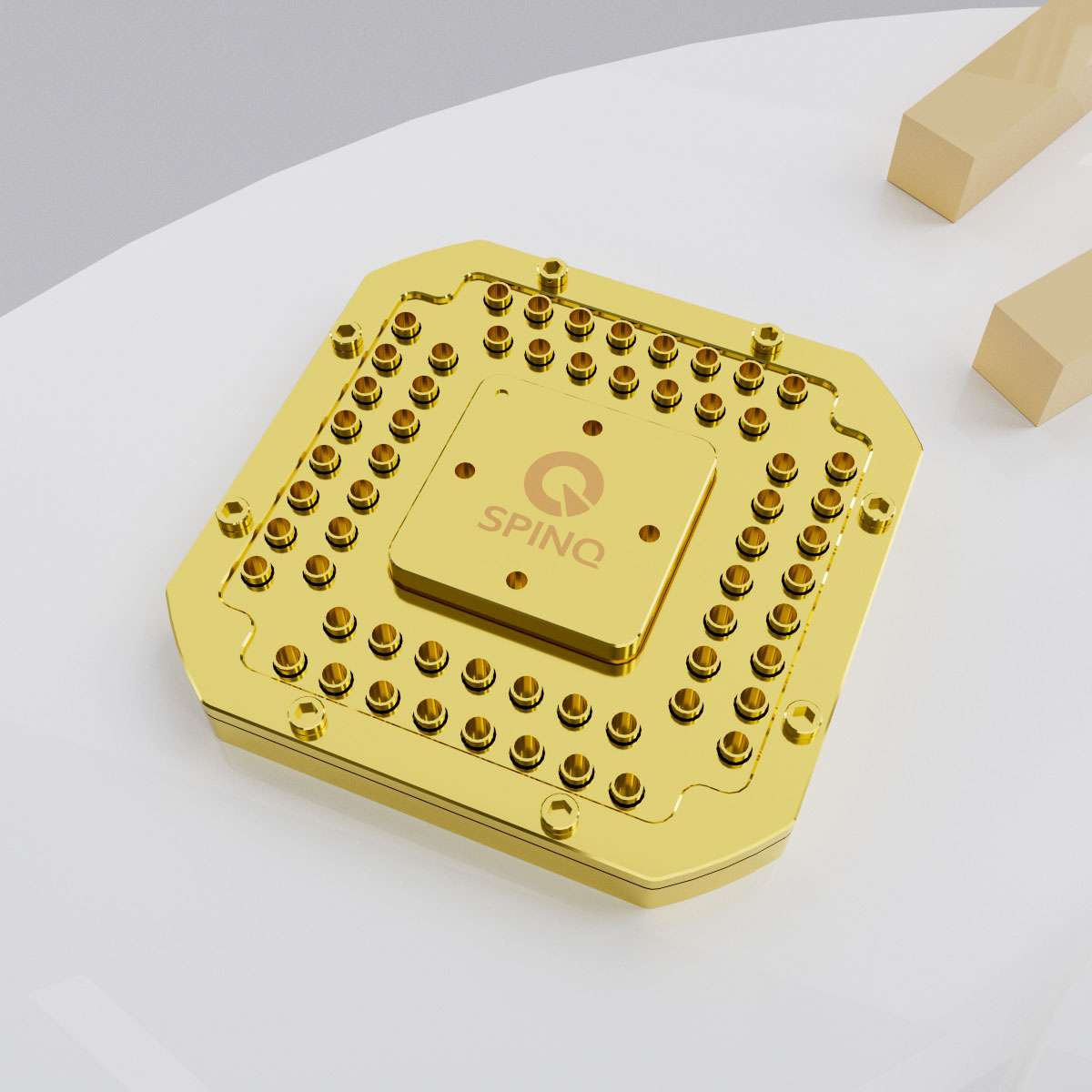
SPINQ superconducting quantum processing units are available in different configurations, including the 5-qubit C5 with a 1D chain topology and the 25-qubit C25 PRO with a 2D lattice topology. Both architectures use tunable couplers to support controllable interactions between connected qubits. The QPU product range also provides documented coherence and gate-performance data, allowing teams to establish a defined hardware baseline before system integration.
-
Tunable Couplers Shape Qubit Connectivity
Once the QPU establishes the available qubit resources, the coupling network determines how those qubits interact. Tunable couplers mediate controllable interactions between connected superconducting qubits, allowing the effective coupling strength to be adjusted during operation.
This capability is important because a quantum processor must balance two competing requirements. Qubits need to interact strongly enough to execute two-qubit gates, yet they must remain sufficiently isolated during idle periods to limit residual interactions, unwanted phase accumulation, and crosstalk.
A well-designed tunable-coupler architecture can support selective qubit interactions, flexible connectivity, and gate operations that match the intended topology. It must also be designed together with control-line routing, readout allocation, frequency planning, and future scalability. A processor that prioritizes qubit count without addressing those interfaces may become difficult to calibrate, operate, or extend.
-
Independent Control Lines Enable Precise Qubit Operations
Qubit interactions alone are not sufficient for computation. Each qubit requires precisely timed control and measurement signals for state preparation, gate execution, calibration, and readout. Independent control lines provide the addressability needed to apply these signals to individual qubits while reducing interference between concurrent operations.
At this layer, frequency stability, phase stability, low-noise signal generation, waveform resolution, channel synchronization, and low-latency feedback directly affect gate quality and experimental repeatability. These requirements become more demanding as systems add qubits and execute more complex pulse sequences.
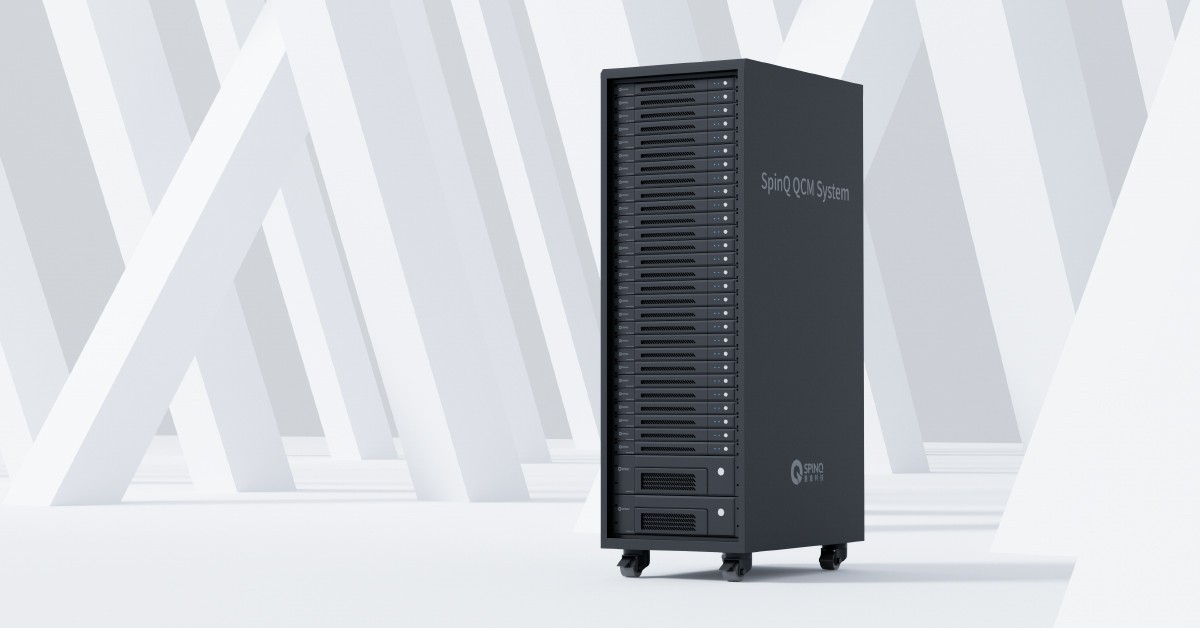
A quantum control and measurement system provides the electronic interface between experimental pulse sequences and the QPU. The SPINQ QCM System uses FPGA-based hardware acceleration to generate waveform files from pulse sequences and to perform initial processing of acquired signals in real time. With sub-nanosecond synchronization accuracy and up to 16-bit vertical resolution, the system supports precise timing and signal control across quantum experiments.
-
Readout Resonators and Measurement Chains Convert Quantum States into Data
Quantum operations must be followed by reliable state measurement. In superconducting systems, readout resonators typically enable dispersive measurement: the qubit state produces a measurable change in the resonator response, which is then converted into a microwave signal that can be amplified, digitized, and processed.
The complete measurement chain commonly includes readout resonators, microwave routing, cryogenic isolation and amplification stages, room-temperature digitization or downconversion, and real-time signal processing. The objective is not simply to collect a signal, but to classify qubit states with low noise, high repeatability, and sufficient speed for calibration and feedback workflows.
Measurement performance should therefore be assessed together with QPU specifications. Factory characterization data, including resonator frequency, qubit frequency, and decoherence metrics, provide an essential baseline for cryogenic integration, frequency planning, and experimental setup.
-
Cryogenic Packaging Connects the QPU to the Low-Temperature Environment
A superconducting QPU must operate in a controlled cryogenic environment, so packaging is a functional part of the quantum architecture rather than a passive enclosure. It establishes thermal contact with the cryogenic platform, protects the device from environmental interference, provides microwave signal access, and maintains stable mechanical positioning.
Effective packaging must address thermal anchoring, magnetic shielding, microwave-compatible routing, mechanical stability, connector accessibility, and compatibility with the broader cryogenic setup. These elements influence both device reliability and the repeatability of installation across experimental environments.
Fully packaged QPUs reduce pre-installation handling and create a more repeatable interface to the low-temperature system. SPINQ QPUs include thermal mountings and magnetic shielding, helping establish the physical conditions required for stable experimental operation.
.jpg)
-
Modular Control and Measurement Electronics Support System Expansion
As a superconducting processor grows, the electronics layer must scale with it. More qubits require more control channels, more readout capacity, more calibration resources, and tighter synchronization across the experimental stack. A modular electronics architecture enables this capacity to be added in stages rather than requiring a complete redesign of the laboratory infrastructure.
This approach is especially useful when research teams need to increase the number of controlled qubits, expand readout throughput, implement more advanced calibration routines, or run larger pulse-sequence workloads. The electronics architecture must preserve timing consistency as modules are added, since synchronization errors can directly affect gate execution and measurement quality.
The SPINQ QCM System uses a modular design that can expand control capacity by adding compatible units, supporting configurations for up to hundreds of qubits. It also incorporates network-analysis and spectrum-analysis functions, automated characterization and calibration capabilities, and remote FPGA program upgrades to support continuing system development.
-
System-Level Integration Turns Components into a Quantum Computing Platform
The value of a modular superconducting architecture emerges when the QPU, coupling network, control stack, readout chain, cryogenic environment, and software tools operate as an integrated platform. At that point, the system can support more than component evaluation: it can enable hardware validation, calibration development, quantum algorithm testing, and application-oriented research.
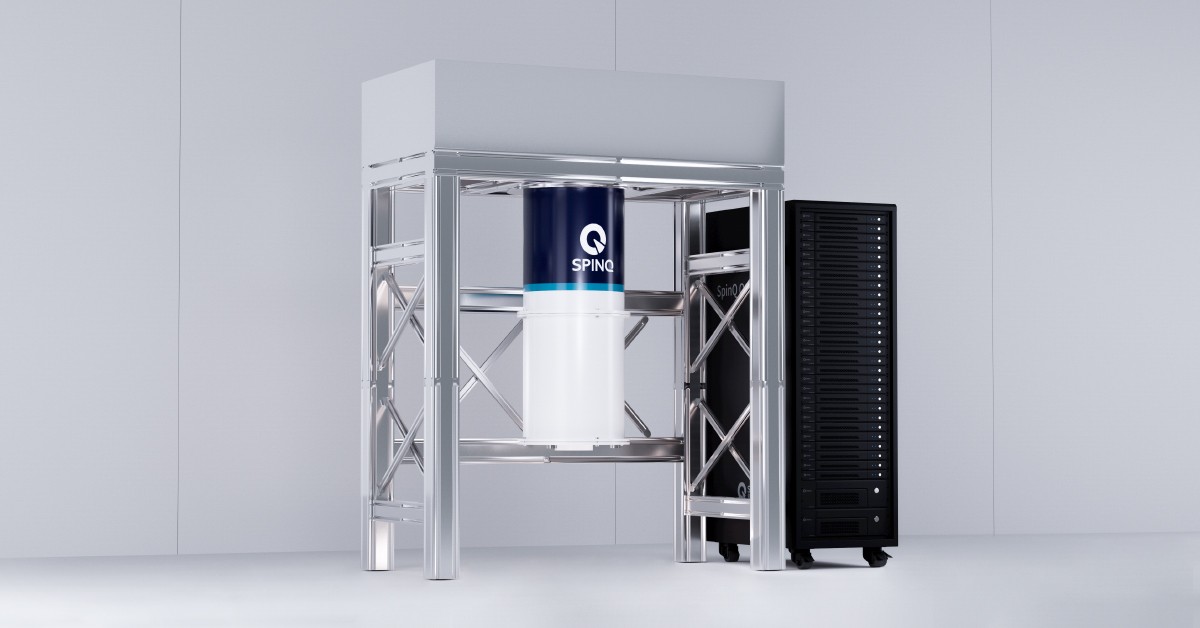
For larger-scale superconducting quantum computing programs, the SPINQ SQC superconducting quantum computer platform supports up to 103 superconducting qubits. Its architecture supports parametric-gate experiments and quantum-error-correction research workflows, providing a system foundation for research in areas such as biopharmaceuticals, materials science, FinTech, and AI.
How to Select Components for a Modular Superconducting Quantum System
Component selection should begin with the intended research objective rather than the highest available qubit count. A development platform may prioritize independent control, accessible characterization data, and flexible cryogenic integration. A larger research program may require a 2D topology, scalable control capacity, high-throughput readout, and a defined path toward quantum-error-correction experiments.
Before selecting a system, evaluate the qubit count required today and the expected expansion path; the suitability of the topology for target algorithms; coupling requirements for the planned gate set; the available control and readout channels; the packaging and cryogenic interfaces; the availability of documented device characterization; and the ability of the complete stack to scale coherently.
Conclusion
A modular superconducting quantum chip architecture combines a validated QPU, tunable couplers, independent control channels, a low-noise readout chain, cryogenic packaging, scalable measurement electronics, and system-level integration. When these elements are specified as a coordinated architecture rather than independent purchases, research teams can reduce integration uncertainty and establish a clearer path from device-level evaluation to advanced superconducting quantum computing research.

Featured Content