
How to Build a Cryogenic Superconducting Qubit System for Quantum Research
2026.09.11 · Blog cryogenic superconducting qubit
A cryogenic superconducting qubit system is not defined by the quantum chip alone. Reliable operation depends on the way the QPU, dilution refrigerator, RF signal chain, control electronics, software, and laboratory infrastructure work together.
For superconducting quantum research, system-level planning matters from the beginning. A stable low-temperature environment protects the operating conditions of the QPU, while precise control and readout hardware turns quantum circuits into a usable experimental platform.
What Is a Cryogenic Superconducting Qubit System?
A superconducting qubit is formed in a circuit containing Josephson junctions. These circuits use macroscopic quantum effects to encode and process quantum information, enabling controllable qubit coupling and scalable quantum processor architectures.
However, a QPU cannot operate as an isolated device. A complete cryogenic superconducting qubit system typically combines:
-
A superconducting quantum processing unit
-
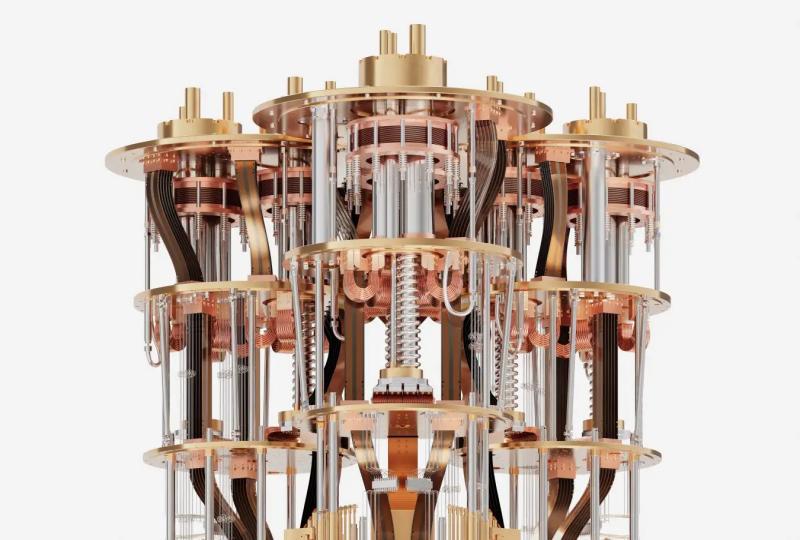
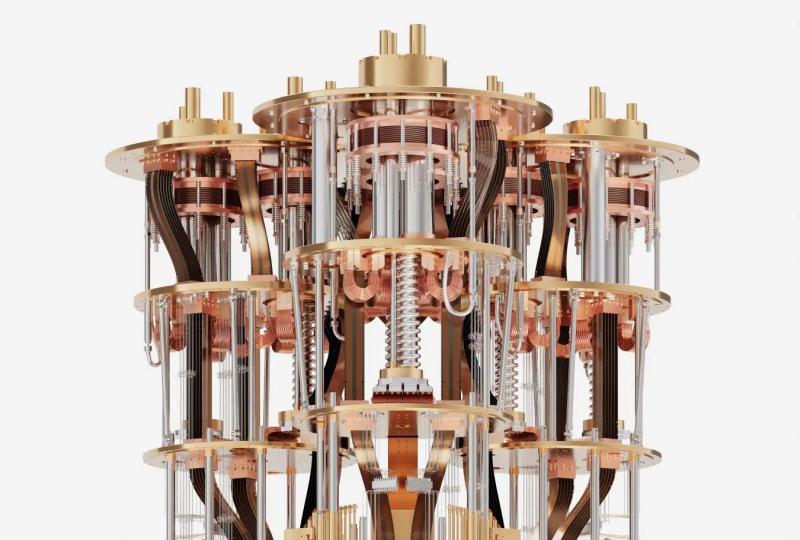
A dilution refrigerator and supporting cooling infrastructure
-
Cryogenic RF cables and components
-
Quantum control and measurement electronics
-
Pulse-control, calibration, and programming tools
-
Installation, integration, and long-term technical support
This system perspective is essential because the performance of one layer can affect every other layer. Qubit hardware, cooling capacity, microwave transmission, measurement workflows, and software access should therefore be evaluated as a connected architecture rather than as separate purchases.
For an overview of the hardware and system options used in superconducting quantum research, explore our superconducting quantum computing products.
Why Does a Superconducting Qubit Need a Cryogenic Environment?
Superconducting qubits require ultra-low temperatures to maintain the operating conditions needed for quantum control and readout. At higher temperatures, thermal energy can introduce unwanted excitation and noise, making stable quantum-state preparation and measurement more difficult.
In our superconducting quantum computing architecture, the QPU C Series operates at ultra-low temperatures of around 20 mK. This operating range helps establish the low-noise environment required for high-coherence and high-stability quantum computing applications.
That temperature requirement shapes every later design decision. The refrigerator must provide an appropriate millikelvin environment, while the wiring and RF components must limit the heat and noise that can travel from room-temperature electronics toward the quantum processor.
How Does Cryogenic Design Influence Qubit Operation?
Cryogenic design affects more than the temperature shown on a monitoring screen. It determines how well the system can preserve controlled operating conditions throughout a quantum experiment.
Temperature stability supports repeatable experiments
A stable low-temperature environment provides a consistent setting for qubit characterization, calibration, and algorithm verification. When experimental conditions are repeatable, research teams can better compare measurement results and refine control parameters.
RF signal quality affects control and readout
Control and readout signals must travel from room-temperature electronics to the mixing chamber, the coldest stage of a dilution refrigerator. Along that path, thermal noise, signal loss, phase instability, and crosstalk can affect the precision of qubit manipulation and measurement.
Laboratory conditions influence system reliability
Cryogenic performance also depends on the laboratory environment. Equipment layout, utility routing, vibration management, cable organization, and maintenance access all influence installation efficiency and long-term operation.
For this reason, cryogenic deployment should begin with the intended experimental workflow rather than with a refrigerator specification alone.
What Hardware Does a Cryogenic Qubit Platform Require?
A research platform should be designed around several closely connected hardware layers.
Superconducting quantum processing unit
The QPU is the computational core of the system. It hosts the qubits, supports quantum gate operations, and provides the physical basis for quantum experiments.
Our QPU C Series is engineered for high-coherence and high-stability quantum computing applications. It features a high Qi factor, extended coherence times, and circuit uniformity designed to support scalable superconducting quantum processor development.
Dilution refrigerator and cooling ecosystem
The dilution refrigerator creates the millikelvin environment required by the superconducting QPU. Its selection should reflect the target processor configuration, expected thermal load, available wiring capacity, sample-space requirements, and future expansion plan.
Supporting infrastructure is equally important. Water chillers, vacuum pumps, pipeline systems, and equipment interfaces should be planned as part of the same cooling ecosystem.
Cryogenic RF signal chain
RF cables and cryogenic components carry control and readout signals across large temperature gradients. Their role is to support low-loss microwave transmission while limiting thermal-noise ingress, crosstalk, and phase noise.
Quantum control and measurement system
The control and measurement system generates RF pulses, coordinates timing, acquires readout signals, and supports calibration workflows. It is the bridge between the quantum processor and the software environment used by researchers.
Our QCM System uses high-precision RF control electronics and FPGA-based hardware acceleration. Its modular architecture is designed for compatibility with superconducting QPUs and supports multi-qubit measurement and control workflows.
Why Must the QPU and Quantum Control System Be Matched?
The QPU is the computational core, yet it becomes usable only when its control, readout, and cryogenic interfaces are matched as one system.
Quantum control hardware must deliver microwave pulses with accurate timing, amplitude, phase, and frequency. Readout hardware must then collect and process the weak signals that indicate qubit states. If these layers are not properly matched, calibration becomes more difficult and experimental data can become less consistent.
A coordinated QPU and control architecture supports:
-
More efficient qubit characterization
-
Repeatable gate calibration
-
Consistent control and readout workflows
-
Flexible experimental access for research teams
-
A clearer route toward additional qubits and control channels
This is particularly important when the research plan includes device characterization, multi-qubit experiments, pulse-level control, or a future quantum error-correction program.
How Should You Plan the Cryogenic RF Signal Chain?
The cryogenic RF signal chain should be considered a core part of the quantum system, not an accessory added after the QPU is selected.
Each element in the chain should support the intended control and readout workflow. This includes cable routing between temperature stages, RF component selection, signal isolation, thermal management, and interfaces with the control electronics.
A practical RF deployment plan should consider:
-
The number of control, readout, and auxiliary channels
-
The heat load introduced by cables and components
-
The required transmission performance across temperature stages
-
The measurement bandwidth and readout architecture
-
Channel isolation and crosstalk management
-
Space for future QPU or control-system expansion
-
Installation and maintenance access inside the cryogenic platform
We support cryogenic environment deployment with dilution refrigerator systems, cryogenic RF components, laboratory assessment, retrofitting, cooling infrastructure, integration, and technical support. This approach aligns the low-temperature environment with the operational requirements of the quantum processor. Learn more about our cryogenic environment deployment services.
What Should Research Teams Consider Before Deployment?
Before deploying a cryogenic superconducting qubit platform, research teams should define the system’s primary purpose. The required configuration differs for qubit characterization, quantum algorithm verification, low-temperature electronic measurement, hardware testing, and multi-qubit research.
The following questions help guide an early-stage deployment plan:
-
What QPU configuration is required for the research roadmap?
-
How many control and readout channels will the initial system need?
-
What laboratory space, utilities, and cooling infrastructure are available?
-
How will the QPU, cryogenic RF chain, and control hardware be integrated?
-
What software workflow will researchers use for programming and calibration?
-
What installation, commissioning, training, and maintenance support is required?
-
How will the system expand as research needs develop?
Scalability should be defined before the first configuration is finalized. The target QPU, channel count, experimental workflow, and future expansion path all determine the required cryogenic and control architecture.
Build a Stable Foundation for Superconducting Quantum Research
A cryogenic superconducting qubit system is built through coordinated engineering across quantum hardware, cooling, RF transmission, control, measurement, and software. When these layers are planned together, research teams can reduce integration complexity and establish a more reliable environment for quantum experiments.
We support superconducting quantum research with integrated QPU, control and measurement, cryogenic deployment, quantum chip manufacturing, characterization, and software capabilities. The configuration can be planned around your laboratory conditions, research objectives, and long-term quantum infrastructure roadmap.
To discuss a superconducting quantum system configuration, cryogenic laboratory assessment, or deployment requirements, contact our technical team.
Featured Content