
How to Choose a Superconducting Qubit Manufacturer: 8 Key Factors
2026.09.11 · Blog superconducting qubit manufacturer
Selecting a superconducting qubit manufacturer depends on whether the chip architecture, fabrication process, packaging method, cryogenic environment, and control stack can support the intended research or development program.
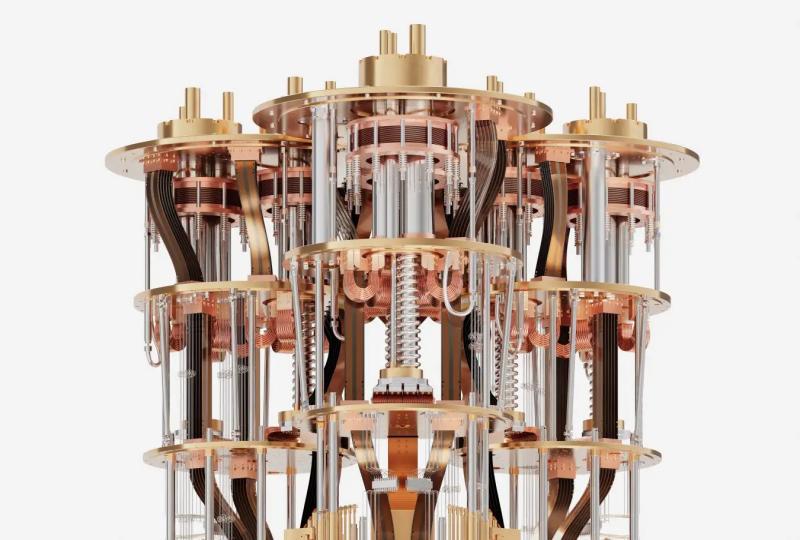
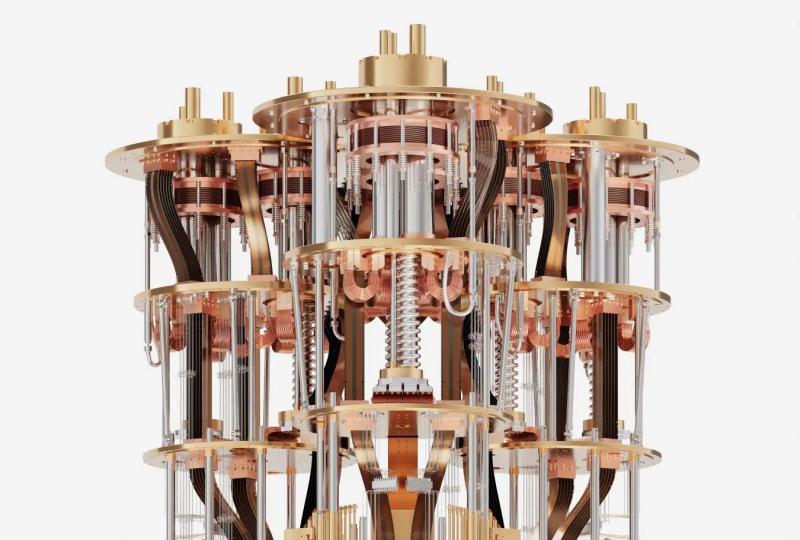
Superconducting quantum hardware is a system-level engineering challenge. Qubits, couplers, resonators, microwave packaging, cryogenic RF components, measurement electronics, and calibration workflows must operate as an integrated whole. SpinQ’s superconducting quantum computing portfolio includes superconducting quantum computers, QPUs, quantum control and measurement systems, chip manufacturing and characterization services, and cryogenic deployment support.
1.Choose Superconducting Qubit Architecture
A research team may need a small multi-qubit chip for device characterization, while another program may require a processor architecture for quantum algorithm testing, coupling experiments, or quantum error-correction research. These projects impose different requirements on chip topology, qubit frequencies, coupler design, readout configuration, and package interfaces.
Before requesting a quotation, define:
-
The required physical qubit count.
-
Fixed-frequency or tunable qubit requirements.
-
Target qubit connectivity and coupling method.
-
Readout and control-line configuration.
-
Frequency allocation requirements.
-
Compatibility with the existing cryogenic platform.
-
The next-stage scaling objective.
A clear requirements list makes it easier to determine whether a standard superconducting QPU or a custom superconducting qubit chip is the more appropriate option.
2.Evaluate the Full Fabrication Path Capability
Superconducting qubit performance is closely tied to fabrication precision. Process variation can influence Josephson junction parameters, qubit frequencies, coupling strengths, resonator behavior, coherence, and consistency across a chip.
Therefore, evaluate the manufacturer’s capability across the full fabrication path:
-
Superconducting circuit design and layout review.
-
Micro- and nano-fabrication processes.
-
Josephson junction fabrication control.
-
Thin-film deposition, lithography, and etching.
-
Chip inspection and handling.
-
Packaging preparation.
-
Electrical and cryogenic characterization.
For multi-qubit devices, process uniformity becomes increasingly important. A processor must maintain sufficiently predictable frequencies and circuit parameters to reduce frequency collisions and simplify calibration.
3.Coherence, Uniformity, and Test Conditions
Coherence is essential, but a coherence-time value alone does not describe a quantum processor’s practical performance. Technical evaluation should consider how qubits behave as part of a complete device under specified operating conditions.
Review the following information:
-
Energy-relaxation time, T(1).
-
Dephasing or coherence metrics, such as T(2).
-
Qubit frequency range and spacing.
-
Frequency stability over repeated measurement cycles.
-
Internal quality factor, Q(i), where applicable.
-
Qubit-to-qubit parameter uniformity.
-
Readout performance and calibration requirements.
-
Performance variation across devices or fabrication runs.
The QPU C Series operates at approximately 20 mK and is designed around high-Q(i) circuits, extended coherence characteristics, and circuit uniformity. These factors are relevant when assessing hardware intended for scalable superconducting quantum processor research.
4.Gate Operations and Qubit Connectivity
A quantum processor must support reliable single-qubit control, two-qubit interactions, and state readout. As the processor grows, the connectivity structure and control complexity become more important.
Focus on the following questions:
-
Which two-qubit interaction method is used?
-
Does the design use direct coupling, tunable couplers, or another coupling architecture?
-
How are control and readout lines routed?
-
Can the topology support the intended algorithm or quantum error-correction experiment?
-
What calibration dependencies arise when more qubits are activated?
-
Is the measurement infrastructure expandable as the system scales?
A strong superconducting QPU design considers hardware topology and control access together. Poorly planned connectivity can make a larger chip harder to calibrate, characterize, and operate effectively.
5.Packaging and Cryogenic Technology
A superconducting qubit chip requires a stable ultra-low-temperature environment and carefully managed microwave signal paths. Packaging, thermalization, shielding, RF routing, and cryogenic hardware affect whether the chip can operate under useful experimental conditions.
The integration scope should include:
-
Microwave package design.
-
Chip mounting and electrical interconnection.
-
RF and DC signal routing.
-
Thermal anchoring and heat-load management.
-
Electromagnetic and magnetic shielding.
-
Dilution refrigerator compatibility.
-
Cryogenic RF components.
-
Laboratory installation and maintenance requirements.
Cryogenic environment planning should begin early in the procurement process. It prevents avoidable compatibility issues between the QPU package, measurement wiring, refrigerator configuration, and control electronics.
6..Quantum Control and Measurement Systems Must Match the QPU
The QPU must be matched with a control and measurement system that can generate, synchronize, acquire, and process the signals required for qubit operation.
Technical teams should evaluate:
-
RF channel count and frequency coverage.
-
Signal synchronization precision.
-
FPGA-based processing capability.
-
Readout acquisition performance.
-
Scalability for larger qubit counts.
-
Compatibility with characterization and calibration workflows.
-
Availability of software interfaces and development resources.
The SPINQ QCM System uses modular high-precision RF control electronics and FPGA-based hardware acceleration. It supports superconducting QPU measurement and control, including qubit characterization and calibration workflows.
7.Custom Superconducting Qubit Design Addresses Specialized Requirements
A standard processor can be suitable for many projects. However, custom design becomes important when an experiment requires a specific layout, coupling structure, operating frequency plan, chip footprint, package interface, or measurement configuration.
Custom superconducting qubit development may involve:
-
Qubit count and chip dimensions.
-
Qubit placement and connectivity.
-
Fixed-frequency or tunable-frequency qubit design.
-
Coupler and resonator configuration.
-
Readout architecture.
-
Package and I/O interface requirements.
-
Target cryogenic test conditions.
-
Characterization and acceptance criteria.
Custom requirements should be defined with the fabrication and integration teams early. This approach reduces redesign cycles and helps ensure that the quantum chip, package, refrigerator, and control system are technically aligned before delivery.
8.System-Level Support Sustains Quantum Hardware Development
Quantum hardware programs usually evolve through several device and system iterations. A supplier relationship should therefore be evaluated by its ability to support design refinement, testing, deployment, and future scaling—not just initial chip delivery.
Important evaluation points include:
-
Support for prototype, custom, and system-level projects.
-
Chip manufacturing and characterization capability.
-
Packaging and cryogenic integration expertise.
-
QPU control and measurement compatibility.
-
Technical communication during design review and deployment.
-
Flexibility for evolving research requirements.
-
Availability of related quantum software and system resources.
Our broader quantum hardware and software ecosystem covers QPUs, QPU EDA, quantum control and measurement systems, superconducting quantum computers, algorithms, and software. This structure enables teams to evaluate modular hardware, integrated systems, and application-oriented development paths within one technical framework.
A Complete Hardware Chain Provides a Stronger Selection Basis
The most suitable superconducting qubit manufacturer is not necessarily the one presenting the largest qubit count. The more relevant question is whether the complete hardware chain can support the project: chip architecture, fabrication consistency, coherence, packaging, cryogenic deployment, control, measurement, characterization, and future iteration.
For a superconducting QPU project, start by defining the chip architecture, test environment, and integration objective. Then align the manufacturing, packaging, cryogenic, and measurement requirements around that specification. For technical discussions covering quantum chip design, manufacturing, QPU integration, or cryogenic deployment, contact our quantum hardware team.
Featured Content