
How Superconducting Quantum Computers Work: QPU to Cryogenic Control
2026.09.10 · Blog how does a quantum computer work
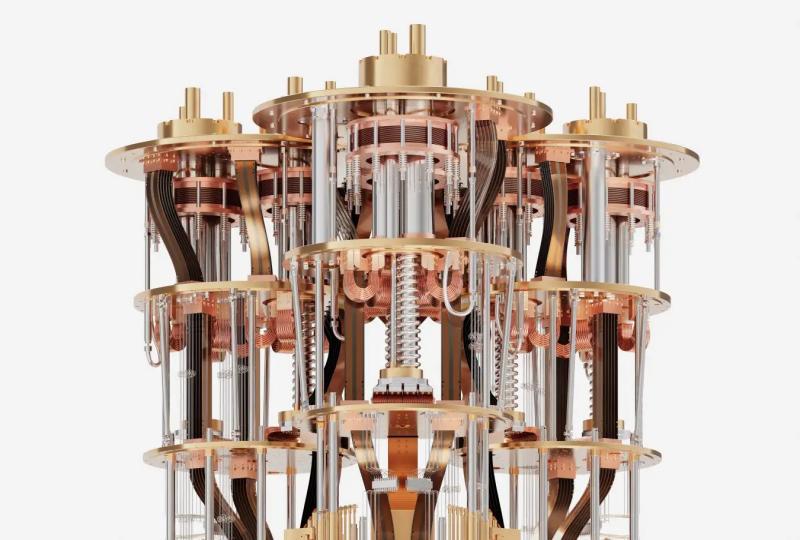
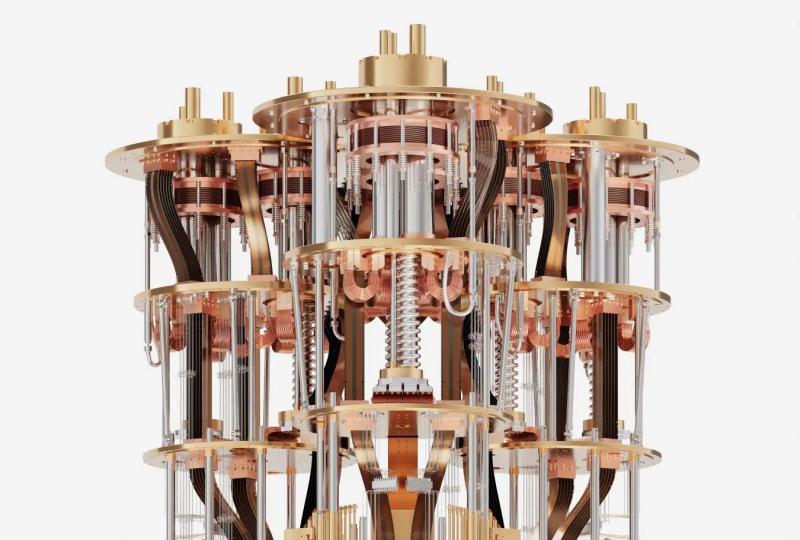
A superconducting quantum computer is a tightly integrated system in which a quantum processing unit, precision control electronics, cryogenic infrastructure, and software operate as one. Its performance depends not on a quantum chip alone, but on how reliably every layer prepares, controls, measures, and protects quantum states.
At the center of this architecture is the QPU. In the SPINQ SQC superconducting quantum computer platform, the QPU, quantum control and measurement capabilities, cryogenic operation, and software workflow are brought together for advanced research and industrial quantum computing development. The SQC S Series supports up to 103 superconducting qubits and includes parametric gate and quantum error-correction capabilities.
What Makes a Superconducting Quantum Computer Different?
A superconducting quantum computer processes information with superconducting qubits rather than classical bits. A classical bit holds one defined value, either 0 or 1. A qubit can be prepared in a quantum state that combines the two computational basis states.
This property becomes useful when qubits are controlled as part of a quantum circuit. Carefully designed operations create superposition, entanglement, and interference, allowing a quantum algorithm to change the probabilities associated with possible measurement outcomes.
However, the QPU is only the starting point. A useful superconducting quantum computing system also needs:
-
A stable cryogenic environment
-
Microwave control and readout signal chains
-
Low-noise, synchronized control electronics
-
Quantum compilation and pulse-control software
-
Classical computing for calibration, data processing, and iterative optimization
Each part of the system affects whether the intended quantum operation can be performed accurately.
How Does a Superconducting QPU Create Qubits?
A superconducting quantum processing unit, or QPU, is a quantum chip built from carefully engineered superconducting circuits. At cryogenic temperatures, these circuits can support quantum energy states that serve as the 0 and 1 states of a qubit.
Josephson Junctions Create Controllable Quantum Circuits
A superconducting qubit typically includes a Josephson junction, which introduces the nonlinearity required to isolate and control two quantum energy levels. This makes it possible to address a qubit as a quantum system rather than as an ordinary electrical resonator.
The QPU architecture also includes elements that enable qubit coupling, readout, signal routing, and shielding from unwanted interference. Together, these components determine how quantum information is stored, manipulated, and measured.
Qubit Quality Matters as Much as Qubit Count
The number of qubits determines the potential scale of a processor, but it does not independently determine usable computing performance. QPU evaluation should also consider:
-
Coherence time
-
Single-qubit gate fidelity
-
Two-qubit gate fidelity
-
Readout fidelity
-
Qubit connectivity
-
Crosstalk between nearby control channels
-
Stability across repeated calibrations
Longer coherence gives the system more time to execute operations before environmental noise degrades the quantum state. High-fidelity gates and readout improve the reliability of quantum circuits and support more demanding workloads, including quantum error-correction research.
How Are Superconducting Qubits Controlled?
Once a QPU has been cooled and initialized, qubits are controlled with microwave or RF pulses. These pulses are generated by quantum control electronics and delivered through carefully designed signal paths.
From Quantum Circuit to Microwave Pulse
A quantum program does not operate directly on the chip. First, quantum software compiles the circuit for the available qubits, connectivity, and supported operations. The compiled instructions are then translated into pulse sequences with defined frequencies, amplitudes, phases, waveforms, and timing.
This sequence follows a practical flow:
-
A researcher defines a quantum circuit or experiment.
-
Software maps the circuit to the target QPU.
-
The control system generates calibrated microwave pulses.
-
Pulses implement single-qubit and two-qubit operations.
-
The system sends readout signals and acquires measurement responses.
-
Classical computing resources process the resulting data.
Because qubits are highly sensitive to noise and timing errors, signal control must remain stable and repeatable throughout the experiment.
Why Pulse-Level Control Is Important
At the circuit level, an operation may look like a simple quantum gate. At the hardware level, that gate is a carefully calibrated pulse sequence.
Pulse-level control enables researchers to:
-
Tune pulse amplitude, phase, frequency, and duration
-
Characterize qubit response and gate behavior
-
Reduce control error and unwanted crosstalk
-
Develop custom control protocols
-
Study quantum dynamics beyond standard gate operations
This connection between software instructions and physical signals is essential for experiments that require precise quantum control.
Why Does a Superconducting Quantum Computer Need Cryogenic Operation?
That control process only works when the QPU remains in a sufficiently quiet and cold operating environment. Superconducting qubits operate close to absolute zero, where thermal energy is reduced enough to help preserve superconductivity and limit unwanted excitations that would disturb the qubits.
In practice, superconducting QPUs are operated at millikelvin temperatures using dilution refrigerator systems. The low-temperature environment supports quantum coherence and helps maintain the conditions required for stable control and readout.
The Cryogenic Environment Is Part of the Computing System
Cooling the QPU is not an isolated task. The cryogenic environment must also support electrical signal delivery, thermal isolation, shielding, amplification, and mechanical stability.
A typical system includes:
-
A dilution refrigerator
-
Multi-stage thermal shielding
-
Cryogenic RF and microwave lines
-
Attenuators, filters, isolators, and amplifiers
-
QPU packaging and low-temperature interconnects
-
Monitoring and supporting cooling infrastructure
The cryogenic environment deployment solution addresses these interdependent requirements, including dilution refrigerator deployment, cryogenic RF signal chains, laboratory assessment, installation, maintenance, and supporting infrastructure.
Why Cryogenic Planning Should Start Early
A superconducting quantum computing project should evaluate cryogenic requirements before system installation. Laboratory space, power capacity, cooling water, vibration conditions, electromagnetic environment, RF routing, operational safety, and maintenance access all affect deployment readiness.
Early planning reduces the risk of mismatched interfaces between the refrigerator, signal chain, control electronics, and QPU.
How Does Quantum Readout Turn Qubit States into Results?
A quantum computation becomes useful only when the final qubit states can be measured and interpreted. In superconducting systems, readout commonly uses resonators coupled to the qubits.
After a quantum circuit is executed, a readout signal interacts with the resonator. The response changes according to the qubit state and is amplified, digitized, and processed by the control system.
Readout Requires Precision at Every Stage
The readout chain must preserve weak quantum signals while limiting added noise. Signal quality can be affected by:
-
Thermal noise
-
Amplifier noise
-
Signal attenuation
-
Phase instability
-
Crosstalk
-
Imperfect calibration
-
Environmental interference
For this reason, readout performance depends on coordinated design across the QPU, cryogenic RF hardware, amplifiers, room-temperature electronics, and signal-processing software.
Reliable readout is especially important for repeated experiments, calibration workflows, error characterization, and quantum error-correction studies.
How Do Software and Classical Computing Support the QPU?
A superconducting quantum computer operates within a hybrid quantum-classical workflow. The QPU executes quantum circuits, while classical computers manage compilation, calibration, data analysis, and optimization.
The Software Stack Connects Research to Hardware
A practical quantum workflow moves through several layers:
-
Application layer: Defines the scientific, optimization, or algorithmic task
-
Quantum circuit layer: Expresses the task as quantum gates and measurements
-
Compilation layer: Maps circuits to the available QPU architecture
-
Pulse-control layer: Converts operations into calibrated physical signals
-
Hardware layer: Executes the operation through the QPU and control system
-
Analysis layer: Processes measurement results and guides the next iteration
This workflow enables users to move from quantum algorithm development to direct hardware execution without treating the QPU as an isolated device.
Why Hybrid Workflows Matter
Many quantum experiments require iterative classical processing. For example, a classical optimizer may update parameters after each batch of quantum measurements, while a calibration workflow may repeatedly characterize qubit frequency, gate response, or readout behavior.
As a result, a scalable superconducting quantum computing platform must support both quantum hardware access and efficient interaction with classical computing resources.
Which Factors Define Superconducting Quantum Computer Performance?
A superconducting quantum system should be assessed as an integrated platform. The most useful evaluation criteria combine processor capability, control precision, environmental stability, and software usability.
QPU Performance
Key QPU factors include qubit count, coherence, connectivity, gate fidelity, and measurement fidelity. These characteristics determine how large and how reliable a quantum circuit can be in practice.
Control and Measurement Performance
The control system must provide precise timing, stable phase relationships, low-noise signal generation, and reliable data acquisition. As the number of qubits grows, channel synchronization and scalable readout become increasingly important.
Cryogenic Stability
Stable cryogenic operation helps protect qubit performance over long experiments. Thermal noise, mechanical vibration, electromagnetic interference, and unstable RF signal paths can all affect system behavior.
Software and Integration Capability
Hardware performance must be accessible through a usable software workflow. Researchers need reliable programming interfaces, circuit compilation, pulse-level access when required, data-analysis tools, and integration with classical computing environments.
How Can You Build a Scalable Superconducting Quantum Computing Platform?
A successful deployment begins with the intended research or development objective. The system architecture should then be designed around the workload, QPU configuration, control requirements, cryogenic conditions, software environment, and available laboratory infrastructure.
Start with the Intended Use Case
A superconducting quantum computing platform may support:
-
Quantum algorithm validation
-
QPU characterization and calibration
-
Quantum control research
-
Quantum error-correction studies
-
Quantum chip development and testing
-
Hybrid quantum-classical workflow development
-
Application research in materials, life sciences, AI, and financial technology
The use case determines whether the priority is qubit scale, high-fidelity control, pulse-level experimentation, software integration, private deployment, or a combination of these requirements.
Plan the Complete System
System planning should cover the QPU, control and measurement electronics, cryogenic environment, RF signal chain, software framework, classical compute resources, laboratory preparation, installation, commissioning, and ongoing support.
This end-to-end approach helps ensure that the quantum processor can be operated as part of a stable and expandable research platform rather than as a disconnected hardware component.
For technical consultation on superconducting quantum computing systems, cryogenic deployment, or integrated quantum infrastructure, contact the SpinQ team to discuss the requirements of your laboratory or development program.
Frequently Asked Questions
What temperature does a superconducting quantum computer operate at?
Superconducting quantum processors operate at millikelvin temperatures. Dilution refrigerator systems create the cryogenic environment required to reduce thermal noise and maintain stable qubit operation.
Is a QPU the same as a complete quantum computer?
No. A QPU is the quantum processor, while a complete superconducting quantum computer also requires control and readout electronics, cryogenic infrastructure, RF signal chains, software, and classical computing resources.
Why are microwave pulses used in superconducting quantum computing?
Microwave or RF pulses are used to manipulate superconducting qubits. Their frequency, phase, amplitude, shape, and timing determine how quantum operations are performed.
What affects quantum gate fidelity?
Gate fidelity can be affected by qubit coherence, pulse calibration, phase noise, control error, crosstalk, thermal noise, and the stability of the surrounding cryogenic and electronic environment.
Why is system integration important?
Superconducting quantum computing depends on the coordination of the QPU, control electronics, cryogenic environment, software, and classical infrastructure. Weak performance in one layer can limit the performance of the overall system.
Featured Content