
What Is Superconducting Quantum Computing Used For?
2026.09.10 · Blog what is superconducting quantum computing
Superconducting quantum computers provide a practical platform for studying quantum information processing, validating quantum algorithms, and developing quantum hardware systems. Their applications span fundamental research, quantum chemistry, materials science, financial technology, artificial intelligence, and other complex computational fields.
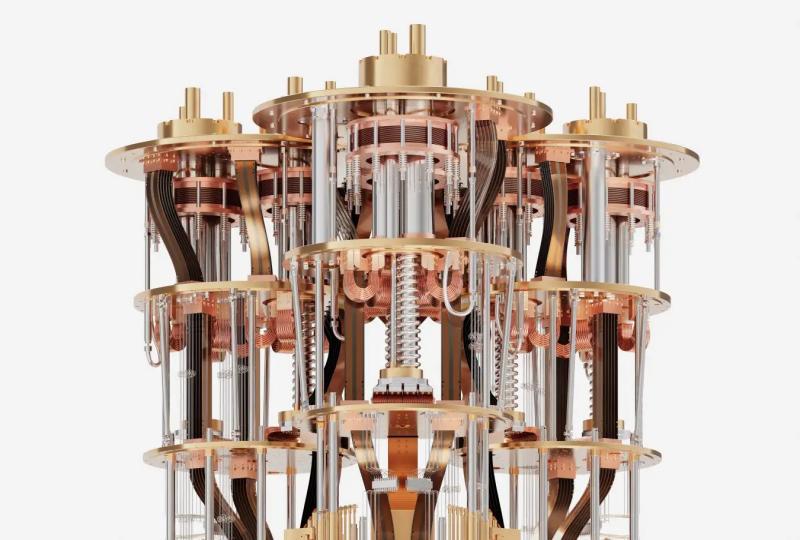
At the center of these systems is the superconducting quantum processing unit, or QPU. Superconducting qubits are formed by quantum circuits built around Josephson junctions, using macroscopic quantum effects to encode and process quantum information. To see how these technologies fit into an integrated hardware environment, explore our superconducting quantum computing solutions, which include superconducting quantum computers, QPUs, control systems, chip manufacturing and characterization services, and cryogenic-environment deployment.
What Are Superconducting Quantum Computers Used for Today?
Superconducting quantum computers are designed for workloads that require researchers to model quantum behavior, execute quantum circuits, or investigate computational problems with a very large solution space.
Today, the most relevant uses include:
-
Quantum computing research and experimental validation.
-
Qubit characterization, calibration, and control development.
-
Quantum algorithm testing on real superconducting hardware.
-
Quantum simulation for chemistry and materials research.
-
Optimization research for finance, logistics, manufacturing, and energy.
-
Hybrid quantum-classical computing experiments.
-
Quantum machine learning exploration.
-
Quantum chip development, testing, and system integration.
These uses should be understood in the context of current quantum hardware. Superconducting processors are not intended to replace conventional computers for everyday applications. Instead, they enable controlled experiments and targeted research in areas where quantum effects are central to the problem being studied.
How Do Superconducting Quantum Computers Support Quantum Research?
A superconducting quantum computing system enables research teams to work with real qubits rather than relying solely on idealized simulations. This matters because the performance of a quantum algorithm depends not only on its mathematical design, but also on coherence, gate fidelity, readout quality, pulse calibration, and the surrounding experimental environment.
Qubit and gate characterization
Research teams can use superconducting processors to investigate:
-
Qubit frequencies and resonance behavior.
-
Energy relaxation and dephasing.
-
Single-qubit and two-qubit gate performance.
-
Qubit coupling and interaction behavior.
-
Signal readout and measurement stability.
-
Noise sources that affect quantum circuit execution.
These studies support the development of more stable quantum processors and more reliable quantum experiments.
Quantum control and measurement research
Qubit performance depends on accurate microwave control and reliable signal acquisition. A control platform must generate appropriate pulse sequences, synchronize channels, process measurement signals, and return qubit-state information efficiently.
Our quantum control and measurement system uses a modular RF architecture for qubit control and readout. FPGA-based hardware acceleration supports waveform generation from pulse sequences, real-time initial signal processing, and fast feedback to the host computer. The system also supports automated qubit characterization and calibration workflows.
Quantum algorithm validation
Real-hardware testing allows researchers to evaluate quantum circuits under actual operating conditions. This includes assessing how circuit depth, gate operations, qubit connectivity, and measurement quality influence experimental results.
For universities, research institutions, and advanced R&D teams, this process helps connect quantum algorithm research with measurable hardware performance.
Can Superconducting Quantum Computers Be Used for Quantum Chemistry?
Yes. Quantum chemistry is a major direction for superconducting quantum computing because molecular behavior is inherently governed by quantum mechanics. As molecular systems become more complex, accurately modeling their electronic interactions can require significant computational resources.
What can researchers explore?
Superconducting quantum processors can support research into:
-
Molecular energy estimation.
-
Electronic-structure modeling.
-
Molecular interactions and reaction mechanisms.
-
Catalytic processes.
-
Candidate material and compound evaluation.
-
Hybrid quantum-classical chemistry workflows.
-
Quantum simulation methods for chemical systems.
In practice, researchers use a quantum processor together with classical computing resources. The classical environment prepares data, optimizes parameters, and analyzes results, while the quantum system executes the quantum circuits needed for the experiment.
This workflow is particularly useful for teams that want to validate quantum chemistry methods on real hardware and understand how hardware noise, gate fidelity, and qubit coherence affect outcomes.
How Can Superconducting Quantum Computing Advance Materials Science?
Materials science is another important area for quantum application exploration. Advanced materials often involve complex electronic states and interactions that are difficult to reproduce with simplified classical models.
Relevant research directions
Superconducting quantum computing can support studies involving:
-
Battery and energy-storage materials.
-
Semiconductor and electronic materials.
-
Catalysts and chemical-process materials.
-
Magnetic and quantum materials.
-
Superconducting material systems.
-
Molecular materials and electronic structures.
-
Materials simulation algorithms.
A quantum processor does not eliminate the need for classical simulation or laboratory testing. Rather, it adds a new experimental resource for investigating quantum models, testing quantum circuits, and developing workflows for future materials research.
For teams building a dedicated experimental setup, our superconducting quantum chips are available in different qubit configurations for quantum computer development, proof-of-concept studies, cryogenic-system testing, quantum chemistry, materials science, quantum simulation, and financial technology research.
Can Superconducting Quantum Computers Help with Optimization?
Optimization problems require users to select the best result from many possible combinations while accounting for constraints such as time, cost, capacity, risk, and resources. These challenges appear in financial services, logistics, manufacturing, supply-chain planning, and energy management.
Where can optimization research begin?
Potential use cases include:
-
Portfolio construction and risk analysis.
-
Resource allocation and scheduling.
-
Route and delivery planning.
-
Manufacturing process optimization.
-
Inventory and supply-chain modeling.
-
Energy system scheduling.
-
Financial technology research.
For current quantum hardware, the most useful starting point is a well-defined proof-of-concept project. Teams should identify a specific optimization problem, establish a strong classical baseline, develop a quantum representation, and compare results under realistic hardware conditions.
This approach gives organizations a reliable way to evaluate whether a quantum workflow may be relevant to their research goals before expanding into more complex use cases.
What Is the Role of Superconducting Quantum Computing in AI?
Superconducting quantum computing is being explored alongside artificial intelligence in two complementary directions: quantum computing for AI research, and AI-assisted quantum system operation.
Quantum computing for AI research
Quantum machine learning research investigates whether quantum circuits can contribute to selected learning, classification, or pattern-analysis tasks. Current work often focuses on small-scale, hybrid quantum-classical experiments rather than broad replacement of conventional AI infrastructure.
Research teams may study:
-
Quantum data encoding methods.
-
Parameterized quantum circuits.
-
Quantum classification experiments.
-
Hybrid optimization workflows.
-
Noise-aware quantum machine learning models.
AI-assisted quantum operation
Artificial intelligence can also support superconducting quantum experiments. Data-driven techniques can help researchers process experimental data, identify performance variations, improve calibration routines, and optimize control parameters.
This combination is especially relevant when a system includes many control channels, repeated calibration tasks, and large volumes of measurement data.
What Limits Current Superconducting Quantum Computing Applications?
Superconducting quantum computing is advancing rapidly, but useful application development requires realistic expectations. The practical value of a system depends on more than the number of qubits.
Key factors that influence performance
-
Qubit coherence time.
-
Single-qubit and two-qubit gate fidelity.
-
Readout quality and measurement stability.
-
Qubit connectivity and coupling design.
-
Control-signal accuracy and synchronization.
-
Cryogenic-system stability.
-
Noise, crosstalk, and calibration consistency.
-
Software compatibility and experimental workflow design.
Superconducting quantum chips operate at ultra-low temperatures. A stable cryogenic environment is therefore essential for high-fidelity qubit operation. System planning should include the quantum processor, control electronics, cryogenic RF components, dilution refrigeration, laboratory conditions, installation, and ongoing technical support.
These requirements are why quantum computing capability should be evaluated as an integrated engineering project rather than as a standalone chip purchase.
How Can an Organization Build a Superconducting Quantum Computing Capability?
The best starting point is to match system design with a specific technical objective. A research group developing quantum chips will require different capabilities from a team validating quantum algorithms or exploring quantum chemistry workflows.
Define the intended use
Begin by identifying the primary objective:
-
Quantum hardware and qubit research.
-
Quantum algorithm development.
-
Quantum chemistry or materials simulation.
-
Optimization and financial technology exploration.
-
AI and quantum machine learning research.
-
Quantum control, readout, and calibration development.
-
Cryogenic-system and RF-infrastructure research.
Evaluate the complete system
A superconducting quantum computing capability typically requires:
-
A superconducting QPU.
-
Quantum control and measurement electronics.
-
Cryogenic and RF infrastructure.
-
Software tools and programming interfaces.
-
Experimental data-processing workflows.
-
Installation, calibration, training, and technical support.
A well-planned system gives researchers the flexibility to begin with targeted experiments and expand their capabilities as their research programs develop.
To discuss QPU configuration, quantum control requirements, cryogenic deployment, chip characterization, or integrated system planning, contact our technical team. We can help define an appropriate superconducting quantum computing solution based on your research objectives, laboratory conditions, and development requirements.
FAQs
What industries can use superconducting quantum computers?
Superconducting quantum computers can support research and development in quantum technology, pharmaceuticals, chemistry, materials science, financial technology, energy, manufacturing, logistics, semiconductor research, and artificial intelligence.
Can superconducting quantum computers replace classical computers?
No. They are specialized systems for quantum research and selected computational experiments. Most current use cases rely on hybrid workflows that combine quantum processors with classical computing resources.
What is the difference between a quantum chip and a superconducting quantum computer?
A quantum chip, or QPU, contains the superconducting qubits used to execute quantum circuits. A superconducting quantum computer includes the QPU together with quantum control and measurement electronics, cryogenic infrastructure, software, and supporting experimental systems.
Why are quantum control and measurement systems necessary?
Quantum control and measurement systems generate and deliver the signals used to manipulate qubits, acquire qubit-state information, and support characterization and calibration. Without reliable control and readout, a QPU cannot execute or evaluate quantum experiments effectively.
What should a laboratory consider before acquiring a superconducting quantum system?
Laboratories should assess their research objectives, available cryogenic infrastructure, required QPU configuration, control and measurement requirements, RF environment, software workflow, installation conditions, staffing, training needs, and long-term technical support requirements.
Featured Content