
Superconducting Qubit Development in Japan
2026.11.20 · Blog in japan superconducting qubit
Japan has become an important contributor to superconducting qubit research, with universities, national research institutes, and technology companies working together to advance quantum processor development. From RIKEN and Fujitsu's 256-qubit superconducting quantum computer to AIST's dedicated superconducting circuit fabrication facility, Japan is developing capabilities across quantum chip design, fabrication, packaging, and system integration.
These developments reflect a broader shift in the country's quantum technology research: moving beyond individual qubit experiments toward integrated processors and more practical quantum computing systems. This article explores the organizations, technologies, and manufacturing capabilities shaping superconducting qubit development in Japan.
How Is Japan Advancing Superconducting Qubit Technology?
Japan has a long history of research into superconducting quantum circuits. Its contributions extend from early experimental demonstrations to the development of multi-qubit processors.
From Early Qubit Experiments to Integrated Processors
Japan has played an important role in establishing superconducting circuits as a practical platform for quantum information processing.
In 1999, researchers at NEC demonstrated coherent control of a superconducting quantum circuit, marking an important milestone in the experimental development of solid-state quantum bits.
Since then, research has expanded from controlling individual quantum states to connecting multiple qubits and developing integrated quantum processors.
Several engineering challenges have become increasingly important:
-
Maintaining qubit coherence during quantum operations.
-
Improving the consistency of Josephson junction fabrication.
-
Developing reliable connections between neighboring qubits.
-
Integrating control and readout circuits.
-
Managing heat and signal transmission inside cryogenic systems.
These challenges require collaboration between quantum physicists, semiconductor engineers, materials scientists, and system developers.
Moving Toward Larger Superconducting Quantum Processors
A major development in Japan is the transition from laboratory-scale devices to larger superconducting quantum computing systems.
Increasing the number of physical qubits requires more than adding components to a chip. Engineers must also address wiring density, thermal management, microwave signal distribution, and processor connectivity.
Japan's recent developments demonstrate how research institutions and industrial partners are approaching these challenges through joint hardware development.
Which Organizations Are Developing Superconducting Qubits in Japan?
Japan's superconducting quantum computing ecosystem includes national research institutions, universities, and companies with expertise in semiconductor manufacturing and advanced electronics.
Several organizations are particularly relevant to understanding the country's progress.
RIKEN and Fujitsu: Advancing Superconducting Qubit Integration
RIKEN and Fujitsu are among the most prominent participants in Japan's superconducting quantum computing development.
In April 2025, the two organizations announced a 256-qubit superconducting quantum computer developed at the RIKEN RQC-FUJITSU Collaboration Center.
The system builds on their earlier 64-qubit superconducting quantum computer, introduced in October 2023.
One important aspect of the 256-qubit development is its high-density implementation technology. Increasing component density inside a dilution refrigerator creates additional thermal challenges, so the research team incorporated improved thermal design to address cooling requirements.
The collaboration represents progress in several areas:
-
Increasing the number of integrated physical qubits.
-
Improving processor implementation density.
-
Addressing thermal management in cryogenic environments.
-
Developing hardware for larger quantum computing systems.
RIKEN and Fujitsu also announced plans to continue research toward larger processors, including a 1,000-qubit system targeted for 2026 in their original development roadmap.
It is important to distinguish these announced development targets from completed and independently verified operating capabilities.
Osaka University: Developing Quantum Processor Technologies
The University of Osaka is another important participant in Japan's superconducting quantum computing research.
Through its Center for Quantum Information and Quantum Biology (QIQB), the university collaborates with RIKEN and other research partners on quantum processor development.
In March 2026, RIKEN and Osaka University's research collaboration announced the launch of cloud access to a new superconducting quantum computer called A (叡)-II.
The system uses a 144-qubit chip, representing an increase of more than two times the physical qubit count of its predecessor, which used a 64-qubit chip.
This development illustrates the importance of collaboration between academic research and national quantum computing infrastructure.
For universities and research organizations, access to operational quantum processors also creates opportunities to investigate quantum algorithms, processor behavior, and hardware-software integration.
AIST: Building Superconducting Quantum Chip Fabrication Capabilities
The National Institute of Advanced Industrial Science and Technology (AIST) contributes to Japan's quantum hardware ecosystem through its Superconducting Quantum Circuit Fabrication Facility, known as Qufab.
Unlike organizations primarily focused on complete quantum computing systems, AIST provides shared fabrication infrastructure for superconducting devices and circuits.
Qufab supports:
-
Superconducting integrated circuit prototyping.
-
Superconducting qubit and quantum circuit fabrication.
-
Three-dimensional packaging of superconducting components.
-
Development of fabrication processes using new materials and structures.
An important feature is its foundry-style service. Researchers and organizations can submit superconducting circuit design data for fabrication and receive prototype devices together with characterization reports based on process evaluation chips.
Its published fabrication processes include Nb/Al-AlOx/Nb Josephson junction layers and multilayer niobium structures.
This is particularly relevant to superconducting qubit development because Josephson junction fabrication directly affects the electrical characteristics of quantum circuits.
Fujitsu: Planning the Next Generation of Superconducting Quantum Computers
Beyond its collaboration with RIKEN, Fujitsu is also investing in longer-term quantum processor development.
In August 2025, Fujitsu announced a research and development initiative targeting a superconducting quantum computer with more than 10,000 physical qubits by 2030, in collaboration with RIKEN and AIST.
The initiative aims to advance hardware and software technologies for early fault-tolerant quantum computing.
Its development objectives include:
-
Scaling superconducting processor architectures.
-
Advancing quantum error correction.
-
Improving hardware-software integration.
-
Supporting applications in materials science, chemistry, and other research fields.
The 10,000-plus-qubit figure is a future development target, not an existing processor specification.
Nevertheless, it demonstrates the scale of Japan's long-term ambitions in superconducting quantum hardware.
What Are the Main Technical Challenges for Superconducting Qubits in Japan?
Japan's progress in superconducting quantum computing also highlights several technical challenges that researchers and manufacturers must address.
These challenges are not unique to Japan, but they are important considerations for any organization developing superconducting quantum hardware.
Improving Qubit Coherence and Fidelity
Superconducting qubits are sensitive to environmental noise and material imperfections.
Two important parameters used to evaluate their behavior are:
-
T1 relaxation time, which measures how quickly an excited qubit returns to its ground state.
-
T2 coherence time, which characterizes the loss of phase coherence.
These properties can be influenced by dielectric losses, material defects, surface contamination, electromagnetic interference, and fabrication variations.
Improving coherence requires coordinated work across circuit design, materials engineering, fabrication, and experimental characterization.
Gate fidelity is another important consideration. Even when individual qubits exhibit suitable coherence, control errors and unwanted interactions can affect the accuracy of quantum operations.
Scaling Up Qubit Integration and Packaging
Increasing the number of superconducting qubits creates additional challenges for chip layout and packaging.
A larger processor requires carefully planned connectivity, control lines, readout resonators, and signal-routing structures.
Three-dimensional integration is one approach being explored to address the limitations of conventional planar layouts.
However, increasing integration density also requires attention to electromagnetic interactions, thermal performance, and fabrication consistency.
The development of larger processors therefore depends on improvements in both chip architecture and packaging engineering.
Cryogenic Control and Microwave Signal Management
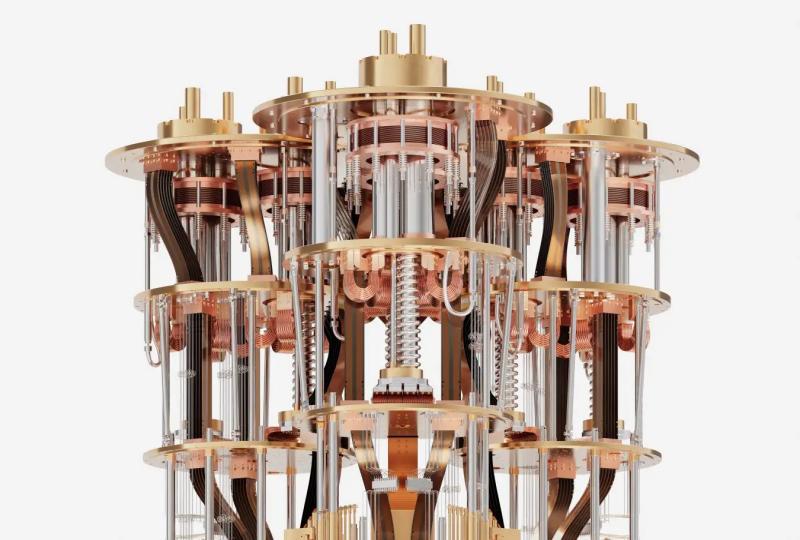
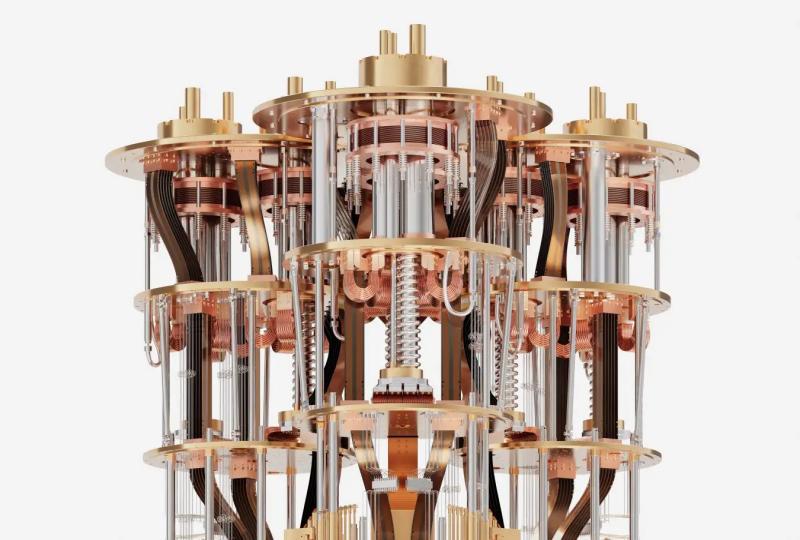
Superconducting qubits generally operate at millikelvin temperatures inside dilution refrigerators.
Their control and readout systems rely on carefully generated microwave signals.
As the number of qubits increases, the number of control and measurement channels can also grow, creating challenges involving:
-
Wiring density inside cryogenic systems.
-
Signal attenuation and amplification.
-
Thermal loads from electrical connections.
-
Microwave crosstalk.
-
Synchronization across multiple channels.
These requirements make quantum control and measurement an important part of superconducting hardware development.
Manufacturing Consistency and Chip Testing
A quantum chip must perform reliably after fabrication, packaging, and cryogenic installation.
Small variations in Josephson junction parameters can lead to differences in qubit frequencies and operating characteristics.
Manufacturing teams therefore need appropriate process controls and characterization methods.
Typical testing activities include:
-
Electrical characterization of fabricated junctions.
-
Qubit frequency measurements.
-
Coherence-time evaluation.
-
Readout characterization.
-
Quantum gate benchmarking.
A structured manufacturing and testing workflow helps researchers identify design or process issues before moving toward more complex processor configurations.
How Is Japan Building Its Superconducting Quantum Hardware Ecosystem?
The development of superconducting quantum computers depends on more than quantum processor research. It requires a coordinated ecosystem covering several stages of hardware development.
Japan's research and industrial activities illustrate how these capabilities can be distributed across different organizations.
Quantum Chip Design and Fabrication
Research institutions develop qubit architectures and circuit layouts, while specialized facilities provide the fabrication capabilities needed to turn these designs into physical devices.
AIST's Qufab is an example of infrastructure that supports this process through superconducting circuit prototyping and fabrication services.
For quantum hardware developers, access to such facilities can help reduce the need to independently establish every fabrication capability.
Similarly, specialized superconducting quantum chip development involves coordinating circuit architecture, fabrication requirements, and device characterization.
Cryogenic Systems and Chip Packaging
Superconducting quantum chips require suitable cryogenic environments and packaging structures.
The package must support electrical connections, signal transmission, and thermal contact while minimizing unwanted electromagnetic interactions.
As processor sizes increase, these engineering requirements become more demanding.
The thermal design improvements demonstrated by RIKEN and Fujitsu in their 256-qubit system illustrate why cryogenic integration is an essential part of processor development.
Quantum Control and Measurement Electronics
Quantum processors need reliable microwave control and readout systems to perform quantum operations.
Control electronics generate precisely timed signals, while measurement systems collect and process readout information.
For multi-qubit systems, channel coordination, signal quality, and calibration become increasingly important.
These requirements explain why quantum control and measurement systems are an important part of the broader superconducting quantum hardware ecosystem.
Processor Integration and Experimental Validation
The final stage connects the quantum chip, cryogenic environment, control electronics, and software into an operational platform.
Testing then determines whether the integrated system meets its intended specifications.
A complete development workflow may involve:
-
Defining processor architecture and qubit specifications.
-
Designing circuit layouts and control interfaces.
-
Fabricating superconducting devices.
-
Packaging and integrating the chip.
-
Installing the chip in a cryogenic environment.
-
Performing qubit characterization and gate testing.
This process connects individual hardware components with a functioning quantum computing system.
What Does Japan's Development Mean for Global Superconducting Qubit Research?
Japan's superconducting quantum computing activities provide several insights into the wider development of quantum hardware.
First, they demonstrate the value of collaboration between research institutions and industrial companies. The RIKEN-Fujitsu partnership combines scientific research with engineering resources and system development capabilities.
Second, facilities such as AIST's Qufab show that specialized fabrication infrastructure can support a wider community of quantum hardware developers.
Third, the development of larger processors highlights the growing importance of system engineering. Qubit integration, packaging, cryogenic management, and measurement electronics must advance alongside qubit design.
These developments also create opportunities for international collaboration.
Quantum hardware development is not limited to one country or one manufacturer. Research institutions and companies around the world contribute different capabilities, from superconducting circuit design to specialized fabrication and complete processor integration.
For organizations evaluating quantum hardware development partners, understanding these capabilities is often more useful than comparing processor qubit counts alone.
How SpinQ Supports Superconducting Qubit Development
The development of superconducting quantum hardware requires expertise across chip design, fabrication, packaging, control, and testing.
SpinQ supports research institutions and quantum technology developers through superconducting quantum chip products and QPU manufacturing and characterization services.
Our QPU Foundry services support custom quantum processor development, including design guidance, chip manufacturing, packaging, and testing-related services.
For organizations developing or evaluating superconducting qubit architectures, this provides a way to connect chip design requirements with practical manufacturing and characterization work.
SpinQ also develops superconducting quantum processors, including the QPU C Series, which provides hardware for quantum computing research and experimental applications.
At the system level, SpinQ's superconducting quantum computing solutions integrate quantum processors with cryogenic infrastructure and control and measurement hardware.
This combination supports different stages of quantum hardware development, from individual chip evaluation to complete experimental platform deployment.
For research teams working on superconducting qubits, the appropriate development approach depends on the desired architecture, processor specifications, fabrication requirements, and experimental objectives.
Conclusion
Japan has established an active superconducting quantum hardware ecosystem involving research institutes, universities, and technology companies.
Developments from RIKEN and Fujitsu demonstrate progress in integrating larger superconducting quantum processors. Osaka University's collaboration with RIKEN highlights the role of academic research in advancing operational quantum systems, while AIST's Qufab provides specialized infrastructure for superconducting circuit fabrication.
Together, these activities show that progress in superconducting qubits depends on more than increasing physical qubit counts. Chip manufacturing, packaging, cryogenic engineering, microwave control, and experimental testing are equally important.
As global quantum hardware development continues, collaboration between specialized manufacturers, research institutions, and system developers will remain essential.
SpinQ supports this development through superconducting quantum chip solutions, QPU manufacturing and characterization services, and integrated quantum computing hardware. Contact our team to discuss your superconducting quantum chip or processor development requirements.
.jpg)
Featured Content