
Quantum Computing Experimental Platform for Learning and Research
2026.11.20 · Blog quantum computing experimental platform
A quantum computing experimental platform provides the hardware, software, and control tools needed to explore quantum principles through practical experiments. It allows students, educators, and researchers to move beyond theoretical concepts and work directly with quantum states, quantum gates, circuits, and algorithms.
Depending on its design, an experimental platform may use nuclear magnetic resonance (NMR), superconducting qubits, or other quantum technologies. Some platforms are designed for introductory education and hands-on experiments, while others support advanced research into quantum hardware, control, and system performance.
Understanding these differences is essential when choosing a platform for a university laboratory, research institution, or quantum computing education program.
What Is a Quantum Computing Experimental Platform?
A completequantum computing experimental platform typically includes several components:
-
Quantum hardware: The physical system used to represent and manipulate quantum information, such as nuclear spins or superconducting qubits.
-
Control system: The hardware and electronic components responsible for applying control signals to quantum systems.
-
Measurement system: Tools for reading quantum states and collecting experimental results.
-
Software environment: Programs and interfaces for designing quantum circuits, configuring experiments, and analyzing results.
-
Experimental resources: Documentation, tutorials, and experiment procedures that help users understand and reproduce experiments.
These components work together to connect quantum theory with practical operation. For example, a student can prepare a quantum state, apply a sequence of quantum gates, and measure the output to investigate how quantum information changes during computation.
What Experiments Can You Perform on a Quantum Computing Platform?
The value of an experimental platform depends largely on the experiments it enables. A well-designed system should support different levels of exploration, from fundamental quantum principles to more advanced computational tasks.
Explore Quantum States and Superposition
Quantum state preparation is one of the first steps in understanding quantum computing.
Unlike classical bits, which have values of either 0 or 1, qubits can exist in superposition states. Through controlled operations and measurements, users can investigate how a qubit behaves and how its measurement probabilities change.
Typical experiments include:
-
Preparing basic quantum states.
-
Creating and observing superposition.
-
Measuring qubit states in different bases.
-
Comparing experimental results with theoretical predictions.
These activities help learners understand the relationship between quantum state preparation, measurement, and probability.
Perform Quantum Gate and Circuit Experiments
Quantum gates are the basic operations used to manipulate qubits. Experimental platforms can help users understand how individual gates affect quantum states and how multiple operations form a quantum circuit.
Common experiments include:
-
Applying single-qubit gates such as X, Y, Z, and Hadamard gates.
-
Exploring phase changes and state rotations.
-
Combining multiple gates into quantum circuits.
-
Investigating two-qubit operations where the hardware supports them.
For researchers, access to different control levels can also make it possible to study how experimental parameters influence gate operations and circuit outcomes.
Run Quantum Algorithms on Real Hardware
Quantum algorithms provide a practical way to connect quantum circuits with computational problems.
An experimental platform may support introductory algorithms such as Deutsch-Jozsa and Grover's search algorithm, depending on its hardware capabilities and software environment.
Running these algorithms on physical quantum hardware helps users explore:
-
How quantum circuits implement algorithmic steps.
-
How quantum interference influences computational outcomes.
-
Why measurement results may differ between individual runs.
-
How hardware limitations affect algorithm execution.
This distinction between simulated and physical execution is important. A simulator can help users understand ideal quantum circuit behavior, while a hardware experiment introduces real-world effects such as noise and imperfect operations.
Study Quantum Control and System Behavior
For advanced research, an experimental platform should provide opportunities to investigate how quantum systems are controlled and measured.
Depending on the hardware architecture, experiments may involve pulse sequences, system calibration, measurement procedures, and quantum dynamics.
These activities are particularly relevant to researchers studying quantum information processing, quantum control, and the performance of physical quantum devices.
What Makes a Good Quantum Computing Experimental Platform?
Not every platform is suitable for every laboratory. The right choice depends on the intended experiments, users' technical backgrounds, and the level of hardware access required. Several factors deserve attention.
Access to Physical Quantum Hardware
A platform designed for experimental research should provide a clear way to interact with quantum hardware.
Users should understand whether experiments run on physical quantum devices, simulated systems, or a combination of both. This distinction affects what can be investigated and how experimental results should be interpreted.
Hardware access is especially important when studying quantum state manipulation, measurement, noise, and device behavior.
Flexible Experimental Control
A platform should support more than running predefined demonstrations if it is intended for deeper research.
Consider whether users can adjust experimental parameters, configure quantum operations, access control sequences, and investigate different experimental conditions.
For example, an introductory teaching platform may prioritize guided experiments, while a research-oriented system may require more flexible access to lower-level controls.
Integrated Control and Measurement
Quantum experiments depend on precise control signals and reliable measurements.
The control and measurement architecture determines how users interact with the quantum processor, apply operations, and collect experimental data.
For laboratories working with advanced quantum hardware, an integrated quantum control and measurement system is an important part of the experimental environment.
Software and Programming Support
Software determines how easily users can design, execute, and analyze experiments.
A practical platform should provide an accessible interface for beginners while offering sufficient flexibility for more experienced users. Useful capabilities may include quantum circuit design, experiment configuration, data visualization, and programming interfaces.
The ability to connect hardware operations with software workflows also makes it easier to develop structured experiments and introduce new research projects.
Room for Future Research
A platform should match not only current requirements but also the laboratory's future plans.
Universities may initially focus on quantum information courses and basic experiments, then gradually introduce more advanced topics. Research laboratories may need to expand their experimental capabilities as their projects evolve.
Evaluating hardware architecture, software flexibility, and available technical support can help institutions make a more sustainable investment.
Different Types of Quantum Computing Experimental Platforms
Quantum computing platforms use different physical technologies. Their operating conditions, control methods, and research applications can vary significantly.
Two important approaches are NMR-based and superconducting quantum computing.
NMR-Based Quantum Computing Experimental Platforms
Nuclear magnetic resonance (NMR) quantum computing uses the spin states of atomic nuclei to represent and manipulate quantum information.
In these systems, radiofrequency pulses are used to control nuclear spins, while magnetic resonance techniques support state detection and experimental analysis.
NMR-based platforms offer several practical characteristics:
-
They can operate at room temperature.
-
Their control processes provide a useful environment for studying quantum operations.
-
They support experiments involving quantum states, gates, and circuits.
-
They are suitable for introducing quantum information concepts through physical experiments.
For universities and educational laboratories, NMR platforms can provide a practical starting point for exploring quantum computing without requiring the complex cryogenic infrastructure associated with superconducting systems.
SpinQ's SPINQ Gemini Lab is designed for quantum computing education and experimental exploration. It provides a platform for users to investigate quantum operations and conduct hands-on experiments with an NMR-based system.
Superconducting Quantum Computing Experimental Platforms
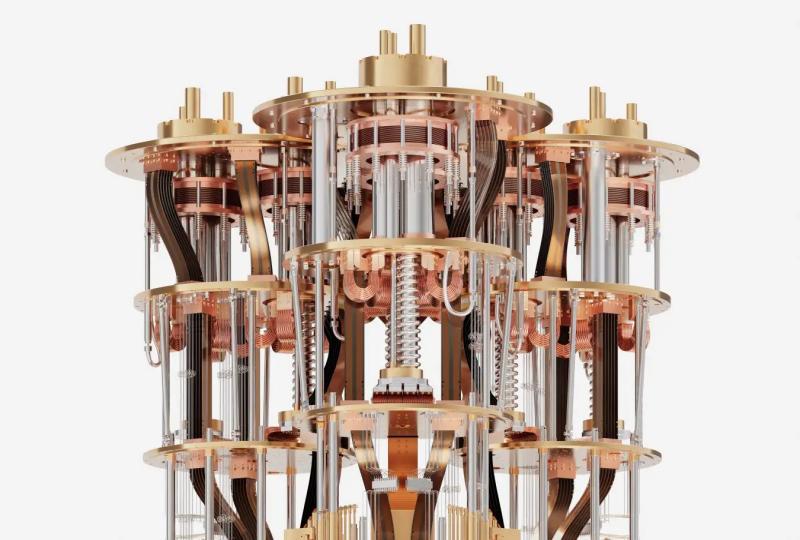
Superconducting quantum computing uses electrical circuits fabricated from superconducting materials to create artificial quantum systems.
These circuits operate at extremely low temperatures, typically requiring dilution refrigeration. Microwave signals are used to control superconducting qubits, while dedicated readout circuits measure their states.
A superconducting quantum computing experimental platform may integrate:
-
Superconducting quantum processor chips.
-
Cryogenic refrigeration systems.
-
Microwave control and readout electronics.
-
Quantum control and measurement software.
-
Calibration and experimental analysis tools.
This architecture is particularly relevant to advanced research involving multi-qubit operations, processor characterization, quantum control, and quantum error correction.
For institutions developing more advanced quantum hardware capabilities, SpinQ's superconducting quantum computer solutions provide a route to exploring superconducting quantum computing at the system level.
The two approaches serve different experimental needs. NMR platforms offer an accessible environment for fundamental experiments and education, while superconducting platforms support research involving low-temperature quantum hardware and more complex processor architectures.
How Universities and Research Labs Use Quantum Computing Experimental Platforms
Quantum computing experimental platforms can support a range of activities across higher education and scientific research.
Supporting University Teaching
Quantum computing combines concepts from physics, mathematics, computer science, and engineering. Experimental platforms allow universities to connect these subjects through practical coursework.
Students can explore quantum states, quantum gates, measurement, and basic algorithms through guided experiments. This hands-on approach helps make abstract quantum concepts easier to understand.
For institutions planning a dedicated quantum computing laboratory, SpinQ's university laboratory solutions can provide a reference for integrating quantum hardware and educational resources into an academic environment.
Enabling Quantum Information Research
Research groups can use experimental platforms to investigate quantum information processing and the behavior of physical quantum systems.
Depending on the platform, research activities may include:
-
Quantum state preparation and measurement.
-
Quantum circuit implementation.
-
Quantum control and pulse optimization.
-
Quantum dynamics and system characterization.
-
Experimental evaluation of quantum algorithms.
The level of research access depends on the hardware and software architecture. A platform with configurable experimental operations can provide more flexibility for developing new research procedures.
Connecting Hardware Experiments with Software Development
Quantum computing research increasingly involves both physical hardware and software tools.
Researchers may design circuits, configure experiments, execute operations, and analyze measurement results through integrated software environments.
Cloud-based access can also make quantum computing resources available to users who are not physically located in the laboratory. SpinQ's quantum computing cloud platform is relevant to this software-oriented side of quantum computing, helping connect users with quantum computing resources through an online environment.
How to Choose the Right Quantum Computing Experimental Platform
Choosing a platform starts with defining the experiments the institution wants to conduct.
For a university introducing quantum computing courses, ease of operation, accessible experiments, and educational resources may be the main priorities.
For a research laboratory, hardware access, control flexibility, measurement capabilities, and experimental data access may matter more.
The following considerations can help narrow the options:
For introductory quantum computing education:
-
Look for guided experiments and accessible interfaces.
-
Check whether students can interact with physical quantum hardware.
-
Evaluate the range of quantum states, gates, and algorithms available.
-
Consider whether the platform fits existing teaching resources.
For advanced quantum research:
-
Examine the underlying quantum hardware architecture.
-
Check the level of access to control and measurement functions.
-
Evaluate support for custom experiments and data analysis.
-
Consider system integration and future research requirements.
For superconducting quantum hardware research:
-
Evaluate the quantum processor and its available qubit operations.
-
Examine cryogenic and microwave control infrastructure.
-
Consider calibration, readout, and system integration.
-
Assess whether the platform supports the intended hardware research workflow.
There is no single experimental platform that meets every requirement. The most suitable option is the one whose hardware architecture and experimental capabilities align with the institution's research and teaching objectives.
Build Your Quantum Computing Experimental Capabilities with SpinQ
A quantum computing experimental platform should do more than demonstrate quantum principles. It should give users a practical environment for exploring quantum states, controlling quantum operations, running experiments, and developing a deeper understanding of quantum information processing.
SpinQ develops quantum computing products and solutions across these areas, supporting educational institutions and research organizations as they build their quantum computing capabilities.
If your university or laboratory is planning a quantum computing experimental platform, contact SpinQ to discuss your hardware requirements, experimental objectives, and laboratory development plans.
.jpg)
Featured Content