
Quantum Entanglement Explained and Its Role in Quantum Computing
2026.11.23 · Blog quantum entanglement
Quantum entanglement is a quantum phenomenon in which two or more particles share a connected quantum state, so their properties cannot be fully described independently. Even when separated by large distances, measurements of entangled particles can produce strongly correlated results. This behavior is one of the most distinctive features of quantum mechanics and an important resource in quantum computing, communication, and information processing.
To understand why quantum entanglement matters, it helps to explore how it works, how scientists create and measure it, and how it contributes to quantum technologies.
What Is Quantum Entanglement?
In classical physics, objects are generally described by their individual properties. Two coins, for example, can each have their own state, regardless of how far apart they are.
Quantum systems behave differently. When particles become entangled, their combined state must be described as a whole rather than as a simple combination of independent states.
Consider two quantum bits, or qubits. A qubit can exist in a superposition of the states |0⟩ and |1⟩. When two qubits are entangled, their joint state may be:
|ψ⟩ = (|00⟩ + |11⟩) / √2
This is one example of a Bell state. It describes a system in which the two qubits have correlated measurement outcomes.
If both qubits are measured in the computational basis, the possible outcomes are:
-
00, with a probability of 50%.
-
11, with a probability of 50%.
The outcomes 01 and 10 do not occur in this ideal state.
Before measurement, neither qubit can be described as simply having a definite individual value of 0 or 1. Instead, the pair shares a joint quantum state.
How Is Entanglement Different from Ordinary Correlation?
Two objects can show correlated behavior without being quantum entangled.
For example, imagine placing one red card and one blue card into separate envelopes. If one person opens an envelope and finds the red card, they immediately know that the other envelope contains the blue card. This is a classical correlation established before the envelopes are separated.
Quantum entanglement goes beyond this kind of pre-existing correlation. Entangled particles can exhibit correlations that cannot be explained by local hidden-variable theories, as demonstrated through experiments testing Bell inequalities.
This distinction is essential for understanding why entanglement is considered a uniquely quantum phenomenon.
How Does Quantum Entanglement Work?
Quantum entanglement develops when quantum systems interact or are prepared in a way that creates a shared state. Afterward, the state of the combined system cannot be separated into independent states for each particle.
A simple two-qubit example helps illustrate this process.
Understanding a Bell State
One commonly studied entangled state is:
|Φ⁺⟩ = (|00⟩ + |11⟩) / √2
This state means that measuring the two qubits in the computational basis produces matching results.
If the first qubit is measured as 0, the second will also be measured as 0. If the first is measured as 1, the second will also be measured as 1.
However, the result of an individual measurement is not predetermined in the same way as the color of a card in a sealed envelope. Quantum mechanics predicts the probabilities of the possible outcomes, while the joint state determines their correlations.
Does Measuring One Particle Affect the Other?
When one particle in an entangled pair is measured, the measurement outcome is correlated with the result obtained from the other particle.
This does not mean that a controllable signal travels from one particle to the other. The correlation comes from the shared quantum state, not from ordinary communication between the particles.
It is also important to distinguish measurement in one basis from measurement in another. Entanglement can produce different correlation patterns depending on the measurement settings chosen by the researchers.
This is why experiments use multiple measurement bases rather than relying on a single set of matching outcomes.

Why Does Quantum Entanglement Challenge Classical Physics?
Quantum entanglement has challenged physicists because its predictions differ from what classical theories based on local hidden variables can explain.
The debate became especially well known through the work of Albert Einstein, Boris Podolsky, and Nathan Rosen, followed by John Bell's mathematical framework.
The EPR Paradox and Einstein's Question
In 1935, Einstein, Podolsky, and Rosen published a paper questioning whether quantum mechanics provided a complete description of physical reality.
Their argument focused on entangled systems. If measuring one particle allowed researchers to predict a property of another distant particle, they questioned how this could happen without an instantaneous influence or some hidden explanation.
Einstein famously referred to the phenomenon as "spooky action at a distance."
The debate was not simply about whether particles were connected. It concerned whether quantum mechanics could be explained through a more classical model in which physical properties were determined by local variables.
What Is Bell's Inequality?
In 1964, John Bell developed a mathematical way to distinguish predictions from local hidden-variable theories and those of quantum mechanics.
One commonly used form is the CHSH inequality:
|S| ≤ 2
Here, S represents a combination of correlation measurements obtained using different measurement settings.
Quantum mechanics predicts that entangled states can violate this limit. For an ideal maximally entangled state, the maximum value is:
|S| = 2√2 ≈ 2.828
Experimental violations of Bell inequalities provide evidence that the observed correlations cannot be explained by local hidden-variable theories under the assumptions of the tests.
These experiments have made quantum entanglement an experimentally testable feature of nature rather than simply a theoretical concept.
Does Entanglement Allow Faster-Than-Light Communication?
No. Quantum entanglement does not allow people to send messages faster than light.
Although the measurement results of entangled particles are correlated, an observer cannot choose an individual measurement outcome to encode a message. The result appears probabilistic, and the correlation becomes visible only when measurement records from both sides are compared through ordinary communication.
This distinction is important because it separates quantum entanglement from science-fiction ideas about instantaneous information transfer.
How Is Quantum Entanglement Created and Measured?
Scientists can create entangled states through controlled interactions between quantum systems. In quantum computing experiments, quantum gates are commonly used to prepare and manipulate these states.
Creating Entanglement with Quantum Gates
A simple two-qubit circuit can generate the Bell state introduced earlier.
The process begins with two qubits initialized in the state:
|ψ₀⟩ = |00⟩
First, a Hadamard gate is applied to the first qubit:
H|0⟩ = (|0⟩ + |1⟩) / √2
The two-qubit system then becomes:
|ψ₁⟩ = (|00⟩ + |10⟩) / √2
Next, a controlled-NOT gate, or CNOT gate, is applied. The first qubit acts as the control and the second as the target. When the control qubit is |1⟩, the target qubit is flipped.
The final state is:
|ψ₂⟩ = (|00⟩ + |11⟩) / √2
The two qubits are now entangled.
This example demonstrates how quantum gates can transform initially independent qubits into a shared quantum state.
How Do Researchers Measure Entanglement?
Measuring entanglement requires more than observing a single measurement result. Researchers typically prepare the same quantum state repeatedly, measure it under different settings, and analyze the resulting statistics.
Common approaches include:
-
Quantum state tomography: Reconstructing information about a quantum state from measurements in different bases.
-
Bell inequality tests: Examining whether measured correlations violate classical bounds.
-
Entanglement witnesses: Using selected measurements to determine whether a state is entangled without fully reconstructing it.
These methods help researchers evaluate whether a quantum system has successfully generated and maintained entanglement.
In practical experiments, measurement accuracy, environmental noise, and control errors can all affect the observed results.
What Role Does Quantum Entanglement Play in Quantum Computing?
Quantum entanglement is an important resource in quantum computing because it allows multiple qubits to form correlated states that cannot be represented as independent single-qubit states.
A quantum computer uses quantum gates to manipulate qubits and create these relationships as part of a quantum circuit.
Entanglement Enables Multi-Qubit Operations
A single qubit can represent a superposition of computational basis states. With multiple qubits, the system can represent a joint quantum state involving many possible combinations.
For two qubits, a general pure state can be written as:
|ψ⟩ = α|00⟩ + β|01⟩ + γ|10⟩ + δ|11⟩
The complex amplitudes α, β, γ, and δ determine the measurement probabilities and must satisfy:
|α|² + |β|² + |γ|² + |δ|² = 1
When the state is entangled, it cannot be expressed as a simple product of two independent single-qubit states.
This ability to create and manipulate multi-qubit correlations is important for quantum algorithms and quantum information processing.
Entanglement and Quantum Error Correction
Quantum error correction is another important application of entanglement.
Physical qubits are sensitive to environmental disturbances, control imperfections, and unwanted interactions. These factors can introduce errors that affect computation.
Many quantum error-correction protocols use entangled states to encode logical information across multiple physical qubits. By measuring carefully designed stabilizers, researchers can detect error information without directly measuring and destroying the encoded logical state.
This approach is essential to the development of fault-tolerant quantum computing.
However, entanglement alone does not guarantee better computational performance. Practical quantum computing also depends on gate fidelity, coherence, connectivity, measurement quality, and effective error management.
Where Is Quantum Entanglement Used Beyond Quantum Computing?
Quantum entanglement is relevant to several areas of quantum information science beyond quantum processors.
Quantum Communication
Entangled particles can be used to establish correlations between distant locations. These correlations support protocols for distributing quantum information and investigating secure communication methods.
Quantum communication systems often rely on entanglement distribution, quantum channels, and specialized measurement techniques.
Quantum Teleportation
Quantum teleportation uses entanglement and classical communication to transfer an unknown quantum state from one location to another.
It does not transport a physical particle from one place to another. Instead, it transfers the quantum state using a shared entangled pair and a classical message.
Quantum Cryptography
Entanglement-based quantum key distribution protocols use quantum correlations to help detect certain forms of eavesdropping.
For example, Bell inequality tests can be incorporated into device-independent approaches to quantum key distribution, although practical implementations require demanding experimental conditions.
Quantum Sensing
Entangled states can also be useful in precision measurement. Under suitable conditions, quantum correlations may help improve measurement sensitivity beyond what is achievable with certain classical strategies.
Researchers continue to investigate how to prepare, preserve, and use entangled states in practical sensing systems.
.jpg)
How Can Researchers Explore Quantum Entanglement Experimentally?
Understanding entanglement requires more than studying its mathematical definition. Researchers and students need to observe how quantum states are prepared, manipulated, and measured.
Quantum computing experimental platforms provide a way to investigate these processes through controlled operations and measurement.
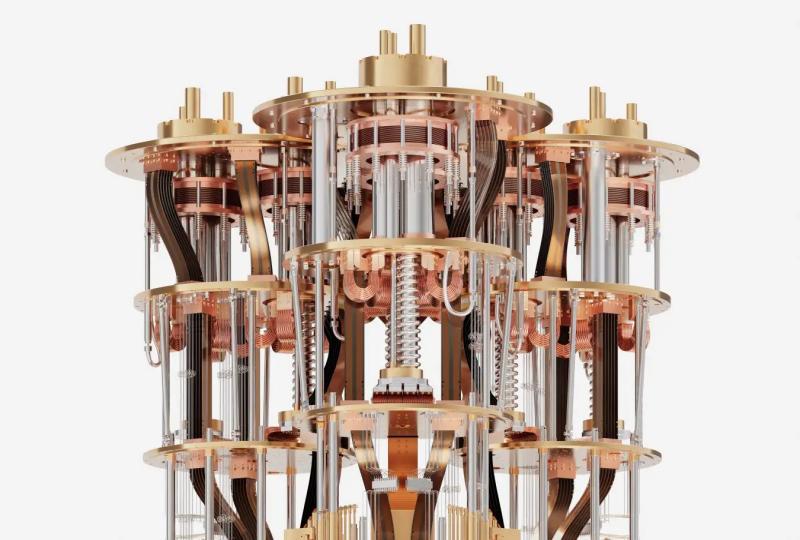
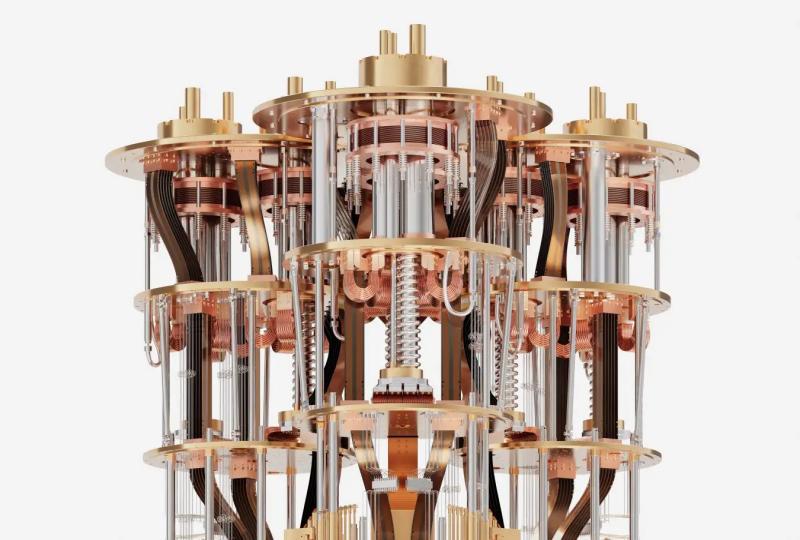
For example, superconducting quantum systems use superconducting circuits as physical qubits. Microwave control signals manipulate their quantum states, while readout systems measure the resulting states.
A typical entanglement experiment may involve:
-
Initializing two or more qubits in known states.
-
Applying single-qubit gates to prepare superposition.
-
Using two-qubit gates to generate entanglement.
-
Measuring the qubits in selected bases.
-
Repeating the experiment to collect statistical data.
-
Analyzing the results to evaluate correlations or test entanglement.
Each stage provides insight into the relationship between quantum control, state preparation, and measurement accuracy.
At SpinQ, we develop superconducting quantum hardware and supporting experimental systems for quantum computing research. Our superconducting quantum chips provide the physical qubit platform, while our quantum control and measurement systems support the operations and readout needed for quantum experiments.
For researchers exploring the broader hardware landscape, our article on global superconducting qubit development provides additional context on how this technology is advancing worldwide.
Conclusion
Quantum entanglement describes a relationship between quantum systems that cannot be fully explained by treating each particle independently. It challenges classical intuitions about physical reality and has been verified through experiments testing Bell inequalities.
In quantum computing, entanglement enables important multi-qubit operations and supports approaches to quantum error correction and quantum information processing. Understanding how to create, control, and measure entangled states is therefore an essential part of quantum research.
As quantum hardware develops, experimental platforms will continue to help researchers investigate entanglement and explore its role in increasingly complex quantum systems. If you are developing a quantum computing research project or evaluating superconducting quantum hardware, contact SpinQ to discuss your experimental and system requirements.
.jpg)
Featured Content