
What Does Quantum Computing System Integration Involve?
2026.10.19 · Blog quantum computing system integration
A quantum chip on its own does not compute anything. To get useful results, the processor needs ultra-cold temperatures, precisely timed microwave signals, readout electronics, and software that turns an algorithm into hardware instructions. Getting these parts to work together is what quantum computing system integration is about, and it is often where a project succeeds or stalls.
.jpg)
This article explains how the layers fit together, where problems tend to appear, and what to look for in an integration partner.
What Quantum Computing System Integration Actually Means
Quantum computing system integration is the work of combining a quantum processing unit (QPU), its control and measurement electronics, its cryogenic environment, and its software stack into one working machine.
Each part depends on the others. The chip's design sets the signal frequencies the electronics must produce. The refrigerator's wiring limits how many control lines reach the chip. The software must know the chip's layout to compile circuits correctly. Choosing each part in isolation makes it easy to end up with components that technically work but do not work well together.
Core Layers of Quantum Computing System Integration
The QPU: Where Qubits Live
In a superconducting quantum computer, qubits are built from superconducting circuits containing Josephson junctions. These circuits behave as quantum systems only at extremely low temperatures. SpinQ's QPU C Series superconducting quantum chips, for example, are described as operating in an environment of 20 mK, which is far colder than outer space.
Control and Measurement Electronics
Qubits are manipulated with short, precisely shaped microwave pulses, and their states are read out through resonators. The electronics that generate and capture these signals must be stable and tightly synchronized. A modern quantum measurement and control system typically uses FPGAs to process signals close to the hardware, which cuts the delay between the chip and the host computer. Modular designs also let teams add channels as qubit counts grow.
Cryogenic Environment
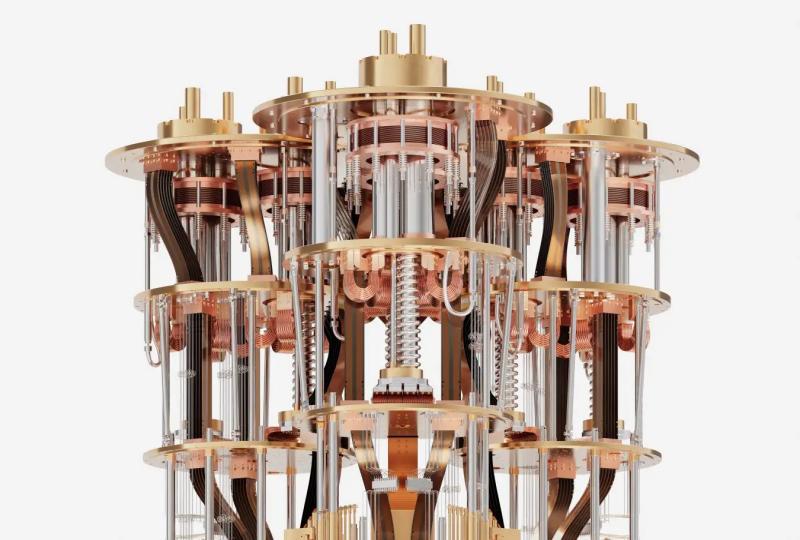
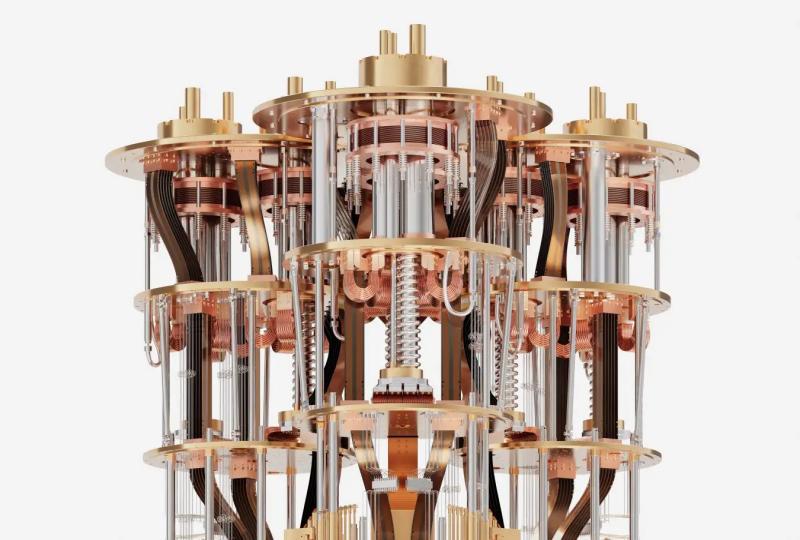
A dilution refrigerator cools the chip to millikelvin temperatures. It also carries the wiring, filters, and amplifiers that connect the cold chip to room-temperature electronics. Layout, thermal load, and vibration all affect qubit performance, so the refrigerator cannot be treated as an off-the-shelf accessory.
.jpg)
Software and Cloud Access
The top layer includes programming frameworks, compilers, and calibration tools. Researchers write circuits in a high-level language such as Python, and the software maps them onto the real hardware. Cloud access lets several users share the machine without being in the lab.
Common Quantum Computing System Integration Challenges
Most integration problems come from the boundaries between components:
-
Interface mismatches. Electronics, chip, and refrigerator wiring must agree on frequencies, connectors, and signal levels.
-
Calibration burden. Every qubit needs tuning, and drift over time means calibration is a recurring task. Automated routines save significant lab time.
-
Wiring and thermal limits. Each control line brings heat into the refrigerator, so adding qubits is a thermal design problem as much as an electronics one.
-
Unclear responsibility. When chip, electronics, and cryogenics come from different vendors, diagnosing a fault can turn into a debate over whose component is responsible.
A single accountable partner for the whole stack reduces the last problem in particular.
Who Needs Quantum Computing System Integration Support
Not every team has the in-house experience to assemble a quantum system. Three groups benefit most from integration support:
-
University research groups that want a working superconducting platform without building a cryogenic and control team from scratch.
-
Companies exploring quantum applications, such as chemistry, materials, or finance, that need hardware access for proof-of-concept work.
-
National labs and institutes setting up new low-temperature quantum laboratories.
For these teams, buying a validated system or a coordinated set of modules is usually faster than sourcing and matching parts independently.
How SpinQ Delivers Quantum Computing System Integration
SpinQ builds its offering around a full-stack approach. According to the company, its product line covers QPUs, QPU EDA, quantum control and measurement systems, superconducting quantum computers, algorithms, and software, available as modular units, integrated systems, or complete solutions.
Several parts of that stack matter for integration:
-
In-house chips. SpinQ designs and manufactures its QPU C Series superconducting quantum chips, including the C103, C25, and C10 models.
-
Matched electronics. Its control and measurement system is built for compatibility with superconducting chips and is intended to scale to hundreds of qubits.
-
Cryogenic deployment. SpinQ offers a full-stack service for ultra-low-temperature environments, covering solution design, equipment selection, system integration, and operations and maintenance, including dilution refrigerators and low-temperature RF components.
-
Chip services. For teams that lack fabrication capability, SpinQ provides manufacturing and testing from design through packaging.
If you are evaluating hardware, explore SpinQ's superconducting quantum computers and talk to the team about your lab requirements, qubit targets, and timeline.
Quantum Computing System Integration FAQ
What is quantum computing system integration? It is the process of combining the QPU, control electronics, cryogenic equipment, and software into one working quantum computer.
What components does a superconducting quantum computer need? At a minimum: a superconducting QPU, a dilution refrigerator, microwave control and readout electronics, and software for programming and calibration.
Can one vendor supply the whole system? Some vendors can. SpinQ lists chips, control systems, cryogenic deployment services, and software within its portfolio, which reduces the number of parties involved.
Why is calibration part of integration? Qubit parameters shift over time, so the control system and software need routines to measure and retune them regularly.
Conclusion
A quantum computer is only as capable as the way its parts fit together. The chip, the control electronics, the cryogenic setup, and the software each have to be designed with the others in mind, and the teams that plan for this early tend to spend less time troubleshooting and more time running experiments.
If you are mapping out a superconducting system for your lab or company, it helps to talk with a team that works across the whole stack. You can learn more about SpinQ and share your application, lab conditions, and qubit goals to see what a suitable setup could look like.
.jpg)
Featured Content