
Superconducting Quantum Computer Qubit: How It Works and How to Judge One
2026.10.20 · Blog superconducting quantum computer qubit
A superconducting quantum computer qubit is a tiny electrical circuit on a chip. A Josephson junction and a capacitor are cooled to about 20 millikelvin, so that two of the circuit's energy levels can act as 0 and 1. Whether that circuit is useful depends on four things: how long it holds its state, how accurately it performs gates, how cleanly it can be read out, and how it connects to its neighbours. Most of this article is about those four things, because they separate a qubit that makes a good demo from one that makes a good experiment. First, though, it helps to be clear on what the thing is and where it came from.
What Is a Superconducting Quantum Computer Qubit?
A qubit is the basic unit of information in a superconducting quantum computer. A classical bit is always 0 or 1. A qubit can sit in a superposition of both states, and several qubits can be entangled so that they must be described together. Gate operations steer these states, and a final measurement turns them into an ordinary 0 or 1.
Many physical systems can serve as a qubit, including trapped ions, neutral atoms, photons and electron spins. A superconducting qubit is the version built from an electrical circuit. Below a critical temperature a superconductor carries current with no resistance, so the circuit loses very little energy and its quantum states last long enough to control. Because the qubit is a circuit rather than a single atom, it is made with chip lithography and operated with microwave pulses. The main superconducting qubit advantages follow from this: fast microwave control, chip-scale fabrication, and coupling structures that can be engineered into the processor. The price is a very cold operating environment.
Why the Transmon Became the Default Superconducting Quantum Computer Qubit
Early superconducting qubits, such as the charge qubit, were very sensitive to stray electric charge. The transmon added a large shunt capacitor. This makes the qubit far less sensitive to charge noise, which is a large part of why it now dominates gate-based superconducting processors.
The trade-off is that the energy levels sit closer together. The qubit's nonlinearity is only a few percent of its operating frequency, so pulses must be shaped carefully to avoid pushing the qubit into higher levels. Alternatives such as flux qubits and fluxonium exist and are active research topics, but for a lab that wants a well-characterised, widely documented platform, the transmon is usually the practical starting point.
Four Specs That Define a Superconducting Quantum Computer Qubit
-
T1 and T2. T1 is how long the qubit stays excited before it relaxes. T2 is how long its phase relationship survives. Published transmon devices now commonly reach several hundred microseconds, and a Princeton group has reported a superconducting qubit that lasts around a millisecond. Those are best-case lab results. A number from a multi-qubit chip in a production fridge is usually lower, and that is the number you will live with.
-
Gate fidelity. Single-qubit gates are usually in the high 99% range. Two-qubit gates are harder and are the figure that most limits circuit depth. Ask whether a figure is a median or a best-qubit maximum. A chip with a 99% best pair and a 96% median behaves very differently from one with a 98% median, and the difference shows up as soon as you run anything longer than a few gates.
-
Readout fidelity. Every algorithm ends with measurement. Weak readout adds error to every result and can quietly dominate your error budget in small experiments.
-
Connectivity and layout. A 5×5 grid with tunable couplers lets you test small error-correction codes. A short chain suits basic gate experiments and teaching. More qubits is not automatically better if neighbours cannot be coupled cleanly.
A useful habit: coherence time alone tells you little. Divide it by gate time to see how many operations fit inside the window, then check that gate fidelities hold across the whole chip and not just on the best pair.
What a Superconducting Quantum Computer Qubit Needs Around It
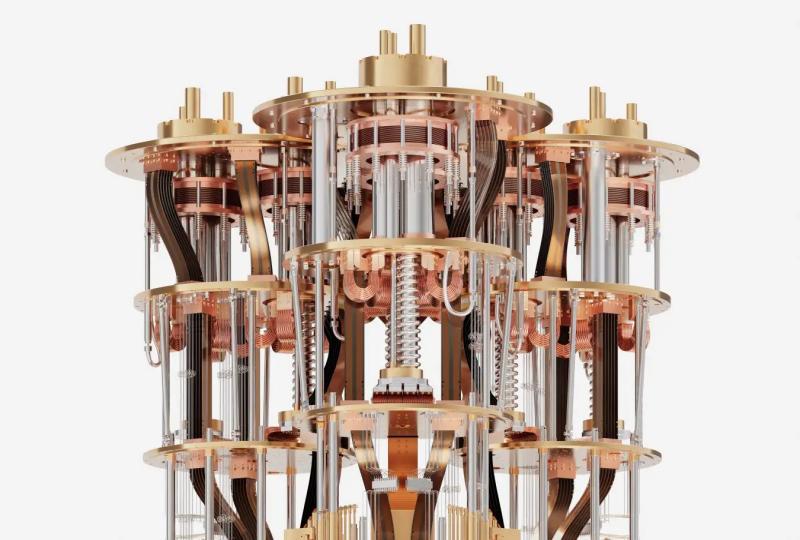
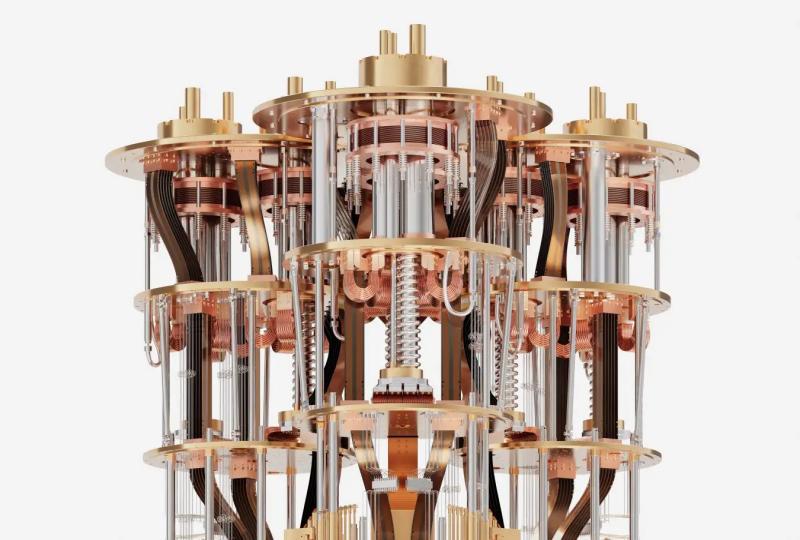
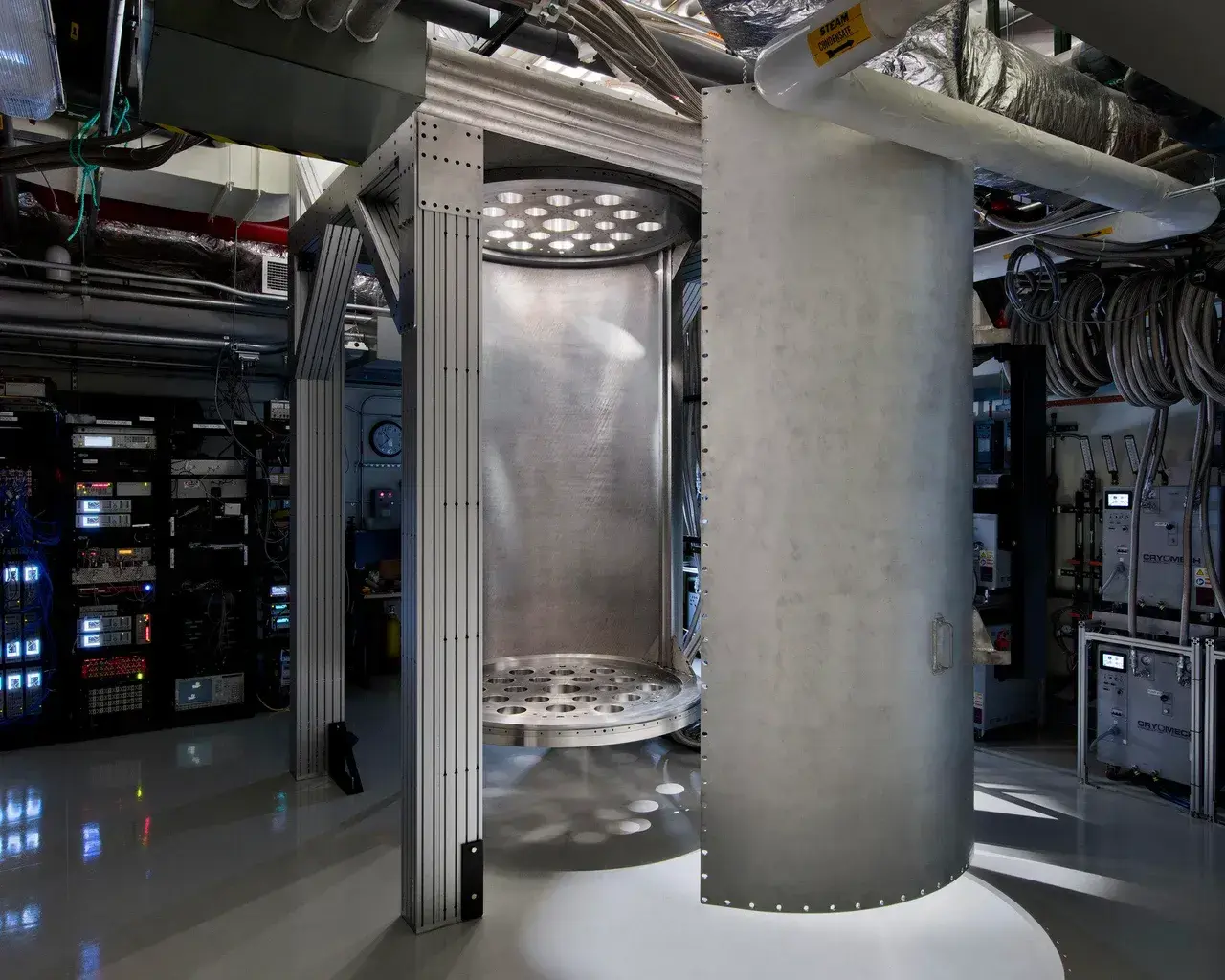
A cryogenic superconducting qubit has to sit at roughly 20 mK in a dilution refrigerator, with filtered, thermalised wiring and control electronics that generate and read microwave pulses with tight timing. Poor shielding, a noisy line or a badly calibrated pulse can cost more coherence than the chip design ever gave you. These choices decide whether the chip's numbers survive installation.
Chip, Full System or First Step: Sourcing a Superconducting Quantum Computer Qubit
Teams usually land in one of three situations.
-
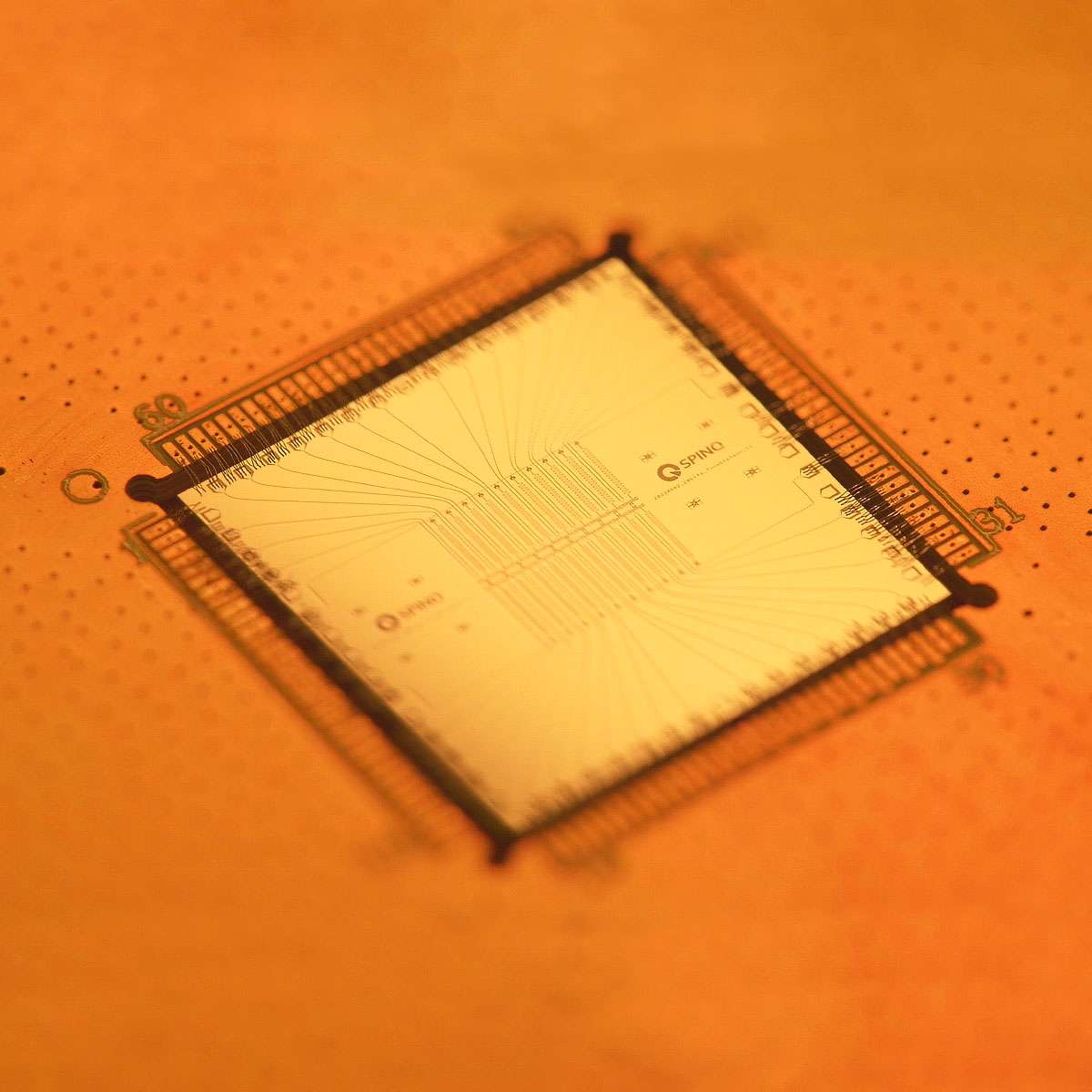
You already have cryogenics and control. This is common in physics departments and national labs. What you need is a chip with known parameters and a test report. SpinQ's QPU C Series superconducting quantum chips, available as C10, C25 and C103, are designed for this use. They are supplied as standalone components for custom system builds, and they operate at around 20 mK. With a chip in hand, your own measurement chain becomes the main variable, which makes results easier to interpret.
-
You are starting from nothing. Buying a chip alone leaves you to integrate the refrigerator, control electronics and software yourself. A full system shortens commissioning, but it raises the budget and the support requirement. What drives superconducting quantum computer cost breaks down where that money goes.
-
You mainly need to teach or prototype algorithms. You may not need a superconducting device at all. A small simulator or cloud access can take you a long way before hardware is worth the effort.
When you talk to any supplier, ask for the median and best figures for each metric above, the qubit count they were measured on, and what test report ships with the chip.
Conclusion
Superconducting systems are well suited to studying gate design, calibration, error mitigation and early error-correction experiments, and to training people who will build and run quantum hardware. They are not yet general-purpose machines that deliver reliable commercial advantage. Qubit counts rise faster than usable fidelity, and large-scale fault tolerance is still a research target. Treat a superconducting qubit as a precise scientific instrument. The best purchase is the one that lets your team measure, learn and iterate with data you trust.
If you are working out which chip size or system configuration fits your lab, send your qubit-count target and your existing cryogenic and control setup to the SpinQ team. A short review of those two things will narrow the options quickly.
.jpg)
Featured Content