
What Can Students Learn with an NMR Quantum Computer Teaching Kit?
2026.10.20 · Blog teaching-kit NMR quantum computer
An NMR quantum computer teaching kit helps students connect quantum computing theory with real experiments. By working with nuclear magnetic resonance (NMR) technology, learners can explore qubits, quantum gates, circuit operations, measurement, and experimental results instead of relying on equations or simulations alone.
For universities and educational laboratories, the value of a teaching kit depends on the experiments it supports, the software available, and how easily instructors can integrate it into existing courses. A suitable system can help students progress from basic quantum concepts to programming, laboratory practice, and experimental data analysis.
What Is an NMR Quantum Computer Teaching Kit?
An NMR quantum computer teaching kit combines quantum computing hardware with tools and learning resources that support practical instruction. It uses nuclear spins as qubits and applies radio-frequency pulses to manipulate quantum states.
Unlike a software-only simulator, an NMR system allows students to explore quantum operations through physical hardware and measurable signals. This makes it useful for connecting quantum mechanics with computer science, physics, and engineering.
How NMR Technology Supports Quantum Education
Nuclear magnetic resonance uses the behavior of nuclear spins in a magnetic field. Carefully controlled radio-frequency pulses can manipulate these spins, allowing a system to demonstrate fundamental quantum operations.
Students can investigate how quantum states change, how gates transform those states, and how measurements produce experimental results. These activities make abstract concepts easier to relate to physical processes.
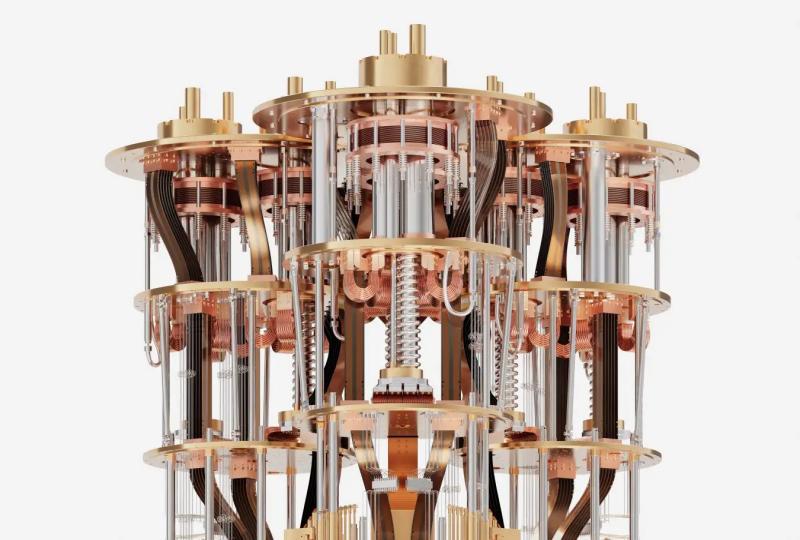
NMR quantum computers are particularly useful for educational experiments because they can operate without the complex cryogenic infrastructure required by superconducting quantum processors.
What Does a Teaching Kit Include?
The exact configuration depends on the system, but an educational platform may combine:
-
Quantum hardware for running experiments.
-
Software for designing and executing quantum circuits.
-
Learning materials and guided experimental procedures.
-
Tools for observing and analyzing experimental results.
-
Programming capabilities for exploring quantum algorithms.
When evaluating NMR quantum computer products, educators should consider the intended student level, available experiments, hardware openness, and teaching resources rather than focusing only on qubit count.
What Quantum Computing Concepts Can Students Explore?
A structured teaching kit allows students to progress from basic quantum principles to practical circuit operations. Each concept becomes easier to understand when learners can test it and examine the results.
Understanding Qubits and Quantum States
A classical bit represents either 0 or 1. A qubit can exist in a superposition of quantum states, enabling quantum algorithms to use properties that have no direct equivalent in ordinary binary computation.
Students can explore how a qubit is initialized, manipulated, and measured. They can also study how quantum states are represented mathematically and how measurements relate to the probabilities predicted by quantum theory.
These exercises provide a foundation for understanding quantum information and more advanced algorithms.
Learning Quantum Gates and Circuits
Quantum gates change the states of qubits. Quantum circuits combine these operations into sequences designed to perform a particular computation.
Students can build simple circuits, apply single-qubit gates, and explore operations involving multiple qubits where the hardware supports them. They can then compare the intended transformation with the resulting experimental data.
This practical process helps learners understand how mathematical operations translate into executable quantum programs.
Exploring Measurement and Experimental Results
Measurement connects quantum states with observable outcomes. Students can examine how repeated measurements produce statistical distributions and compare those distributions with theoretical predictions.
Real experiments may differ from ideal simulations because of imperfect operations, environmental effects, and measurement uncertainty. Analyzing these differences introduces students to an important part of experimental science: interpreting results rather than assuming every measurement will match an ideal prediction exactly.
What Experiments Can Students Perform?
The range of available experiments depends on the teaching kit and its hardware and software capabilities. A well-designed curriculum should progress from introductory activities to more complex investigations.
Building and Running Basic Quantum Circuits
Students can begin by constructing simple circuits and executing them on the available quantum system. They can change gate sequences, compare circuit configurations, and examine how these changes affect the output.
For example, an instructor can demonstrate how a sequence of gates changes a qubit's state, then ask students to predict the result before running the experiment.
This approach encourages active learning and gives students practice connecting circuit design with observable behavior.
Observing Quantum State Changes
NMR experiments can help learners investigate spin resonance, pulse-driven state manipulation, and other physical processes underlying quantum computation.
Depending on the platform, students may explore Rabi oscillation, relaxation, qubit initialization, and control. These experiments introduce the relationship between physical hardware and the logical operations used in quantum circuits.
They also help students understand that quantum computing involves more than writing code: the physical system must be controlled and measured appropriately.
Comparing Theory with Experimental Data
Students can calculate expected outcomes, run experiments, and compare measured results with their predictions. They can then investigate possible reasons for discrepancies.
This process develops skills in data analysis, scientific reasoning, and experimental validation.
For a deeper introduction to practical laboratory work, our guide to the NMR quantum experiment explains how learners can connect quantum concepts with pulse sequences, physical signals, and experimental analysis.
How Can Teachers Integrate NMR Quantum Computing into Courses?
An NMR quantum computer teaching kit is most useful when its experiments support defined learning objectives. Teachers should decide what students need to understand before selecting activities and organizing laboratory sessions.
Connect Quantum Theory with Laboratory Practice
Instructors can introduce a concept during a lecture, demonstrate the corresponding circuit, and then ask students to run an experiment.
A lesson on quantum gates, for example, can begin with the mathematical description of an operation. Students can then implement the gate, collect results, and discuss whether the observed behavior matches their expectations.
This structure links theoretical learning with practical investigation.
Design Hands-On Quantum Computing Activities
Experiments should match the students' background and gradually increase in complexity.
Introductory activities may focus on qubits, basic gates, and measurement. More advanced coursework can introduce multi-qubit circuits, algorithm implementation, pulse control, or experimental optimization when supported by the equipment.
Clear instructions and measurable learning outcomes help instructors assess whether students understand both the concepts and the experimental process.
Support Different Levels of Learners
Students in physics, computer science, and engineering may approach quantum computing with different strengths. Some may be familiar with linear algebra and quantum mechanics, while others may have more programming experience.
A flexible teaching program can begin with guided experiments and progress toward independent circuit design and analysis. This makes it easier to use the same educational environment across introductory courses, specialist modules, and student projects.
What Should Educators Consider When Choosing a Teaching Kit?
The right NMR quantum computer teaching kit should match the institution's curriculum, available laboratory resources, and expectations for practical learning.
Hardware and Experimental Capabilities
Consider the number of qubits, the supported operations, and the depth of experimentation available. A compact system may suit demonstrations and introductory courses, while a more open experimental platform may be better for advanced university laboratories.
Educators should also assess operating requirements, maintenance, physical space, and the level of access students have to the underlying hardware.
Software and Learning Resources
Software should make it practical for students to design circuits, run experiments, and examine results. Learning materials, guided procedures, and programming support can reduce the preparation burden on instructors.
The most appropriate configuration depends on whether the course emphasizes introductory concepts, algorithm development, physical experiments, or a combination of these areas.
Classroom Integration and Long-Term Use
A teaching kit should support more than a single demonstration. Consider how it can be used across different courses, laboratory exercises, and student projects.
SpinQ's quantum education solutions combine educational quantum computing equipment with learning resources and practical experiments for institutions developing or expanding quantum education programs.
How Can Students Build Practical Quantum Computing Skills?
An effective learning pathway combines conceptual understanding, programming, physical experimentation, and data interpretation.
Progress from Basic Circuits to Experiments
Students can begin with single-qubit operations before moving to more complex circuits and algorithms. Each stage should reinforce the connection between the mathematical model, the programmed operation, and the observed result.
As students gain experience, they can investigate why experimental outputs may differ from ideal predictions and how circuit design or hardware behavior affects the results.
Develop Programming and Data Analysis Skills
Quantum computing education also develops transferable technical skills. Students can learn to construct circuits, organize experiments, interpret measurement statistics, and explain their conclusions using evidence.
For advanced learners, platforms such as SpinQ Gemini Lab support experiments ranging from quantum principles and algorithms to pulse control and broader quantum technology topics. This provides opportunities to extend structured coursework into more exploratory laboratory activities.
Conclusion
An NMR quantum computer teaching kit helps students understand quantum computing by connecting theory with physical experiments. Through qubit manipulation, quantum circuit design, measurement, and data analysis, learners can develop a more practical understanding of how quantum information is processed.
For educators, choosing the right system means looking beyond hardware specifications. Experimental capabilities, programming tools, learning resources, and curriculum fit all influence the educational value of the equipment.
By matching the teaching kit to clear learning objectives, institutions can build practical quantum computing courses that help students progress from fundamental concepts to hands-on experimentation and deeper technical skills.
.jpg)
Featured Content