
Low-Noise Superconducting Quantum Computing Systems for Reliable Research
2026.10.20 · Blog low-noise superconducting quantum computing system
A low-noise superconducting quantum computing system requires more than a well-designed quantum chip. It depends on a stable cryogenic environment, precise microwave control, reliable readout electronics, and effective calibration. These components must work together to limit unwanted disturbances and support consistent quantum operations.
For research laboratories and quantum hardware developers, the main challenge is determining whether noise-control measures translate into measurable performance. Understanding noise sources, evaluation metrics, and hardware interactions provides a practical starting point for system selection.
Where Noise Affects a Superconducting Quantum Computing System
Superconducting qubits use electrical circuits built around Josephson junctions to represent and manipulate quantum information. Because their operation depends on maintaining delicate quantum states, they are sensitive to environmental disturbances and hardware imperfections.
Qubit Decoherence and Material Defects
Interactions with the environment can cause quantum states to lose coherence. Energy relaxation and dephasing are two important mechanisms.
Material defects, dielectric loss, surface contamination, and interface imperfections can limit qubit performance. Magnetic field variations and charge fluctuations can also affect qubit frequencies and stability.
Chip geometry, fabrication quality, packaging, and material selection therefore matter when designing a low-noise superconducting quantum computing system. However, improving the chip alone cannot eliminate errors introduced elsewhere.
Cryogenic Conditions and Electromagnetic Interference
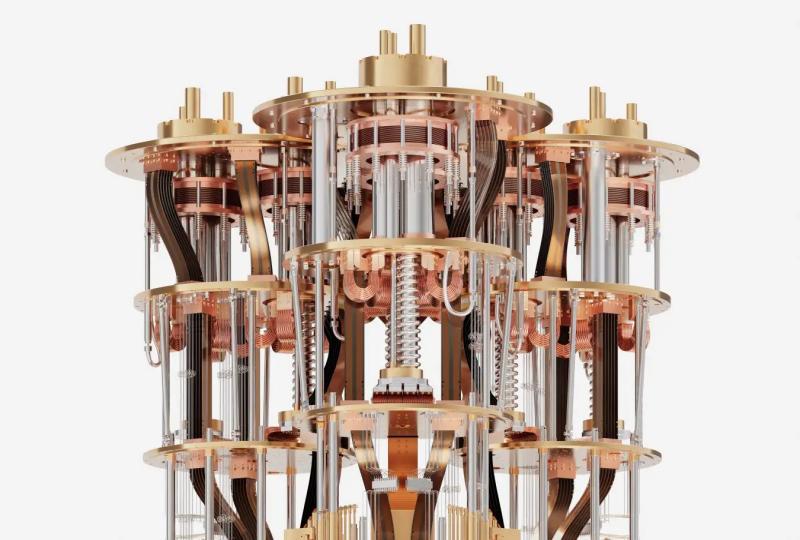
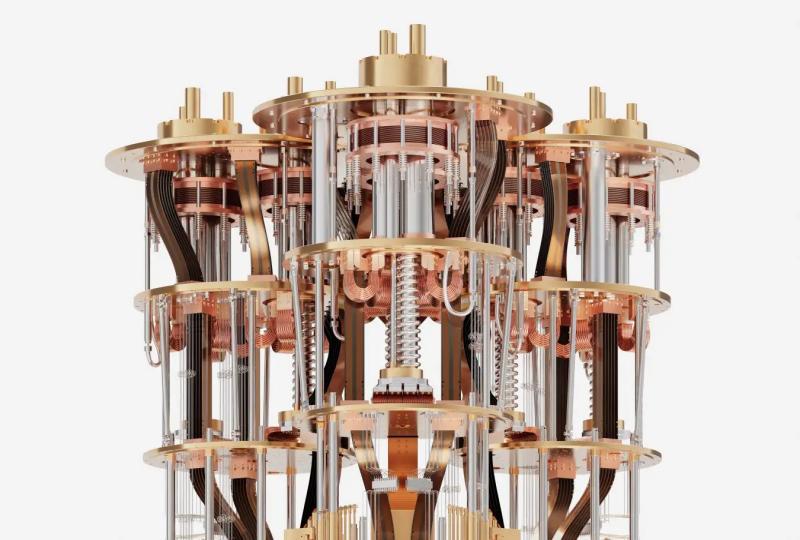
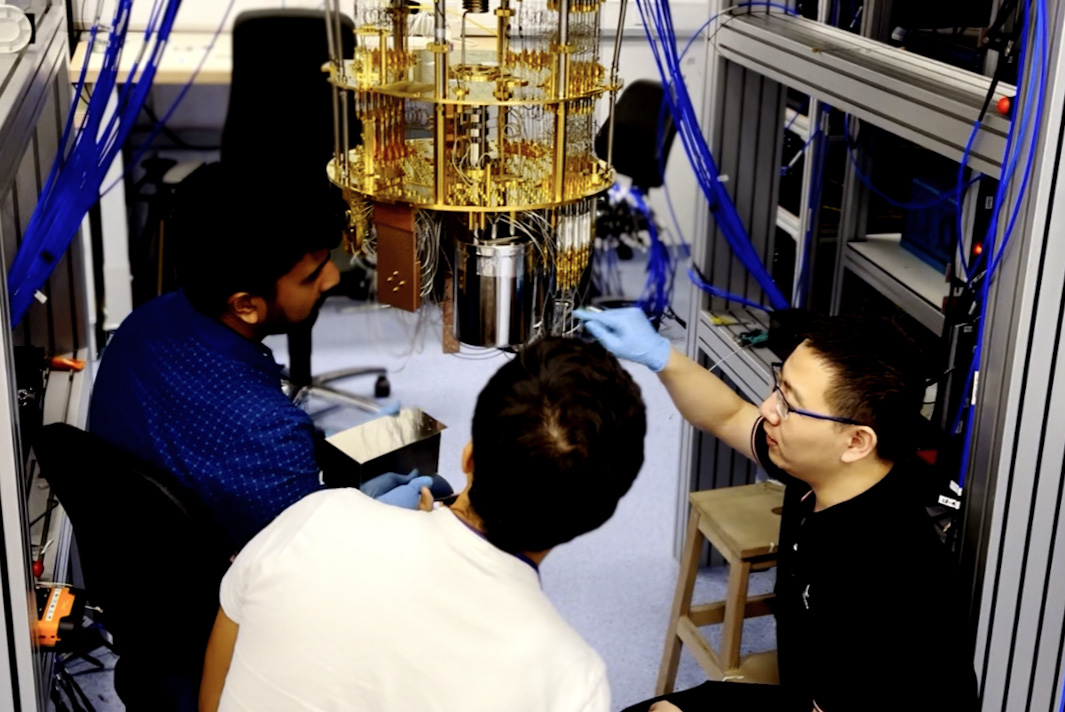
Superconducting qubits typically operate at millikelvin temperatures. A dilution refrigerator provides the required low-temperature environment, but temperature alone does not determine system performance.
Thermal radiation, insufficient filtering, electromagnetic interference, grounding problems, and mechanical vibrations can affect experimental stability. Wiring and connectors also require careful design because control and readout signals travel between room-temperature electronics and the processor inside the cryostat.
Effective engineering combines thermal management, shielding, filtering, grounding, and suitable microwave components. These measures must match the system's wiring layout and heat load.
.jpg)
Control and Readout Errors
Quantum gates rely on carefully shaped microwave pulses. Errors in pulse amplitude, phase, frequency, or timing can cause unintended operations. Noise in the readout chain can also make quantum states harder to distinguish accurately.
Crosstalk occurs when a control signal intended for one qubit affects neighboring qubits. Calibration drift can further reduce performance over time.
The SPINQ QCM System addresses the control and measurement layer through RF signal generation, synchronization, and measurement capabilities. When evaluating a control system, researchers should examine channel configuration, signal resolution, timing performance, and compatibility with the target QPU.
How to Reduce Noise Across the Quantum Hardware Stack
Reducing noise requires coordinated engineering across the chip, cryogenic environment, control electronics, and experimental workflow. Improvements at one layer can be limited if another introduces errors.
Optimize Qubit Design and Chip Packaging
Qubit geometry, material interfaces, coupling networks, and fabrication processes influence energy loss and sensitivity to environmental fluctuations. Packaging must also provide reliable electrical connections, thermal contact, and electromagnetic shielding.
The SPINQ QPU C Series provides processor options for quantum hardware research. Its factory characterization reports include measurements such as qubit frequencies and decoherence times.
These measurements establish a baseline before integration but do not guarantee identical performance in a different cryogenic and control environment. System-level testing remains necessary.
Improve Cryogenic Isolation and Signal Integrity
A stable low-temperature environment helps suppress thermal excitations, while the cryogenic setup must also manage heat flow and unwanted signals.
Important engineering considerations include:
-
Thermal management: Confirm that the cooling system can maintain operating conditions under the expected heat load.
-
Filtering and attenuation: Select suitable components to reduce unwanted noise entering the processor.
-
Electromagnetic shielding: Limit interference from external sources and nearby equipment.
-
Wiring and grounding: Check connections and signal routing for unwanted coupling.
-
Mechanical stability: Assess whether vibrations could affect sensitive components or measurements.
The appropriate configuration depends on the processor, signal-line count, measurement architecture, and experimental requirements. Excessive filtering or attenuation can also affect signal power and measurement performance.
For further technical context, see our guide to superconducting quantum computer noise reduction.
Maintain Control Accuracy Through Calibration
Even a well-isolated processor requires regular characterization and calibration. Qubit frequencies can drift, control pulses may need adjustment, and interactions between channels can introduce errors.
A practical calibration workflow should include:
-
Measuring qubit frequencies and coherence properties.
-
Adjusting pulse amplitude, duration, and shape.
-
Testing single-qubit and two-qubit gate performance.
-
Characterizing readout errors and crosstalk.
-
Repeating measurements to identify changes over time.
Software-based error mitigation can reduce the impact of certain errors but cannot eliminate every physical source of noise or replace reliable hardware.
Which Metrics Matter When Evaluating a Low-Noise Quantum System?
A low-noise specification is meaningful only when connected to measurable performance. Researchers should compare several complementary metrics rather than relying on a single number.
-
Qubit relaxation time (T₁): Measures how quickly an excited qubit loses energy.
-
Qubit coherence time (T₂): Characterizes how long a qubit maintains phase coherence under a defined measurement protocol.
-
Single-qubit gate fidelity: Measures the accuracy of individual qubit operations.
-
Two-qubit gate fidelity: Evaluates the accuracy of operations involving two qubits, which are important for multi-qubit circuits.
-
Readout fidelity: Indicates how accurately the measurement system distinguishes qubit states.
-
Calibration stability: Describes how consistently the system maintains its operating parameters over time.
These metrics describe different aspects of performance. A processor may have favorable coherence times but still experience control errors, imperfect readout, or unstable calibration. High gate fidelity under specific test conditions does not guarantee consistent performance across the entire processor.
Compare Results Under Consistent Conditions
Check whether measurements use comparable methods, calibration procedures, operating conditions, and statistical definitions.
Distinguish median performance from maximum values, since a best-case result for one qubit or gate may not represent the entire processor.
For system acceptance, request characterization reports, review test conditions, and establish repeatable measurements after installation. This helps identify whether performance changes originate from the processor, control electronics, cryogenic environment, or experimental procedure.
Choosing Between a Standalone QPU and an Integrated Superconducting System
The right configuration depends on research objectives, available infrastructure, and the level of hardware integration the team wants to manage.
When a Standalone QPU Is the Better Fit
A standalone quantum processing unit can suit laboratories with compatible cryogenic equipment, control electronics, and measurement infrastructure. It is relevant to teams conducting processor characterization, quantum device development, or custom hardware integration.
Before selecting this approach, confirm compatibility with the existing cryogenic setup, wiring, control channels, and software environment. Account for the engineering work required to integrate components and validate their combined performance.
The SPINQ QPU C Series supports quantum hardware research and development. Its characterization reports help researchers assess device properties before integration.
When an Integrated Superconducting System Is More Practical
An integrated superconducting quantum computer may suit laboratories that want a coordinated platform without independently managing every hardware interface. Depending on the configuration, it can combine a QPU, cryogenic equipment, quantum control and measurement electronics, and supporting software.
The SPINQ Taurus superconducting quantum computer is relevant to research teams evaluating an integrated platform. Verify its supported configuration, measurement capabilities, software interfaces, installation requirements, and technical support options.
An integrated system still requires calibration and performance verification. Researchers should establish acceptance criteria and test the system under their intended operating conditions.
Compare the Configuration With Your Research Requirements
Consider these factors before making a decision:
-
Existing infrastructure: Identify compatible cryogenic, control, and measurement equipment.
-
Integration workload: Assess the time and expertise required to connect components and validate performance.
-
Experimental objectives: Match processor configuration and control capabilities to planned research.
-
Calibration and maintenance: Confirm support for characterization, recalibration, and troubleshooting.
-
Future requirements: Review supported expansion options and compatibility with planned experiments.
A standalone QPU may provide greater flexibility for teams developing custom hardware, while an integrated system can simplify coordination across the hardware stack. The better choice depends on the laboratory's research priorities and engineering resources.
What to Verify Before Deploying a Low-Noise Superconducting Quantum Computing System
Translate the research plan into measurable technical requirements before committing to a system. This makes supplier discussions more specific and helps prevent integration problems after installation.
Use the following checklist during technical evaluation:
-
Research requirements: Define target experiments, qubit configuration, connectivity, and control capabilities.
-
Processor characterization: Request coherence, gate, and frequency measurements with their test conditions.
-
Cryogenic infrastructure: Confirm cooling capacity, operating temperatures, wiring, and thermal constraints.
-
Control and readout compatibility: Verify channel count, signal requirements, synchronization, and software interfaces.
-
Calibration and reproducibility: Establish how performance will be measured and repeated after installation.
-
Integration and maintenance: Clarify installation responsibilities, training, support, and maintenance requirements.
-
Acceptance criteria: Agree on the tests used to determine whether the system meets project requirements.
For laboratories without established superconducting quantum infrastructure, integration support may be as important as individual component specifications. Teams with existing equipment should prioritize interface compatibility and system-level validation.
Conclusion
A low-noise superconducting quantum computing system must be evaluated as an integrated platform rather than a collection of isolated components. Chip characteristics, cryogenic stability, control accuracy, readout quality, and calibration all influence experimental results.
By comparing measurable performance under consistent conditions and defining deployment requirements in advance, research teams can select hardware that fits their objectives and infrastructure. Lower noise can support more reliable quantum operations, but it does not alone guarantee fault-tolerant computing or practical quantum advantage.
.jpg)
Featured Content