
Superconducting Quantum Computer Technology and Performance
2026.10.21 · Blog superconducting quantum computer technology
Superconducting quantum computer technology uses engineered electrical circuits to create and control quantum bits, or qubits. By combining superconducting chips, millikelvin cooling, microwave control, and precise measurement, this technology enables researchers to investigate quantum algorithms, simulate physical systems, and develop quantum hardware.
However, a processor's practical capabilities depend on more than its qubit count. Coherence time, gate fidelity, connectivity, and system stability all influence which experiments it can support. Understanding these factors helps researchers evaluate hardware specifications and choose a platform that matches their research objectives.
How Superconducting Quantum Computer Technology Works
Superconducting quantum computers encode information in the quantum states of electrical circuits. Unlike classical bits, which represent either 0 or 1, qubits can occupy superpositions of their computational states.
From Josephson Junctions to Quantum Bits
A Josephson junction consists of two superconductors separated by a thin insulating barrier. Its nonlinear electrical behavior allows engineers to create distinct quantum energy levels within a circuit.
In a common design called the transmon, the two lowest energy levels represent the qubit states |0⟩ and |1⟩. Carefully calibrated microwave pulses manipulate these states, while interactions between qubits enable entangling operations.
The quality of the fabricated circuit affects how reliably these operations can be performed. Materials, interfaces, junction properties, and unwanted electromagnetic noise can all influence performance. Our guide to superconducting quantum chip architecture explores the relationship between chip design and processor capabilities.
Why Superconducting Qubits Need Cryogenic Cooling
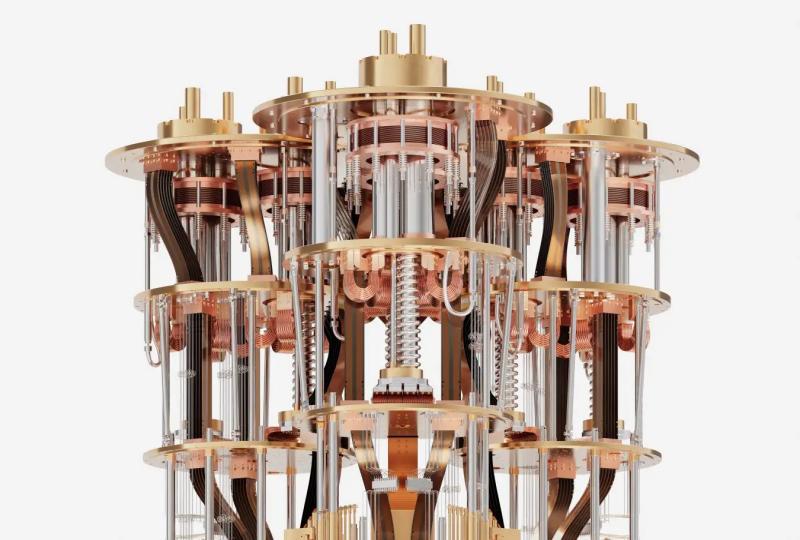
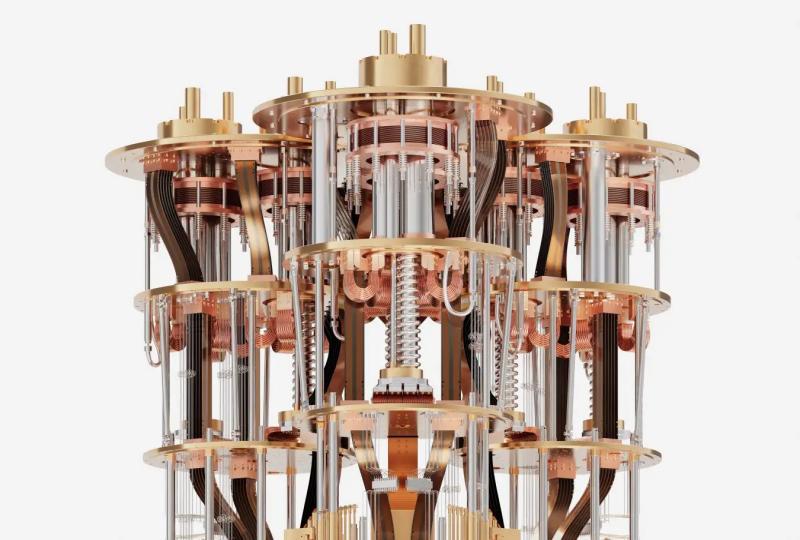
Superconducting qubits typically operate at millikelvin temperatures, often around 10–20 mK, depending on the system design. A dilution refrigerator provides the extremely cold environment needed to reduce thermal excitations and support stable quantum operation.
Cooling alone does not eliminate errors. Researchers must also manage electromagnetic interference, unwanted coupling, thermal radiation, and fluctuations in control signals. These requirements make cryogenic infrastructure an essential part of the overall computing system.
Which Technical Specifications Determine Quantum Processor Performance?
A processor's specifications help explain its capabilities, but individual metrics must be interpreted together. The following parameters are especially useful when comparing superconducting quantum hardware.
Coherence Time: T₁ and T₂
T₁ measures the characteristic time associated with energy relaxation, while T₂ measures phase coherence under a specified measurement protocol. Both affect how long quantum information can remain usable during an experiment.
SpinQ's S25 and S25 Pro superconducting quantum processor configurations have the following specified parameters:
SPINQ S25
-
Physical qubits: 25
-
Median T₁: ≥30 μs
-
Median T₂: ≥15 μs
-
Median single-qubit gate fidelity: ≥99.5%
-
Median two-qubit gate fidelity: ≥96%
-
Qubit topology: 5 × 5 two-dimensional lattice
SPINQ S25 Pro
-
Physical qubits: 25
-
Median T₁: ≥60 μs
-
Median T₂: ≥30 μs
-
Median single-qubit gate fidelity: ≥99.8%
-
Median two-qubit gate fidelity: ≥99%
-
Qubit topology: 5 × 5 two-dimensional lattice
These figures are specified values for the respective configurations, not universal benchmarks for superconducting quantum computers. Researchers should also check measurement protocols, calibration conditions, and performance variation over time before comparing devices.
Longer coherence times provide more room for quantum operations, but they do not guarantee better circuit results. Gate errors, measurement errors, and unwanted interactions can still limit performance.
For a closer look at interpreting these measurements, see our guide to superconducting quantum computer coherence time.
Gate Fidelity and Qubit Connectivity
Gate fidelity describes how closely a quantum operation matches its intended transformation. Single-qubit gates manipulate individual qubits, while two-qubit gates create interactions essential to many quantum algorithms.
Even small errors can accumulate across a long circuit. As a simplified illustration, if 100 operations each had an independent success probability of 99%, the probability that all 100 operations succeeded would be approximately 36.6%. This calculation assumes independent errors and is not a complete model of quantum circuit performance.
Connectivity also matters. A two-dimensional lattice can support useful neighboring-qubit interactions, but some algorithms still require additional operations to accommodate the available topology. Researchers should therefore evaluate gate fidelity, connectivity, circuit depth, and readout performance together.
What Can Researchers Actually Do with Superconducting Quantum Computers?
Superconducting quantum processors are used in research to investigate quantum algorithms, test hardware control methods, and explore error correction. Two examples show how technical specifications relate to experimental goals.
Research Example 1: Quantum Error Correction
Quantum error correction aims to protect quantum information by encoding it across multiple physical qubits and detecting errors through carefully designed measurements.
The surface code is an important research approach because it uses a two-dimensional arrangement of qubits and repeated measurements to identify error patterns. A distance-3 surface-code experiment, for example, investigates error detection and correction using a small code structure rather than demonstrating a large, fully fault-tolerant computer.
For this type of experiment, researchers need suitable qubit connectivity, reliable two-qubit gates, accurate readout, and repeatable measurement cycles. SpinQ's S25 and S25 Pro specifications list support for a distance-3 surface code, making this capability relevant when evaluating the platform for quantum error-correction research.
Support for a particular code does not, by itself, establish that logical qubits outperform physical qubits or that large-scale fault tolerance has been achieved.
Research Example 2: Quantum Chemistry and Molecular Simulation
The variational quantum eigensolver (VQE) is a hybrid quantum-classical algorithm used to investigate molecular energy calculations and other eigenvalue problems.
In a typical research workflow, a team represents a molecular model as a mathematical Hamiltonian, maps that model onto a quantum circuit, and measures the circuit's output. A classical optimizer then updates the circuit parameters to search for a lower estimated energy.
The experiment can be repeated at different circuit depths and compared with classical calculations for a tractable reference problem. This helps researchers study whether the chosen hardware can execute the required operations with sufficient reliability.
Relevant hardware metrics include the number of usable qubits, two-qubit gate fidelity, circuit depth, measurement accuracy, and the number of circuit repetitions. Small-scale demonstrations can validate an algorithmic workflow, but they do not automatically establish a practical advantage over classical chemistry methods.
Why System Integration Matters Beyond the Quantum Chip
A quantum processor requires a complete control and measurement environment to perform experiments reliably.
The system typically includes:
-
A quantum processing unit (QPU) that hosts the qubits and couplers.
-
A cryogenic system that maintains the required operating temperature.
-
Quantum control and measurement electronics that generate microwave signals and acquire readout responses.
-
Software that compiles circuits, coordinates operations, and processes results.
These components interact throughout every experiment. For example, an otherwise capable QPU may produce inconsistent results if control pulses drift or readout errors are poorly characterized.
This is why researchers should evaluate the processor and its supporting infrastructure as a single experimental platform. Our article on how superconducting quantum computers connect the QPU to cryogenic control explains how these hardware and software layers work together.
How to Evaluate a Superconducting Quantum Computing Platform
Choosing a platform begins with the experiments the research team intends to perform. A useful evaluation should address three practical questions.
Does the Processor Match the Research Task?
Check the number of physical qubits, supported gate operations, connectivity, coherence times, and measured gate fidelities. Then consider whether these capabilities support the required circuit structure and depth.
A processor optimized for small-scale hardware experiments may suit one project, while a team studying multi-qubit error correction may need different connectivity and measurement capabilities.
Can the Laboratory Support the System?
Assess cryogenic infrastructure, control electronics, software compatibility, installation requirements, calibration workflows, and technical support. These factors affect how readily a team can conduct and reproduce experiments.
Can Performance Be Evaluated Transparently?
Request information about measurement methods, median versus best-case results, calibration stability, and representative circuit benchmarks. Consistent measurement protocols make comparisons more meaningful than isolated peak specifications.
Exploring Superconducting Quantum Hardware with SpinQ
For research institutions and engineering teams, SpinQ's SPINQ Taurus™ Superconducting Quantum Computer provides a platform for superconducting quantum hardware research and system integration.
The platform brings together superconducting quantum processors, millikelvin cryogenic infrastructure, quantum control and measurement systems, and software. The S25 and S25 Pro configurations provide 25 physical qubits in a 5 × 5 two-dimensional lattice, with different specified coherence times and gate fidelities.
These specifications offer a starting point for evaluating the platform against research requirements. Teams should also consider the experiments they intend to run, system configuration, operating conditions, and the performance they can verify under relevant measurement protocols.
The Engineering Challenges Ahead
Superconducting quantum computer technology continues to face challenges in reducing errors, improving fabrication consistency, maintaining stable calibration, and scaling control and measurement infrastructure.
Increasing the number of qubits is only one part of progress. Researchers must also preserve useful coherence, improve gate and readout fidelity, and develop effective error-correction methods.
The most meaningful way to evaluate a superconducting quantum computer is therefore to connect its measured specifications to the experiments it can support. By examining hardware quality, system integration, and research requirements together, teams can make more informed decisions about quantum computing platforms and future development.
.jpg)
Featured Content