
Superconducting Quantum Computer Limitations in Practice
2026.10.21 · Blog superconducting quantum computer limitations
Superconducting quantum computer limitations affect how reliably quantum circuits run, how processors scale, and which research tasks current hardware can support. Although superconducting qubits enable fast control and integration with advanced chip fabrication, noise, cooling requirements, calibration demands, and quantum error correction remain significant engineering challenges.
Understanding these limitations helps researchers evaluate hardware beyond qubit count and determine whether a system is suitable for their experimental goals.
Qubit Noise and Gate Errors Limit Reliable Computation
Superconducting qubits are sensitive to their surrounding environment. Small disturbances can introduce errors during quantum operations, reducing the reliability of calculations as circuits become deeper or more complex.
How Decoherence Limits Circuit Depth
Quantum information must preserve its state long enough for a circuit to complete its operations. Two important measurements are T1, which describes energy relaxation, and T2, which characterizes the decay of quantum phase coherence.
When coherence is lost during computation, the resulting state may deviate from the intended result. Deeper circuits generally require more operations and longer execution times, increasing exposure to noise.
However, coherence time alone does not determine circuit performance. Gate duration, connectivity, control quality, and the structure of the algorithm also influence how many useful operations a processor can execute.
Why Gate Fidelity and Readout Errors Matter
Gate fidelity measures how closely a quantum operation matches its intended behavior. Single-qubit and two-qubit gates should be evaluated separately because two-qubit operations often introduce different error characteristics and can be more challenging to implement reliably.
Readout errors create another limitation. Even when a circuit prepares the intended quantum state, measurement may incorrectly identify the result.
These error sources can compound across a circuit. Researchers should therefore consider coherence, gate fidelity, readout accuracy, and circuit-level performance together rather than relying on a single headline specification.
Cryogenic Cooling and Control Systems Add Complexity
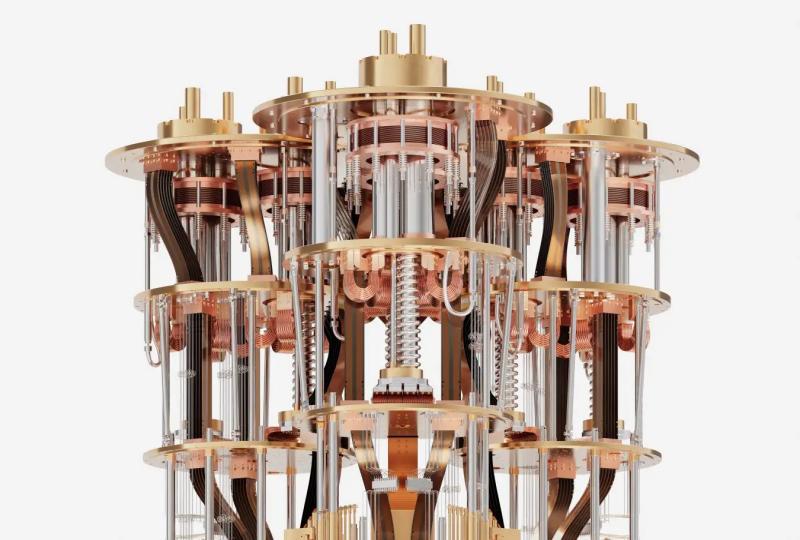
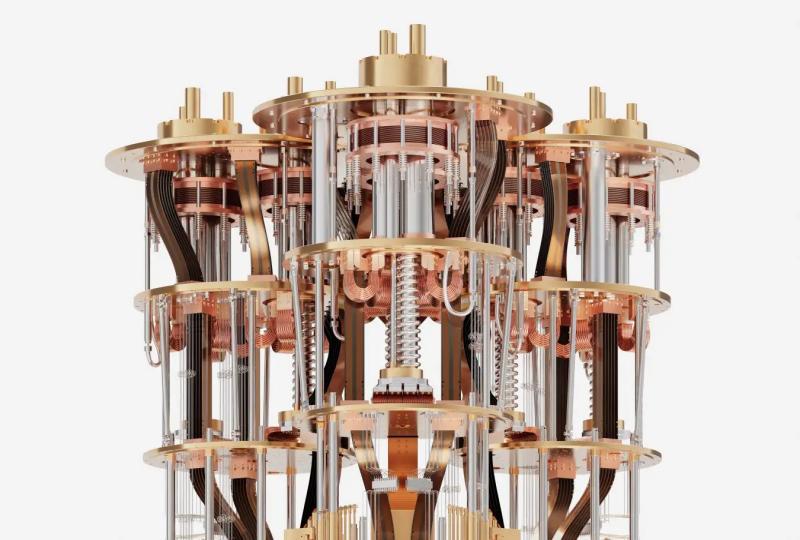
Superconducting quantum processors operate at extremely low temperatures, typically in a millikelvin environment. Maintaining these conditions is essential to their operation, but the processor is only one part of a much larger system.
Why Millikelvin Temperatures Are Necessary
Superconducting circuits rely on materials entering a superconducting state. The processor must also be cold enough to suppress unwanted thermal excitation and support the preparation and control of quantum states.
Dilution refrigerators provide the low-temperature environment, while microwave electronics deliver control signals and help measure qubit states. These subsystems must work together without introducing excessive noise or disturbing the processor.
The cooling system also imposes practical constraints on available space, thermal load, maintenance, and experimental access. As processor designs grow, integrating more components within these limits becomes increasingly demanding.
How Wiring, Crosstalk, and Calibration Affect Performance
Each qubit needs appropriate control and measurement capabilities. Adding qubits can increase wiring requirements, signal-management complexity, and the number of interactions that engineers must characterize.
Crosstalk occurs when an operation intended for one qubit unintentionally affects another. Calibration drift can also change how accurately control pulses implement their intended operations over time.
These issues make system integration as important as chip design. A processor with more qubits may offer limited practical benefits if its control system cannot operate them consistently or if calibration overhead makes experiments difficult to reproduce.
For a closer look at the relationship between the processor and its surrounding equipment, our guide to quantum processor and cryogenic control systems explains how these components work together.
Adding More Qubits Does Not Automatically Improve Computing Power
Increasing the number of physical qubits can expand a processor's potential capabilities, but qubit count alone does not show how much useful computation it can perform. Performance also depends on qubit quality, connectivity, gate errors, control resources, and the computational task.
The Difference Between Physical and Logical Qubits
A physical qubit is a hardware component that stores and processes quantum information. A logical qubit encodes quantum information across multiple physical qubits using a quantum error-correction scheme.
Logical qubits are designed to protect quantum information against certain errors. However, they require additional physical resources and carefully coordinated operations. The overhead depends on the error rates, the chosen code, the target reliability, and the implementation.
Consequently, a processor with many physical qubits does not automatically provide the same number of reliable logical qubits. The relevant question is how effectively the hardware supports the intended computation.
Why Quantum Error Correction Requires Additional Resources
Quantum error correction typically requires repeated measurements, additional qubits, classical processing, and operations that detect and correct errors without directly measuring the encoded information.
The challenge is to suppress logical errors sufficiently for longer computations to become reliable. This requires physical operations to be accurate enough for the selected error-correction approach, along with control and measurement systems capable of supporting repeated cycles.
Scaling therefore involves more than manufacturing larger chips. It requires coordinated progress in qubit quality, connectivity, control electronics, decoding, and system reliability.
Hardware Limitations Affect Real Quantum Research
The practical impact of superconducting quantum computer limitations depends on the experiment. Some studies can produce useful results with relatively shallow circuits, while others require deeper circuits, repeated measurements, or stringent error control.
How Circuit Depth Affects Quantum Chemistry Experiments
Variational quantum eigensolvers (VQEs) are hybrid quantum-classical algorithms explored for estimating molecular energies and studying quantum systems. A VQE prepares a quantum state, measures relevant quantities, and uses a classical optimizer to update the circuit parameters.
Hardware noise can distort measurement results and make optimization less stable. Meanwhile, increasing circuit depth to represent more complex states can expose the experiment to additional gate errors and decoherence.
The outcome depends on the molecular model, circuit design, measurement strategy, and classical optimization procedure. Current hardware can support meaningful algorithmic and methodological research, but performance on a small demonstration does not establish a general quantum advantage over classical methods.
Why Error-Correction Experiments Depend on Hardware Quality
Surface codes are an important approach to quantum error correction. They organize physical qubits into a structure that enables repeated measurements of error syndromes, providing information about errors without directly measuring the encoded quantum state.
These experiments depend on reliable operations, sufficiently accurate measurements, and consistent control across multiple qubits. Correlated errors, crosstalk, and measurement faults can complicate error detection and correction.
Researchers therefore examine error rates and their behavior across repeated correction cycles, not simply the number of qubits in the experiment. Such demonstrations help identify the conditions needed for more reliable quantum computation, but they do not by themselves establish a fully fault-tolerant, general-purpose quantum computer.
How to Evaluate Superconducting Quantum Computer Performance
A practical evaluation should connect hardware specifications to the intended research workload. The most useful system is not necessarily the one with the highest qubit count; it is the one whose capabilities, stability, and software support match the experiment.
Compare Coherence, Gate Fidelity, and Readout Accuracy
Start by reviewing the processor's coherence times, single-qubit and two-qubit gate fidelities, and readout performance. Check whether the reported values are averages, medians, best-case results, or measurements from specific qubits.
It is also important to understand the measurement conditions, calibration procedures, and variability across repeated experiments. Specifications measured under different conditions may not be directly comparable.
For a broader assessment, consider connectivity, supported gate operations, calibration frequency, circuit execution capabilities, and the tools available for collecting and analyzing experimental data. System-level benchmarks can help connect individual device metrics with performance on representative tasks.
Match Hardware Capabilities to Research Goals
Different projects place different demands on a quantum processor. Introductory experiments may prioritize accessible programming tools and repeatable demonstrations, while hardware research may require detailed access to calibration, control, and performance measurements.
Algorithm development places greater emphasis on supported operations, circuit execution, measurement workflows, and integration with classical software. Error-correction research requires suitable connectivity, control precision, and the ability to conduct repeated measurement cycles.
Before selecting a system, define the experiments to be performed, the performance metrics that matter, the available laboratory infrastructure, and the level of control required. This makes it easier to identify meaningful trade-offs between processor specifications and practical usability.
Exploring Superconducting Quantum Hardware with SpinQ
For research teams evaluating superconducting quantum computing systems, hardware selection should reflect both current experimental needs and longer-term research plans.
Our superconducting quantum computer solutions provide a starting point for examining processor configurations and system capabilities. Researchers can use the relevant hardware specifications to assess how a system aligns with their requirements for quantum circuit experiments, device characterization, and hardware-focused research.
Chip architecture is another important consideration because qubit layout, connectivity, and design choices affect how quantum operations can be implemented. Our article on superconducting quantum chip architecture provides further context for understanding these design considerations.
The right evaluation should remain grounded in measurable specifications and the intended workload. No single configuration eliminates every limitation, but understanding the relationship between processor performance and experimental requirements helps research teams make more informed decisions.
Understanding the Practical Limits of Superconducting Quantum Computing
Superconducting quantum computer limitations arise from several interconnected challenges: qubit noise, imperfect operations, demanding cryogenic systems, control complexity, and the resources required for quantum error correction.
These limitations influence how reliably circuits run, how efficiently processors scale, and which experiments can be performed. Qubit count remains an important specification, but it must be considered alongside coherence, gate fidelity, readout accuracy, connectivity, and system stability.
By evaluating these factors against specific research goals, researchers can better understand what current superconducting quantum hardware can support and which technical improvements are needed to advance toward more reliable and scalable quantum computing.
.jpg)
Featured Content