
How to Choose a Research-Grade Educational Quantum Computer
2026.10.26 · Blog research-grade educational quantum computer
A research-grade educational quantum computer combines real quantum hardware, flexible programming, and hands-on experiments to support both university teaching and advanced research training. The right platform should help students move beyond basic demonstrations to quantum algorithm development, experimental control, and data analysis.
For universities and research institutions, selecting a suitable system means looking beyond qubit count. Hardware accessibility, software capabilities, experimental flexibility, and the depth of supported projects all influence how effectively a quantum computer can support long-term learning and research.
What Defines a Research-Grade Educational Quantum Computer?
A research-grade educational quantum computer should connect quantum theory with practical experimentation. Unlike a platform designed primarily for demonstrations, it should provide opportunities to investigate how quantum operations work, test algorithms, and explore experimental parameters within its supported capabilities.
Real Quantum Hardware Beyond Simulation
Quantum simulators are useful for learning circuit design and testing algorithms under idealized conditions. However, they do not fully reproduce the behavior of a physical quantum system.
Access to real quantum hardware allows students to prepare quantum states, apply operations, collect measurements, and compare experimental outcomes with theoretical predictions. This process helps them understand how physical implementation affects quantum computation.
For university laboratories, the value lies in connecting mathematical concepts with observable experimental behavior. Students can investigate state preparation, quantum gates, measurement, and the sources of differences between expected and measured results.
Experimental Access Beyond Basic Quantum Circuits
Research-oriented learning also requires room for investigation beyond predefined exercises. Depending on the platform, this may include adjusting control parameters, designing pulse sequences, reconstructing quantum states, or developing custom quantum programs.
These capabilities allow instructors to create open-ended assignments in which students formulate hypotheses, design experiments, analyze results, and refine their methods.
The term research-grade should therefore be evaluated against specific capabilities. An educational system may support meaningful quantum information research and experimental training without replacing a specialized research processor intended for advanced hardware development.
Which Capabilities Matter Most for Research and Teaching?
The most useful platform supports a progression from fundamental concepts to increasingly independent experimentation. Universities should evaluate the relationship between hardware access, programming tools, measurement capabilities, and the level of experimental freedom available to students.
Quantum Programming and Algorithm Development
Programming flexibility is essential when students need to move from following instructions to designing their own experiments.
A suitable platform should provide accessible tools for beginners while supporting code-based quantum circuit construction and algorithm development for advanced learners. Depending on the system, practical activities may include Grover's algorithm, the quantum Fourier transform, or variational quantum algorithms such as the variational quantum eigensolver (VQE).
Students should also be able to compare theoretical predictions, simulator results, and measurements from real hardware where supported. This comparison helps them understand how algorithm design interacts with the behavior of the physical system.
Pulse-Level Control and Experimental Flexibility
Quantum gates provide an accessible way to study quantum operations, but pulse-level experiments can reveal more about how those operations are implemented.
On platforms that provide suitable low-level access, students can explore pulse sequences, control parameters, spin resonance, and state manipulation. These experiments connect quantum information theory with the underlying physics and engineering.
Not every educational computer offers the same level of control. Institutions should confirm which parameters can be adjusted, whether custom experiments are supported, and whether the available interfaces match their intended courses or research projects.
Measurement, Data Analysis, and Repeatable Experiments
A quantum experiment is not complete when a circuit has been executed. Students must also interpret measurements, assess statistical variation, and determine whether the results support their expectations.
Useful educational platforms should provide a clear workflow for collecting results, analyzing measurement data, and comparing experimental outcomes with theoretical models.
Repeatability is equally important. Students should be able to understand the experimental conditions, document their procedures, and investigate why repeated measurements may differ. These skills are relevant to both quantum computing education and broader scientific research.
How Different Quantum Hardware Platforms Support Research Learning
Different hardware technologies offer different learning opportunities. The best choice depends on whether an institution prioritizes accessible experiments, algorithm development, physical control, or advanced hardware engineering.
NMR Quantum Computers for Accessible Laboratory Experiments
Nuclear magnetic resonance (NMR) quantum computers use nuclear spin systems to implement quantum operations. Educational NMR platforms can provide a compact environment for studying quantum states, control operations, measurement, and algorithm execution.
They are particularly useful when universities want students to work with physical quantum systems without building a full superconducting quantum computing facility.
Depending on the configuration, an NMR system can support quantum mechanics experiments, quantum algorithms, pulse control, and quantum technology demonstrations. Some platforms also provide access to customizable experimental parameters and hybrid classical-quantum programming.
These capabilities can support advanced coursework and research training, although the number of qubits, system architecture, and supported experiments determine the scope of the work.
Superconducting Systems for Hardware-Focused Research Training
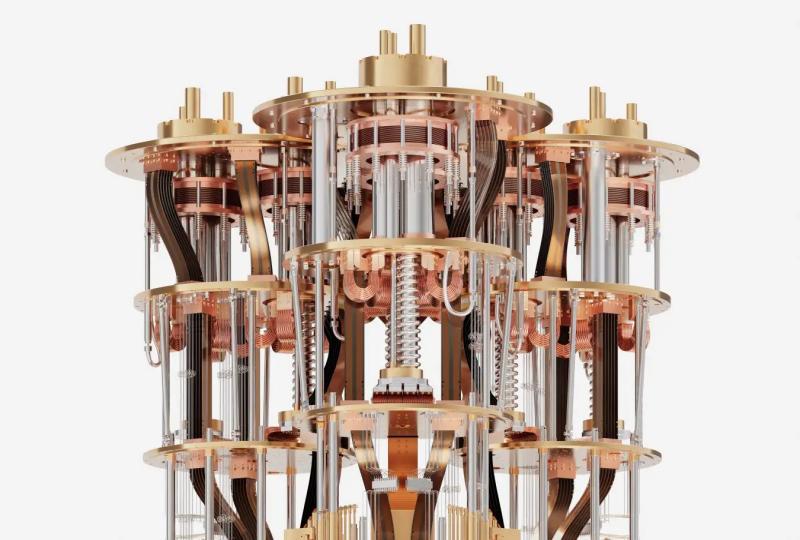
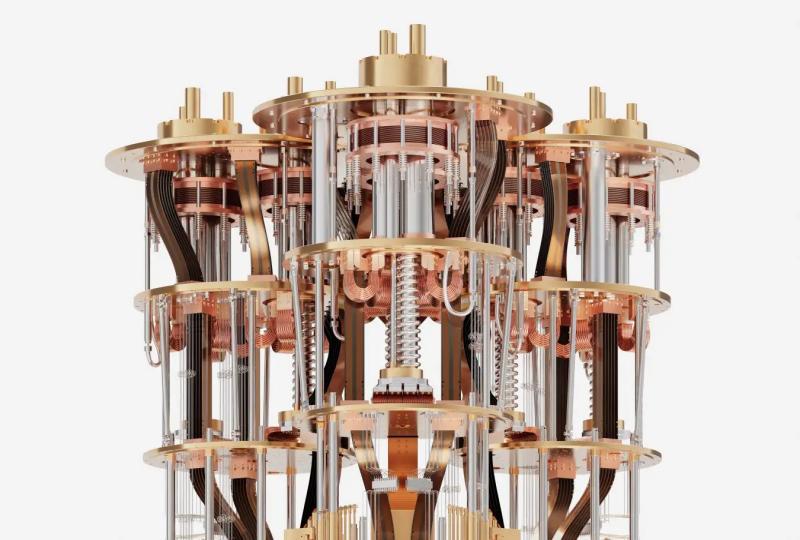
Superconducting quantum computers provide another route into experimental quantum computing. They use superconducting circuits as qubits and generally require cryogenic cooling, microwave control, and specialized measurement systems.
Working with these platforms can help students and researchers explore qubit characterization, gate operations, control electronics, and the engineering challenges involved in operating quantum processors.
However, the infrastructure requirements are substantially different from those of compact educational NMR systems. Universities should consider laboratory space, cooling equipment, maintenance, technical expertise, and operating costs before choosing a superconducting platform.
For institutions focused on quantum hardware engineering or processor-level research, these requirements may be justified. For broader teaching programs, a more accessible experimental system may provide a better starting point.
Can One Platform Support Both University Courses and Research Projects?
A well-chosen educational quantum computer can support multiple learning levels, provided its hardware and software capabilities match the planned activities. The key is to design a progression that moves from guided exercises toward increasingly independent work.
From Introductory Experiments to Advanced Projects
Introductory courses can focus on quantum states, superposition, measurement, and basic gates. Students can then progress to circuit construction, algorithm implementation, and comparisons between ideal simulations and real-system results.
Advanced courses may introduce pulse design, quantum dynamics, state reconstruction, or hybrid classical-quantum programming when the platform supports these functions.
At the research-training level, students can investigate questions that require experimental design, parameter adjustment, data interpretation, and repeated testing. The specific research questions must remain within the system's physical and computational capabilities.
This progression allows universities to use the same laboratory infrastructure across multiple courses while adjusting the complexity of experiments to student experience.
Matching Experimental Depth to Student Experience
The ability to scale learning activities is particularly important for institutions serving students from different academic backgrounds.
Physics students may focus on spin dynamics, resonance, and quantum state evolution. Computer science students may emphasize circuit construction and algorithm development. Engineering students may investigate signal control, measurement, and system integration.
A flexible platform makes it easier to create different learning pathways without separating theory from practical work. It also gives instructors more options when designing laboratory courses, capstone projects, and interdisciplinary research training.
What Should Universities Evaluate Before Purchasing?
A research-oriented educational quantum computer should be evaluated as part of a complete laboratory program, not simply as a standalone instrument. Hardware, software, learning resources, and implementation requirements all influence its long-term value.
Hardware Access, Software, and Integration
Start by identifying the experiments the institution expects to conduct. Then verify whether the platform supports the required qubit configuration, programming interfaces, measurement workflows, and experimental controls.
Consider the following factors:
-
Hardware access: Can students execute circuits on a physical quantum system and inspect relevant experimental results?
-
Programming flexibility: Are graphical tools, code-based programming, and custom experiments supported where needed?
-
Experimental depth: Can users investigate quantum gates, pulse control, state reconstruction, or other advanced topics?
-
Software integration: Can the system fit into existing teaching workflows and programming environments?
-
Research scope: Are the available hardware capabilities sufficient for the planned projects?
Universities should also review documentation, supported software versions, system maintenance, and the availability of technical assistance. These factors can influence how easily the equipment becomes part of regular laboratory teaching.
Lab Space, Maintenance, and Instructor Support
Deployment requirements vary considerably across quantum hardware technologies. Before purchasing, institutions should assess available space, power requirements, environmental conditions, operating procedures, and the technical expertise needed to maintain the system.
Instructor preparation is equally important. Laboratory guides, experiment instructions, programming examples, and structured learning materials can reduce the time required to develop new courses.
For institutions establishing a quantum laboratory for the first time, a complete quantum education solution can help connect equipment selection with experiment planning, teaching resources, and practical implementation.
The most appropriate configuration is the one that meets current teaching objectives while leaving a realistic path for more advanced experiments as the program develops.
Exploring Research-Oriented Quantum Education with SpinQ
At SpinQ, we develop quantum computing platforms and educational solutions that connect quantum theory with hands-on experimentation. For universities seeking a system that supports both structured teaching and research-oriented activities, the available experimental capabilities are an important starting point.
Our SPINQ Gemini™ Lab quantum computing experimental platform supports experiments across quantum computing principles, quantum algorithms, and broader quantum technologies. Its open experimental architecture provides access to low-level operations and supports pulse design, hybrid classical-quantum programming, and exploratory projects.
The platform can be used for experiments involving spin resonance, Rabi oscillation, quantum gate construction, state reconstruction, algorithm implementation, quantum simulation, and quantum control. The exact scope of each activity depends on the selected configuration and experiment.
For advanced learners, customizable parameters and open-ended experimental tasks create opportunities to investigate the relationship between quantum theory and physical implementation. This makes the platform relevant to university laboratory courses, research training, and quantum information education.
Our article on education-friendly quantum labs explores how real hardware, structured experiments, programming tools, and teaching resources can work together in university learning environments.
When evaluating a platform, institutions should match its documented capabilities to their intended experiments rather than assuming that every educational quantum computer supports the same research activities.
Choosing the Right Platform for Long-Term Quantum Learning
Choosing a research-grade educational quantum computer requires a clear understanding of what students and researchers need to accomplish. Real hardware access, flexible programming, experimental control, measurement analysis, and appropriate learning resources are all important considerations.
Universities should also distinguish between research-oriented educational platforms and specialized quantum processors built for advanced hardware research. Both can contribute to quantum workforce development, but they serve different purposes and have different infrastructure requirements.
By defining learning objectives first and evaluating equipment against specific experimental needs, institutions can build quantum laboratories that support both foundational education and increasingly advanced research training.
.jpg)
Featured Content