
Superconducting Quantum Bits: Benefits and Challenges
2026.10.27 · Blog superconducting quantum bits
Superconducting quantum bits are the foundation of superconducting quantum computers, but their performance depends on more than the number of qubits in a processor. Coherence time, gate fidelity, noise, and connectivity all influence how reliably a quantum system can process information. Understanding these factors helps researchers evaluate superconducting quantum technology, identify its advantages, and recognize the engineering challenges involved in building scalable quantum computers.
What Are Superconducting Quantum Bits?
Superconducting quantum bits, commonly called superconducting qubits, are artificial quantum systems built from superconducting electrical circuits. Unlike classical bits, which represent either 0 or 1, qubits can occupy quantum superposition states that combine these two basis states.
A Josephson junction is a key component in many superconducting qubit designs. It introduces the nonlinearity needed to create distinct energy levels that can be used to encode quantum information. Microwave pulses control these states, while measurement circuits read out the results.
Our superconducting quantum devices use this circuit-based approach to explain how Josephson junctions and other circuit elements form the foundation of quantum information processing.
Common designs include transmon and Xmon qubits. Both support controlled quantum operations, but their circuit layouts and engineering trade-offs differ.
Advantages of Superconducting Quantum Bits
Superconducting qubits offer several important advantages for quantum hardware development. Their value comes from the combination of fast control, flexible circuit design, and potential integration into increasingly complex processors.
Fast Quantum Gate Operations
Superconducting qubits can support quantum gate operations on timescales of tens of nanoseconds. Fast operations allow a processor to execute many gates within a limited coherence window, helping reduce the time available for certain errors to accumulate.
However, speed alone does not guarantee reliable computation. Gate fidelity and the number of operations a circuit requires are also important.
Flexible Design and Chip Integration
Superconducting qubits are fabricated using circuit-design and microfabrication techniques. Engineers can adjust circuit parameters, qubit layouts, and coupling structures to support different processor architectures.
This design flexibility helps researchers investigate new qubit configurations and develop multi-qubit chips for quantum algorithms, simulation, and error-correction research.
Controllable Qubit Interactions
Quantum processors need controlled interactions between qubits to create entanglement and execute multi-qubit gates. Superconducting circuits can use engineered couplers and microwave control to implement these interactions.
The challenge is to achieve the desired coupling without introducing excessive unwanted interactions or operational errors.
Challenges in Superconducting Quantum Bit Technology
Despite their advantages, superconducting qubits remain sensitive to environmental disturbances and demanding operating conditions. These challenges must be addressed at both the individual-qubit and full-system levels.
Decoherence and Environmental Noise
Quantum information can be lost through energy relaxation and dephasing. The T1 relaxation time describes how quickly an excited qubit loses energy, while T2 characterizes the loss of phase coherence.
Materials defects, electromagnetic interference, and unwanted coupling to the environment can shorten these times. Better circuit design, materials, filtering, and environmental control can help improve stability.
Crosstalk and Gate Errors
Crosstalk occurs when controlling one qubit unintentionally affects another. As processors add more qubits and control channels, unwanted interactions become more difficult to manage.
Gate errors also accumulate across quantum circuits. Researchers therefore need to measure single-qubit and two-qubit gate fidelity, characterize interactions, and calibrate control pulses carefully.
Cryogenic Requirements and System Complexity
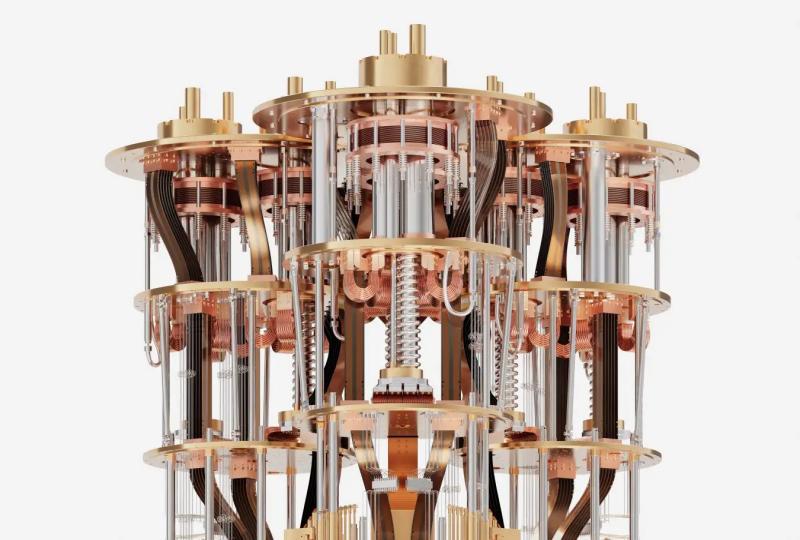
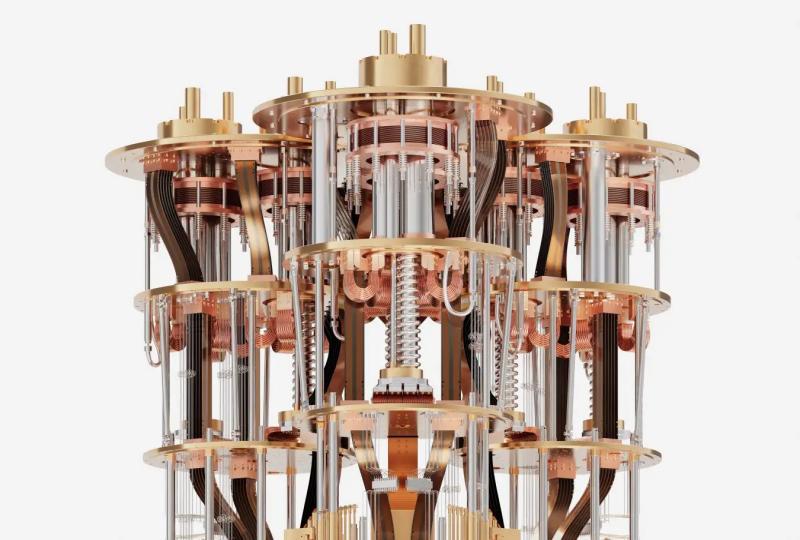
Superconducting qubits must operate at extremely low temperatures to maintain superconductivity and limit unwanted thermal excitation. SpinQ's superconducting quantum computing architecture uses millikelvin cryogenic infrastructure, with operating temperatures around 10 millikelvin in its system overview.
This environment requires specialized cooling equipment, microwave control electronics, measurement hardware, and carefully designed wiring and shielding. Reliable operation depends on coordinating these components rather than optimizing the chip alone.
Scaling to Larger Quantum Processors
Increasing the number of qubits does not automatically increase useful computing power. Larger processors require more complex calibration, control, readout, and error-management strategies.
Quantum error correction adds another challenge because multiple physical qubits are used to protect logical quantum information. Practical scaling therefore depends on both individual-qubit quality and the ability to coordinate the complete processor.
Key Performance Metrics for Superconducting Quantum Bits
Several measurements help determine whether superconducting qubits can support a particular experiment or quantum computing workload.
-
Coherence time: T1 and T2 indicate how long quantum information retains important properties before relaxation or dephasing degrades it.
-
Gate fidelity: Measures how closely a physical quantum operation matches its intended operation. Two-qubit gate fidelity is especially important for circuits that rely on entanglement.
-
Readout fidelity: Indicates how accurately the system identifies a qubit's measured state.
-
Crosstalk: Measures unwanted interactions between qubits or control channels.
-
System stability: Evaluates whether calibration and operating performance remain consistent over time.
These metrics should be considered together. A qubit with a long coherence time may still perform poorly in a circuit if its gates are inaccurate or its readout is unreliable.
Our guide to superconducting quantum chip testing explains how coherence measurements, gate benchmarking, readout characterization, and crosstalk analysis contribute to a more complete assessment of chip performance.
How Superconducting Quantum Bits Work Together in a Quantum Processor
A practical quantum computer combines qubits with coupling structures, control electronics, readout circuits, cryogenic infrastructure, and programming software. Each component must work in coordination to execute a quantum circuit.
Qubit connectivity determines which pairs can interact directly. The processor's architecture influences how efficiently quantum operations can be scheduled and how much additional routing or control is required.
For larger systems, calibration and error correction become increasingly important. Engineers must balance qubit count with operation quality, connectivity, system stability, and the resources required to maintain reliable performance.
SpinQ's Taurus superconducting quantum computer supports configurations of 100+ superconducting qubits and is designed with quantum error correction and parametric gates in mind. The platform connects qubit technology with the cryogenic, control, and measurement infrastructure needed for quantum computing research and industrial development.
Applications of Superconducting Quantum Bits
Superconducting qubits support research across several areas of quantum computing.
-
Quantum simulation: Studying quantum systems and models that are difficult to represent efficiently using classical methods.
-
Quantum chemistry and materials science: Investigating molecular behavior, material properties, and related computational problems.
-
Quantum optimization: Exploring quantum algorithms for selected optimization problems.
-
Quantum error correction: Testing methods for detecting and correcting errors in quantum information.
-
Quantum hardware research: Developing circuit designs, control methods, benchmarking procedures, and processor architectures.
The practical value of these applications depends on the problem, circuit depth, hardware quality, and available error-management methods. Superconducting qubits provide a flexible hardware platform, but useful results still require careful algorithm design and performance evaluation.
Conclusion
Superconducting quantum bits combine fast gate operations, flexible circuit design, and the potential for chip-level integration. Their main challenges include decoherence, gate errors, crosstalk, cryogenic requirements, and the complexity of scaling to larger processors.
Evaluating these systems requires more than counting qubits. Coherence time, gate fidelity, readout accuracy, connectivity, and overall system stability must be considered together. By improving both individual-qubit performance and full-system integration, researchers can build more reliable superconducting quantum processors and advance practical quantum computing.
.jpg)
Featured Content