
3-Qubit NMR Quantum Computers for Education and Experimental Research
2026.10.27 · Blog 3-qubit nmr quantum computer
A 3-qubit NMR quantum computer provides a practical way to explore quantum states, quantum gates, entanglement, and quantum algorithms using real quantum hardware. For universities and research laboratories, it connects theoretical concepts with hands-on experiments, allowing students and researchers to design quantum programs, control qubits, and examine experimental results in a compact environment.
Unlike large-scale quantum computing systems designed for advanced hardware development, a three-qubit nuclear magnetic resonance (NMR) quantum computer focuses on accessible experimentation and foundational research. Its value depends on more than the number of qubits: programming flexibility, experimental access, supported algorithms, and the ability to investigate underlying physical processes are also important.
What Is a 3-Qubit NMR Quantum Computer?
An NMR quantum computer uses the magnetic properties of atomic nuclei to represent and manipulate quantum information. In a three-qubit system, three quantum bits form the basic computational system, allowing users to investigate operations involving individual qubits and combinations of multiple qubits.
NMR quantum computing uses radiofrequency (RF) pulses to manipulate nuclear spin states within a controlled magnetic environment. By applying carefully designed pulse sequences, the system can prepare quantum states, implement quantum gates, and generate measurement signals for experimental analysis.
Three qubits provide a useful platform for exploring multi-qubit operations. The system has eight computational basis states, represented by combinations of three binary labels. More importantly, it allows users to investigate how quantum gates transform states and how interactions between qubits contribute to quantum algorithms.
A 3-qubit NMR quantum computer can support several educational and experimental objectives:
-
Quantum state preparation: Create and manipulate quantum states to understand the representation of quantum information.
-
Quantum gate operations: Study single-qubit and multi-qubit logic gates and their effects on quantum states.
-
Entanglement experiments: Prepare and examine entangled states to explore correlations that cannot be explained by classical probability alone.
-
Quantum algorithm implementation: Execute selected algorithms on physical quantum hardware and compare experimental outcomes with theoretical expectations.
-
Quantum control research: Investigate pulse sequences, calibration, and the relationship between control signals and quantum evolution.
These capabilities make three-qubit NMR systems particularly relevant to quantum information courses, university laboratories, and introductory experimental research.
What Can You Do with a 3-Qubit NMR Quantum Computer?
The main advantage of a three-qubit system is the ability to move beyond isolated demonstrations and study complete quantum operations. With appropriate software and hardware access, users can progress from individual gates to multi-step circuits and algorithm execution.
Common experiments include:
-
Single- and multi-qubit gate experiments: Examine how quantum operations change the state of a system and how sequences of gates form a quantum circuit.
-
Bell-state preparation and verification: Investigate entanglement through state preparation and experimental measurement.
-
Deutsch algorithm experiments: Explore how quantum algorithms process information through interference and quantum operations.
-
Grover algorithm experiments: Demonstrate the principles of quantum search on a small computational system.
-
Pulse calibration and Rabi oscillation: Study the response of a quantum system to RF control signals and understand why accurate calibration matters.
-
Relaxation-time measurements: Investigate (T_1) and (T_2), which describe different aspects of quantum-state relaxation and coherence.
These experiments connect mathematical descriptions of quantum computing with physical behavior. Students can construct a circuit, execute it on the device, and analyze how the observed results compare with expected outcomes.
For research groups, the same experimental framework can support exploratory work in quantum control, quantum dynamics, and small-scale algorithm development. The practical scope remains bounded by the device's qubit count, coherence characteristics, control capabilities, and experimental configuration. A three-qubit system is not a substitute for a large-scale fault-tolerant quantum computer.
Key Experiments for Quantum Computing Education and Research
A useful experimental program should build skills progressively rather than treating each quantum algorithm as an isolated exercise.
-
Begin with quantum states and basic gates.
Students can prepare simple states and apply single-qubit gates to observe how quantum operations change a system. These experiments establish the connection between state vectors, circuit diagrams, and physical control.
-
Introduce multi-qubit operations and entanglement.
Once the basic operations are understood, students can combine gates across multiple qubits. Bell-state experiments provide a practical way to explore entanglement, state preparation, and measurement.
-
Connect control physics with computational results.
Pulse calibration and relaxation-time measurements help explain why real quantum experiments require careful control. Students can investigate how RF pulses influence quantum evolution and how relaxation affects the results of a computation.
-
Move toward complete quantum algorithms.
Deutsch and Grover algorithm experiments demonstrate how individual gates work together in a computational sequence. Users can compare expected outcomes with hardware results and consider the effects of experimental limitations.
This progression is particularly useful when designing university courses. Introductory students can focus on states and gates, while advanced students can investigate pulse sequences, quantum dynamics, and extended experimental projects.
For institutions building a broader practical curriculum, the SPINQ Gemini Lab quantum computing experimental platform offers an alternative focused on experiments spanning pulse-level, gate-level, and algorithm-level operations.
Software and Hardware Access for Hands-On Quantum Experiments
Software determines how easily users can design experiments, while hardware access determines how deeply they can investigate the physical processes behind quantum computation. Both matter when selecting a 3-qubit NMR quantum computer.
At the application level, quantum circuit tools allow users to arrange gates and implement algorithms without manually defining every hardware control signal. This approach is useful for teaching because it helps students focus on circuit structure, computational logic, and experimental results.
Python-based programming offers more flexibility for users developing custom algorithms or integrating quantum operations with classical code. Classical-quantum hybrid programming is particularly useful for exploring workflows in which classical computation and quantum circuits perform different parts of a task.
At a lower level, pulse-sequence editing and access to control parameters allow users to examine how quantum gates are implemented physically. This is important for advanced laboratory courses and research projects that investigate quantum control rather than simply running predefined algorithms.
When evaluating software and hardware access, consider whether the system supports:
-
Custom quantum program development rather than only predefined demonstrations.
-
Single-qubit and multi-qubit gate operations.
-
Python programming and classical-quantum hybrid workflows where required.
-
Pulse-sequence editing and access to relevant hardware parameters.
-
Experimental data collection and analysis.
-
Multi-user or remote hardware access when shared laboratory use is necessary.
The right level of access depends on the intended users. A course introducing quantum algorithms may prioritize straightforward circuit design, while a quantum information laboratory may need greater control over pulses, signals, and experimental parameters.
How to Choose a 3-Qubit NMR Quantum Computer
Choosing a three-qubit system starts with the experiments an institution wants to teach or investigate. Product specifications are useful, but they should be assessed against actual course objectives and laboratory requirements.
Experimental coverage
Check whether the system supports the required experiments, including quantum-state preparation, multi-qubit gates, entanglement, algorithm execution, pulse calibration, and relaxation-time measurements. A broader experiment library can make it easier to support different course levels.
Programming flexibility
Determine whether users can write custom quantum programs, use Python, and explore classical-quantum hybrid workflows. These capabilities become increasingly valuable in advanced courses and student projects.
Hardware transparency
Consider how much of the underlying quantum system users can access. A system designed mainly for demonstrations may be suitable for introductory instruction, whereas a platform with pulse-level controls can provide more opportunities for experimental investigation.
Operating environment and maintenance
NMR systems can be attractive for teaching laboratories because some desktop configurations operate at room temperature without the complex cryogenic infrastructure required by many superconducting quantum computers. However, operating requirements, calibration procedures, maintenance arrangements, and environmental conditions should still be checked for the specific device.
Teaching resources and support
Hardware alone does not create a complete laboratory experience. Experiment manuals, course materials, instructor resources, technical support, and options for integrating the equipment into existing curricula can influence how effectively a system is used.
Capacity and access
For classes or shared laboratories, consider how students will access the device, whether remote operation is available, and how experiments can be scheduled. Multi-user access and clear experimental workflows can help institutions integrate hands-on quantum computing into regular teaching.
The best choice is the system that supports the required experiments at the appropriate level of complexity, rather than simply the device with the longest feature list.
How SpinQ Supports Practical Quantum Computing Education
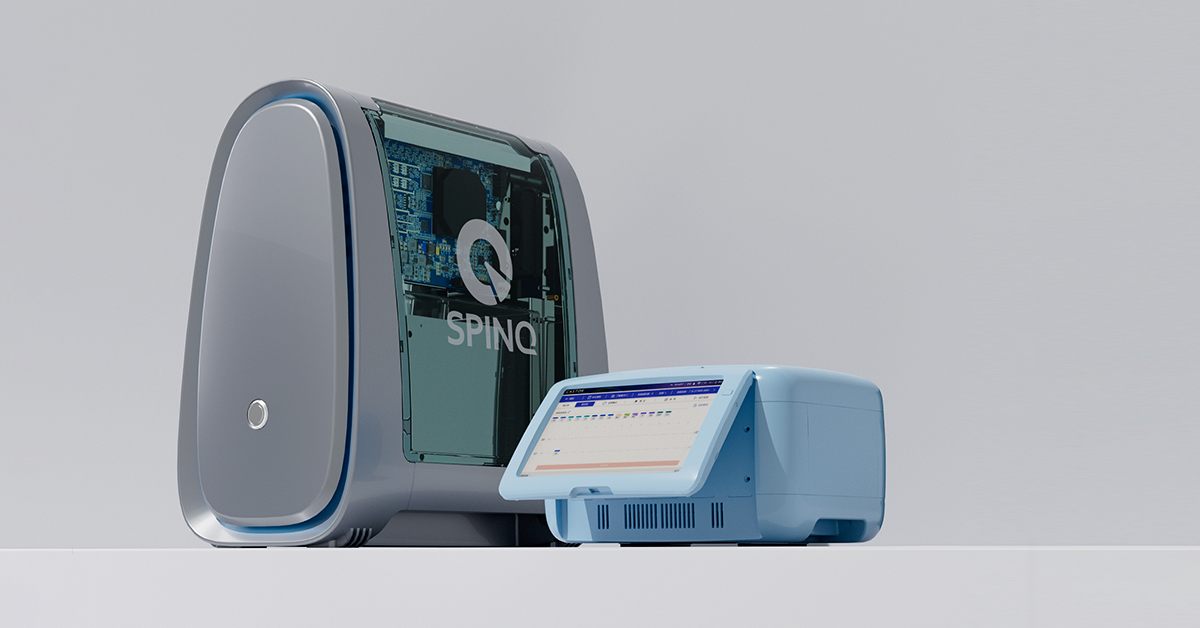
SpinQ offers NMR-based quantum computing equipment for education and experimental exploration, including the SPINQ Triangulum II three-qubit desktop NMR quantum computer and the SPINQ Gemini Lab experimental platform.
The SPINQ Triangulum II 3-qubit desktop NMR quantum computer is designed for quantum computing education, demonstrations, and experimental work. It supports single-, double-, and triple-qubit logic gates, custom quantum programming, Python-based development, and hardware-level pulse-sequence editing. Its documented experiment coverage includes quantum-state and gate operations, pulse calibration, relaxation-time measurements, Bell-state preparation, and Deutsch and Grover algorithms.
These capabilities make Triangulum II relevant to institutions seeking a compact system for teaching quantum computing concepts through real hardware experiments. Its open pulse-control features also offer opportunities to investigate the physical operations underlying quantum circuits.
For broader experimental teaching needs, the SPINQ Gemini Lab provides a platform covering quantum mechanics and quantum computing, with an open architecture supporting pulse-level, gate-level, and algorithm-level experiments. This can be a better fit for laboratories that want to explore the relationship between quantum physics, control methods, and computational tasks in greater depth.
SpinQ also provides a university experimental classroom solution that combines quantum hardware with courses, software, and teaching resources. Universities can assess this approach when planning quantum information, physics, or computer science laboratory programs.
 (1).png)
Conclusion
A 3-qubit NMR quantum computer helps students and researchers explore quantum information through hands-on experiments with real quantum hardware. It supports foundational work in quantum states, gates, entanglement, algorithm implementation, and quantum control, making it a practical option for university teaching and selected experimental research.
When selecting a system, consider experimental coverage, programming flexibility, hardware-level access, operating requirements, and teaching support together. For institutions that want to connect quantum theory with physical experimentation, the SPINQ Triangulum II and SPINQ Gemini Lab offer different approaches to building practical quantum computing capabilities around specific educational and research objectives.
.jpg)
Featured Content