
Superconducting Quantum Chip Best Practices for Better Performance
2026.10.26 · Blog superconducting quantum chip best practices
Superconducting quantum chip best practices focus on designing, fabricating, operating, and calibrating chips so that quantum measurements are reliable and repeatable. Good results depend on more than qubit count: circuit architecture, material quality, cryogenic conditions, microwave control, and measurement procedures all influence processor performance. A systematic approach helps research teams identify problems earlier, compare results fairly, and make better decisions throughout quantum chip development.
Start with a Chip Design That Supports Reliable Experiments
A superconducting quantum chip must do more than create qubits. Its architecture must also support precise control, accurate measurement, and predictable interactions between qubits. Design decisions made early can affect fabrication yield, calibration complexity, and the quality of later experiments.
Plan Qubit Layouts and Connectivity Carefully
Superconducting qubits are typically implemented using circuits containing Josephson junctions. Their arrangement determines how qubits interact and how control and readout signals reach them.
When planning a chip, consider the intended quantum circuits, the required connectivity, and the physical space needed for control and measurement components. A denser layout may support more interactions within a limited area, but it can also increase unwanted coupling and make signal routing more difficult.
The best practice is to balance connectivity with controllability. For example, tunable couplers can provide adjustable interactions between selected qubits, while a carefully planned layout can help limit unwanted interactions. These choices should reflect the experiments the processor is intended to support rather than simply maximizing the number of qubits.
Our superconducting quantum chip design and QPU technology provides a useful starting point for understanding how chip architecture, fabrication, and performance considerations work together.
Account for Readout, Coupling, and Crosstalk
Quantum processors need dedicated structures for controlling qubits and measuring their states. Readout resonators, coupling elements, and microwave lines must work together without introducing excessive interference.
Crosstalk occurs when a control or measurement signal unintentionally affects another qubit or channel. It can distort gate operations, complicate calibration, and reduce the accuracy of experimental results.
To reduce these risks, evaluate the expected interactions between neighboring components during design. Consider frequency allocation, signal routing, and the separation of control and readout functions. These decisions cannot eliminate every source of interference, but they can make unwanted interactions easier to identify and manage.
Design for Characterization and Future Scaling
A chip should be designed with testing in mind. Researchers need to measure qubit frequencies, coherence times, gate performance, and readout behavior to determine whether the processor meets its intended goals.
Include clear plans for accessing control and measurement channels, collecting characterization data, and diagnosing underperforming qubits. If the architecture is expected to grow, consider how additional qubits and connections could affect wiring, calibration, and system complexity.
Planning for characterization from the beginning makes it easier to distinguish design issues from problems introduced during fabrication, packaging, or operation.
Maintain Consistency During Fabrication and Packaging
Even a well-designed chip can perform inconsistently if manufacturing variations or packaging problems affect its electrical properties. Fabrication and assembly should therefore be treated as essential parts of quantum hardware development, not as separate steps that end once a chip has been produced.
Control Material Quality and Fabrication Variations
Superconducting qubit performance can be affected by material defects, surface conditions, interfaces, and variations in Josephson junction properties. These factors can influence energy relaxation, frequency stability, and device-to-device consistency.
A practical approach is to maintain controlled fabrication procedures and record important process parameters. When comparing devices, examine whether differences in measured performance may be associated with fabrication variations rather than circuit design alone.
Where possible, characterize multiple devices from the same fabrication batch. Looking at distributions and recurring patterns provides more useful information than relying exclusively on the best-performing chip.
Check Packaging, Connections, and Signal Paths
Packaging connects the quantum chip to the wider control and measurement system. Poor connections, unintended electromagnetic modes, and signal losses can undermine performance even when the chip itself is functioning as intended.
Inspect package integrity, electrical connections, grounding, and compatibility with the intended operating environment. The chip package and microwave interface should be evaluated as part of the complete measurement setup.
This is particularly important when a device is moved between test systems. Differences in packaging, wiring, filtering, or grounding may change the measured results, making direct comparisons unreliable unless these conditions are documented.
Build a Stable Cryogenic and Control Environment
Superconducting qubits operate under carefully controlled cryogenic conditions. Their performance also depends on the quality of the microwave signals used to manipulate quantum states and the measurement chain used to observe them.
A stable environment helps researchers separate intrinsic device behavior from disturbances introduced by the surrounding system.
Keep Temperature and Environmental Noise Under Control
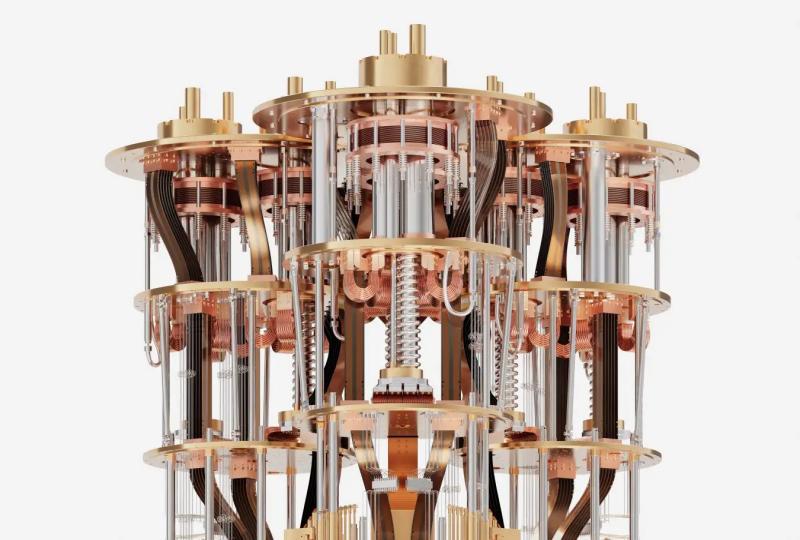
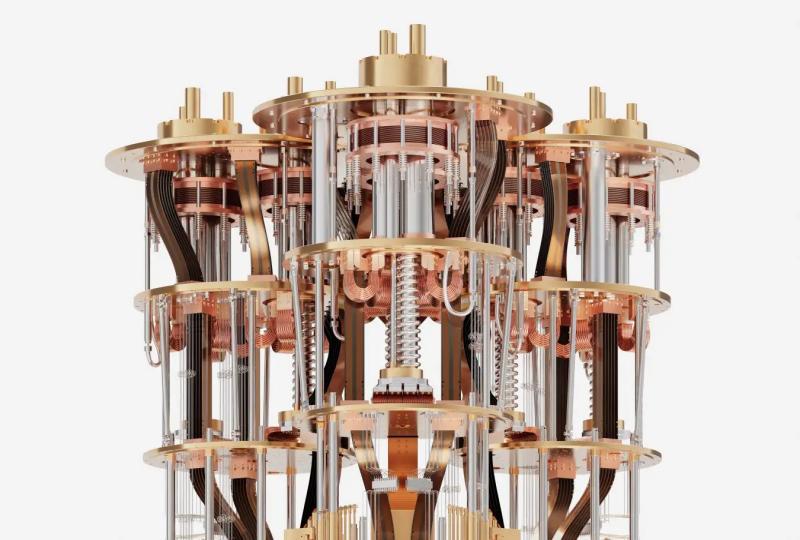
Superconducting quantum processors typically operate at millikelvin temperatures. Cooling reduces thermal excitation, while shielding and filtering help limit unwanted environmental disturbances.
Monitor temperature stability and verify that the cryogenic system reaches its intended operating conditions before conducting sensitive measurements. Electromagnetic interference, vibration, thermal radiation, and insufficient filtering can all affect experimental outcomes.
It is also important to evaluate the complete setup. A chip's measured performance reflects not only its circuit design but also its package, wiring, control electronics, and operating environment.
Verify Microwave Signal Integrity Before Calibration
Microwave signals drive quantum gates and help researchers measure qubit states. Their frequency, amplitude, phase, and timing must be controlled carefully.
Before calibrating the processor, verify the relevant signal paths and check for unexpected attenuation, reflections, leakage, or channel interference. Establishing a stable baseline can prevent researchers from compensating for hardware problems through unnecessary calibration adjustments.
Keep control parameters and system configurations consistent across experiments whenever possible. If a cable, filter, amplifier, or control setting changes, record the change and repeat any measurements that may be affected.
Use Repeatable Calibration and Measurement Procedures
Calibration connects the physical behavior of a quantum chip with the control instructions used to operate it. Since qubit frequencies and control responses can drift, calibration should be treated as an ongoing process rather than a one-time setup task.
Characterize Qubit Frequencies and Coherence Times
Begin by identifying the operating frequencies of individual qubits and checking whether they fall within the expected ranges. Spectroscopy can help locate transitions, while coherence measurements characterize how long quantum information can be preserved under specified conditions.
Two common metrics are T1, which measures energy relaxation, and T2, which characterizes phase coherence under a defined measurement protocol. These metrics provide different information and should not be treated as interchangeable.
For meaningful comparisons, record the measurement method, operating conditions, sample size, and time of measurement. A single high value does not necessarily represent the typical performance of the chip. Repeated measurements can reveal drift and distinguish stable behavior from temporary fluctuations.
Our explanation of superconducting quantum computer coherence time provides further context for interpreting this important performance metric.
Calibrate Gates and Readout Channels Systematically
Quantum gates must implement their intended operations with sufficiently low error, while readout must distinguish quantum states accurately. Calibration procedures should address these functions separately before evaluating their combined behavior.
For gate calibration, examine control pulse parameters such as frequency, amplitude, duration, and phase. For readout, assess measurement discrimination and identify possible interference between channels. Multi-qubit operations also require attention to unwanted interactions and errors that may not appear in single-qubit tests.
Use consistent procedures and acceptance criteria across calibration runs. When a parameter changes, document the reason and measure whether the adjustment improves the intended outcome without creating new problems elsewhere.
Track Crosstalk and Performance Drift
Calibration results can change over time as environmental conditions, qubit frequencies, and control responses vary. Periodic checks help identify these changes before they compromise a larger experiment.
Repeat selected benchmark measurements after major configuration changes and at appropriate intervals during long-running studies. If performance declines, investigate possible causes systematically instead of recalibrating every channel without a clear diagnosis.
For a more detailed discussion of test planning and characterization workflows, see our guide to superconducting quantum chip testing. It complements these practices by focusing on how testing helps assess chip behavior and reliability.
Evaluate Chip Performance with Consistent Benchmarks
A reliable evaluation should consider several metrics together. Qubit count alone does not show how accurately a processor performs quantum operations or how consistently it behaves across repeated experiments.
Compare Coherence, Gate Fidelity, and Readout Accuracy
Coherence times indicate how long quantum states retain useful properties under specified conditions. Gate fidelity evaluates how closely an implemented operation matches its target, while readout accuracy describes how reliably measurement identifies a qubit's state.
These metrics answer different questions. A chip with longer coherence times may still have control errors, and strong single-qubit gate performance does not automatically guarantee equally strong two-qubit operations.
When comparing chips, use consistent definitions and measurement protocols. Where relevant, distinguish averages, medians, and best-case results, and record how many qubits were included in each statistic. This makes comparisons more meaningful and helps prevent isolated results from being mistaken for typical performance.
Record Test Conditions and Repeat Measurements
Good experimental records should include chip and device identifiers, cryogenic conditions, control settings, calibration parameters, measurement protocols, and relevant software versions.
Repeat measurements when possible and preserve enough information to reproduce the setup. When comparing results across chips or test sessions, account for differences in operating conditions and instrumentation.
These practices make it easier to investigate unexpected results, compare fabrication batches, and determine whether a performance change reflects genuine hardware improvement.
Apply These Best Practices to Real Quantum Hardware
Superconducting quantum chip performance depends on the interaction between the processor and the systems used to control, cool, measure, and operate it. A chip-level result therefore needs to be interpreted in the context of the full experimental setup.
At SpinQ, we approach superconducting quantum computing as an integrated hardware and control challenge. Our superconducting quantum computer solutions bring together quantum processing hardware and the supporting infrastructure needed for advanced quantum experiments.
For research teams evaluating a platform, it is useful to understand how the chip, control and measurement electronics, cryogenic environment, and software workflow fit together. A clear system architecture and repeatable characterization process can make it easier to identify performance bottlenecks and plan future experiments.
The most suitable setup depends on the research objective, the level of hardware access required, and the team's ability to maintain and characterize the system. Reviewing these requirements early helps align chip capabilities with practical laboratory needs.
Make Superconducting Quantum Chip Results More Reproducible
Reliable superconducting quantum chip development requires consistent practices across design, fabrication, packaging, cryogenic operation, calibration, and performance evaluation. No single metric or engineering adjustment can guarantee strong results across every experiment.
Start by designing for controllability and measurement, maintain consistent fabrication and operating procedures, and use repeatable calibration and benchmarking methods. Document the conditions behind every important result and investigate performance changes systematically.
By treating the chip and its supporting infrastructure as one connected system, research teams can better understand hardware behavior, make fairer comparisons, and build a stronger foundation for continued quantum processor development.
.jpg)
Featured Content