
How Does a Superconducting Quantum Computer Work at Cryogenic Temperatures?
2026.09.16 · Blog superconducting quantum computer work environment
A superconducting quantum computer depends on a carefully controlled cryogenic environment to support stable operation of its quantum processor, making cryogenic engineering an essential part of the overall system.
The relationship between the quantum processor, cooling system, RF signal chain, and control equipment determines how effectively the system can operate. SpinQ develops superconducting quantum computing products covering the QPU, superconducting quantum computer, and quantum control and measurement system, providing the core components needed for an integrated computing architecture.
What Makes a Superconducting Quantum Computer Different?
A superconducting quantum computer uses superconducting circuits to form and control qubits. SpinQ’s superconducting quantum computing architecture uses circuits with Josephson junctions, where qubits are formed through macroscopic quantum effects.
This architecture is designed around three important characteristics:
Scalable qubit architecture
The circuit approach supports scalable qubit numbers and controllable multi-qubit coupling, providing a hardware foundation for expanding quantum processors.
High-fidelity quantum operations
High gate fidelity is an important consideration when building a practical superconducting quantum computing system. The QPU and its supporting control hardware therefore need to work as a coordinated system.
A dedicated cryogenic environment
The superconducting QPU must operate under ultra-low-temperature conditions. This requirement makes cryogenic infrastructure an integral part of the system architecture.
Why Does a Superconducting Quantum Computer Operate at Around 20 mK?
The QPU C Series is designed for operation at around 20 mK, an ultra-low-temperature environment that supports its high-coherence and high-stability design.
The QPU needs a controlled environment
The cryogenic environment needs to provide more than a low temperature. Stability, vibration control, monitoring, and signal transmission all affect the conditions in which the quantum processor operates.
SpinQ’s cryogenic solutions use dilution refrigerator systems to maintain the required millikelvin environment, with integrated low-vibration design, intelligent monitoring, and visualized cryogenic operation.
Temperature is only one part of the system
A reliable superconducting quantum computer requires the cooling environment and supporting hardware to work together. This is why cryogenic deployment needs to be considered alongside the QPU, RF components, laboratory infrastructure, and control system.
How Does the Cryogenic System Support the QPU?
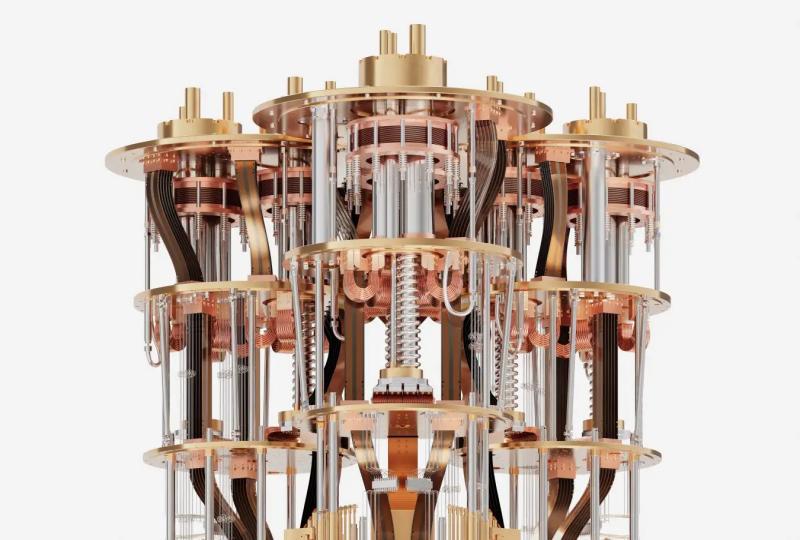
The dilution refrigerator provides the low-temperature environment in which the superconducting quantum processor operates.
Dilution refrigeration
SpinQ provides dilution refrigerator systems designed to maintain an optimal operating environment for qubits. These systems can support quantum algorithm verification, precision electronic measurements, and low-temperature physics experiments.
Low-vibration operation
Mechanical stability is also important when building a controlled experimental environment. An integrated low-vibration design helps maintain consistent operating conditions around the quantum processor.
Intelligent monitoring
Monitoring provides visibility into the cryogenic environment during operation. This is particularly useful when the system is being used for repeated experiments and quantum measurements.
For projects that require a complete low-temperature infrastructure, cryogenic quantum computer deployment covers dilution refrigerators, cryogenic RF components, laboratory retrofitting, and system integration.
What Happens to the Signal Between Room Temperature and the QPU?
Cooling the processor is only part of the challenge. Signals also need to travel between room-temperature electronics and the quantum processor inside the cryogenic environment.
Cryogenic RF signal chains
SpinQ provides cryogenic RF cables and components designed for quantum control systems. The signal chain extends from room temperature to the mixing chamber, connecting the external control hardware with the low-temperature environment.
Signal quality matters
The cryogenic RF system is designed to address several factors that can affect signal transmission:
-
Thermal noise ingress
-
Signal loss
-
Crosstalk
-
Phase noise
Maintaining low-loss, high-fidelity microwave signal transmission provides a stable hardware foundation for precise qubit manipulation.
How Do Quantum Control and Measurement Work With the Cryogenic System?
The QPU cannot operate as an isolated component. It needs precise control and measurement hardware to send signals, perform measurements, and support qubit characterization.
High-precision RF control
The SpinQ QCM System uses a modular architecture with high-precision RF control electronics and FPGA-based hardware-level acceleration.
The system is designed for high compatibility with superconducting QPUs and can support measurement and control of hundreds of qubits.
Qubit characterization and calibration
The system also includes tutorial codes for qubit characterization and calibration, helping connect the control layer with the practical operation of the quantum processor.
This makes the control and measurement system an important part of a complete superconducting quantum computing setup rather than a separate accessory.
What Infrastructure Is Needed for Cryogenic Quantum Computing?
A superconducting quantum computer requires suitable laboratory infrastructure in addition to the QPU and dilution refrigerator.
Laboratory assessment and retrofitting
The laboratory needs to accommodate scientific space planning, utility routing, and precision cable routing.
SpinQ provides laboratory assessment and renovation services designed to establish a suitable environment for quantum computing research.
Supporting cooling equipment
A complete cooling ecosystem can include:
-
Water chillers
-
Vacuum pumps
-
Custom pipeline systems
-
Cryogenic RF components
Matching these components correctly helps reduce the complexity of equipment selection and interface integration.
How Should You Choose a Superconducting Quantum Computer?
When selecting a superconducting quantum computer, the QPU should be considered together with the cryogenic and control infrastructure.
Look at the QPU specifications
The SpinQ QPU C Series is designed for high-coherence and high-stability quantum computing applications. Its key specifications include:
-
Operating temperature: around 20 mK
-
High Qi factor
-
Extended coherence times
-
Excellent circuit uniformity
These characteristics form the hardware foundation for scalable, high-performance quantum processors.
Consider the complete cryogenic environment
The cooling system should match the requirements of the QPU and the intended research environment. Dilution refrigeration, RF signal transmission, vibration control, monitoring, and supporting infrastructure should be evaluated as a complete system.
Match the control system to the QPU
The control and measurement system should provide the required RF performance and compatibility with the selected QPU. For larger systems, the ability to manage the measurement and control of hundreds of qubits becomes an important consideration.
How Can SpinQ Support a Complete Superconducting Quantum Computing Setup?
A superconducting quantum computer requires close coordination between the QPU, cryogenic environment, RF signal chain, laboratory infrastructure, and quantum control system.
SpinQ brings these components together through superconducting quantum computers, QPU products, quantum control and measurement systems, and cryogenic environment deployment services.
For organizations planning a superconducting quantum computing project, contact SpinQ to discuss the required QPU, cryogenic environment, control system, and deployment configuration.
The result is a more integrated approach to building a superconducting quantum computing environment—from the QPU operating at around 20 mK to the RF signal chain and supporting laboratory infrastructure.
Featured Content