
How Does a Factory Manufacture Superconducting Qubits?
2026.09.16 · Blog factory superconducting qubit
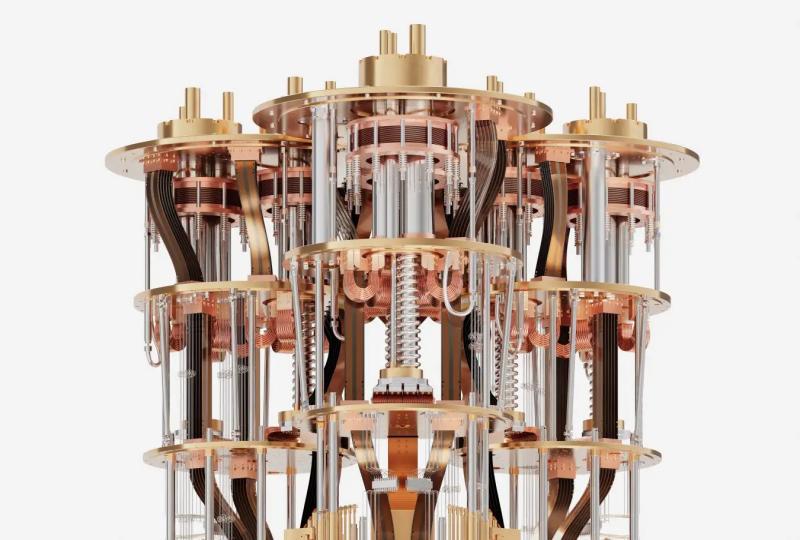
Superconducting qubits are a key hardware approach for building scalable quantum computers. Unlike conventional semiconductor devices, they rely on superconducting quantum circuits and Josephson junctions to create controllable quantum states.
For customers looking for a factory superconducting qubit solution, the important questions go beyond how a qubit works. Manufacturing consistency, chip design, packaging, testing, control, and system integration all affect how a quantum processor can be used in research and practical applications.
What Is a Superconducting Qubit Factory?
A superconducting qubit factory brings several engineering processes together to produce quantum chips with controlled and repeatable characteristics.
From chip design to packaged hardware
A superconducting quantum chip involves multiple stages:
-
Qubit circuit design
-
Micro-nano fabrication
-
Chip packaging
-
Electrical characterization
-
Cryogenic testing
-
Quantum control and measurement
The quality of each stage matters because the qubit must operate as a controllable quantum device after fabrication.
SpinQ provides QPU manufacturing and characterization services covering the process from design to packaging, supported by micro-nano laboratory capabilities and expertise in superconducting device physics.
How Are Superconducting Qubits Manufactured?
The manufacturing process connects circuit design with physical quantum hardware.
Designing the superconducting circuit
Superconducting qubits are constructed from superconducting quantum circuits centered on Josephson junctions. Their nonlinear LC-resonator behavior creates two low-energy levels that serve as the |0⟩ and |1⟩ states.
This makes circuit architecture an important part of the manufacturing process. The design must support the intended qubit connectivity, control method, and application requirements.
Fabricating and packaging the chip
After the design stage, the physical chip must be fabricated and packaged for operation in a cryogenic environment.
For applications requiring a ready-to-use hardware unit, SPINQ QPU C Series superconducting quantum chips use standardized design, fabrication, packaging, and testing processes. The product line includes different configurations, allowing users to select QPUs according to their experimental requirements.
Which Manufacturing Factors Affect Qubit Performance?
A superconducting qubit factory needs to maintain consistency throughout fabrication and testing because small differences in quantum hardware can affect operational performance.
Coherence and circuit quality
SpinQ's QPU C Series is designed for high-coherence and high-stability applications. The chips operate at ultra-low temperatures of around 20 mK and are designed with high Qi factors and circuit uniformity.
The published specifications also provide measurable performance references. For example, the C25 PRO configuration lists median T₁ of at least 60 μs, median T₂ of at least 30 μs, and median single-qubit gate fidelity of at least 99.8%.
Qubit connectivity
Connectivity becomes increasingly important as the number of qubits increases.
The QPU C Series adopts a 2D lattice topology, with the architecture supporting up to 100+ superconducting qubits and native support for quantum error correction experiments.
This type of architecture provides a foundation for developing larger quantum processors rather than treating each qubit as an isolated unit.
How Does a Factory Test Superconducting Qubits?
Fabrication is only one part of superconducting qubit production. Testing provides the measurements needed to understand whether a completed QPU meets its intended specifications.
Characterizing the finished QPU
SpinQ QPU products include a factory characterization report covering measurements such as:
-
Resonant cavity frequency
-
Qubit frequency
-
Decoherence time
-
Other key characterization results
This gives users measurable information about the delivered quantum hardware rather than relying only on nominal design parameters.
Testing at cryogenic temperatures
Superconducting QPUs require an ultra-low-temperature operating environment. SpinQ operating temperature of around 20 mK for its QPU C Series.
For customers developing a complete experimental setup, SpinQ also provides cryogenic environment deployment covering dilution refrigerators, cryogenic RF components, laboratory retrofitting, integration, and maintenance.
Can Superconducting Qubit Manufacturing Be Standardized?
Standardization is important when quantum hardware needs to move beyond individual laboratory prototypes.
Standardized design and production
SpinQ's QPU C Series uses standardized processes covering:
-
QPU design simulation
-
Fabrication
-
Packaging
-
Testing
The approach supports commercially available QPUs while maintaining defined configurations and documented performance.
This is particularly useful for organizations that need repeatable hardware for quantum computing development, validation, education, or application research.
Different qubit configurations
Different projects require different hardware scales. SpinQ offers QPU configurations including C5, C25, and other C Series options, with different qubit numbers and architectures. The published C5 and C25 specifications include 1D chain and 2D lattice topologies respectively.
What Should You Look for in a Superconducting Qubit Factory?
When selecting a superconducting qubit manufacturer, technical capability should be considered together with the support available after fabrication.
Check the manufacturing scope
Important questions include:
-
Can the supplier handle design and fabrication?
-
Is packaging included?
-
Is characterization provided?
-
Are performance results documented?
-
Can different qubit configurations be supplied?
-
Is customization available?
SpinQ's superconducting quantum computing portfolio covers QPUs, QPU EDA, quantum control and measurement systems, and related system solutions. This broader product structure can help connect the quantum chip with the hardware required for operation.
Check control and measurement compatibility
A QPU needs suitable control electronics to become part of a functioning quantum computing system.
The SPINQ QCM System uses a modular architecture with RF control electronics and supports measurement and control of hundreds of qubits. It also provides tutorial codes for qubit characterization and calibration.
This makes compatibility between the QPU and its control system an important consideration when planning a superconducting quantum computing platform.
Why Choose SpinQ for Superconducting Qubit Solutions?
SpinQ combines superconducting QPU products with manufacturing, characterization, control, measurement, and system deployment capabilities.
From QPU to complete quantum computing systems
SpinQ's product ecosystem covers QPUs and QPU EDA through quantum control and measurement systems, superconducting quantum computers, algorithms, and software. The goal is to provide modular units, integrated systems, and complete solutions for industrial applications.
The SpinQ superconducting quantum computing solutions therefore address more than the physical qubit itself, connecting quantum hardware with the systems needed for experimentation and development.
Experience in superconducting quantum hardware
SpinQ was founded in 2018 and has developed a business covering superconducting quantum computers, NMR quantum computers, online quantum experiment platforms, and application software. Its products have been sold in more than 40 countries and regions.
In November 2023, SpinQ delivered an independently developed and manufactured superconducting quantum chip to a research institution in the Middle East, marking its first superconducting quantum chip exported overseas.
For organizations evaluating a superconducting qubit factory, this combination of manufacturing capability, product development, characterization, and system integration provides a practical path from quantum chip requirements to deployable quantum computing hardware.
SpinQ continues to develop superconducting quantum computing technologies while expanding their use across scientific research, education, drug development, fintech, artificial intelligence, and other application areas.
To explore current developments and product releases, SpinQ quantum computing news provides updates on superconducting quantum computers, QPUs, quantum education, and related quantum technologies.
Featured Content