
How Can Superconducting Qubits Support National Labs?
2026.10.08 · Blog Superconducting Qubit for National Labs
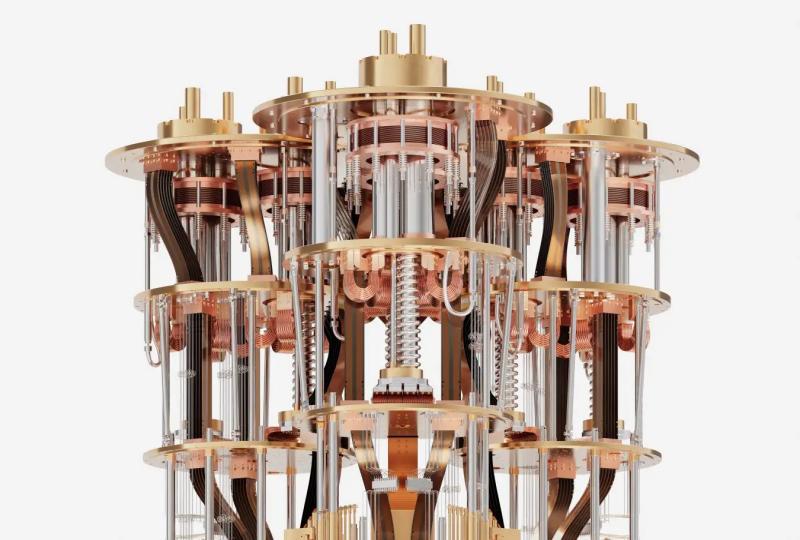
National labs need quantum computing hardware that can fit into demanding research environments, where stability, precise control, measurement, and system integration all matter. Superconducting qubits offer a practical architecture for building programmable quantum processors, but the QPU is only one part of the system. Cryogenic conditions, control electronics, measurement capabilities, and supporting infrastructure all contribute to a usable research platform.
Why Do Superconducting Qubits Matter for National Lab Research?
For research teams working with quantum hardware, a superconducting qubit platform needs to provide more than a specific number of qubits. It should make the processor, control system, and experimental environment work together smoothly.
SpinQ develops an industrial-grade superconducting quantum computing ecosystem covering superconducting quantum computers, QPUs, quantum control and measurement systems, and supporting services. This integrated approach allows research teams to select the hardware and system configuration that fits their experimental requirements.
Programmable Quantum Hardware
Superconducting qubits are built using circuits with Josephson junctions, where qubits are formed through macroscopic quantum effects.
This architecture supports:
-
Scalable qubit numbers
-
High-fidelity quantum gates
-
Controllable multi-qubit coupling
-
Programmable quantum operations
These capabilities make superconducting processors suitable for research that requires direct interaction with quantum hardware.
What Should a National Lab Look for in a Superconducting Qubit System?
The number of qubits is only one part of a useful research platform. For laboratory applications, researchers also need to consider how consistently the QPU performs and how easily it connects with the rest of the experimental system.
QPU Performance and Stability
Key considerations include:
-
Coherence characteristics
-
Gate fidelity
-
Circuit uniformity
-
Qubit stability
-
Multi-qubit control
The SpinQ QPU C Series is designed for high-coherence and high-stability quantum computing applications. It operates at ultra-low temperatures of around 20 mK and features a high Qi factor, extended coherence times, and circuit uniformity.
Flexible Experimental Control
Research requirements can change as experiments progress. A suitable system should therefore provide sufficient control and measurement capabilities rather than limiting researchers to a fixed workflow.
This is where the QPU and its control infrastructure need to be considered as one system.
How Do Cryogenics Support Superconducting Qubits?
Superconducting qubits require an ultra-low-temperature environment to operate effectively. For this reason, cryogenic engineering is closely connected to QPU performance.
Stable Low-Temperature Operation
The QPU C Series operates at around 20 mK. Maintaining this environment requires more than a refrigerator alone. The cryogenic system, RF components, QPU, and laboratory infrastructure need to work together.
A stable cryogenic environment helps create the conditions required for high-fidelity qubit operation.
Integrated Cryogenic Infrastructure
For larger research projects, the surrounding infrastructure becomes increasingly important.
SpinQ provides cryogenic environment deployment covering:
-
Dilution refrigerators
-
Cryogenic RF components
-
Laboratory retrofitting
-
System integration
-
Maintenance
This allows the cryogenic environment to be planned around the quantum computing system rather than treated as an isolated component.
Why Do Quantum Control and Measurement Matter?
Once the QPU is operating at cryogenic temperatures, researchers still need precise ways to control and measure the qubits. This makes the quantum control and measurement system an essential part of the experimental setup.
Precise RF Control
The SpinQ QCM System uses a modular architecture with high-precision RF control electronics. It is designed to support measurement and control of hundreds of qubits.
FPGA-based hardware acceleration also supports high-speed control and measurement, while the system includes tutorial codes for qubit characterization and calibration.
Faster Qubit Characterization
Qubit research often requires repeated measurement and calibration. A suitable control system can make these processes more efficient by bringing control, measurement, and characterization capabilities into one workflow.
For national labs, this integration can be especially useful when the quantum processor is being used as an experimental research platform rather than simply as a computing resource.
How Should a Superconducting Qubit System Be Evaluated?
A complete evaluation should look at how the major components work together.
Look at the QPU
Consider:
-
Qubit characteristics
-
Coherence
-
Gate fidelity
-
Circuit uniformity
-
Multi-qubit coupling
Look at Control and Measurement
The control system should provide:
-
High-precision RF control
-
Flexible measurement
-
Multi-qubit management
-
FPGA-based acceleration
-
Qubit characterization and calibration support
Look Beyond Individual Components
The practical question is not simply whether each component meets a specification. It is whether the QPU, control electronics, measurement system, and cryogenic environment can operate as a coherent research platform.
That system-level view helps laboratories reduce compatibility issues between individual components and provides a clearer path for future development.
What Can a Complete Superconducting Quantum Platform Include?
A superconducting quantum computing platform can extend from the QPU to the surrounding experimental infrastructure.
For laboratories exploring different configurations, SpinQ's superconducting quantum computing products include the SPINQ Taurus™ superconducting quantum computer, QPU C Series superconducting quantum chips, the SPINQ QCM System, QPU manufacturing and characterization services, and cryogenic environment deployment.
Superconducting Quantum Computer
The SPINQ Taurus™ uses Josephson-junction-based circuits and is designed around scalable qubit numbers, high gate fidelity, and controllable multi-qubit coupling.
Superconducting QPU
The QPU C Series operates at around 20 mK and is designed with high Qi, extended coherence times, and circuit uniformity for superconducting quantum computing applications.
Control, Measurement, and Cryogenics
The system can also be supported by quantum control and measurement equipment, QPU manufacturing and characterization services, and cryogenic environment deployment.
Together, these capabilities provide a more complete foundation for laboratories building or expanding superconducting quantum computing research infrastructure.
How Can National Labs Build a Superconducting Qubit Research Platform?
The right configuration depends on the laboratory's research objectives, existing infrastructure, and required level of hardware access.
Match the System to the Research
Before selecting equipment, define:
-
Required QPU capabilities
-
Target qubit scale
-
Control and measurement requirements
-
Cryogenic requirements
-
Existing laboratory infrastructure
-
Future expansion needs
This helps determine whether the laboratory needs a complete superconducting quantum computer, an individual QPU, control and measurement equipment, or a combination of these capabilities.
Build for Long-Term Research
A research platform should also leave room for future development. Modular hardware, integrated control, and scalable system architecture can make it easier to adapt the platform as experimental requirements change.
SpinQ brings together superconducting quantum computers, QPUs, quantum control and measurement systems, QPU manufacturing and characterization, and cryogenic deployment to support different stages of superconducting quantum computing research.
When a national lab is ready to discuss specific hardware, control, or cryogenic requirements, contact SpinQ for a superconducting quantum computing solution tailored to the intended research environment.
.jpg)
Featured Content