
How Is Superconducting Quantum Computer Development Achieved?
2026.10.08 · Blog Superconducting Quantum Computer development
Superconducting Quantum Computer development is a system-level engineering process that extends far beyond increasing the number of qubits on a chip. Reliable quantum computing requires coordinated progress in qubit design, chip fabrication, packaging, cryogenic operation, control electronics, measurement, calibration, and system integration.
As quantum processors become more complex, each development stage introduces new technical requirements. Qubit coherence must be preserved, unwanted interactions must be controlled, manufacturing consistency must be maintained, and increasingly complex control and readout systems must operate within strict cryogenic constraints. Understanding these interconnected processes provides a clearer view of how superconducting quantum computers progress from device concepts to practical computing systems.
What Does Superconducting Quantum Computer Development Involve?
Superconducting quantum computer development connects several engineering disciplines into one development cycle. A quantum processor cannot be optimized effectively by treating its chip, cryogenic environment, control hardware, and software as isolated components.
From Qubits to a Complete System
At the device level, development begins with superconducting qubit and circuit architecture. Engineers consider parameters such as qubit frequency, coupling, coherence, gate operation, and readout performance.
The next stages extend beyond the chip itself. Fabricated devices need to be packaged, characterized, connected to cryogenic infrastructure, and integrated with control and measurement electronics. This system-level approach is also reflected in superconducting quantum computing solutions, where hardware, cryogenic operation, control, and system integration need to work together.
The overall development cycle therefore includes:
-
Superconducting qubit and circuit design
-
Quantum chip fabrication
-
QPU packaging and characterization
-
Cryogenic system engineering
-
Quantum control and readout
-
Calibration and performance optimization
-
Software and system integration
Each stage affects the performance requirements of the others, making coordination essential throughout development.
How Are Superconducting Qubits Developed?
The performance of a superconducting quantum computer ultimately depends on how reliably its qubits can be operated and controlled.
Designing Qubits for Reliable Operation
Superconducting qubits must maintain quantum states long enough to support useful operations while remaining controllable and measurable. This requires careful attention to coherence, operating frequency, coupling, fabrication parameters, and environmental sensitivity.
Qubit design also involves balancing different requirements. Stronger coupling can support faster interactions, but unwanted interactions may increase. Higher connectivity can simplify some operations, while also increasing control complexity. As a result, qubit development is fundamentally an optimization problem rather than a single-parameter improvement.
Moving From Individual Qubits to Qubit Arrays
A multi-qubit processor introduces additional constraints that are not present in an isolated qubit.
Frequency allocation, coupling architecture, control signals, readout channels, and physical layout all need to be coordinated. Crosstalk between neighboring elements and unwanted interactions can become increasingly difficult to manage as the number of qubits grows.
This makes the transition from individual-device development to larger qubit arrays a major step in superconducting quantum computer development.
How Is a Superconducting Quantum Chip Developed?
Quantum chip development transforms circuit concepts into physical devices that can be fabricated, tested, and integrated into a QPU.
Chip Design and Fabrication
The process begins with circuit and layout design. Engineers define superconducting structures, resonators, coupling elements, control lines, and other components according to the intended qubit architecture.
Fabrication then translates these designs into physical structures through controlled material deposition, patterning, etching, and other microfabrication processes. Process variation can influence electrical characteristics and ultimately affect qubit performance.
For this reason, superconducting quantum products involve more than the quantum chip itself. QPU manufacturing, characterization, and the supporting hardware required to operate superconducting processors all form part of a practical development environment.
Why Characterization Matters
Fabrication does not mark the end of chip development. Each device needs to be characterized to determine whether its actual electrical and quantum properties match the intended design.
Characterization can reveal variations in resonance frequencies, coupling behavior, coherence, readout response, and other performance parameters. These measurements create a feedback loop between device fabrication and subsequent optimization.
The resulting data can be used to refine fabrication processes, improve chip layouts, adjust operating parameters, and guide future generations of quantum processors.
Why Is Cryogenic Engineering Essential to Superconducting Quantum Computing?
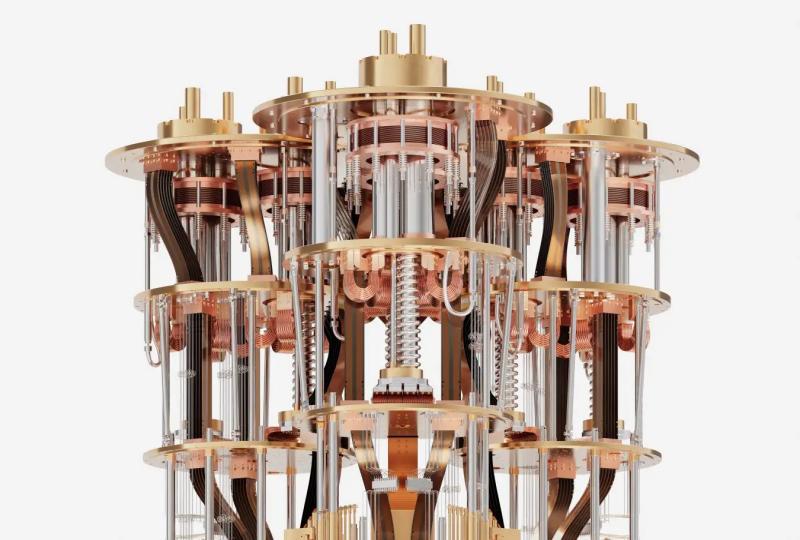
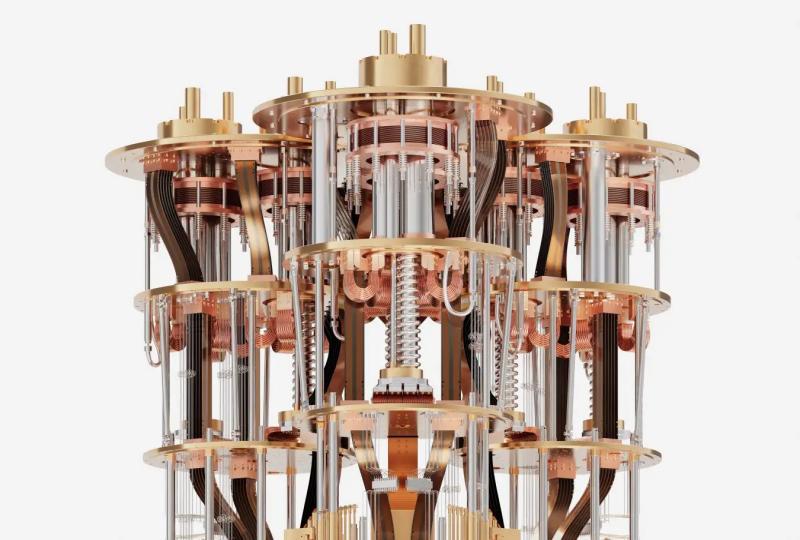
Superconducting qubits require extremely low operating temperatures to maintain their superconducting behavior and support stable quantum operations. Cryogenic engineering is therefore a core part of the processor architecture rather than an external supporting function.
Creating a Stable Operating Environment
A superconducting quantum system typically relies on dilution refrigeration to reach the low-temperature environment required by the QPU.
However, reaching a low temperature alone is not sufficient. The complete cryogenic environment must also address:
-
Thermal loads from cables and components
-
Electromagnetic interference
-
Signal attenuation and filtering
-
Heat dissipation
-
Mechanical and environmental stability
-
Reliable connections between room-temperature electronics and the QPU
As a result, cryogenic engineering directly influences the operating conditions available to the quantum processor.
Connecting the QPU With the Cryogenic System
The interface between the QPU and cryogenic infrastructure is particularly important. Control and readout signals must travel through different temperature stages while maintaining appropriate signal integrity and thermal performance.
As systems become larger, the number of required connections and components also increases. This creates additional challenges involving wiring density, thermal management, signal routing, and system maintenance.
How Are Superconducting Quantum Computers Controlled and Measured?
A superconducting QPU cannot operate independently. Control electronics generate the signals required to manipulate qubits, while measurement systems capture the resulting quantum states.
Quantum Control
Quantum control involves precise management of signal frequency, amplitude, timing, and pulse shape. These parameters determine how individual qubits and coupled qubit systems are operated.
Increasing the number of qubits creates a corresponding increase in control requirements. More channels, more calibration parameters, and more complex signal routing can make system management significantly more demanding.
This is why scalable superconducting quantum computer development requires control architecture to evolve alongside the QPU rather than being added after the processor has been designed.
Quantum Readout and Calibration
Readout determines how the state of a qubit is measured, while calibration establishes the operating parameters needed for reliable quantum gates and measurements.
Calibration can involve qubit frequencies, pulse parameters, timing, readout settings, and other system characteristics. Because device behavior can change with operating conditions, calibration is an ongoing engineering activity rather than a one-time setup procedure.
A typical development loop can therefore be viewed as:
Design → Fabrication → Measurement → Calibration → Optimization
The results from each stage feed back into the next generation of devices and operating parameters.
What Are the Main Challenges in Superconducting Quantum Computer Development?
The central challenge is not simply achieving more qubits. It is maintaining useful system performance as the architecture becomes increasingly complex.
Maintaining Qubit Coherence
Quantum information is sensitive to environmental disturbances. Material defects, electromagnetic noise, thermal effects, fabrication variation, and unwanted interactions can all affect qubit behavior.
Improving coherence therefore requires attention to materials, device geometry, fabrication quality, packaging, electromagnetic environment, and cryogenic conditions.
Reducing Noise and Crosstalk
Noise and crosstalk can originate at multiple levels of the system. Chip layout, packaging, wiring, control electronics, and measurement hardware can all contribute to unwanted interactions or signal degradation.
Solving these problems requires system-level optimization. Improvements in one component may have limited value if another part of the architecture introduces a larger source of interference.
Improving Manufacturing Consistency
Manufacturing consistency becomes increasingly important as quantum processors scale. Small variations between nominally identical devices can result in different operating frequencies, coupling characteristics, or control requirements.
Consistent fabrication processes and comprehensive device characterization therefore become essential for building larger and more predictable processor platforms.
How Can Superconducting Quantum Computers Scale?
Scaling requires more than placing additional qubits on the same chip. Every increase in processor size affects the supporting architecture.
More Qubits Require More Supporting Infrastructure
Larger processors generally require more:
-
Control and readout channels
-
Cryogenic connections
-
Signal-processing resources
-
Calibration parameters
-
Thermal management capacity
-
Software and system-management capabilities
These requirements create a scaling challenge across the entire stack.
A QPU with more qubits may therefore demand significant changes to its packaging, cryogenic infrastructure, control architecture, calibration workflow, and software environment. The ability to coordinate these layers becomes increasingly important as system size grows.
Building Toward Larger Quantum Systems
A scalable development strategy treats the QPU, cryogenic environment, control electronics, measurement infrastructure, and software as interconnected components.
This approach also makes modular development important. Individual subsystems can be characterized and optimized before being integrated into increasingly complex quantum computing platforms.
The objective is not simply to maximize qubit count, but to build a system in which additional qubits can be operated, measured, calibrated, and maintained effectively.
Where Is Superconducting Quantum Computer Development Heading?
The development of superconducting quantum computers is moving toward increasingly integrated engineering workflows. Improvements in chip design need to be matched by advances in fabrication, packaging, cryogenics, control, measurement, calibration, and system software.
From Component Development to System Integration
Future progress depends on reducing the gap between individual component performance and complete-system performance.
A high-performing qubit is valuable only when it can be fabricated consistently, integrated into a QPU, operated within a stable cryogenic environment, controlled accurately, and measured reliably. The same principle applies to every layer of the quantum computing stack.
For organizations building research and computing capabilities, this makes system integration an increasingly important part of superconducting quantum computing development.
Supporting Practical Quantum Computing
Superconducting quantum computer development ultimately depends on the ability to bring multiple engineering disciplines together into a reliable operating platform.
Our work spans superconducting QPU development, quantum chip manufacturing and characterization, cryogenic infrastructure, and control and measurement technologies. This integrated approach supports organizations that need to move from quantum hardware concepts toward practical experimental and research environments.
For projects that require a more specific technical discussion, quantum computing consultation can help clarify requirements around QPU configuration, cryogenic environments, control systems, and system integration.
Conclusion
Superconducting Quantum Computer development is a continuous engineering process involving qubit design, chip fabrication, characterization, cryogenic operation, quantum control, measurement, calibration, and system integration.
As processor architectures become more complex, the key development challenge shifts from individual component performance toward coordinated system performance. Successful scaling requires each layer of the architecture to develop together, creating a reliable foundation for increasingly capable superconducting quantum computing systems.
.jpg)
Featured Content