
What Can Students Learn with an Educational Quantum Computer in Laboratories?
2026.09.20 · Blog for laboratories Educational Quantum Computer
Quantum computing is easier to understand when students can connect what they learn in class with what they can actually observe and operate. A laboratory gives them that opportunity by bringing quantum computing concepts into hands-on learning.
With an educational quantum computer, students can move beyond theoretical study to programming, experimentation, and result analysis. At SpinQ, we combine real quantum computer equipment, staged experiments, learning resources, and hands-on practice to support quantum computing education in laboratory settings.
What Skills Can Students Build in a Quantum Computing Laboratory?
A well-designed quantum computing laboratory should do more than demonstrate how a quantum computer works. It should give students opportunities to apply what they learn and gradually develop practical skills.
Our quantum education solutions are designed around this connection between theory and practice, with laboratory solutions for university and secondary school education. Students can learn through both theoretical study and real machine practice.
From Quantum Concepts to Practical Learning
Students can use laboratory activities to connect quantum information concepts with actual experiments. This makes it easier to follow how an idea studied in class becomes an observable experimental process.
As their experience grows, they can move from guided activities toward more independent quantum computing experiments.
Building Programming and Experimentation Skills
Hands-on work also gives students a chance to write quantum programs, operate quantum computing equipment, and examine the results of their experiments.
This combination helps connect programming with physical quantum computing rather than keeping software and laboratory work completely separate.
Which Quantum Computing Experiments Can Students Explore?
Once students have a foundation in quantum computing, the next step is to give them experiments that match their level and learning objectives. Different laboratory platforms can support different depths of experimentation.
Quantum Algorithms and Circuit Programming
The SPINQ Triangulum™ Ⅱ is a 3-qubit desktop NMR quantum computer designed for quantum computing education and demonstrations. It supports any 3-qubit quantum algorithm, allows users to write quantum programs, and provides hardware-level pulse sequence editing.
This gives students a practical way to connect quantum algorithm design with an actual quantum computing system.
From Pulse-Level to Algorithm-Level Experiments
For more advanced laboratory work, SPINQ Gemini™ Lab provides a broader experimental environment. It uses Radio Frequency technology and an open architecture to support experiments from pulse-level and gate-level through to algorithm-level, making it suitable for both teaching and research in higher education.
Students can therefore explore not only quantum algorithms, but also the hardware and control processes behind quantum computation.
How Does Hands-On Practice Strengthen Student Learning?
The value of laboratory learning becomes clearer when students can gradually take more responsibility for an experiment. Instead of simply following a theoretical explanation, they can work through a complete process from setup to observation and analysis.
Learning Through Real Machine Practice
Our quantum education approach combines theoretical learning with real machine practice and staged quantum computing experiments. This structure allows students to build their knowledge step by step while working with real quantum computing equipment.
Developing Experimental and Engineering Skills
For students who want to explore quantum hardware more deeply, the Spin Qubit Experimental System provides access to quantum physical phenomena, fundamental quantum experimental techniques, Radio Frequency technology, and digital signal processing.
This gives advanced learners a practical environment for developing skills in quantum information experiments and engineering applications.
How Can an Educational Quantum Computer Support Different Learning Levels?
Students enter quantum education with different levels of experience, so laboratory equipment needs to support a clear progression from guided learning to deeper experimentation.
Our product range covers portable, desktop, and experimental configurations, allowing educational programs to align equipment with their teaching and laboratory objectives.
Accessible Learning and Demonstration
The SPINQ Gemini™ Mini/Mini Pro is a 2-qubit portable NMR quantum computer with a built-in touchscreen, control system, and curriculum for teaching and self-learning.
It provides a practical starting point for students who need to develop an understanding of quantum computing and algorithm design through direct interaction with the equipment.
Advanced Laboratory Exploration
As students move into more advanced courses or research-oriented projects, an experimental platform can provide greater access to quantum hardware and experimental processes.
This progression allows a quantum computing laboratory to support different learning objectives without treating every student or course as requiring the same level of equipment.
Can Students Move from Quantum Education to Research?
For higher education, laboratory learning can naturally extend into more advanced experimental work. Students who have developed programming and experimental skills can use them as a foundation for research-oriented activities.
SPINQ Gemini™ Lab is designed as a one-stop experimental platform covering quantum mechanics through quantum computing, with experiments ranging from pulse-level to gate-level and algorithm-level. This makes it suitable for both teaching and research in higher education.
The result is a more continuous learning path: students can develop fundamental skills first and then apply those skills to more advanced quantum computing and experimental projects.
What Should a Practical Quantum Computing Laboratory Provide?
The equipment is only one part of an effective educational environment. Students also need structured experiments and learning resources that help them connect different stages of study.
A practical laboratory can bring together:
-
Real quantum computer equipment
-
Staged quantum computing experiments
-
Theoretical study
-
Real machine practice
-
Learning and teaching resources
-
Opportunities for advanced experimentation
Our education solution brings these elements together to help universities and science outreach institutions develop quantum information teaching programs.
Explore Educational Quantum Computers for Your Laboratory
Students learn quantum computing more effectively when theory, programming, and experimentation work together. With the right educational quantum computer, a laboratory can give students a practical path from learning quantum concepts to writing programs, performing experiments, and developing advanced technical skills.
SpinQ provides educational-grade NMR quantum computers in experimental, desktop, and portable configurations, together with solutions designed for quantum computing education and laboratory practice.
If you are planning a quantum computing laboratory, developing a university course, or looking for equipment for hands-on quantum education, contact SpinQ's quantum computing team to discuss your laboratory requirements and suitable solution.
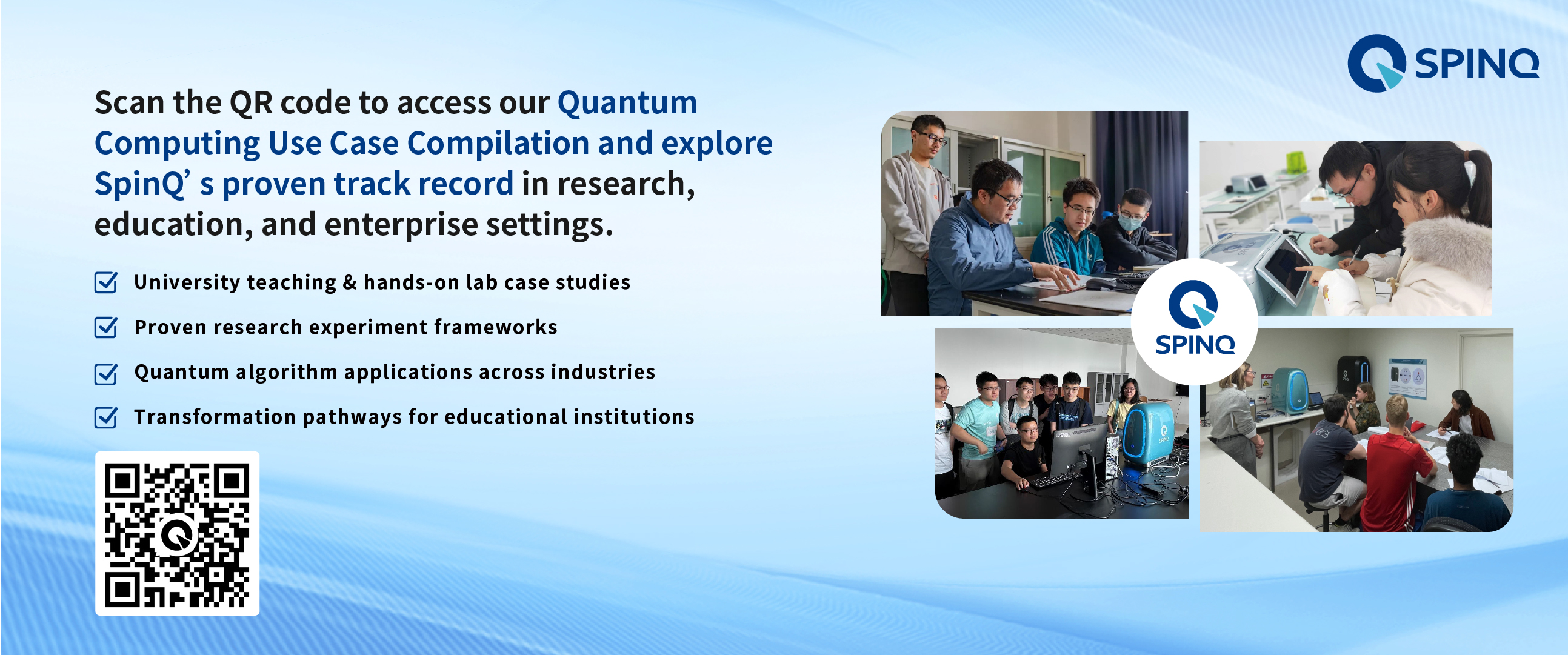
Featured Content