
Thermodynamics and Control of Open Quantum Systems in Quantum Computing
2026.11.12 · Blog thermodynamics and control of open quantum systems
Thermodynamics and control of open quantum systems are essential to understanding how quantum devices behave in real environments. Unlike idealized quantum systems, which are assumed to be isolated, practical quantum systems interact with their surroundings. These interactions can cause energy loss, decoherence, and changes in quantum states.
Quantum thermodynamics examines how energy, heat, work, and entropy behave in these systems, while quantum control focuses on managing their evolution through external signals, pulses, and measurements. Together, these fields provide important foundations for improving quantum hardware.
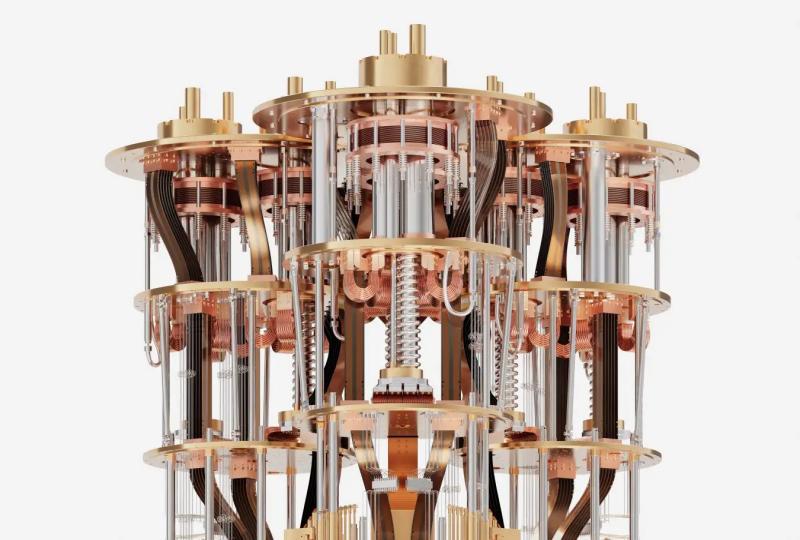
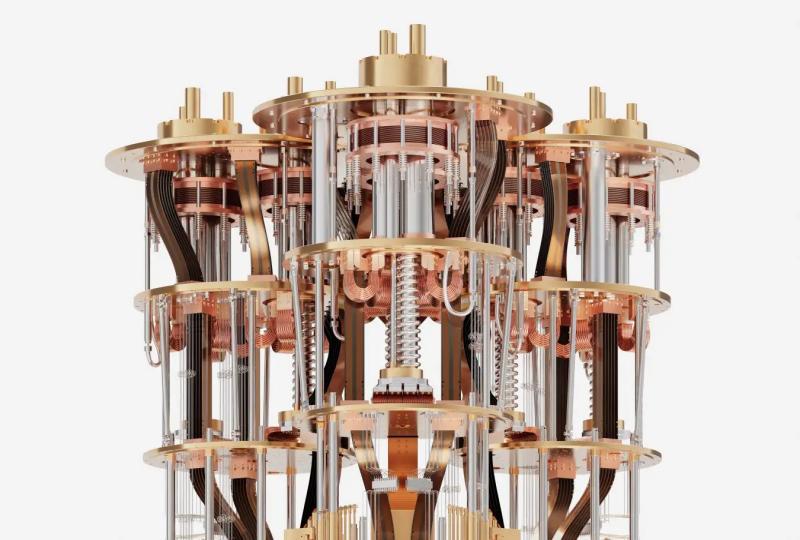
These challenges are particularly relevant to superconducting quantum computers, where environmental noise, material properties, and control accuracy directly affect qubit performance.
What Are Open Quantum Systems and How Do They Work?
An open quantum system is a quantum system that interacts with its external environment. The system may exchange energy and information with its surroundings, causing its state to evolve differently from an ideal isolated system.
Closed Quantum Systems vs. Open Quantum Systems
A closed quantum system is an ideal model in which no energy or information is exchanged with the environment. Its evolution can be described by the Schrödinger equation and unitary transformations.
An open quantum system, however, is influenced by external factors such as thermal fluctuations, electromagnetic fields, and interactions with surrounding materials.
A typical open quantum system contains three elements:
-
System: The quantum object being studied, such as an atom, nuclear spin, or superconducting qubit.
-
Environment: The surrounding physical conditions and external degrees of freedom.
-
Interaction: The coupling between the system and its environment, which can affect energy and information exchange.
This interaction makes open-system dynamics more complex than the evolution of isolated quantum states.
How Environmental Interactions Affect Quantum States
Environmental interactions can produce several effects:
-
Energy relaxation: A quantum system loses energy to its environment and moves toward a lower-energy state.
-
Decoherence: The phase relationships between quantum states gradually disappear, weakening quantum interference.
-
Quantum noise: Random fluctuations influence the evolution and measurement of quantum states.
These effects are important in quantum computing because quantum operations depend on maintaining controlled quantum states throughout a computation.
The Thermodynamics of Open Quantum Systems
Quantum thermodynamics applies thermodynamic concepts to quantum systems, including those that interact with their environments. It examines how energy and entropy change during quantum processes.
Energy, Heat, and Work in Quantum Systems
Energy, heat, and work remain central concepts in quantum thermodynamics, but their definitions require consideration of quantum states and interactions.
The energy of a quantum system is determined by its Hamiltonian. When an external field or control signal changes the Hamiltonian, work can be performed on the system. Heat exchange, in contrast, is associated with energy transferred through interactions with the environment.
For example, an externally driven quantum system may absorb energy during a control operation. At the same time, its interaction with the environment can cause energy dissipation.
Understanding these processes helps researchers analyze how quantum devices respond to external driving and environmental influences.
Entropy and Irreversible Quantum Processes
Entropy describes important aspects of uncertainty and information in a quantum state. One widely used measure is von Neumann entropy:
S(ρ) = −Tr(ρ log ρ)
Here, ρ represents the density matrix of the quantum system.
For an ideal isolated system undergoing unitary evolution, von Neumann entropy remains unchanged. In an open system, however, interactions with the environment can change the system's reduced state and increase its entropy.
This is closely related to decoherence and irreversible processes. Information about the system may become distributed across its environment, making the original quantum state difficult to recover.
Nonequilibrium Dynamics and Quantum Dissipation
Many quantum systems operate far from thermal equilibrium. External driving, continuous measurement, and environmental coupling can keep a system in a nonequilibrium state.
Quantum dissipation describes the loss of energy from a system through its interaction with the environment. Researchers study these processes to understand how quantum states evolve over time and how energy flows between different parts of a physical system.
The dynamics may be Markovian, where environmental memory effects are negligible, or non-Markovian, where information and correlations can flow back from the environment to the system.
These distinctions help researchers select appropriate models and control strategies for different quantum devices.
How Open-System Effects Influence Superconducting Qubits
Superconducting qubits are particularly relevant to the study of open quantum systems because their performance depends on interactions with their surrounding physical environment.
A superconducting qubit is typically formed from a nonlinear superconducting electrical circuit. Its quantum states are controlled using microwave signals, while measurements reveal information about its state.
Although these devices operate at cryogenic temperatures, they are not completely isolated from environmental influences.
Energy Relaxation and Qubit Coherence
Two important parameters for characterizing superconducting qubits are T1 and T2.
-
T1 relaxation time describes how quickly a qubit loses energy and transitions from an excited state toward its ground state.
-
T2 coherence time describes how long the relative phase between quantum states remains coherent.
A short T1 or T2 can limit the time available for quantum operations. These parameters therefore influence gate performance, state preparation, and the reliability of quantum circuits.
The relationship between energy relaxation and coherence is also important. Under common assumptions, the coherence time is limited by both energy relaxation and pure dephasing:
1/T2 = 1/(2T1) + 1/Tφ
Here, Tφ represents the pure dephasing time.
Measuring these parameters helps researchers identify different sources of performance degradation and evaluate the behavior of superconducting qubits.
Environmental Noise and Qubit Stability
Superconducting qubits are sensitive to several sources of environmental disturbance.
-
Electromagnetic noise: Fluctuations in control and readout lines can affect qubit frequencies and operations.
-
Material defects: Imperfections at interfaces and within materials can contribute to energy loss and decoherence.
-
Thermal effects: Unwanted thermal excitations can influence qubit populations even in cryogenic environments.
-
Crosstalk: Unintended interactions between control channels or neighboring qubits can interfere with quantum operations.
These effects become increasingly important as quantum processors integrate more qubits and control channels.
Managing environmental noise therefore requires coordinated improvements in chip design, materials, cryogenic engineering, and control electronics.
Managing Decoherence in Superconducting Quantum Processors
Researchers use several approaches to reduce the impact of environmental interactions.
First, improvements in materials and circuit design can reduce unwanted losses. Better fabrication processes and interface engineering can help limit sources of decoherence.
Second, cryogenic infrastructure and electromagnetic shielding help create a more stable operating environment.
Third, control techniques such as dynamical decoupling can reduce the influence of certain types of noise through carefully designed pulse sequences.
Finally, accurate calibration and measurement are essential for identifying control errors and monitoring qubit performance.
The design of the quantum processor itself also matters. Our superconducting quantum chip development focuses on the hardware foundation required for superconducting quantum processing, where qubit structures, connectivity, and device integration all contribute to system performance.
Quantum Control Methods for Open Quantum Systems
Quantum control aims to influence the evolution of a quantum system through external interactions. For open quantum systems, control methods must account for both the intended operation and unwanted environmental effects.
Pulse Control and External Driving
Superconducting qubits are commonly controlled using microwave pulses. By adjusting pulse frequency, amplitude, phase, and duration, researchers can manipulate qubit states and implement quantum gates.
One basic phenomenon is Rabi oscillation. When a qubit is driven by a resonant external field, its population can oscillate between quantum states.
Rabi oscillations are useful for understanding the relationship between control signals and qubit dynamics. They also provide a practical method for calibrating pulse parameters.
Accurate pulse control is essential because deviations in signal amplitude, timing, or frequency can introduce errors into quantum operations.
Dynamical Decoupling and Noise Suppression
Dynamical decoupling is a control technique that uses sequences of carefully timed pulses to reduce the effects of certain environmental disturbances.
Instead of allowing a quantum state to evolve freely under unwanted interactions, researchers apply control pulses that can partially average out the influence of noise.
The effectiveness of dynamical decoupling depends on the characteristics of the noise and the available control resources. It does not eliminate every source of decoherence, but it can extend coherence under suitable conditions.
Measurement-Based Feedback and Quantum Calibration
Quantum measurements provide information about the state and behavior of a device. Researchers can use measurement results to adjust control parameters and improve experimental performance.
A typical calibration process may involve:
-
Preparing a known initial quantum state.
-
Applying a sequence of control pulses.
-
Measuring the resulting state.
-
Comparing the measurement with the expected result.
-
Adjusting pulse parameters to reduce errors.
Feedback and calibration are especially important in multi-qubit systems, where small control errors can accumulate across quantum circuits.
The Role of Quantum Control and Measurement Systems
The practical control of open quantum systems requires more than a quantum processor. It also depends on the electronics and software responsible for generating control signals, synchronizing operations, and collecting measurement data.
Generating and Synchronizing Quantum Control Signals
In superconducting quantum computers, microwave control signals are used to manipulate qubit states. A control system must generate accurate waveforms and coordinate multiple channels with precise timing.
Important capabilities include:
-
Microwave and radio-frequency signal generation.
-
Programmable pulse shaping.
-
Multi-channel synchronization.
-
Accurate timing and sequence execution.
-
Flexible control of experimental parameters.
These functions help researchers implement quantum gates, conduct calibration experiments, and investigate how control signals affect quantum dynamics.
Measuring Qubit States and Analyzing Experimental Data
Quantum measurement systems convert information about quantum states into signals that can be collected and analyzed.
The process generally involves signal acquisition, readout processing, and data analysis. Researchers use these results to evaluate qubit states, characterize device performance, and identify possible sources of error.
SpinQ's Quantum Control and Measurement System provides a modular control and measurement solution for quantum hardware. Its capabilities in waveform generation, synchronization, measurement, and data processing support the experimental requirements of quantum processor control.
Control and measurement technologies are therefore an important connection between theoretical quantum dynamics and practical hardware experiments.
NMR and Superconducting Qubits as Experimental Platforms
Different quantum hardware architectures offer different ways to investigate quantum dynamics and environmental interactions. NMR and superconducting systems are two examples, each with distinct physical properties and experimental requirements.
Studying Nuclear Spin Dynamics with NMR
Nuclear magnetic resonance uses nuclear spins as quantum information carriers. Radio-frequency pulses manipulate spin states, while resonance signals provide information about the system.
NMR experiments can help researchers investigate:
-
Nuclear spin relaxation through T1 measurements.
-
Transverse coherence through T2 measurements.
-
Rabi oscillations under external RF driving.
-
Quantum state preparation and measurement.
These experiments provide accessible ways to study quantum dynamics and the effects of controlled interactions.
SpinQ's NMR quantum products support quantum computing education and experimental research involving nuclear spin systems. They provide a complementary experimental route for studying quantum states and control techniques.
Investigating Environmental Effects in Superconducting Systems
Superconducting systems offer another experimental environment for studying open quantum dynamics. Their qubits are sensitive to noise, energy loss, and interactions with surrounding materials.
Researchers can investigate these effects through coherence measurements, pulse calibration, qubit readout, and controlled experiments.
Unlike NMR systems, superconducting processors require cryogenic operating environments and specialized microwave control and measurement electronics.
These differences make superconducting systems particularly relevant to research into the engineering challenges of maintaining and controlling quantum states in scalable quantum processors.
Applications of Thermodynamics and Control in Quantum Technologies
Research into open quantum systems has implications beyond understanding environmental effects. It also supports the development of quantum technologies that depend on reliable state preparation, controlled evolution, and accurate measurement.
Quantum Computing and Error Reduction
Decoherence and noise can reduce quantum gate fidelity and introduce errors into quantum circuits.
Understanding how quantum states interact with their environments helps researchers develop better hardware, control techniques, and error-correction methods.
Quantum error correction, for instance, uses encoded information and repeated measurements to detect and correct certain errors. Its implementation depends on sufficiently accurate operations and reliable measurement processes.
Quantum Heat Engines and Refrigeration
Quantum thermodynamics also investigates how quantum systems can function as heat engines and refrigerators.
Quantum heat engines explore energy conversion through quantum states and controlled interactions with thermal environments. Quantum refrigerators investigate how quantum processes can transfer energy and cool selected systems.
These remain active research areas, with questions involving quantum coherence, correlations, and nonequilibrium thermodynamic behavior.
Quantum Sensing and Precision Measurement
Quantum sensing uses quantum properties to measure physical quantities such as magnetic fields, temperature, and acceleration.
Environmental interactions can introduce measurement noise, but carefully designed control sequences can also improve sensitivity under appropriate conditions.
Understanding open-system dynamics is therefore important for developing stable quantum sensors and improving measurement accuracy.
Conclusion
Thermodynamics and control of open quantum systems provide a framework for understanding how quantum devices exchange energy with their environments, lose coherence, and respond to external control. These questions are particularly important for superconducting quantum computing, where qubit performance depends on environmental stability, precise microwave control, and reliable measurement.
Progress requires coordinated development across quantum chip design, cryogenic infrastructure, control electronics, and experimental methods. At SpinQ, we develop superconducting quantum hardware and quantum control and measurement technologies to support the development and study of quantum computing systems.
If you are exploring superconducting quantum processors, control electronics, or experimental quantum computing platforms, contact SpinQ to discuss your research and system requirements.
.jpg)
Contenido Destacado