
An Engineer's Guide to Building Better Superconducting Qubits
2026.11.09 · Blog engineers guide to superconducting qubits
Superconducting qubits are among the leading technologies used to build quantum processors. For engineers, developing them involves much more than understanding quantum mechanics. It requires practical knowledge of circuit design, materials, microfabrication, microwave engineering, cryogenic systems, and precision measurement.
This engineer's guide to superconducting qubits covers the essential stages of development, from selecting a qubit architecture and designing circuit parameters to fabricating chips, configuring control systems, and evaluating performance. It also explains common engineering problems and the considerations involved in integrating individual qubits into a complete quantum computing platform.
What Should Engineers Know Before Working with Superconducting Qubits?
Before designing or testing a superconducting qubit, engineers need to understand its basic circuit structure and operating environment.
A superconducting qubit is an artificial quantum system built from superconducting electrical circuits. It typically uses a Josephson junction, which consists of two superconductors separated by a thin insulating barrier, to introduce the nonlinear behavior needed to create distinguishable quantum energy levels.
Unlike an ordinary electrical circuit, a superconducting qubit operates according to quantum mechanics. Its two computational states are commonly represented as |0⟩ and |1⟩.
Several components are particularly important:
-
Josephson junction: Provides the nonlinear inductive element that makes the circuit suitable for quantum information processing.
-
Capacitor: Helps determine the qubit's charging energy and electrical characteristics.
-
Readout resonator: Couples to the qubit and enables its state to be measured through microwave signals.
-
Coupler: Controls interactions between qubits in multi-qubit processors.
Superconducting qubits also require extremely low operating temperatures, typically in the millikelvin range. This environment reduces thermal excitation and helps preserve quantum coherence.
For engineers, these fundamentals provide the starting point for understanding how circuit parameters, fabrication quality, and experimental conditions influence qubit performance.
How Should Engineers Choose a Superconducting Qubit Architecture?
Qubit architecture affects circuit design, fabrication requirements, control methods, and processor integration. Engineers should select an architecture based on the intended application and the performance requirements of the overall system.
Transmon Qubits for Practical Quantum Processor Design
The transmon is one of the most widely used superconducting qubit designs.
It is based on a Josephson junction shunted by a relatively large capacitance. This configuration reduces sensitivity to charge noise while retaining the nonlinear energy-level structure required for quantum operations.
When designing a transmon, engineers need to consider several parameters:
-
Josephson energy (EJ): Influences the qubit's energy-level structure.
-
Charging energy (EC): Depends on the effective circuit capacitance.
-
Qubit frequency: Determines the frequency range used for microwave control.
-
Anharmonicity: Provides separation between the lowest transition and higher energy-level transitions.
A practical design must balance these parameters. Increasing the ratio of Josephson energy to charging energy can reduce charge sensitivity, but it also affects anharmonicity and other operating characteristics.
Engineers therefore need to optimize the circuit as a whole instead of adjusting individual parameters independently.
Xmon and Other Circuit Architectures
Xmon is a planar transmon-style superconducting qubit architecture. Its layout uses a cross-shaped capacitor structure and supports flexible connections to neighboring qubits and control or readout components.
This makes it useful for studying processor layouts and multi-qubit connectivity.
Other superconducting circuit designs may prioritize different characteristics, such as reduced sensitivity to particular noise sources, longer coherence times, or alternative coupling mechanisms.
When comparing architectures, engineers should evaluate:
-
Sensitivity to charge, flux, and other environmental noise.
-
Available qubit connectivity.
-
Control and readout requirements.
-
Fabrication complexity and reproducibility.
-
Compatibility with the intended processor topology.
There is no single architecture that is optimal for every project. The appropriate choice depends on the balance between qubit performance, manufacturability, and system-level requirements.
How Do Engineers Design a Superconducting Qubit Chip?
After selecting an architecture, engineers need to translate the design into a physical circuit. This stage requires careful coordination between electrical modeling, electromagnetic simulation, and chip layout.
Define Qubit Frequency and Circuit Parameters
Qubit frequency is one of the first parameters engineers need to establish.
For a transmon, the approximate transition frequency can be expressed as:
[
f_{01}\approx \frac{\sqrt{8E_JE_C}-E_C}{h}
]
where:
-
(E_J) is the Josephson energy.
-
(E_C) is the charging energy.
-
(h) is Planck's constant.
This relationship provides an initial design reference. Actual device behavior also depends on circuit parasitics, junction characteristics, and interactions with other components.
Engineers should consider the following during parameter selection:
-
Set a target frequency range that matches the available control and measurement electronics.
-
Estimate junction and capacitance values through circuit modeling.
-
Evaluate anharmonicity to support selective quantum-state control.
-
Allocate frequencies across the chip to reduce unwanted interactions and frequency collisions.
Frequency planning becomes increasingly important when multiple qubits share a processor. Poor frequency allocation can complicate gate operations and increase the risk of unwanted coupling.
Design Couplers and Readout Resonators
Couplers and readout resonators determine how qubits interact with each other and with the measurement system.
For multi-qubit processors, engineers need to design coupling strengths that support the intended quantum gates without introducing excessive unwanted interactions.
Readout resonators are commonly used to measure qubit states through dispersive interactions. The qubit state changes the resonator's response, which can be detected by measuring the reflected or transmitted microwave signal.
Important design considerations include:
-
Resonator frequency and linewidth.
-
Qubit-resonator coupling strength.
-
Separation between neighboring resonator frequencies.
-
Readout signal isolation.
-
Unwanted interactions between adjacent circuit elements.
These parameters affect measurement speed, readout fidelity, and the potential for crosstalk.
Plan Chip Layout and Packaging
A circuit design must also work as a physical chip.
Engineers need to consider qubit placement, coupling structures, ground planes, signal routing, and connections to external electronics.
Packaging is equally important. Poor grounding, parasitic modes, or unsuitable connections can introduce unwanted electromagnetic behavior and degrade device performance.
For larger processors, the layout should also account for future integration requirements, including additional control lines, readout connections, and cryogenic interfaces.
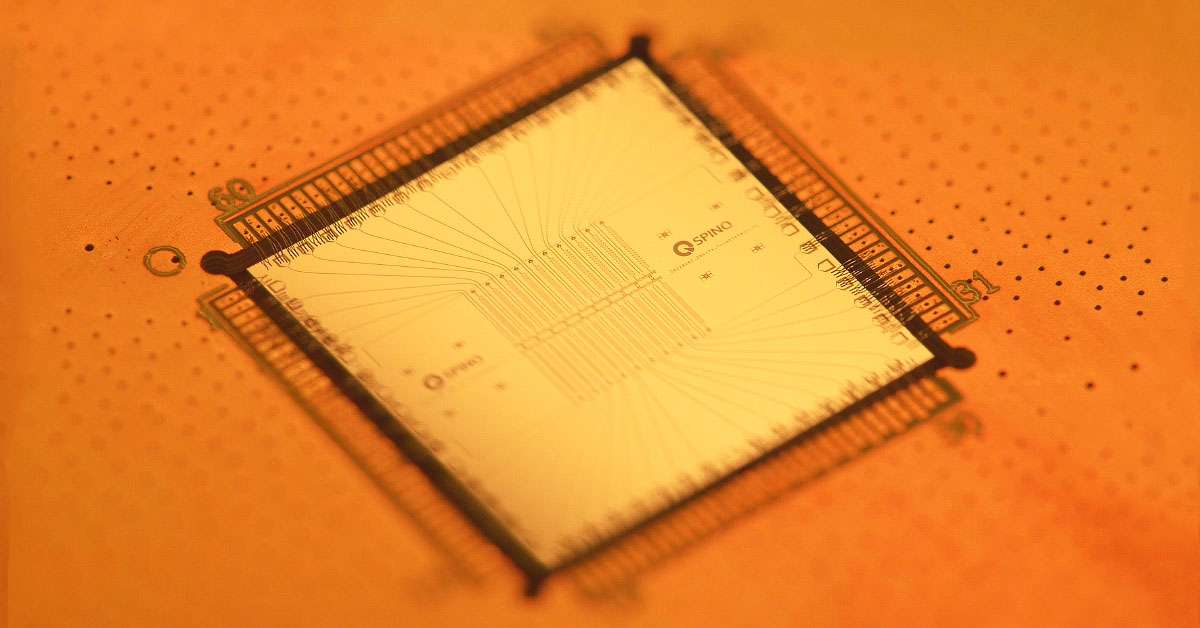
Our superconducting quantum chip design and testing practices provide further insight into the considerations involved in developing and evaluating superconducting quantum chips.
What Should Engineers Check During Fabrication and Assembly?
A well-designed circuit does not automatically produce a high-performing quantum chip. Fabrication and assembly determine how accurately the physical device matches the intended design.
Control Material and Fabrication Quality
Superconducting quantum chips commonly use carefully selected substrate and superconducting film materials.
Material defects, surface contamination, and dielectric losses can contribute to energy dissipation and reduce qubit coherence.
Josephson junction fabrication is another critical step. Small variations in junction dimensions or barrier properties can change the critical current and, consequently, the Josephson energy.
Engineers should pay attention to:
-
Substrate cleanliness and surface preparation.
-
Superconducting film uniformity.
-
Junction dimensions and barrier consistency.
-
Lithography and etching accuracy.
-
Process repeatability across devices.
These factors influence both individual qubit performance and consistency across a processor.
Verify Packaging and Chip Connections
After fabrication, the chip must be assembled and connected to the experimental system.
Wire bonding, connectors, grounding, shielding, and package geometry all influence electrical and microwave behavior.
Engineers should inspect connections for mechanical reliability and evaluate whether the package introduces unwanted resonances or signal leakage.
It is also important to check whether the assembled device is compatible with the intended cryogenic setup and control electronics.
A systematic fabrication and assembly process makes it easier to identify whether performance problems originate from the circuit design, manufacturing variations, or packaging.
How Do Engineers Set Up Qubit Control and Measurement?
Once the chip is assembled, engineers need to configure the hardware required to operate and measure the qubits.
Superconducting qubits are typically controlled using microwave pulses. The control system must generate signals with accurate frequencies, amplitudes, phases, and timing.
Configure Microwave Control Signals
Single-qubit gates are implemented by applying microwave pulses that drive transitions between quantum states.
The pulse frequency determines which transition is addressed, while its amplitude, phase, and duration influence the resulting rotation of the qubit state.
Two-qubit gates require controlled interactions between neighboring qubits. Depending on the architecture, these operations may use tunable couplers, frequency adjustments, or microwave-driven interactions.
Engineers should verify:
-
Frequency accuracy and stability.
-
Pulse amplitude and phase calibration.
-
Timing synchronization between channels.
-
Control-line isolation.
-
Consistency of signal delivery at the chip.
Small control errors can accumulate during quantum circuits containing many operations. Precise signal generation and calibration are therefore essential.
Establish Reliable Qubit Readout
Qubit readout typically relies on measuring changes in the response of a coupled microwave resonator.
A microwave signal is sent through the readout circuit, and the resulting response is amplified and processed. The measurement result is then used to distinguish between the qubit's computational states.
Readout performance depends on several factors, including resonator design, signal-to-noise ratio, amplifier performance, measurement duration, and thermal population.
Engineers need to optimize the complete measurement chain, not just the resonator itself.
Integrate Control Electronics
A scalable control setup must coordinate signal generation, measurement acquisition, and timing across multiple channels.
Modular quantum control and measurement systems can help engineers expand experimental capabilities without redesigning the entire electronics architecture.
For example, the SpinQ Quantum Control and Measurement System uses modular RF control electronics and FPGA-based hardware acceleration to support qubit control, measurement, and characterization.
These capabilities are particularly relevant when researchers move from single-qubit experiments to multi-qubit processor development.
How Should Engineers Test and Evaluate Superconducting Qubits?
Testing helps engineers determine whether a fabricated and assembled device meets its design requirements. Different experiments measure different aspects of qubit behavior, so performance evaluation should use multiple complementary methods.
Measure T1 and T2
T1 measures the energy relaxation time of a qubit. Engineers typically prepare the qubit in an excited state, allow it to evolve for a controlled period, and measure the remaining excited-state population.
T2 characterizes the decay of phase coherence. Ramsey experiments and echo sequences are commonly used to investigate coherence behavior.
These measurements help engineers understand how long quantum information can be preserved and identify possible sources of noise and decoherence.
Verify Qubit Control with Rabi and Ramsey Experiments
Rabi oscillations are used to examine how a qubit responds to resonant microwave driving.
By varying pulse duration or amplitude, engineers can observe changes in the qubit's state and calibrate the control pulse required for a desired rotation.
Ramsey experiments help characterize qubit frequency and phase evolution. They can reveal frequency detuning and provide information about dephasing.
Together, these experiments establish a foundation for more advanced control and gate characterization.
Evaluate Gate and Readout Fidelity
After basic qubit characterization, engineers need to evaluate how accurately the device performs quantum operations.
Randomized benchmarking is commonly used to estimate average gate performance while reducing sensitivity to certain state-preparation and measurement errors.
For multi-qubit processors, two-qubit gate characterization is especially important because entangling operations are essential for many quantum algorithms.
Readout fidelity should also be measured to determine how reliably the system distinguishes between computational states.
A useful evaluation process should compare results across qubits and over repeated measurements, rather than relying on a single experimental result.For a deeper look at the process, see our guide to calibration in superconducting quantum computers.
What Problems Do Engineers Commonly Encounter and How Can They Solve Them?
Even when the circuit design and fabrication process are well controlled, experimental performance may differ from expectations. Engineers need a structured approach to identifying possible causes.
Qubit Coherence Is Shorter Than Expected
Possible causes include material defects, dielectric losses, environmental noise, unwanted coupling, and imperfect shielding.
Engineers can investigate this by comparing T1 and T2 measurements across devices, examining temperature stability, and checking the electromagnetic environment.
Qubit Frequencies Are Too Close
Frequency collisions can make it difficult to address individual qubits and may increase unwanted interactions.
Engineers should review frequency allocation, coupling design, and fabrication variations. For tunable qubits, operating points and frequency trajectories also need careful evaluation.
Gate Fidelity Is Inconsistent
Inconsistent gate performance may result from inaccurate pulse calibration, signal distortion, crosstalk, or frequency drift.
Checking the microwave signal chain and repeating calibration experiments can help isolate the issue.
Readout Results Are Unstable
Unstable measurements may be related to resonator behavior, amplifier performance, signal interference, or changes in the cryogenic environment.
Engineers should examine the full readout chain, including signal generation, amplification, acquisition, and data processing.
Performance Changes Over Time
Qubit parameters can drift during extended experiments. Temperature fluctuations, changes in environmental noise, and variations in control electronics may all contribute.
Repeated characterization and automated calibration can help identify these changes before they significantly affect experimental results.
The key is to treat troubleshooting as a systematic process. Engineers should compare measured behavior with expected circuit and system performance, then isolate potential causes one layer at a time.
How Can Engineers Integrate Qubits into a Complete Quantum Computing Platform?
Developing an individual superconducting qubit is only one part of building a quantum computer. A practical research platform needs to coordinate several hardware and software components.
Quantum Processing Unit
The QPU contains the superconducting qubits and associated circuits that perform quantum operations.
Its qubit topology, connectivity, coherence, and gate performance determine the processing capabilities available to researchers.
When selecting a QPU, engineers should consider the intended experiments, processor architecture, and compatibility with supporting hardware.
SpinQ's QPU C Series provides superconducting quantum chip configurations for quantum computing development, processor evaluation, and research applications.
Cryogenic Infrastructure
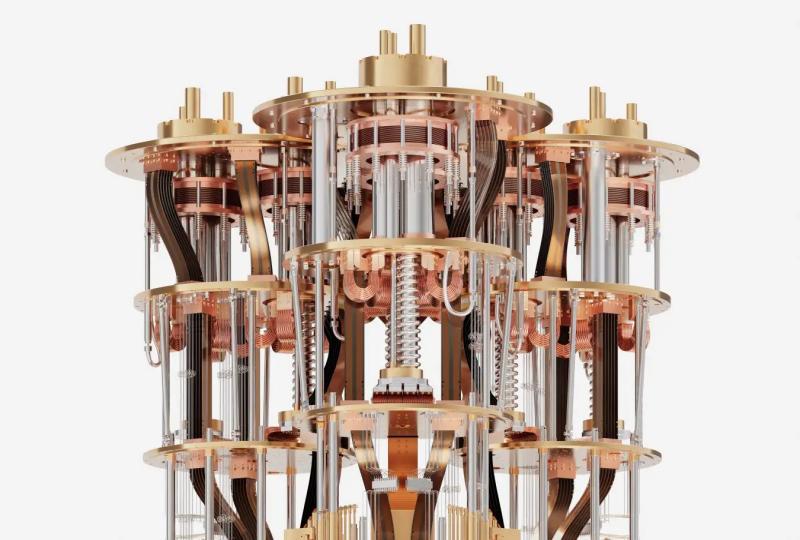
A dilution refrigerator provides the low-temperature environment required for superconducting operation.
Engineers need to evaluate cooling capacity, temperature stability, wiring arrangements, filtering, and thermal anchoring to ensure that the QPU can operate under suitable conditions.
Control and Measurement Hardware
Control electronics generate the microwave signals required for quantum operations, while measurement hardware collects and processes readout signals.
The control system must be compatible with the processor's channel requirements, signal specifications, and experimental workflows.
Software and Experimental Workflows
Software connects the hardware components and allows researchers to configure circuits, execute quantum operations, collect measurement data, and perform calibration.
A well-integrated software environment makes experimental procedures easier to manage and supports more systematic hardware evaluation.
For organizations that need a coordinated platform, the SpinQ Taurus superconducting quantum computer brings together superconducting quantum processing hardware, cryogenic infrastructure, control and measurement electronics, and software.
.jpg)
Conclusion
Developing superconducting qubits requires engineers to work across several disciplines, from quantum circuit design and microfabrication to microwave control, cryogenic engineering, and experimental measurement.
A reliable development process begins with selecting an appropriate qubit architecture and defining circuit parameters. It then moves through fabrication, packaging, control configuration, performance characterization, and system integration.
Each stage influences the next. A high-quality chip needs reliable control electronics, a stable cryogenic environment, and accurate measurement capabilities to deliver consistent experimental results.
At SpinQ, we develop superconducting quantum processors, control and measurement systems, and integrated quantum computing platforms to support research and engineering applications. If you are planning a superconducting quantum hardware project or building a quantum computing research platform, contact our team to discuss your technical requirements.
.jpg)
Featured Content