
How Can Quantum Computers Advance Education?
2026.11.05 · Blog how can quantum computers advance education
How can quantum computers advance education? They can make complex quantum concepts easier to understand, introduce students to emerging computing technologies, and provide hands-on opportunities to explore quantum algorithms and experiments. By combining interactive learning, programming exercises, and real quantum hardware, educational quantum computers help schools and universities connect theoretical knowledge with practical experience.
Their educational value extends beyond training future quantum scientists. They can also strengthen STEM education, encourage interdisciplinary thinking, and help educational institutions develop structured quantum computing programs.
Why Is Quantum Computing Becoming Important in Education?
Quantum computing is an emerging technology with growing relevance to physics, mathematics, computer science, and engineering. Introducing it into education helps students understand new computing principles and prepares them to engage with future technological developments.
Preparing Students for Emerging Quantum Technologies
As quantum technologies continue to develop, students need opportunities to understand how quantum computers work and what makes them different from classical computers.
Learning about qubits, quantum gates, superposition, and entanglement introduces students to a new way of processing information. Early exposure can also help universities develop courses and training programs for students interested in quantum science and engineering.
Connecting Physics, Mathematics, and Computer Science
Quantum computing naturally connects several academic disciplines.
-
Physics explains quantum states, superposition, and measurement.
-
Mathematics provides the foundations for quantum states, vectors, and probability.
-
Computer science introduces quantum algorithms, programming, and computational models.
-
Engineering explores hardware design, control systems, and experimental implementation.
This interdisciplinary approach helps students see how knowledge from different subjects contributes to solving technical problems.
Moving Beyond Theory Through Practical Learning
Quantum mechanics can be difficult to understand through textbooks alone. Concepts such as superposition and entanglement are not directly observable in everyday life.
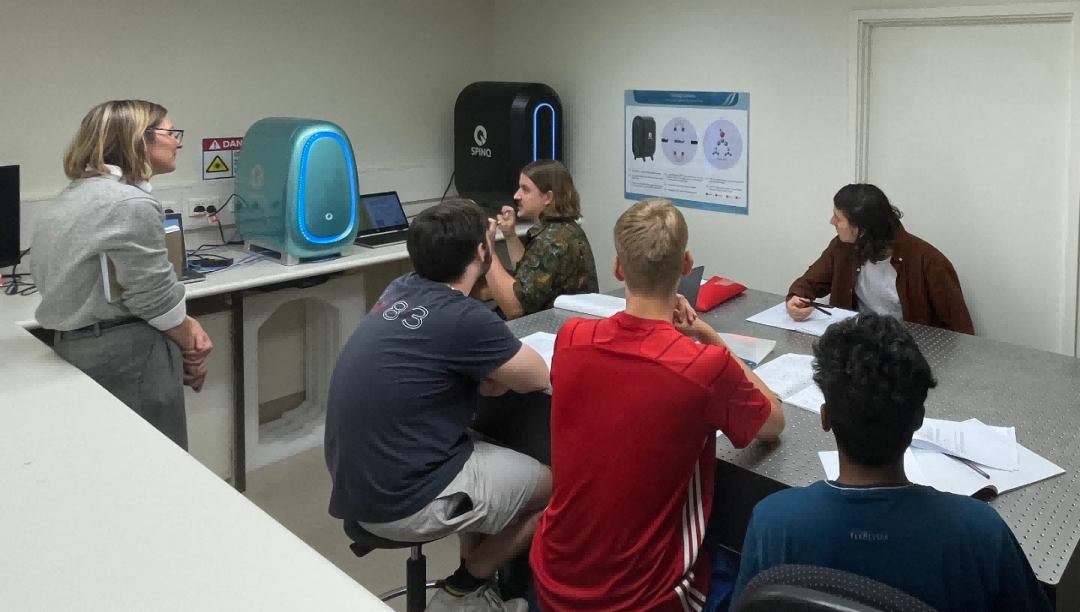
Interactive software, quantum simulators, and real quantum devices give students different ways to explore these concepts. Instead of only reading about quantum gates, they can build simple circuits, run experiments, and examine measurement results.
How Can Quantum Computers Improve the Learning Experience?
Quantum computers can make learning more interactive by allowing students to move from conceptual explanations to programming and experimentation.
Making Abstract Quantum Concepts Easier to Understand
Visual tools help students explore how quantum states change during a computation. They can examine how quantum gates affect a qubit and how measurement produces different outcomes.
For example, students learning about superposition can prepare a qubit in a superposition state and observe the statistical distribution of measurement results. This connects an abstract concept with an experiment they can perform and analyze.
Connecting Quantum Programming With Real Hardware
Quantum programming gives students an opportunity to translate mathematical operations into executable circuits.
A typical learning exercise may involve:
-
Designing a quantum circuit.
-
Selecting and arranging quantum gates.
-
Running the circuit through a simulator or quantum device.
-
Collecting measurement results.
-
Comparing the results with theoretical predictions.
This process helps students understand that quantum computing involves both programming and physical operations.
Developing Computational and Problem-Solving Skills
Quantum computing exercises encourage students to approach problems from different perspectives. They need to understand the problem, select suitable operations, construct circuits, and interpret results.
These activities can strengthen logical reasoning, mathematical thinking, programming skills, and experimental analysis. Such abilities are valuable across STEM disciplines, even when students do not pursue a career in quantum technology.
How Can Quantum Computers Support Different Levels of Education?
Different educational stages have different learning objectives. A suitable quantum computing program should therefore progress from basic scientific awareness to advanced programming and institutional research.
Basic Education: Building Quantum Science Awareness
For secondary schools and introductory STEM programs, the main goal is to help students become familiar with quantum science.
Teachers can introduce fundamental concepts through demonstrations and guided activities, including:
-
What a qubit is and how it differs from a classical bit.
-
How superposition expands the possible states of a quantum system.
-
How quantum measurement produces probabilistic outcomes.
-
Why quantum computing uses principles from quantum mechanics.
Simple visual experiments and interactive demonstrations can make these topics more approachable. Students do not need advanced mathematical knowledge to begin exploring the basic ideas.
The objective at this stage is to develop curiosity, scientific literacy, and interest in emerging technologies.
Higher Education: Developing Practical Quantum Skills
Universities need more advanced learning activities that connect quantum theory with computing and experimentation.
Students can study quantum algorithms, develop programs, construct circuits, and explore how quantum operations are implemented on hardware.
Practical activities may include:
-
Building circuits with single-qubit and multi-qubit gates.
-
Exploring introductory algorithms such as the Deutsch-Jozsa algorithm.
-
Studying quantum state preparation and measurement.
-
Comparing experimental results with theoretical expectations.
-
Investigating noise and other limitations of quantum hardware.
Real hardware is particularly valuable because it introduces students to the physical processes behind quantum computation. They can observe how control operations and measurement affect experimental outcomes.
For universities developing practical courses, an NMR quantum experiment guide can provide useful context for designing hands-on learning activities.
Educational Institutions: Building Structured Quantum Programs
For schools, universities, and research institutions, quantum education can develop beyond individual lessons into a long-term teaching program.
A structured program may include several components:
-
Teaching hardware: Quantum devices provide a platform for demonstrations and experiments.
-
Software tools: Programming environments and simulators support circuit design and algorithm exercises.
-
Teaching resources: Course materials, experiment instructions, and practical guides help instructors organize lessons.
-
Laboratory activities: Students can progress from basic demonstrations to more advanced experimental work.
Institutions should also consider their teaching objectives, available facilities, instructor expertise, and student experience when selecting equipment.
A dedicated quantum computing laboratory can help universities organize hardware-based courses, practical experiments, and interdisciplinary teaching activities in one learning environment.
What Can Students Learn With Educational Quantum Computers?
Educational quantum computers can support learning across several interconnected areas.
Quantum Computing Fundamentals
Students begin with the basic principles of quantum information, including qubits, quantum states, superposition, entanglement, and measurement.
These concepts provide the foundation for understanding how quantum computers process information.
Quantum Programming
Students learn how to translate quantum operations into executable programs. They can construct circuits, apply quantum gates, and examine how different operations change the state of a quantum system.
Quantum Algorithms
Introductory algorithms help students understand how quantum circuits perform computational tasks. They can explore algorithm structures, run simple examples, and compare quantum approaches with classical methods.
Quantum Experiments
Hardware-based experiments introduce students to state preparation, quantum control, measurement, and data analysis.
These activities are important because they reveal practical considerations that cannot be fully understood through mathematical descriptions or simulations alone.
Interdisciplinary Applications
Quantum computing also creates opportunities to connect different subjects. Physics students can explore quantum states and measurement, computer science students can study algorithms, and engineering students can investigate hardware control and system design.
This makes quantum computing a useful topic for interdisciplinary STEM education.
Real Quantum Computers vs. Simulators in Education
Both quantum simulators and real quantum computers have important roles in teaching. The right choice depends on the learning objectives, course level, and available resources.
What Quantum Simulators Can Teach
Quantum simulators allow students to construct circuits and explore quantum algorithms without accessing physical quantum hardware.
They are useful for:
-
Introducing quantum programming.
-
Practicing circuit construction.
-
Visualizing quantum states and operations.
-
Testing basic algorithms.
-
Supporting classroom exercises and independent learning.
Simulators are often convenient for introductory courses because students can focus on computational principles without first understanding hardware operation.
What Real Quantum Hardware Adds
Real quantum devices provide an experimental environment where students can interact with physical quantum systems.
Depending on the platform, students may explore quantum state preparation, control operations, measurement, and experimental data. They can also observe how real hardware differs from idealized simulations.
This experience helps connect theoretical predictions with practical results.
Why Combining Both Approaches Matters
Simulators and real quantum computers serve complementary purposes.
Students can begin by designing and testing circuits in a simulated environment. They can then execute suitable circuits on real hardware and compare the results.
This learning approach builds understanding progressively, while helping students recognize the differences between ideal quantum operations and physical experiments.
How Does SpinQ Support Quantum Computing Education?
At SpinQ, we develop quantum computing products and educational platforms that help institutions introduce quantum technology through practical learning. Different hardware configurations support different teaching objectives, from introductory demonstrations to advanced laboratory experiments.
Portable Quantum Computers for Introductory Learning
Portable quantum computers can help schools introduce quantum computing without requiring a large laboratory setup.
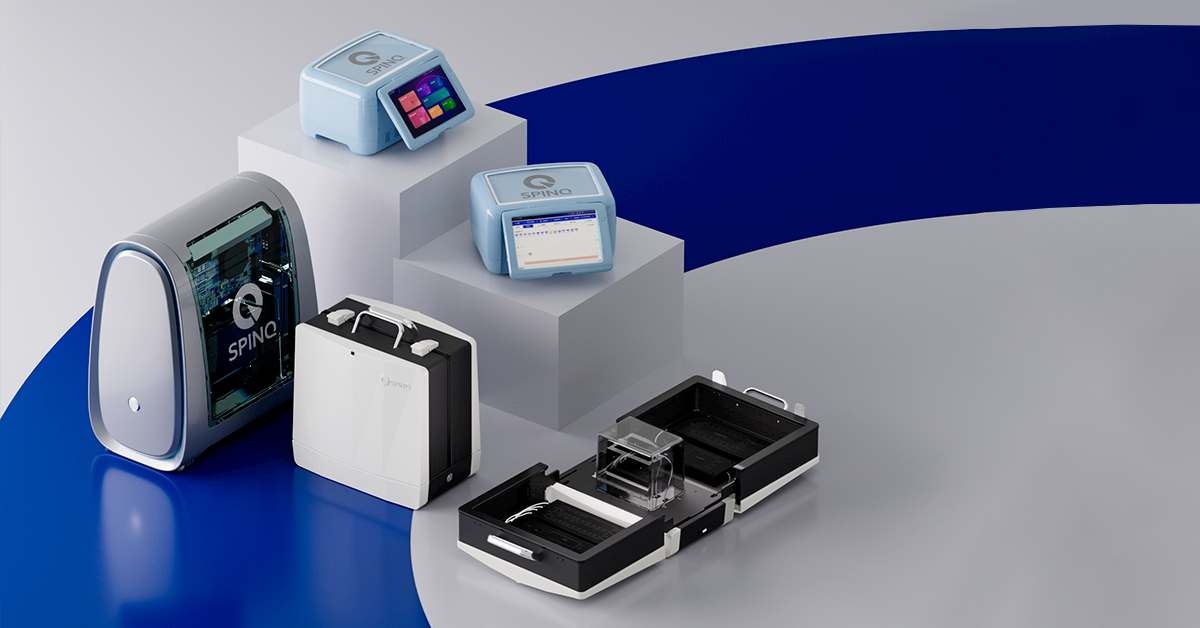
SpinQ's Gemini Mini and Gemini Mini Pro support introductory quantum computing education and demonstrations. They provide students and teachers with opportunities to explore fundamental quantum concepts and engage with practical learning activities.
These systems are suitable for educational environments that want to make quantum computing more accessible.
Desktop Quantum Computers for University Courses
For universities and more advanced teaching programs, desktop quantum computers can provide a platform for structured experiments and programming exercises.
SpinQ's Triangulum II supports practical learning involving quantum circuits, programming, and hardware-based experiments. Students can explore how quantum operations are organized and how measurement results relate to circuit design.
This type of platform helps bridge the gap between introductory quantum education and more advanced university coursework.
Laboratory Platforms for Advanced Teaching and Research
Institutions that need a more comprehensive experimental environment can consider laboratory-oriented platforms.
SpinQ's Gemini Lab supports more systematic quantum computing experiments, allowing students and researchers to explore different levels of quantum operations and experimental workflows.
To understand the available hardware options and identify a suitable configuration for different educational objectives, explore our NMR quantum computing product portfolio.
By combining hardware, software, and educational resources, we aim to help institutions establish practical quantum computing programs that can develop alongside their teaching and research needs.
Conclusion
Quantum computers can advance education by making quantum science more accessible, supporting practical programming and experiments, and helping institutions build structured quantum learning programs. From introducing basic quantum concepts in schools to developing advanced experimental courses at universities, they provide new ways to connect scientific theory with hands-on learning.
The most effective approach combines suitable teaching resources, quantum simulators, and real hardware. If your institution is planning to introduce quantum computing courses or establish a teaching laboratory, contact SpinQ to explore educational quantum computing solutions that match your needs.
.jpg)
Featured Content