
What Is a Superconducting Processor and How Does It Work?
2026.11.05 · Blog superconducting processor
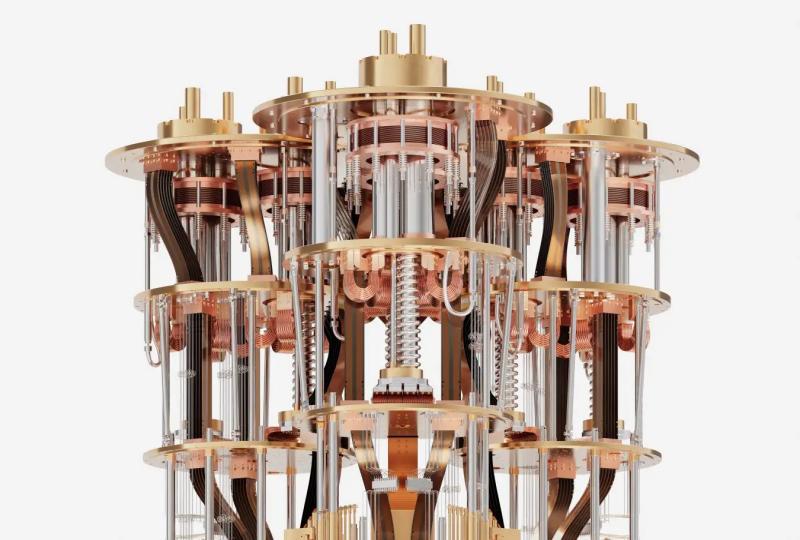
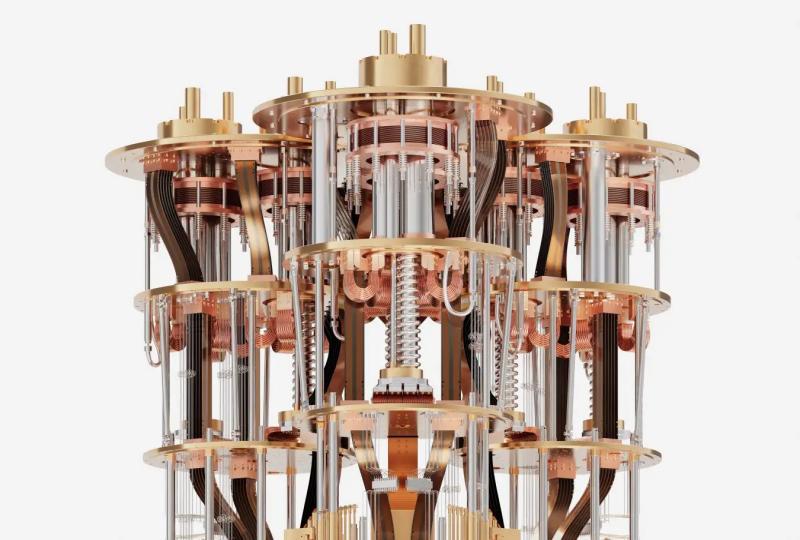
A superconducting processor is a quantum computing chip that uses superconducting electrical circuits to create and control qubits. Unlike classical processors, which use transistors to process binary information, superconducting processors manipulate quantum states to perform quantum operations. They rely on specialized circuit designs, microwave signals, and extremely low temperatures to maintain and control these states.
Understanding how a superconducting processor works involves more than looking at its qubit count. Its architecture, coherence time, gate fidelity, connectivity, and supporting control systems all influence its computing capabilities. These factors also determine how effectively the processor can be integrated into a complete quantum computing system.
What Is a Superconducting Quantum Processor?
A superconducting quantum processor is the central computing component of a superconducting quantum computer. It contains multiple superconducting qubits connected through carefully designed circuit structures.
Superconducting Qubits as the Computing Units
A classical computer processes information using bits with values of either 0 or 1. A quantum processor uses qubits, which can exist in quantum superposition states involving both computational basis states.
Superconducting qubits are artificial quantum systems fabricated using superconducting materials and electrical circuit components. They can be initialized, controlled, and measured through electrical and microwave interfaces.
Several types of superconducting qubits exist, including transmon, flux, and phase qubits. The transmon is widely used because its design reduces sensitivity to certain types of charge noise while maintaining controllability.
.png)
How Josephson Junctions Enable Quantum States
The Josephson junction is a key component in many superconducting qubit designs. It consists of two superconducting electrodes separated by a thin insulating barrier.
This structure enables nonlinear electrical behavior that allows a circuit to support distinct quantum energy levels. By selecting and controlling appropriate energy levels, engineers can define the computational states of a qubit.
The Josephson junction therefore plays an important role in turning superconducting electrical circuits into controllable quantum systems.
For a deeper introduction to the underlying technology, explore our discussion of superconducting qubit technology.
Superconducting Processors vs. Classical CPUs and GPUs
Classical processors and quantum processors use different computing principles.
-
CPUs execute general-purpose instructions using classical binary logic.
-
GPUs perform parallel operations across many classical processing units.
-
Superconducting processors manipulate quantum states through quantum gates and measurements.
Quantum processors are not direct replacements for CPUs or GPUs. They are designed for specific computational tasks where quantum algorithms may offer advantages. In practical systems, classical computers still handle program execution, experiment coordination, data processing, and other supporting operations.
How Does a Superconducting Processor Work?
A superconducting processor performs quantum computations by preparing qubits, applying control operations, and measuring the resulting quantum states. These stages work together to execute a quantum circuit.
Preparing Qubit States
Before a quantum computation begins, qubits need to be initialized into known states, commonly the ground state.
Because superconducting qubits operate at extremely low temperatures, thermal excitation can be reduced. However, initialization is not always perfect, and additional calibration and control techniques may be required to improve preparation accuracy.
A well-defined initial state provides the starting point for executing quantum circuits.
Controlling Qubits With Microwave Pulses
Superconducting qubits are typically controlled using microwave signals tuned to their transition frequencies.
Carefully designed microwave pulses can change the state of a qubit. Adjusting pulse frequency, duration, amplitude, and phase allows the control system to perform different quantum operations.
For example, a pulse can rotate a qubit state around a selected axis on the Bloch sphere. This provides a practical way to implement single-qubit gates.
Performing Quantum Gates and Qubit Interactions
Quantum gates are the basic operations used to manipulate qubits during computation.
Single-qubit gates control individual qubit states, while two-qubit gates create interactions between connected qubits. These interactions are essential for generating entanglement and implementing more complex quantum algorithms.
A quantum circuit combines these operations in a specific sequence. The processor executes the circuit by applying corresponding control signals to the physical qubits.
Measuring Quantum States and Reading Results
After the circuit operations are completed, the processor measures the qubits to obtain classical results.
In superconducting systems, measurement commonly uses readout resonators coupled to the qubits. The quantum state affects the response of the resonator, allowing the measurement system to distinguish between different states.
Since quantum measurement is probabilistic, a circuit is usually executed multiple times. The collected results form a distribution that can be compared with theoretical predictions or used to analyze the computation.
What Are the Main Components of a Superconducting Processor?
A superconducting processor is built from several interconnected components. Their arrangement determines how qubits interact and how control and measurement operations are performed.
Qubit Architecture and Chip Layout
The qubit architecture defines the number of qubits, their physical arrangement, and the way they connect with one another.
Common layouts include linear arrangements and two-dimensional grids. Different layouts provide different connectivity patterns and influence how quantum circuits are mapped onto the processor.
Chip design must also consider signal routing, fabrication constraints, unwanted interactions, and the physical space required for supporting structures.
Couplers and Qubit Connectivity
Couplers enable interactions between selected qubits. They can be fixed or tunable, depending on the processor architecture.
Connectivity determines which qubits can directly interact. When two qubits are not directly connected, a circuit may require additional operations to move quantum information or create the desired interaction.
A carefully designed coupling network can help improve circuit implementation and reduce unnecessary operations.
Readout Resonators and Measurement Circuits
Readout resonators provide a way to measure qubit states. They interact with qubits and produce measurable signals that can be processed by the readout electronics.
The design of these resonators and their connections affects measurement speed, accuracy, and the ability to distinguish states across multiple qubits.
Control Lines and Microwave Interfaces
Control lines deliver signals to the qubits, while measurement lines carry readout information back to the control system.
As processor size increases, managing these connections becomes more difficult. Engineers must consider signal interference, crosstalk, wiring density, and the challenges of routing signals into a cryogenic environment.
How Do You Evaluate Superconducting Processor Performance?
A superconducting processor should not be evaluated by qubit count alone. Several technical metrics help researchers understand its actual capabilities and limitations.
Qubit Count and Connectivity
Qubit count indicates how many physical qubits are available on a processor. However, a larger number does not automatically mean better computational performance.
Connectivity is equally important because it determines which qubits can interact directly. A processor with a suitable connectivity structure may execute certain circuits more efficiently than one with a higher qubit count but limited connections.
Coherence Time
Coherence time describes how long a qubit can maintain its quantum state before environmental interactions cause it to lose information.
Two commonly used measurements are:
-
T1 relaxation time: Measures how quickly an excited qubit state decays toward the ground state.
-
T2 dephasing time: Describes how quickly the relative phase information of a qubit is lost.
Longer coherence times generally provide more opportunities to perform quantum operations before errors caused by decoherence become significant.
Gate Fidelity
Gate fidelity measures how closely an implemented quantum operation matches its intended ideal operation.
Both single-qubit and two-qubit gate fidelities matter. Two-qubit gates are particularly important because they enable interactions and entanglement between qubits.
Even small errors can accumulate when a circuit contains many operations. Therefore, high gate fidelity is important for executing deeper circuits reliably.
Scalability and Error Correction
Scalability refers to the ability to increase processor size and computational capability while maintaining manageable performance and engineering requirements.
Quantum error correction is another major consideration. It uses multiple physical qubits to encode and protect logical quantum information.
Building a larger processor is only one part of this process. Reliable control, high-quality gates, suitable connectivity, and effective error correction are all necessary steps toward fault-tolerant quantum computing.
What Challenges Limit Superconducting Processor Development?
Superconducting processors have made significant progress, but several engineering challenges continue to affect their development.
Maintaining Ultra-Low Operating Temperatures
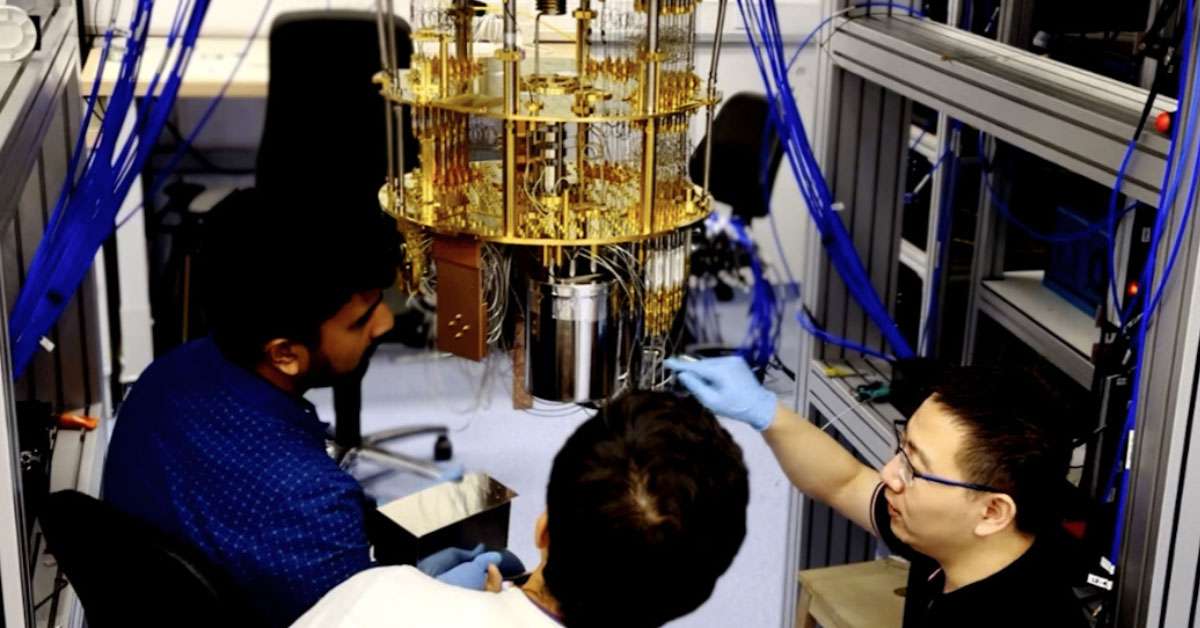
Superconducting qubits require cryogenic environments, typically operating at temperatures in the millikelvin range.
These conditions help maintain superconductivity and reduce thermal excitations. However, cryogenic systems require specialized refrigeration equipment, careful thermal management, and well-designed wiring.
Reducing Noise and Decoherence
Qubits are sensitive to environmental disturbances, including electromagnetic noise, material defects, and unwanted interactions with their surroundings.
These effects can shorten coherence times and introduce errors during quantum operations. Improving materials, fabrication processes, circuit design, and environmental shielding can help reduce these problems.
Managing Crosstalk and Qubit Connectivity
When multiple qubits operate within a compact chip, control signals and interactions can unintentionally affect neighboring components.
This crosstalk can reduce gate accuracy and complicate calibration. Processor designers must balance connectivity with the need to maintain reliable control over individual qubits.
Scaling Control and Measurement Channels
A larger processor requires more control and measurement resources. Delivering signals to many qubits while managing heat load, wiring complexity, and signal interference is a major engineering challenge.
These requirements make system-level design increasingly important as processor architectures expand.
How Does a Superconducting Processor Become a Complete Quantum Computing System?
A superconducting processor is the core computing component, but it cannot operate independently as a complete quantum computer. It needs supporting hardware and software to control, measure, and coordinate quantum operations.
The main components include:
-
Superconducting QPU: Contains the qubits and circuit structures that perform quantum operations.
-
Cryogenic System: Maintains the extremely low temperatures required for superconducting operation.
-
Quantum Control and Measurement System: Generates microwave control signals, reads qubit states, and supports calibration.
-
Quantum Software: Converts algorithms and quantum circuits into instructions that can be executed on the hardware.
-
System Integration: Connects the processor, cryogenic infrastructure, electronics, and software into a coordinated platform.
These components must be designed to work together. For instance, the processor's control requirements influence the design of microwave electronics, while its physical layout affects cryogenic wiring and measurement connections.
A modular superconducting quantum chip architecture provides a useful perspective on how QPUs, control systems, and other hardware modules can be organized into a scalable system.
How Does SpinQ Support Superconducting Processor Development?
At SpinQ, we focus on superconducting quantum computing technologies and the hardware systems needed to support practical quantum processor development.
Our solutions cover quantum processing units, control and measurement technologies, and complete superconducting quantum computing systems.
SPINQ QPU C Series
The SPINQ QPU C Series provides superconducting quantum processing hardware for research and development applications.
A QPU is the core of a superconducting quantum computer, and its design influences qubit connectivity, control requirements, and experimental capabilities.Explore our superconducting quantum processing units to learn more about our processor solutions.
Quantum Control and Measurement Systems
Reliable quantum operations require accurate control signals and measurement capabilities.
Quantum control and measurement systems support qubit initialization, microwave pulse delivery, readout, and experimental calibration. These functions are essential for translating quantum circuit designs into physical operations on a superconducting processor.
Complete Superconducting Quantum Computing Solutions
For organizations developing quantum computing laboratories or research platforms, processor hardware is only one part of the overall system.
SpinQ's superconducting quantum computer solutions bring together key hardware and system components to support superconducting quantum computing development.
This system-level approach helps institutions consider processor requirements alongside cryogenic infrastructure, control electronics, measurement capabilities, and software integration.
Conclusion
A superconducting processor uses superconducting circuits and quantum states to perform quantum computations. Its capabilities depend on more than the number of qubits: architecture, connectivity, coherence time, gate fidelity, and control precision all contribute to its performance.
As superconducting quantum technology develops, improving processor design and integrating it with reliable cryogenic, control, and measurement systems will remain essential. For research institutions and organizations exploring superconducting quantum computing, understanding both the processor and its supporting infrastructure is an important step toward selecting and developing the right system.
If you are evaluating superconducting QPUs or planning a complete quantum computing platform, contact SpinQ to discuss your technical and system integration requirements.
.jpg)
Featured Content