
What Are the Advantages of Superconducting Qubit Technology?
2026.09.22 · Blog Superconducting Qubit advantages
Superconducting qubits are widely used in quantum computing because they combine engineered circuit design with fast control and scalable hardware architectures. But what are the main advantages of superconducting qubit technology, and why does it remain an important approach for quantum processor development?
Factors such as gate fidelity, coherence, qubit connectivity, control precision, and system integration all affect how effectively a superconducting quantum processor can be developed and operated.
What Is a Superconducting Qubit?
A superconducting qubit is built from a superconducting quantum circuit that typically includes Josephson junctions. Its two lowest energy levels can represent the |0⟩ and |1⟩ states used for quantum computing.
Because the qubit is engineered as an electrical circuit, researchers can design important parameters such as frequency, coupling, and circuit topology. This provides considerable flexibility when developing quantum processors.
Superconducting qubits also require an ultra-low-temperature environment. The SPINQ QPU C Series operates at around 20 mK, providing the cryogenic conditions required for superconducting quantum operation.
What Are the Main Superconducting Qubit Advantages?
The advantages of superconducting qubits come from combining controllable circuit design with scalable processor architecture.
Scalable Qubit Architecture
Superconducting circuits can be fabricated and integrated at the chip level, creating a practical path from individual qubits to multi-qubit processors.
The superconducting quantum products available from SpinQ include QPUs with different qubit configurations. The QPU C Series supports configurations of more than 100 qubits and uses a 2D lattice topology to provide a foundation for larger-scale quantum processor development.
High Gate Fidelity
Gate fidelity measures how accurately quantum operations are performed. Higher fidelity helps reduce errors during quantum circuits and experiments.
For example, the C25 PRO QPU provides a median single-qubit gate fidelity of ≥99.8%, with a maximum of ≥99.9%. Its two-qubit gate fidelity reaches a median of ≥99% and a maximum of ≥99.5%.
These figures provide useful reference points when evaluating superconducting quantum processor performance.
Flexible Qubit Coupling
Quantum processors need controlled interactions between qubits. Superconducting circuits allow coupling structures to be engineered directly into the processor.
Tunable couplers can be used to control interactions between neighboring qubits. Combined with 1D chain and 2D lattice architectures, this approach supports different processor configurations and multi-qubit experiments.
Fast Quantum Control
Superconducting qubits are controlled through microwave signals. This allows quantum operations, signal generation, and measurement to be implemented through high-speed electronic systems.
Fast control is particularly useful when researchers need to perform repeated experiments, characterize qubits, calibrate gates, or execute increasingly complex quantum circuits.
How Does Coherence Affect Superconducting Qubit Performance?
A qubit needs to preserve its quantum state long enough to perform useful operations. This makes coherence time an important parameter when evaluating a superconducting processor.
For example, the C25 PRO QPU specifies a median T₁ of ≥60 μs and a median T₂ of ≥30 μs.
However, coherence time should not be evaluated alone. Gate fidelity, readout performance, coupling, control accuracy, and operating temperature all contribute to the overall performance of a superconducting quantum system.
Why Does Quantum Control and Measurement Matter?
A high-performance QPU needs accurate electronics to generate control signals, collect measurement results, and synchronize different operations.
The quantum control and measurement system developed by SpinQ uses FPGA-based hardware acceleration for waveform generation and real-time signal processing. It provides synchronization accuracy below 1 ns and up to 16-bit vertical resolution.
These capabilities are important for qubit characterization, calibration, quantum control, and measurement.
What Role Does Cryogenic Technology Play?
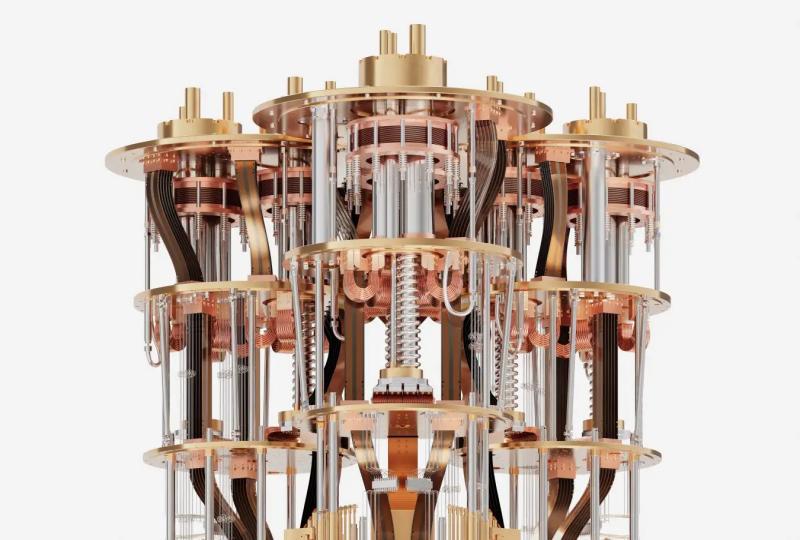
Superconducting qubits operate at extremely low temperatures, so cryogenic technology is an essential part of the overall system.
A quantum processor must be connected to a suitable refrigeration and measurement environment. Thermal stability, wiring, signal transmission, and space inside the cryogenic system all affect how effectively the QPU can operate.
For this reason, evaluating superconducting quantum technology requires looking beyond the chip itself and considering the complete hardware environment.
Where Can Superconducting Qubits Be Used?
Superconducting qubits can support different stages of quantum computing research and development.
Smaller QPU configurations can be useful for quantum hardware experiments, algorithm development, education, and proof-of-concept research. Larger processors provide a platform for more complex studies such as quantum simulation, quantum chemistry, materials research, and other quantum computing applications.
For example, the SPINQ QPU product family includes 2-, 5-, 10-, and 20-qubit configurations, while larger configurations are also being developed for scalable quantum computing research.
How Should You Evaluate a Superconducting Qubit Platform?
Qubit count is important, but it should not be the only specification considered.
Check Qubit Performance
Look at:
-
T₁ and T₂ coherence times
-
Single-qubit gate fidelity
-
Two-qubit gate fidelity
-
Readout performance
-
Operating temperature
Evaluate System Architecture
Consider:
-
Qubit connectivity
-
Coupling method
-
Control electronics
-
Measurement capabilities
-
Cryogenic infrastructure
-
Software compatibility
Consider Future Scalability
A platform should also provide a practical path toward larger processors. Architecture, fabrication, control, connectivity, and system integration all become increasingly important as qubit numbers grow.
How Can Superconducting Qubit Technology Support Complete Quantum Systems?
The advantages of superconducting qubits become more meaningful when the QPU, control electronics, cryogenic environment, and software work together.
This is where an integrated approach can simplify quantum computing development. SpinQ combines superconducting QPU development with cryogenic systems, quantum control and measurement, and supporting technologies to provide superconducting quantum computing products for different research and development requirements.
Instead of evaluating a qubit as an isolated component, researchers can consider the complete system, from quantum chip design and control to measurement and cryogenic operation.
Superconducting Qubit Advantages in Perspective
So, what are the key advantages of superconducting qubit technology?
The main strengths include:
-
Scalable chip-based architectures
-
High-fidelity quantum gates
-
Flexible qubit coupling
-
Fast microwave control
-
Precise quantum measurement
-
Compatibility with integrated quantum systems
These advantages make superconducting qubits a practical technology for developing quantum processors across different scales. At the same time, factors such as cryogenic requirements, coherence, control complexity, and scalability should be considered when evaluating a complete quantum computing platform.
Featured Content