
What Can a Solution Provider Offer for Superconducting Quantum Chips?
2026.09.21 · Blog solution provider superconducting quantum chip
A superconducting quantum chip is the foundation of a quantum processor, but building a usable quantum computing system requires more than the chip itself. The QPU needs precise control, measurement, and a stable cryogenic environment to operate effectively.
We bring these capabilities together through superconducting quantum chips, QPUs, quantum control and measurement systems, cryogenic deployment, and supporting technical services. This integrated approach helps customers move from individual quantum hardware to a complete research or computing setup.
What Goes Into a Complete Superconducting Quantum Solution?
A practical superconducting quantum system connects several technologies. Each one has a specific role, so the solution needs to be designed as a coordinated system rather than as a collection of separate components.
The core includes:
-
Superconducting quantum chips and QPUs
-
Quantum control and measurement
-
Cryogenic infrastructure
-
Chip fabrication and characterization
-
System integration and technical support
Our superconducting quantum product portfolio brings these capabilities together, covering the QPU C Series, SPINQ QCM System, QPU manufacturing and characterization services, and cryogenic environment deployment.
Building the Quantum Processor Around the Chip
The chip sits at the center of the system. Its architecture, qubit connectivity, coherence, and gate fidelity directly affect how the QPU can be controlled and used.
Qubit Architecture and Connectivity
The SPINQ QPU C Series uses an enhanced 2D lattice architecture designed to improve connectivity and scalability. The architecture supports high-density integration of 100+ superconducting qubits and native quantum error correction, including surface-code architectures with code distance up to d = 7.
For current QPU configurations, the C5 uses a 1D chain with 5 qubits, while the C25 PRO uses a 2D lattice with 25 qubits. Both use tunable couplers.
Coherence and Gate Fidelity
These parameters help determine how reliably quantum operations can be performed.
For the C5, median single-qubit gate fidelity is ≥99.5%, while median two-qubit gate fidelity is ≥96%. For the C25 PRO, the corresponding median figures are ≥99.8% and ≥99%, with maximum single-qubit and two-qubit gate fidelities of ≥99.9% and ≥99.5%, respectively.
These specifications give customers concrete reference points when selecting a QPU for different research and development requirements.
Connecting the QPU With Quantum Control and Measurement
Once the QPU is selected, the next step is accurate control and readout. Quantum operations depend on precisely generated signals, synchronized timing, and reliable measurement.
The SPINQ QCM System is designed for compatibility with superconducting QPUs and uses modular RF control electronics with FPGA-based hardware acceleration. It can support the measurement and control of hundreds of qubits while providing up to 16-bit vertical resolution and sub-nanosecond synchronization accuracy.
This creates a direct connection between the physical QPU and the control layer:
Superconducting QPU → RF Control → Measurement → Calibration
The modular architecture also makes it possible to expand control capabilities as quantum systems grow.
Creating the Right Cryogenic Environment
Superconducting quantum chips require a carefully controlled low-temperature environment. The QPU, signal lines, and cryogenic components therefore need to be considered together during system deployment.
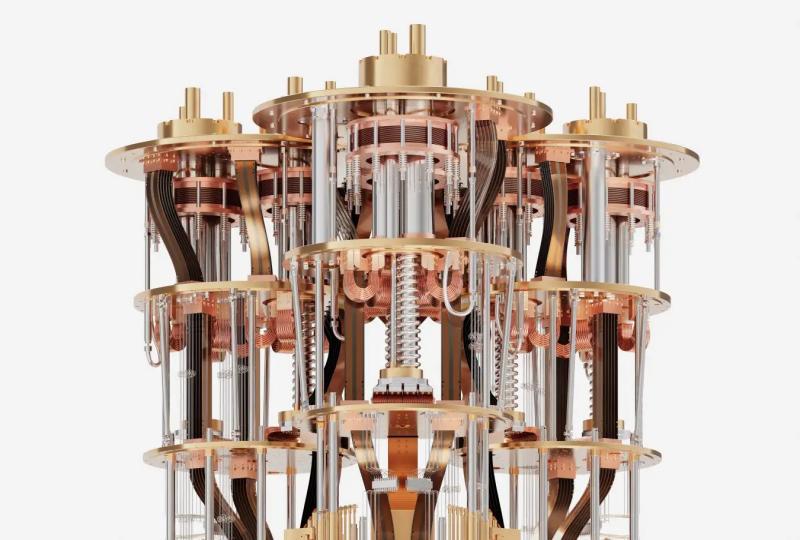
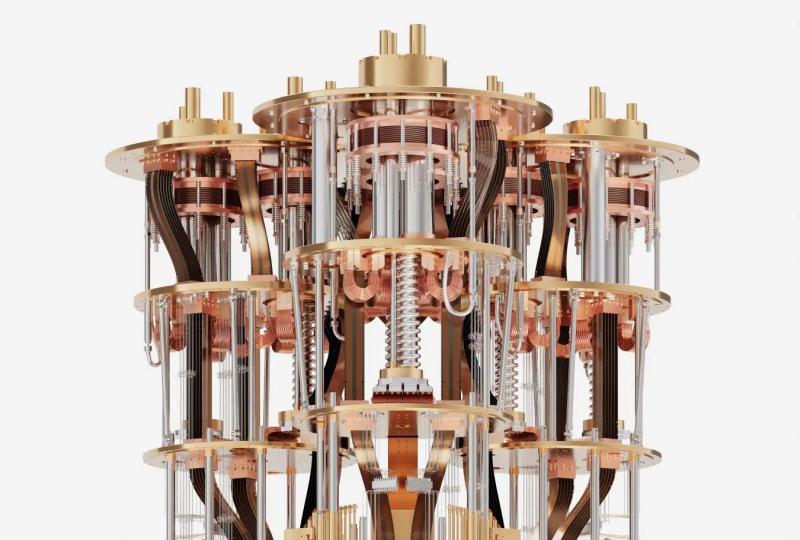
Our cryogenic deployment capabilities cover dilution refrigerators, cryogenic RF components, laboratory retrofitting, system integration, and maintenance. The QPU C Series is designed for operation at ultra-low temperatures of around 20 mK.
The goal is not simply to reach a low temperature. The complete environment must provide stable thermal conditions and reliable signal transmission so that the QPU can operate as intended.
From Chip Fabrication to QPU Characterization
A complete superconducting quantum chip solution also depends on how the chip is fabricated, packaged, and tested. These steps connect device design with actual QPU performance.
Design and Fabrication
We provide end-to-end superconducting quantum chip manufacturing services covering design through packaging. Our QPU manufacturing capabilities are supported by a dedicated micro-nano laboratory and fabrication equipment for superconducting quantum devices.
This allows chip design, fabrication, packaging, and subsequent characterization to be coordinated within one development process.
Characterization Before Integration
Each QPU includes a standard characterization report covering key measurements such as resonant cavity frequency, qubit frequency, and decoherence time.
This gives customers clear technical information before the QPU is integrated into their experimental environment.
Choosing the Right Superconducting Quantum Chip Configuration
Different quantum projects require different levels of QPU capability. Rather than using one configuration for every application, we provide different qubit counts and architectures to support different research needs.
For example, the C5 provides 5 qubits in a 1D chain, while the C25 PRO provides 25 qubits in a 2D lattice. The two configurations also differ in their coherence and gate-fidelity specifications.
This makes the choice more practical: customers can match the QPU configuration with their experimental goals, available infrastructure, and required control capabilities.
Bringing the Quantum Hardware Together
A superconducting quantum chip becomes much more useful when its supporting hardware is designed around the same system requirements.
Our product portfolio connects the QPU with quantum control and measurement, cryogenic deployment, and manufacturing services. This gives customers a clearer path from quantum chip selection to system integration.
For projects that require a broader superconducting quantum computing platform, we can also integrate the QPU, milli-kelvin cryogenic system, QCM system, and software into a complete architecture.
How Can We Support Your Superconducting Quantum Project?
The right solution depends on where your project is today. You may need a ready-to-use QPU, custom chip fabrication, a control and measurement system, cryogenic deployment, or a more complete superconducting quantum computing setup.
We provide customization, foundry and design services, system solution tailoring, professional installation and training, and technical support for our QPU products.
If you are planning a superconducting quantum project, you can discuss your quantum chip requirements with our team. We can help you identify the appropriate QPU configuration, control requirements, and supporting infrastructure for your application.
Featured Content