
Superconducting Quantum Computing Bottlenecks and Scaling Challenges
2026.11.04 · Blog superconducting quantum computing bottlenecks
Superconducting quantum computing faces several interconnected bottlenecks, including limited qubit coherence, gate errors, crosstalk, cryogenic infrastructure constraints, and the resource requirements of quantum error correction. Overcoming these challenges requires more than improving individual qubits. It demands coordinated advances in chip fabrication, quantum control, measurement, cryogenic engineering, and full-system integration.
Although superconducting technology has made significant progress in quantum processor development, building a larger processor does not automatically produce a more powerful or reliable quantum computer. As qubit numbers increase, the complexity of controlling, connecting, and maintaining them also grows.
Understanding these limitations is essential for researchers, hardware engineers, and organizations evaluating the next generation of quantum computing systems.
Why Is Scaling Superconducting Quantum Computing So Difficult?
Scaling superconducting quantum computing involves increasing the number of physical qubits while maintaining the performance and reliability of the entire system.
A processor with more physical qubits may support more complex quantum circuits, but only if those qubits can be controlled accurately and maintain their quantum states long enough to complete useful operations.
Three factors make this particularly challenging.
First, quantum states are sensitive to environmental disturbances. Increasing system complexity introduces more opportunities for noise and unwanted interactions.
Second, additional qubits require more control and measurement resources. Signal routing, synchronization, and calibration become increasingly difficult as the processor grows.
Third, practical quantum computing requires error correction. Physical qubits must work together to create more reliable logical qubits, introducing additional hardware and computational overhead.
Therefore, scalability depends on the combined performance of the processor, control electronics, cryogenic infrastructure, and supporting software.
What Are the Main Superconducting Quantum Computing Bottlenecks?
Several technical limitations affect the development of larger superconducting quantum computers. Although each presents a different engineering challenge, they are closely connected.
Limited Qubit Coherence and Environmental Noise
Qubit coherence determines how long quantum information can be preserved before environmental interactions cause it to deteriorate.
Superconducting qubits are particularly sensitive to energy relaxation and dephasing. Energy relaxation causes a qubit to lose its excitation, while dephasing disrupts the relative phase between quantum states.
Several factors contribute to these problems:
-
Material defects and microscopic imperfections in chip structures.
-
Dielectric losses and two-level system defects.
-
Unwanted electromagnetic interference and environmental noise.
-
Residual thermal excitations within the quantum processor.
These effects can introduce errors during quantum operations and limit the depth of circuits that can be executed reliably.
Improving coherence requires careful material selection, fabrication processes, circuit design, and environmental control. However, longer coherence times alone cannot guarantee better system performance. Qubit coherence must work together with accurate gates, reliable measurement, and effective error correction.
Gate Fidelity, Crosstalk, and Frequency Collisions
Quantum gates manipulate qubit states to perform computational operations. Their accuracy, commonly measured through gate fidelity, is therefore essential to reliable quantum computation.
In superconducting processors, microwave pulses are commonly used to control qubits and perform gate operations. As more qubits are integrated into a processor, controlling individual qubits without disturbing neighboring ones becomes increasingly difficult.
Three related problems deserve attention:
-
Gate errors: Imperfect control pulses and unwanted interactions can produce incorrect quantum operations.
-
Crosstalk: Signals intended for one qubit may unintentionally affect nearby qubits.
-
Frequency collisions: Similar or poorly separated qubit frequencies can make individual control and selective interactions more difficult.
These problems become more challenging in densely connected processors, where multiple operations may need to run simultaneously.
Improving gate fidelity requires optimized pulse shaping, careful frequency allocation, better chip layouts, and accurate calibration. Control electronics must also provide stable and precisely synchronized signals.
Cryogenic Cooling and Wiring Limitations
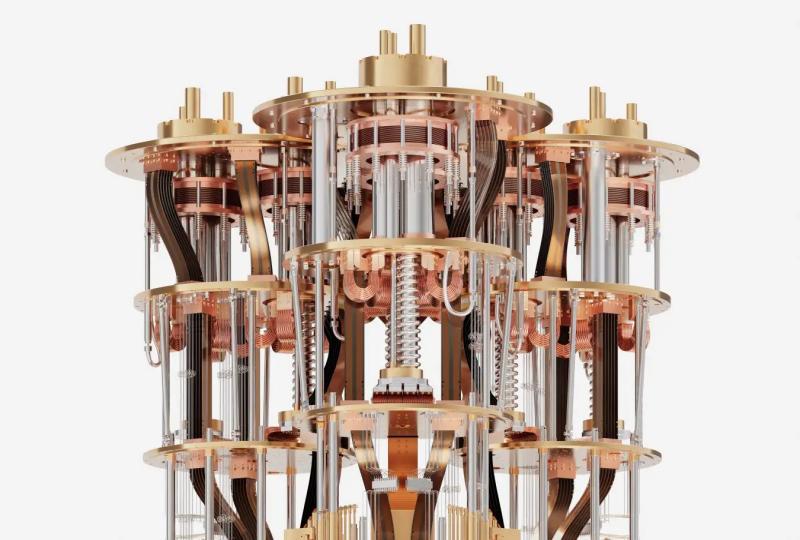
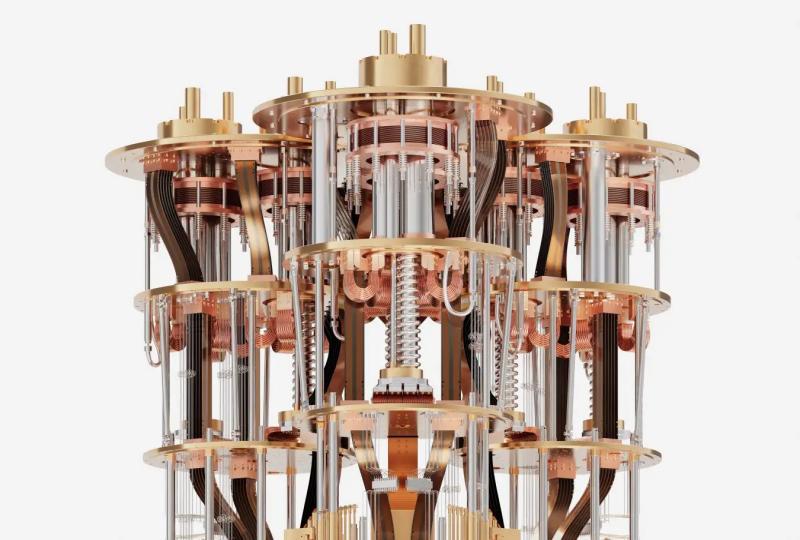
Superconducting quantum processors operate at extremely low temperatures, typically in the millikelvin range, to maintain superconductivity and reduce unwanted thermal excitations.
A dilution refrigerator provides the necessary cooling environment. However, expanding the processor creates additional demands on the cryogenic infrastructure.
Every control and readout connection introduces physical wiring requirements. As the number of qubits increases, the system needs more signal paths between room-temperature electronics and the processor inside the refrigerator.
This creates several challenges:
-
Limited cooling power at the lowest temperature stages.
-
Increased heat load from cables and electronic components.
-
Restricted space for wiring and connectors.
-
Greater complexity in routing microwave signals.
-
More demanding thermal management and system maintenance.
Simply adding more cables is not a sustainable long-term solution. Researchers are exploring multiplexed readout, improved wiring architectures, and cryogenic control electronics to reduce the infrastructure required for larger systems.For a practical cryogenic superconducting quantum computing system, cooling capacity, signal transmission, and processor requirements must be considered together.
Quantum Control and Measurement Complexity
A superconducting quantum computer requires precise control signals to initialize qubits, execute quantum gates, and measure computational results.
As processor size increases, the number of control and readout channels can also grow, creating a significant engineering challenge.
The main difficulties include:
-
Generating accurate microwave pulses across multiple channels.
-
Maintaining synchronization between control signals.
-
Reading qubit states with sufficient accuracy.
-
Reducing interference between neighboring channels.
-
Calibrating large numbers of qubits efficiently.
Measurement is particularly important because quantum information must be extracted reliably without introducing excessive errors.
Automated calibration, multiplexed measurement, and more integrated control architectures can help address these limitations. A scalable quantum control and measurement system is therefore an essential part of the overall processor architecture.
The goal is not simply to control more qubits, but to maintain consistent performance as the number of channels and operations increases.
Quantum Error Correction Overhead
Quantum error correction is essential for building fault-tolerant quantum computers. Unlike classical bits, quantum information cannot be copied directly to create conventional backup data. Instead, quantum error correction encodes information across multiple physical qubits and uses measurements of error syndromes to identify and correct errors.
This introduces a major resource challenge.
A logical qubit may require many physical qubits, depending on the error-correction code, physical error rates, connectivity, and desired logical reliability.
Surface codes are an important approach because they use local interactions between neighboring physical qubits. However, they also require repeated syndrome measurements, reliable operations, and classical decoding.
The main bottlenecks include:
-
High physical qubit requirements for logical qubits.
-
Errors during two-qubit gates and measurement.
-
Repeated syndrome extraction and real-time processing.
-
Additional hardware and connectivity requirements.
Reducing physical error rates can lower the resources needed for error correction. However, practical fault tolerance also depends on the reliability and speed of the entire system.
Chip Fabrication Consistency and System Integration
Manufacturing consistency is another important challenge in superconducting quantum computing.
Superconducting processors rely on precisely fabricated circuit structures, including Josephson junctions. Variations in junction parameters can affect qubit frequencies, coupling strengths, and device performance.
When a processor contains more qubits, maintaining consistent fabrication quality becomes increasingly important.
Key challenges include:
-
Variations in Josephson junction properties.
-
Differences in qubit frequencies and coupling strengths.
-
Device yield and fabrication repeatability.
-
Chip packaging and interconnection reliability.
-
Integration between processors and supporting hardware.
These issues extend beyond chip manufacturing. A processor must also work reliably with its cryogenic environment, microwave control electronics, measurement hardware, and software.
This makes system integration a critical part of scaling. Even a high-performance chip may not deliver its expected results if the surrounding infrastructure cannot support its operating requirements.
How Can These Superconducting Quantum Computing Bottlenecks Be Addressed?
No single improvement can resolve every limitation. Progress requires coordinated development across several engineering areas.
Improve Qubit Design and Fabrication Processes
Better materials, optimized circuit layouts, and more consistent fabrication processes can help improve coherence and reduce device variability.
Researchers can also improve chip characterization to identify fabrication defects and performance differences before processors are integrated into larger systems.
More reliable fabrication is especially important when moving from small experimental devices toward processors containing larger numbers of interconnected qubits.
Build More Scalable Quantum Control Architectures
Control architectures need to support increasing numbers of qubits without creating an unsustainable number of independent signal channels.
Multiplexing, automated calibration, improved pulse control, and more integrated electronics can help reduce system complexity.
At the same time, accurate synchronization and low-noise signal generation remain essential for maintaining gate performance.
Optimize Cryogenic Infrastructure and Hardware Integration
Cryogenic systems must provide sufficient cooling capacity while accommodating the wiring, connectors, and electronic components required by larger processors.
Improved thermal management, optimized cable routing, and cryogenic electronics can help address these constraints.
Hardware integration is equally important. Processor specifications, signal requirements, cooling capacity, and measurement architecture should be considered during system design instead of being optimized independently.
Advance Quantum Error Correction and Modular Architectures
More efficient error-correction codes and improved physical gate performance can reduce the resources needed to create reliable logical qubits.
Modular architectures also offer a potential path toward larger systems. Instead of relying exclusively on a single increasingly complex processor, modular approaches explore how multiple quantum processing units can work together.
However, connecting modules introduces additional challenges involving communication, synchronization, and error management. These architectures must therefore be evaluated at the system level.
Why Does Full-Stack Engineering Matter for Scalable Superconducting Quantum Computing?
The challenges of superconducting quantum computing demonstrate why processor performance cannot be evaluated in isolation.
A quantum processor depends on several interconnected subsystems:
-
Quantum processing units provide the physical qubits and their interactions.
-
Cryogenic systems maintain the low-temperature operating environment.
-
Quantum control electronics generate and manage microwave signals.
-
Measurement systems extract computational results.
-
Software supports programming, calibration, operation, and data analysis.
Each subsystem affects the performance of the others. For example, increasing the number of qubits places additional demands on signal routing, measurement channels, and cooling capacity. These changes can influence the overall stability and operational efficiency of the quantum computer.
At SpinQ, we approach superconducting quantum computing through integrated hardware and system development. Our superconducting quantum computer solutions bring together key components needed for quantum processor operation and experimentation.By considering processor design, control, measurement, and system integration together, we aim to support practical research and the continued development of superconducting quantum computing.
What Will Determine the Future of Superconducting Quantum Computing?
The future of superconducting quantum computing will depend on how effectively the industry addresses several interconnected engineering challenges.
Higher qubit coherence and gate fidelity will improve the reliability of quantum operations. More efficient control and measurement architectures will help manage increasingly complex processors. Advances in cryogenic infrastructure and fabrication will support larger hardware systems, while quantum error correction will remain essential for achieving fault-tolerant computation.
Ultimately, increasing qubit numbers is only one part of the process. The more important challenge is building systems in which processors, control electronics, cooling infrastructure, and software operate together reliably.
For research institutions and organizations exploring superconducting quantum computing, understanding these system-level requirements is an important step toward evaluating hardware capabilities and planning future development.
If you are exploring superconducting quantum computing hardware, processor integration, or quantum control solutions, contact SpinQ to discuss your technical requirements and potential collaboration opportunities.
.jpg)
Featured Content