
Scalable Superconducting Qubit Design for Larger Quantum Processors
2026.11.03 · Blog scalable superconducting qubit
A scalable superconducting qubit must deliver reliable performance while supporting the connections, control operations, and system integration required by larger quantum processors. Increasing the number of qubits is only one part of the challenge. Researchers must also manage fabrication variations, signal interference, readout accuracy, and cryogenic constraints to build hardware that can support increasingly complex quantum circuits.
What Makes a Superconducting Qubit Scalable?
Scalability describes the ability to expand a quantum computing platform while maintaining useful performance and manageable system complexity. For superconducting qubits, this requires coordinated progress in device design, chip architecture, control electronics, and error management.
Qubit Quality and Consistent Performance
Superconducting qubits use electrical circuits containing Josephson junctions to represent and manipulate quantum information. Their fast gate operations and compatibility with chip-based fabrication make them suitable for developing integrated quantum processors.
However, qubit performance depends on several factors. Coherence time describes how long quantum information can be preserved, while gate fidelity measures how accurately quantum operations are performed. Readout accuracy also matters because measurement errors can affect the results of a quantum circuit.
As processors grow, consistency across qubits becomes increasingly important. A chip with several high-performing qubits may support useful experiments, but larger circuits require reliable operations across many connected devices.
Scalable superconducting qubit design therefore aims to improve individual device performance while making the behavior of the overall processor more predictable.
Connectivity and Control Requirements
Quantum algorithms rely on interactions between qubits. The available connections determine which two-qubit operations can be performed directly and which require additional gates or changes in circuit layout.
More connections can make certain circuits easier to execute, but they can also increase design complexity and unwanted interactions. Researchers must balance connectivity with control precision, fabrication constraints, and the need to isolate qubits when they are not interacting.
A scalable design should support the operations required by its target applications without creating unnecessary control and calibration overhead.
Choosing the Right Architecture for Scalable Superconducting Qubits
Qubit architecture determines how devices are arranged, how they interact, and how a processor can be expanded. These decisions affect both quantum circuit execution and the engineering requirements of the complete system.
One-Dimensional Chains and Two-Dimensional Lattices
A one-dimensional chain connects qubits in a linear arrangement. This structure can simplify some aspects of layout and control, but operations between distant qubits may require additional gates.
Two-dimensional lattices provide more potential neighboring connections and are relevant to several quantum error-correction approaches. However, increasing the number of connections introduces additional routing, control, and fabrication considerations.
Neither layout is universally best. The appropriate architecture depends on the intended quantum algorithms, error-correction strategy, available hardware, and system constraints.
How Tunable Couplers Improve Interaction Control
Couplers help determine how quantum information can be exchanged between connected qubits. Tunable couplers allow researchers to adjust interactions between selected qubits, providing flexibility in implementing quantum gates and suppressing unwanted interactions under suitable operating conditions.
Their design must account for gate performance, control complexity, fabrication variability, and interactions with neighboring components. As the processor grows, the collective behavior of qubits and couplers becomes as important as the performance of individual devices.
Our work on superconducting quantum chip architecture explores how chip topology, coupling, and system integration relate to the development of larger quantum processors.
When Modular Architectures Become Useful
Modular architectures offer another possible route to scaling. Instead of expanding a single chip indefinitely, researchers can investigate ways to combine multiple processing modules into a larger system.
This approach may provide flexibility in chip design, manufacturing, and system development. However, connecting modules introduces additional requirements for communication, control, packaging, and potentially quantum-state transfer between components.
Modularity is therefore not an automatic solution to scalability. Its value depends on whether the benefits of dividing the system outweigh the overhead of connecting and coordinating its components.
Fabrication Consistency Is Essential for Scalable Qubits
A scalable architecture must be supported by manufacturing processes that produce predictable devices. Variations between qubits can affect processor calibration, operating frequencies, gate performance, and overall experimental reliability.
Reducing Device-to-Device Variations
Differences in Josephson junction parameters, material properties, and fabrication dimensions can lead to variations in qubit characteristics. These differences may complicate frequency allocation, increase calibration requirements, and make it harder to maintain consistent performance across a chip.
Improving fabrication repeatability and characterizing devices systematically can help researchers identify variations before integrating them into larger processors.
Consistency does not mean that every qubit must be identical. Instead, devices need sufficiently predictable characteristics for the architecture and control strategy to accommodate their differences.
Packaging and Chip-Level Integration
Chip packaging and electrical connections also influence performance. Poorly designed interfaces can introduce unwanted electromagnetic modes, signal loss, or other sources of interference.
As the number of qubits increases, packaging must accommodate more connections while preserving signal integrity and compatibility with cryogenic operation. Chip design, packaging, and system interfaces should therefore be considered together rather than treated as separate stages.
These engineering choices can determine whether a promising chip design can be reproduced and integrated into a larger experimental platform.
Control and Readout Must Scale With the Qubit Count
Even a well-designed quantum chip cannot operate effectively without accurate control and measurement. As more qubits are added, the supporting electronics must handle greater operational complexity without compromising signal quality.
Managing Control Lines and Microwave Crosstalk
Superconducting qubits are commonly controlled using microwave signals. Increasing the qubit count can increase the number of control requirements, wiring connections, and opportunities for unwanted signal interactions.
Microwave crosstalk occurs when a signal intended for one component unintentionally affects another. This can introduce gate errors and make calibration more difficult.
Multiplexing, improved wiring strategies, and more integrated control electronics can help manage these demands. However, each approach involves trade-offs involving bandwidth, isolation, signal quality, and implementation complexity.
Scaling Readout Without Losing Accuracy
Readout systems must distinguish qubit states accurately while supporting the measurement requirements of the processor. As the number of qubits increases, researchers need to manage measurement channels, signal processing, and interactions between readout components.
Multiplexed readout can allow several qubits to share parts of the measurement infrastructure under suitable conditions. Its effectiveness depends on factors such as frequency allocation, resonator design, signal-to-noise ratio, and measurement speed.
The objective is to increase measurement capacity while preserving the accuracy needed for quantum algorithms and error-correction protocols.
Calibration for Larger Quantum Processors
Qubit frequencies and operating conditions can vary between devices and may change over time. Researchers must calibrate gate operations, characterize interactions, and monitor system performance to maintain reliable execution.
Manual calibration can become increasingly demanding as the processor grows. Automated characterization and calibration tools can help researchers repeat measurements, identify drift, and update operating parameters more efficiently.
Scalability therefore depends not only on the number of available control channels but also on how effectively the system can be maintained and operated.
Cryogenic Engineering and Quantum Error Correction Shape Scalability
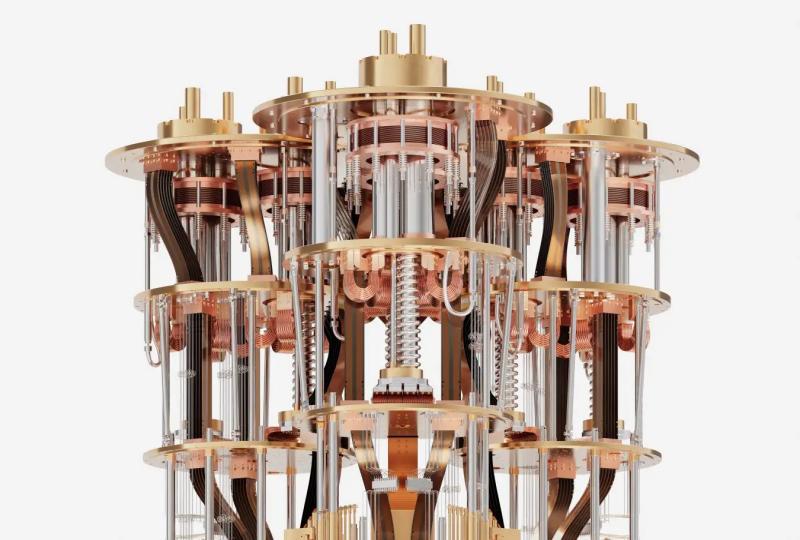
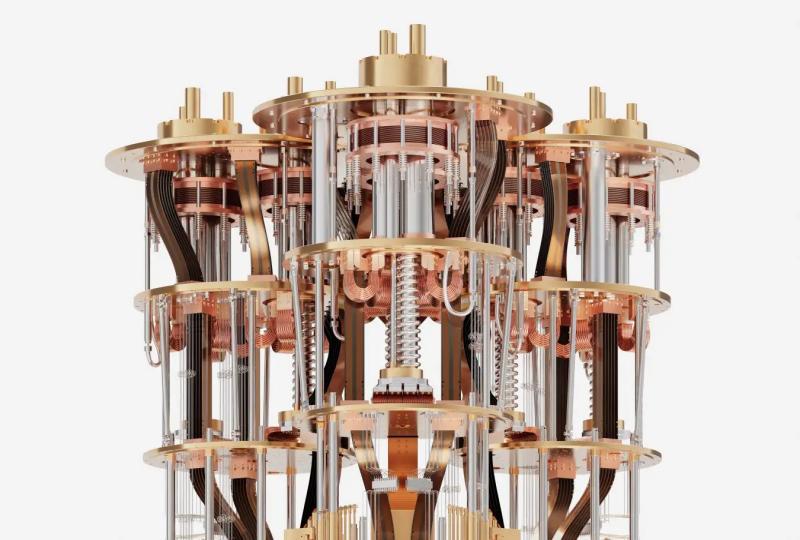
Superconducting qubits generally operate at temperatures of only a few millikelvin. Their supporting systems must maintain these conditions while providing the electrical connections needed for control and measurement.
As the qubit count increases, wiring density, thermal load, available space, and signal management become more difficult to balance. Engineers must design cryogenic interfaces and control strategies that support expansion without compromising operating conditions.
Quantum error correction adds another layer of requirements. Logical qubits encode quantum information across multiple physical qubits, allowing certain errors to be detected and corrected through coordinated operations and measurements.
The resources required depend on physical error rates, connectivity, the correction method, and the reliability needed for the target computation. Better physical qubits can reduce the burden of error correction, but successful scaling also requires reliable control, repeated measurements, and sufficient system integration.
For this reason, scalable superconducting qubit development must consider the complete system, from chip fabrication to cryogenic operation and error-management procedures.
How to Evaluate a Scalable Superconducting Qubit Platform
Research teams evaluating quantum hardware should look beyond the advertised number of qubits. A useful assessment considers whether the platform supports the intended experiments and whether its performance can be measured and reproduced.
Key evaluation criteria include:
-
Qubit coherence times, single-qubit and two-qubit gate fidelities, and measurement accuracy.
-
Chip topology, coupling mechanisms, and compatibility with target quantum circuits.
-
Control and readout capabilities, including channel management and signal interference.
-
Cryogenic infrastructure, electrical interfaces, and integration requirements.
-
Calibration procedures, repeatability, and access to relevant performance data.
-
Compatibility with research software, testing workflows, and future experimental needs.
These criteria help researchers distinguish between a processor that demonstrates a particular capability and a platform that can support a broader, repeatable research program.
Our superconducting quantum computing system benchmarking guide provides further context for evaluating performance at the system level.
Supporting Scalable Superconducting Qubit Research With the Right Hardware
Universities, laboratories, and quantum technology companies need experimental hardware to investigate qubit behavior, validate quantum circuits, and explore the engineering challenges associated with larger processors.
Our SPINQ QPU C Series provides a starting point for teams exploring superconducting quantum processing hardware. Depending on the research configuration, quantum processing hardware can support investigations into quantum operations, device characteristics, and processor performance.
For projects that require a broader experimental environment, our SPINQ superconducting quantum computer provides a route to exploring quantum processing alongside supporting control, measurement, and cryogenic components.
The right configuration depends on the project's goals, experimental methods, and system requirements. Researchers working on qubit characterization may prioritize different capabilities from teams investigating quantum circuits or system integration.
If your team is evaluating superconducting quantum hardware for research or development, contact us to discuss your application requirements and explore suitable options.
Building a Practical Path Toward Scalable Superconducting Qubits
Scalable superconducting qubit design requires progress across multiple engineering areas. High-quality qubits provide the foundation, while appropriate connectivity, repeatable fabrication, reliable control and readout, and effective cryogenic integration support larger processors.
Quantum error correction adds further requirements but also provides a path toward more reliable quantum information processing. Achieving this goal will require hardware and software to develop together, supported by rigorous testing and system-level evaluation.
For researchers and developers, the practical objective is to build platforms that can grow in capability while maintaining reliable operation. By evaluating qubit performance alongside architecture and system integration, research teams can make more informed decisions about the hardware and engineering strategies needed for the next generation of superconducting quantum processors.
.jpg)
Featured Content