
How a Fault-Tolerant Superconducting Quantum Computing System Is Built
2026.11.03 · Blog fault-tolerant superconducting quantum computing system
A fault-tolerant superconducting quantum computing system combines superconducting quantum processors, cryogenic infrastructure, precise control electronics, and quantum error correction to protect quantum information during computation. Its goal is to keep logical errors sufficiently low for reliable quantum operations, even when individual physical qubits are imperfect.
Building such a system requires more than increasing the number of qubits on a chip. Every layer, from quantum hardware to classical processing, must work together to detect errors, manage noise, and maintain stable operations. Understanding this architecture helps research institutions and quantum hardware developers evaluate the engineering requirements for scalable quantum computing.
What Makes a Superconducting Quantum Computing System Fault-Tolerant?
A conventional superconducting quantum computer performs operations using physical qubits. However, physical qubits are vulnerable to noise, decoherence, imperfect gates, and measurement errors. These effects can gradually destroy quantum information.
Fault-tolerant quantum computing addresses this problem through quantum error correction (QEC). Instead of relying on a single physical qubit, a logical qubit encodes quantum information across multiple physical qubits.
Physical Qubits vs. Logical Qubits
Physical qubits are the actual quantum devices fabricated on a processor. Logical qubits are encoded states protected through quantum error-correction procedures.
The distinction is important:
-
Physical qubits are directly controlled and measured by the hardware.
-
Logical qubits use multiple physical qubits to detect and correct errors.
-
Logical operations are designed to preserve encoded quantum information despite physical imperfections.
A successful fault-tolerant architecture must demonstrate that error correction improves the reliability of logical information. Simply integrating more physical qubits does not guarantee this outcome.
Why Quantum Error Correction Is Essential
Superconducting qubits operate in environments where small disturbances can introduce errors. Sources include thermal fluctuations, control imperfections, unwanted coupling, and decoherence.
Quantum error correction uses additional qubits and repeated measurements to identify error syndromes without directly measuring the encoded logical information.
When the physical error rates are sufficiently low and the error-correction architecture is appropriate, increasing the code distance can reduce the logical error rate.
This is a central requirement for moving from quantum error-correction experiments toward fault-tolerant computation.
What Are the Core Components of a Fault-Tolerant Superconducting Quantum System?
A fault-tolerant superconducting quantum computing system requires several interconnected hardware and software layers. Each component has a specific responsibility, but overall performance depends on how effectively they operate together.
Superconducting Quantum Processing Unit
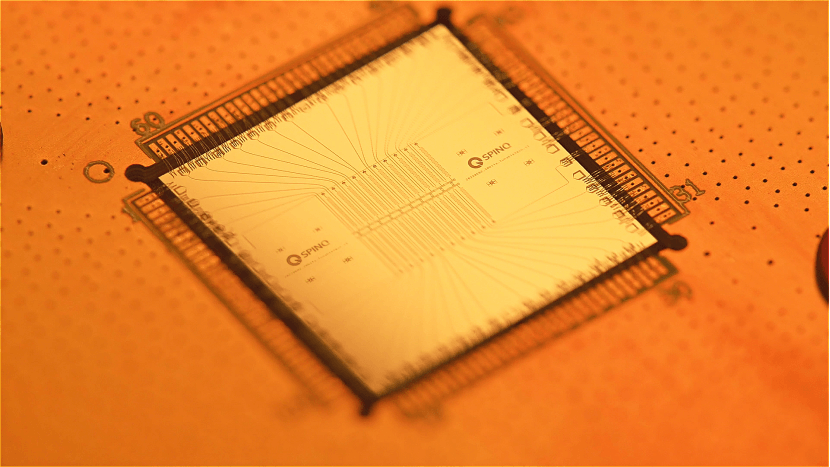
The quantum processing unit (QPU) is the core computational component. Superconducting qubits are typically built using circuits containing Josephson junctions, which provide the nonlinear energy levels needed for quantum operations.
Important design considerations include:
-
Qubit coherence time and gate fidelity.
-
Qubit connectivity and coupling architecture.
-
Frequency allocation and unwanted interactions.
-
Chip layout and scalability.
-
Fabrication consistency and device characterization.
A two-dimensional qubit topology is particularly relevant to surface-code implementations because it supports the local interactions required by many error-correction operations.
For research teams developing superconducting hardware, the SPINQ® QPU C Series provides a superconducting processor platform with enhanced 2D lattice connectivity and support for quantum error-correction experiments.
Cryogenic Infrastructure
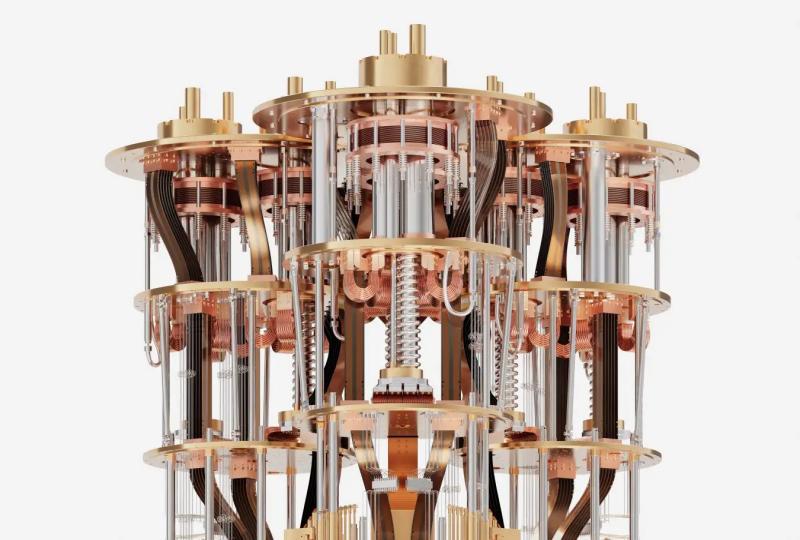
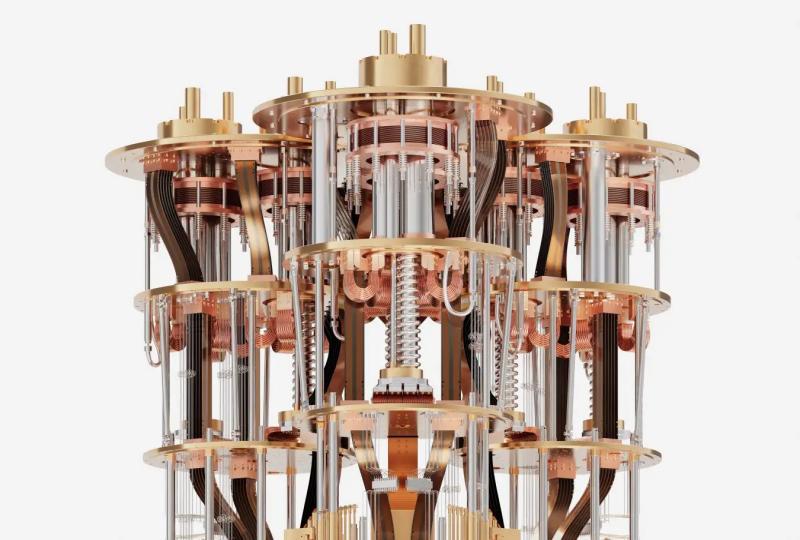
Superconducting qubits require extremely low operating temperatures, typically in the millikelvin range. A dilution refrigerator provides the thermal environment needed to maintain superconducting operation and preserve qubit coherence.
However, cryogenic engineering involves more than cooling the processor.
The system must also manage:
-
Heat loads from control and readout cables.
-
Thermal isolation between temperature stages.
-
Microwave signal transmission.
-
Magnetic shielding and environmental interference.
-
Mechanical and thermal stability.
As qubit numbers increase, the additional wiring and electronic components introduce greater thermal and integration demands. Cryogenic infrastructure must therefore be designed alongside the processor rather than treated as a separate accessory.
Quantum Control and Readout Systems
Quantum control and measurement electronics connect the classical computing environment to the QPU.
Control systems generate microwave pulses that manipulate qubit states. Readout systems acquire signals that reveal measurement outcomes.
Their main responsibilities include:
-
Generating accurately timed microwave pulses.
-
Controlling pulse frequency, amplitude, and phase.
-
Measuring qubit states.
-
Synchronizing operations across multiple channels.
-
Supporting calibration and feedback workflows.
As systems scale, channel synchronization, signal quality, and parallel operation become increasingly important. Errors in control or measurement can affect multiple qubits and undermine quantum error-correction experiments.
Classical Computing and Software Infrastructure
Fault-tolerant quantum computing also depends on classical processing.
The classical system manages quantum circuits, collects measurement results, processes error syndromes, and supports decoding algorithms. In advanced architectures, decoding and feedback must operate quickly enough to support repeated error-correction cycles.
This creates an important engineering requirement: quantum hardware and classical computing infrastructure must be designed as a coordinated system.
.jpg)
How Does Quantum Error Correction Enable Fault-Tolerant Computing?
Quantum error correction protects logical quantum information by detecting errors through indirect measurements. It is one of the most important technologies for building reliable superconducting quantum systems.
How Surface Codes Protect Quantum Information
The surface code is a widely studied quantum error-correction approach for superconducting quantum processors.
It arranges data qubits and measurement qubits in a two-dimensional lattice. Measurement operations check relationships between neighboring qubits, producing error syndromes that help identify potential bit-flip and phase-flip errors.
The system can then use a classical decoder to determine appropriate corrections.
Code distance is an important property of this architecture. Increasing the code distance generally requires more physical qubits and more extensive error-correction operations, but it can improve logical protection when physical error rates are below the relevant error threshold.
How Repeated Syndrome Measurements Detect Errors
A single measurement may not provide enough information to distinguish actual errors from measurement noise.
Therefore, quantum error correction typically involves repeated syndrome measurements across multiple cycles.
The process includes:
-
Preparing data and measurement qubits.
-
Performing stabilizer measurements.
-
Collecting measurement outcomes.
-
Processing error syndromes using a classical decoder.
-
Applying or tracking the required corrections.
This process must be repeated while preserving the encoded quantum information.
Why Logical Error Rates Matter
Physical gate fidelity is important, but it does not independently establish fault-tolerant performance.
A more meaningful indicator is whether the logical error rate decreases as the code distance increases.
Researchers need to examine repeated error-correction cycles, logical memory performance, decoder behavior, and the stability of the complete control and measurement stack.
A system that supports surface-code experiments provides an important foundation for this research, but it should not automatically be described as a fully fault-tolerant quantum computer.
What Makes Fault-Tolerant Superconducting Quantum Systems Difficult to Scale?
Increasing the physical qubit count introduces challenges across the entire system. More qubits require additional control channels, more complex calibration, greater measurement capacity, and more demanding cryogenic infrastructure.
Several engineering challenges deserve particular attention.
Maintaining Gate Fidelity and Coherence
As the processor grows, frequency collisions, crosstalk, and unwanted interactions become harder to manage.
A system must maintain consistent gate performance across the chip, including when multiple operations run simultaneously.
Researchers also need to monitor coherence-time variations and calibration drift over extended experiments.
Managing Cryogenic and Control Complexity
Additional qubits require more signal connections and readout resources. These increase thermal loads and make wiring, filtering, and signal routing more complicated.
Modular system architectures can help organize these components through defined interfaces between the QPU, cryogenic hardware, control electronics, and software.
Our discussion of modular superconducting quantum chip architecture explores how these layers can be coordinated as processors expand.
Supporting Real-Time Error Correction
Error correction involves continuous communication between quantum hardware and classical processing systems.
The processor must perform measurements, transmit results, and receive decoding or feedback information with sufficient speed and reliability.
As system complexity increases, decoder latency, data throughput, synchronization, and feedback performance become important engineering constraints.
How Can Researchers Develop and Test Fault-Tolerant Quantum Hardware?
Developing fault-tolerant hardware is a gradual process. Research teams need to characterize individual components before validating their behavior as an integrated system.
Start with Quantum Chip Characterization
Initial testing focuses on physical qubit properties, including:
-
T1 and T2 coherence times.
-
Single-qubit and two-qubit gate fidelity.
-
Readout fidelity.
-
Qubit connectivity.
-
Leakage and crosstalk.
These measurements establish the baseline performance of the processor.
Validate Control and Measurement Performance
The next step is to test whether the control and measurement infrastructure can perform repeatable operations across multiple qubits.
Researchers should examine pulse accuracy, synchronization, simultaneous gate operations, measurement stability, and calibration workflows.
These factors determine whether the hardware can support more complex experiments.
Conduct Quantum Error-Correction Experiments
Once the hardware and control environment are sufficiently stable, researchers can investigate error-correction protocols.
Experiments may include repeated stabilizer measurements, syndrome extraction, logical-state preparation, and logical error-rate analysis at different code distances.
The SPINQ Taurus™ Superconducting Quantum Computer integrates a superconducting QPU, millikelvin cryogenic infrastructure, quantum control and measurement electronics, and software.
Its S25 and S25 Pro configurations provide 25-qubit processors with a 5 × 5 two-dimensional lattice and support for d=3 surface-code experiments. These capabilities provide a platform for superconducting quantum computing research and quantum error-correction exploration.
For more advanced chip research, the SPINQ® QPU C Series extends the processor architecture toward higher qubit integration and more complex error-correction experiments. Its architecture is designed to support up to 100+ superconducting qubits and surface-code implementations with code distance up to d=7.
These capabilities support research into scalable quantum hardware. They should be understood as processor and experimental capabilities, not evidence that a complete large-scale fault-tolerant quantum computer is already available.
What Should You Consider When Building a Superconducting Quantum Computing System?
Selecting a system requires matching hardware capabilities to the intended research objectives.
Research institutions and quantum technology developers should consider three main areas.
Hardware Performance and System Compatibility
Evaluate the QPU, cryogenic infrastructure, control electronics, and measurement system together.
A processor with strong individual qubit metrics may still encounter system-level limitations if its control environment or readout architecture cannot support the intended experiments.
Research Requirements and Integration Flexibility
Different projects require different capabilities.
Quantum chip development may prioritize pulse-level access and characterization tools. Quantum error-correction research may require repeated stabilizer measurements, suitable qubit connectivity, and classical decoding support.
System integrators may place greater emphasis on interfaces, modular expansion, and software compatibility.
Long-Term Scalability
Consider how the architecture can accommodate additional qubits, control channels, measurement resources, and more complex software workflows.
Scalability should be assessed across the entire system rather than through processor size alone.
Building the Next Generation of Fault-Tolerant Quantum Systems
Fault-tolerant superconducting quantum computing requires coordinated progress in quantum processor design, cryogenic engineering, control electronics, measurement, and error correction.
The transition from physical qubits to reliable logical qubits remains a significant engineering challenge. It requires not only improved hardware performance but also repeatable error-correction cycles, effective classical decoding, and scalable system integration.
For research institutions and quantum hardware developers, understanding these requirements is essential when planning processor development, experimental validation, and system expansion.
SpinQ provides superconducting quantum computing hardware and integrated system solutions to support quantum processor research, system development, and quantum error-correction exploration. If your team is developing superconducting quantum hardware or planning a research system, contact SpinQ for superconducting quantum computing solutions to discuss your technical requirements.
.jpg)
Featured Content