

What Is Superposition in Quantum Computing and How Does It Work?
2026.11.02 · Blog superposition in quantum computing
Superposition in quantum computing allows a qubit to exist in a combination of the 0 and 1 states before measurement. This property gives quantum computers a fundamentally different way to represent and process information. But how does a qubit enter superposition, how do quantum gates manipulate it, and how does this state contribute to computation?
Understanding these questions requires looking beyond the idea that a qubit can be both 0 and 1. The real significance of superposition lies in how quantum states are controlled, how their probability amplitudes interact, and how measurement produces computational results.
What Does Superposition Mean in Quantum Computing?
In classical computing, a bit has one definite value: either 0 or 1. A quantum bit, or qubit, can exist in a superposition of these two basis states.
A general single-qubit state is expressed as:
[
|\psi\rangle=\alpha|0\rangle+\beta|1\rangle
]
Here:
-
(|0\rangle) and (|1\rangle) represent the two computational basis states.
-
(\alpha) and (\beta) are complex probability amplitudes.
-
Their squared magnitudes determine the probabilities of measuring each state.
The amplitudes must satisfy the normalization condition:
[
|\alpha|^2+|\beta|^2=1
]
For example, if a qubit is in an equal superposition:
[
|\psi\rangle=\frac{1}{\sqrt{2}}(|0\rangle+|1\rangle)
]
It has a 50% probability of being measured as 0 and a 50% probability of being measured as 1.
How Is Quantum Superposition Different from Classical Probability?
A classical bit with a 50% probability of being 0 and a 50% probability of being 1 represents uncertainty about a definite value.
A quantum superposition is different. It is a physical quantum state with probability amplitudes and relative phase information.
This phase information matters because quantum states can interfere with one another. Quantum algorithms use this property to change the probabilities of different measurement outcomes.
Therefore, superposition is not simply a mixture of possible answers. It provides the foundation for quantum interference and more complex quantum operations.
How Does Superposition Work in a Quantum Computer?
A quantum computer creates and manipulates superposition through controlled quantum operations. The process begins with an initialized qubit and continues through a sequence of quantum gates.
How Does the Hadamard Gate Create Superposition?
The Hadamard gate is one of the most common ways to create an equal superposition from a qubit initialized to 0.
Its matrix representation is:
[
H=\frac{1}{\sqrt{2}}
\begin{pmatrix}
1&1\
1&-1
\end{pmatrix}
]
When this gate acts on the initial state (|0\rangle), the result is:
[
H|0\rangle=\frac{|0\rangle+|1\rangle}{\sqrt{2}}
]
The qubit is now in an equal superposition of the two computational basis states.
Applying the Hadamard gate again returns the qubit to its original state:
[
H(H|0\rangle)=|0\rangle
]
This demonstrates that quantum gates do more than change a qubit from 0 to 1. They manipulate the amplitudes and phases that describe its quantum state.
What Happens When Multiple Qubits Enter Superposition?
When multiple qubits are combined, the number of possible computational basis states grows exponentially.
For a system of (n) qubits, the state can be represented using (2^n) computational basis states.
For example:
-
1 qubit: 2 basis states
-
2 qubits: 4 basis states
-
3 qubits: 8 basis states
-
10 qubits: 1,024 basis states
A two-qubit system can be expressed as:
[
|\psi\rangle=
\alpha_{00}|00\rangle+
\alpha_{01}|01\rangle+
\alpha_{10}|10\rangle+
\alpha_{11}|11\rangle
]
Each basis state has its own probability amplitude.
However, this does not mean a quantum computer can directly read all these states at once. The system evolves as a quantum state, and measurement produces a specific outcome. Quantum algorithms must manipulate the amplitudes before measurement to make useful results more likely.
What Happens When a Quantum Superposition Is Measured?
Measurement connects the quantum state to a classical result. Before measurement, a qubit may exist in a superposition. When measured in the computational basis, it produces either 0 or 1.
The probability of each result follows the Born rule:
[
P(0)=|\alpha|^2
]
[
P(1)=|\beta|^2
]
For an equal superposition, both outcomes have a 50% probability.
Why Does Measurement Produce Only One Result?
A measurement does not reveal every component of a superposition. Instead, it returns one outcome based on the probability distribution of the quantum state.
For example, consider a qubit prepared in an equal superposition. If the same experiment is repeated many times under identical conditions, the results will generally contain both 0s and 1s.
The distribution should approach the expected 50:50 ratio as the number of measurements increases.
This is why repeated measurements are important in quantum experiments. A single result cannot fully describe the probability distribution of a quantum state.
How Can Repeated Measurements Reveal Quantum Probabilities?
A typical experiment follows three steps:
-
Prepare a qubit in a known initial state.
-
Apply a quantum gate to create a superposition.
-
Repeat the circuit and collect measurement results.
The resulting statistics can be compared with theoretical predictions.
Real hardware may produce deviations because of noise, imperfect gate operations, and measurement errors. These differences also provide useful information about the behavior and performance of a quantum system.
How Does Superposition Help Quantum Computers Solve Problems?
Superposition allows quantum computers to represent multiple computational basis states within one quantum state. However, this alone does not guarantee faster computation.
The computational value comes from combining superposition with quantum gates, interference, and measurement.
Superposition and Quantum Parallelism
Quantum parallelism describes how quantum operations can act on a superposition of computational basis states.
For example, a quantum circuit operating on a superposition of several inputs can transform their corresponding amplitudes through the same sequence of gates.
However, measurement still returns only one outcome. A quantum computer cannot simply calculate every possible answer and display them all.
Instead, quantum algorithms are designed to use interference so that desirable outcomes become more likely.
Why Does Quantum Interference Matter?
Quantum interference occurs when probability amplitudes combine.
Depending on their relative phases, amplitudes can reinforce or cancel one another.
-
Constructive interference increases the amplitude of certain outcomes.
-
Destructive interference reduces the amplitude of other outcomes.
This process is central to many quantum algorithms.
Grover's algorithm provides a useful example. It uses quantum operations to increase the probability of measuring a desired item in an unstructured search problem.
The algorithm does not simply check every possibility and reveal the answer. It repeatedly manipulates amplitudes so that the target state becomes more likely to appear during measurement.
Superposition provides the initial state space, while interference helps shape the final probability distribution.
How Can You Observe Superposition in a Quantum Computing Experiment?
The most effective way to understand superposition is to observe how a quantum state changes during an experiment.
Instead of relying only on mathematical descriptions, students and researchers can prepare qubits, apply quantum gates, and analyze measurement results using real quantum hardware.
A basic superposition experiment can follow this process:
Prepare an Initial Qubit State
Start with a qubit initialized to the computational basis state (|0\rangle).
Initialization establishes a known starting point, making it easier to understand how subsequent operations affect the qubit.
Apply a Hadamard Gate
Apply a Hadamard gate to transform the initial state into an equal superposition:
[
|0\rangle\rightarrow
\frac{|0\rangle+|1\rangle}{\sqrt{2}}
]
This operation creates a state with equal measurement probabilities for 0 and 1.
Measure and Analyze the Results
Measure the qubit repeatedly and examine the resulting probability distribution.
For an ideal equal superposition, the expected probabilities are 50% for each outcome. Comparing experimental results with this prediction helps demonstrate how quantum states behave and how real hardware differs from an ideal model.
Change the Quantum Circuit and Compare Results
The experiment can be extended by applying additional gates before measurement.
For example, applying a second Hadamard gate should return the qubit to (|0\rangle) in an ideal system.
Comparing the results before and after the additional operation helps demonstrate the role of quantum phase and interference.
For more advanced experiments, quantum state reconstruction can provide additional information about the amplitudes and phases of a prepared state.
Which Quantum Computing Equipment Can Support These Experiments?
For universities and educational laboratories, an NMR-based quantum computer provides a practical way to explore quantum states, gate operations, and measurement through real experiments.
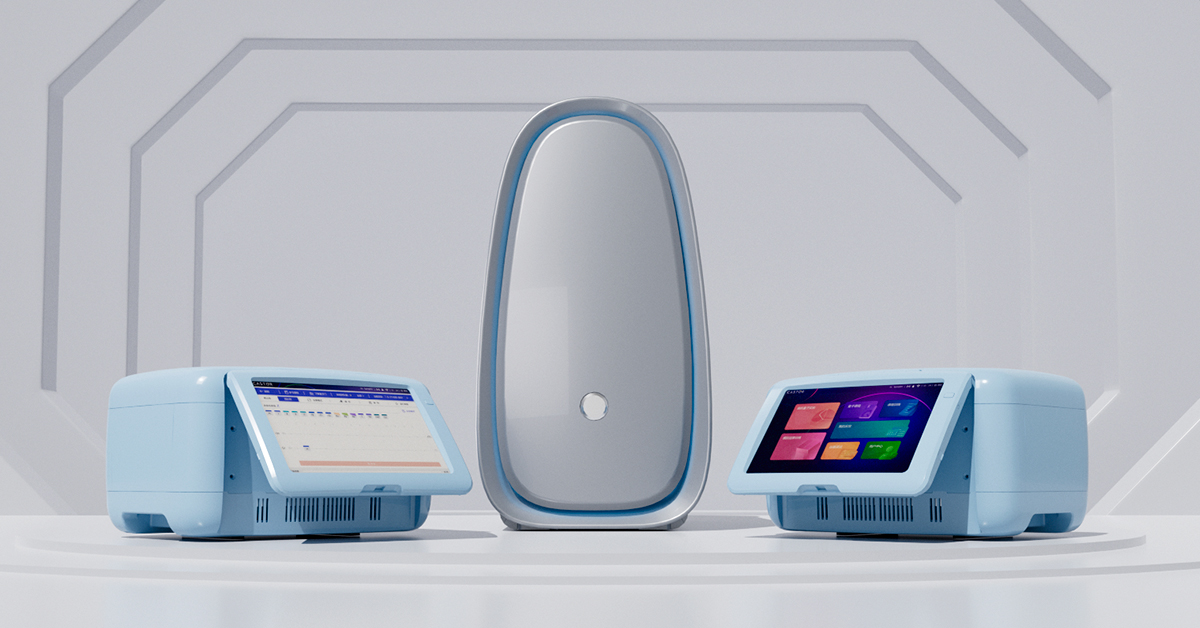
The SPINQ Gemini™ Lab Quantum Computing Experimental Platform supports experiments involving qubit initialization, quantum gate manipulation, state reconstruction, and verification. Its open experimental architecture allows users to explore operations from the pulse level to quantum circuits and algorithms.
This makes it suitable for higher-education teaching, quantum information experiments, and foundational research experiences.
Our quantum computing education solutions connect theoretical concepts with hands-on experimental work, helping students understand how quantum operations translate into observable results.
For institutions developing a broader quantum computing curriculum, our article on how educational quantum computers support practical quantum teaching explores how real hardware can complement theoretical learning and simulation.
NMR systems are particularly useful for demonstrating fundamental quantum principles in controlled educational and experimental settings. They are not intended to replace advanced superconducting processors used for large-scale quantum hardware research.

Why Is Superposition Important for Learning Quantum Computing?
Superposition is one of the foundations of quantum information processing. Understanding it helps learners move from basic qubit concepts to more advanced topics, including quantum entanglement, quantum algorithms, and quantum error correction.
Three learning outcomes are particularly important:
-
Understanding quantum states: Recognizing how probability amplitudes describe a qubit and how they differ from classical probabilities.
-
Understanding quantum circuits: Seeing how quantum gates create, transform, and combine quantum states.
-
Interpreting experimental results: Connecting theoretical measurement probabilities with results collected from real quantum systems.
For students, educators, and research institutions, practical experimentation can make these concepts easier to understand.
SpinQ's NMR quantum computer solutions support quantum computing education and entry-level research through integrated hardware, software, and experimental resources.
The goal is to build a clear understanding of quantum information principles and develop the practical skills needed to explore more advanced quantum technologies.
Superposition does not make every computation faster, nor does it allow a quantum computer to read all possible answers simultaneously. Its importance comes from how quantum states evolve, how amplitudes interfere, and how carefully designed algorithms use these effects to produce useful measurement outcomes.
.jpg)
Featured Content