
The Future of Superconducting Quantum Computing
2026.11.02 · Blog the future of superconducting quantum computing
The future of superconducting quantum computing depends on more than increasing the number of qubits. Better gate fidelity, effective quantum error correction, scalable chip design, and reliable system engineering are all essential to building quantum computers that can tackle increasingly complex computational problems. These advances could eventually support research in chemistry, materials science, and optimization, but practical applications will depend on how well quantum hardware and software work together.
Why the Future of Superconducting Quantum Computing Depends on More Than Qubit Count
A quantum processor with more qubits does not automatically deliver better computational performance. Researchers must also consider how accurately those qubits perform operations, how long they preserve quantum information, and how reliably they work together in a quantum circuit.
Qubit Quality and Gate Fidelity
Superconducting qubits use electrical circuits containing Josephson junctions to create and manipulate quantum states. Their fast gate operations and compatibility with chip-based fabrication make them a leading approach to quantum computing.
However, every quantum operation can introduce errors. Decoherence, unwanted interactions, control imperfections, and measurement errors can affect the final result. As circuits become more complex, these errors can accumulate and reduce the probability of obtaining a correct answer.Improving single-qubit and two-qubit gate fidelity is therefore essential.
Reliable Performance at Larger Scales
Scaling a processor introduces challenges beyond adding more qubits. A larger device must support reliable connections, coordinated control, accurate measurements, and manageable calibration requirements.
Quantum Error Correction Will Shape the Next Generation
Quantum information is sensitive to environmental disturbances and operational errors. Quantum error correction addresses this challenge by encoding information into logical qubits and using additional physical resources to detect and correct errors.
From Physical Qubits to Logical Qubits
A physical qubit is a hardware component that stores quantum information. A logical qubit encodes information across multiple physical qubits so that errors can be detected and corrected without directly measuring and destroying the encoded information.
Building reliable logical qubits is a major step toward fault-tolerant quantum computing. Instead of relying on every physical qubit to operate perfectly, researchers can use structured error-correction methods to protect quantum information against certain types of errors.
For superconducting quantum processors, this requires coordinated operations, repeated measurements, effective control, and sufficiently low error rates. The quality of the underlying hardware remains important because error correction cannot compensate indefinitely for noisy components or excessive operational overhead.
Reducing Errors Without Excessive Resource Overhead
Error correction requires additional physical qubits and control operations. The number of resources needed depends on the error-correction code, hardware error rates, connectivity, and the reliability required for a particular computation.
Future progress will therefore depend on improving both physical qubit performance and the efficiency of error-correction methods. Better hardware can reduce the overhead required to protect logical information, while improved control and measurement systems can make repeated correction cycles more practical.
The goal is not simply to demonstrate error correction in a small experiment. It is to develop methods that can support useful computations as processor size and circuit complexity increase.
System Engineering Is a Major Challenge for Scalable Quantum Computing
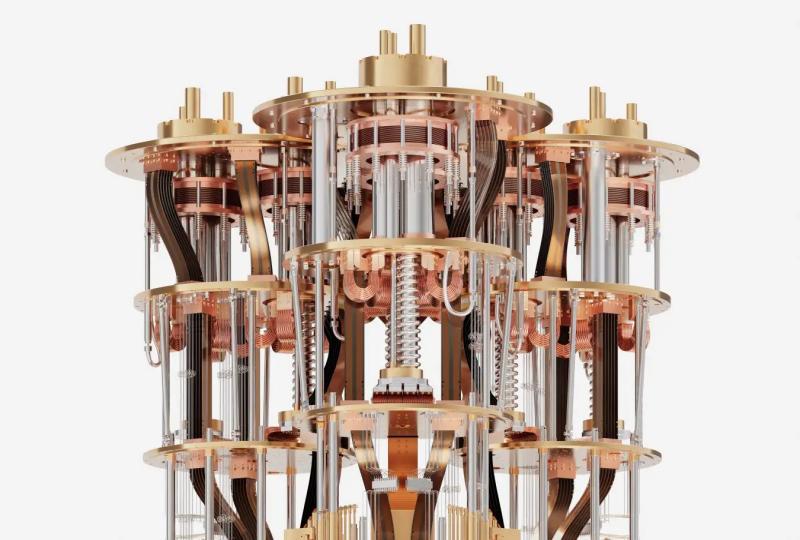
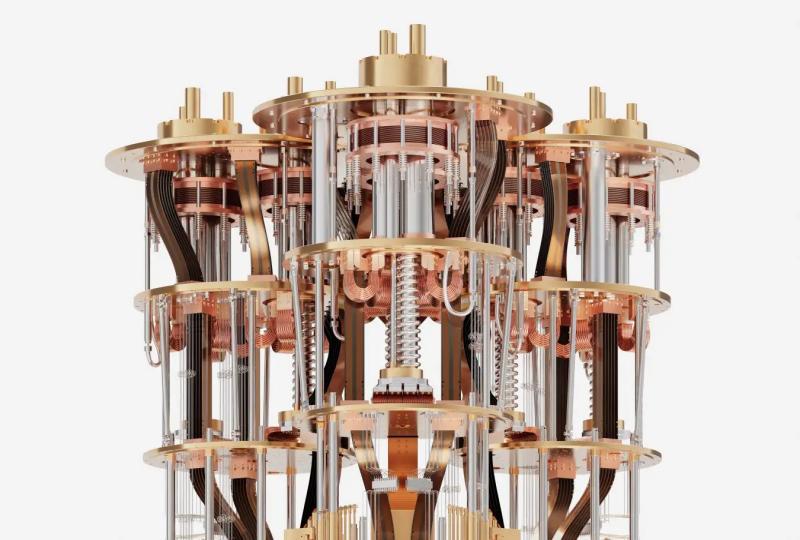
Building a scalable superconducting quantum computer requires more than designing a good quantum chip. The processor must operate within a coordinated system of cryogenic equipment, control electronics, readout components, signal connections, and software.
In its March 2026 editorial, Nature Electronics discusses the challenges of building practical quantum computers, highlighting the difficulties of scaling, quantum error correction, and integrating hardware components. These challenges are especially relevant to superconducting systems, which typically operate at millikelvin temperatures while much of their control electronics operates at room temperature.
Connecting Qubits, Control Electronics, and Readout
Superconducting qubits require carefully controlled microwave or other electrical signals to perform quantum operations. Readout circuits must then extract information about the qubit states with sufficient accuracy.
As the number of qubits grows, the system must handle more control channels, measurements, and calibration procedures. If these components are not designed to work together, adding qubits can increase operational complexity without delivering a proportional improvement in useful computing performance.
Researchers are therefore exploring approaches such as control-signal multiplexing, more integrated electronics, and modular hardware designs. These methods aim to reduce the burden of connecting and controlling large numbers of qubits.
Managing Cryogenic Wiring and Heat Loads
Superconducting qubits generally operate at temperatures of only a few millikelvin. Maintaining these conditions requires dilution refrigeration, thermal management, shielding, and carefully engineered signal paths.
Each additional cable or electronic component can affect the available space, thermal load, and complexity of the cryogenic environment. Engineers must balance the need for control and readout signals against the limited cooling capacity and physical space available inside a cryogenic system.
As processors expand, cryogenic engineering becomes an important part of the scaling strategy. Better wiring layouts, thermal anchoring, and integration between quantum devices and control electronics can help maintain stable operating conditions.
Integrating Hardware Into a Reliable System
A useful quantum computer must combine its processor, control and measurement hardware, cryogenic infrastructure, and software into a coordinated platform.
System integration also affects maintenance, calibration, reproducibility, and experimental throughput. A processor may demonstrate promising characteristics under specific laboratory conditions, but its practical value depends on whether the complete system can sustain reliable operation across repeated experiments.
The future of superconducting quantum computing will therefore depend on system-level engineering alongside advances in individual qubits.
Chip Design and Manufacturing Must Support Larger Processors
Quantum chip architecture influences how qubits connect, how quantum gates are implemented, and how efficiently a processor can execute a circuit. As systems grow, the relationship between chip design and the rest of the hardware becomes increasingly important.
Improving Chip Fabrication and Device Consistency
Variations in device fabrication can produce differences in qubit frequencies, coherence times, and coupling characteristics. These differences can make calibration more difficult and affect the consistency of processor performance.
More repeatable fabrication, packaging, and testing can help researchers characterize devices and identify performance variations. Standardized processes are particularly valuable when experiments require multiple chips or when researchers need to compare results across different devices.
Modular Architectures and Qubit Connectivity
The arrangement of qubits determines which interactions can be implemented directly and which require additional operations. Suitable connectivity can simplify circuit execution, while tunable couplers can provide flexibility in controlling interactions between qubits.
For larger systems, modular architectures offer another potential route to expansion. Instead of relying exclusively on one increasingly complex chip, researchers can investigate ways to integrate multiple processing components while managing communication and control between them.
Our work on superconducting quantum chip architecture explores how chip topology, coupling, and system integration relate to scalability. The broader engineering goal is to ensure that improvements in processor design remain compatible with control, readout, and cryogenic requirements.
Where Superconducting Quantum Computing Could Solve Real-World Problems
The value of quantum computing becomes easier to understand when it is connected to specific research and industrial problems. Superconducting quantum computers may eventually help address selected computational tasks that are difficult for classical methods, although practical advantages must be demonstrated for each application.
Quantum Chemistry and Materials Science
Chemists and materials scientists often need to understand how electrons interact within molecules and materials. These interactions influence chemical reactions, molecular properties, catalysts, and battery materials.
Accurately modeling some complex quantum systems can demand substantial computational resources. Quantum computers offer a way to represent and investigate quantum behavior directly, making quantum simulation a promising research direction.
For example, a materials research team could investigate methods for estimating molecular energy levels or studying simplified models of electronic interactions. Such work may help researchers evaluate candidate materials and understand chemical processes.
However, a quantum processor does not automatically make these tasks faster or more accurate than classical simulation. The practical benefit depends on the problem, the algorithm, the required precision, and the capabilities of the available hardware.
Energy and Financial Optimization
Energy operators, logistics planners, and financial researchers often work with optimization problems involving many variables and constraints.
An electricity network operator, for example, must consider resource availability, demand, operating limits, and scheduling requirements. A financial research team may need to compare investment portfolios while balancing risk, return, and regulatory constraints.
Quantum algorithms, including approaches to combinatorial optimization and sampling, are being investigated for selected problems of this kind. Researchers can use small-scale experiments to explore solution quality, computational overhead, and how quantum methods compare with established classical algorithms.
The objective is not to assume that quantum computing will outperform conventional optimization software in every case. It is to identify particular problems where a quantum approach may offer a measurable benefit.
Quantum Research and Hardware Development
Universities, laboratories, and quantum technology companies face a more immediate challenge: determining how quantum processors behave under real operating conditions.
Research teams need to characterize qubits, test quantum gates, evaluate measurement accuracy, and investigate how errors affect algorithms. They also need to understand the relationship between processor performance and supporting systems such as cryogenic equipment and control electronics.
Superconducting quantum processing units provide a platform for these experiments. By testing quantum circuits on physical hardware, researchers can compare theoretical expectations with measured results and develop better calibration, control, and error-management techniques.
This research is essential to the longer-term development of quantum applications because improvements in hardware reliability and system integration can expand the range of experiments that researchers can perform.
Why System Integration Matters for Practical Quantum Applications
Even when a quantum algorithm has potential, running it successfully on physical hardware presents additional challenges. The processor must preserve quantum information, execute operations accurately, and return results that can be interpreted and verified.
This is where system integration connects hardware development with practical applications. Cryogenic performance affects qubit stability. Control electronics influence gate operations. Readout systems determine how reliably measurement results can be obtained. Software tools help researchers map algorithms to hardware and analyze experimental outcomes.
In the long term, advances in error correction, hardware integration, and system reliability will need to progress together before larger quantum computers can consistently deliver useful results on demanding tasks.
How Research Hardware Can Support the Future of Superconducting Quantum Computing
Research hardware plays an important role in translating theoretical progress into experimental evidence. Universities, laboratories, and industrial research teams need access to quantum processors and supporting systems to investigate device behavior, develop algorithms, and test system-level improvements.
Our SPINQ QPU C Series provides superconducting quantum processing hardware for research and development. Different processor configurations can support work involving quantum circuit experiments, device characterization, quantum simulation, and the investigation of error-correction methods.
For teams working on broader system development, our SPINQ superconducting quantum computer brings together quantum processing hardware and supporting components such as cryogenic infrastructure, control and measurement systems, and software.
This integrated approach can help researchers investigate how individual hardware components perform as part of a complete quantum computing platform. It also supports experiments that connect processor characteristics with calibration, measurement, and application development.
The appropriate configuration depends on the research objective. A team studying qubit behavior may prioritize processor access and characterization capabilities, while a group developing quantum algorithms may need a broader experimental environment for programming, execution, and performance analysis.
Research hardware does not eliminate the challenges of large-scale fault-tolerant computing. It provides a practical foundation for testing ideas, evaluating limitations, and contributing to the engineering advances required for future systems.
The Road Ahead for Superconducting Quantum Computing
The future of superconducting quantum computing will depend on progress across several connected areas: qubit quality, quantum error correction, chip architecture, cryogenic engineering, control electronics, and system integration.
These advances could create new opportunities in quantum chemistry, materials science, optimization, and other areas where researchers are investigating difficult computational problems. Their impact will depend on demonstrating reliable performance and measurable benefits for specific tasks.
.jpg)
Featured Content