
Superconducting Quantum QPU: Architecture, Performance, and Applications
2026.11.04 · Blog Superconducting Quantum QPU
A superconducting quantum QPU (Quantum Processing Unit) is the core processing hardware of a superconducting quantum computer. It uses superconducting circuits and Josephson junctions to create and control quantum bits, enabling quantum operations and computation. Its performance depends on several factors, including qubit count, connectivity, coherence time, gate fidelity, and control capabilities.
For research institutions and quantum hardware developers, understanding these characteristics is essential when evaluating a quantum processor. A suitable QPU must not only provide the required qubit configuration but also support reliable operations and integration with cryogenic and quantum control systems.
What Is a Superconducting Quantum QPU?
A superconducting quantum QPU is a processor built from superconducting electrical circuits that operate at extremely low temperatures. Unlike conventional processors that use transistors to process binary information, superconducting QPUs use quantum states to represent and manipulate information.
The basic building blocks are superconducting qubits. These circuits typically incorporate Josephson junctions, which provide the nonlinear properties needed to create controllable quantum energy levels.
A QPU brings multiple qubits together and connects them through carefully designed circuit structures. These connections allow qubits to interact and perform quantum gates, forming the foundation for quantum algorithms and experiments.
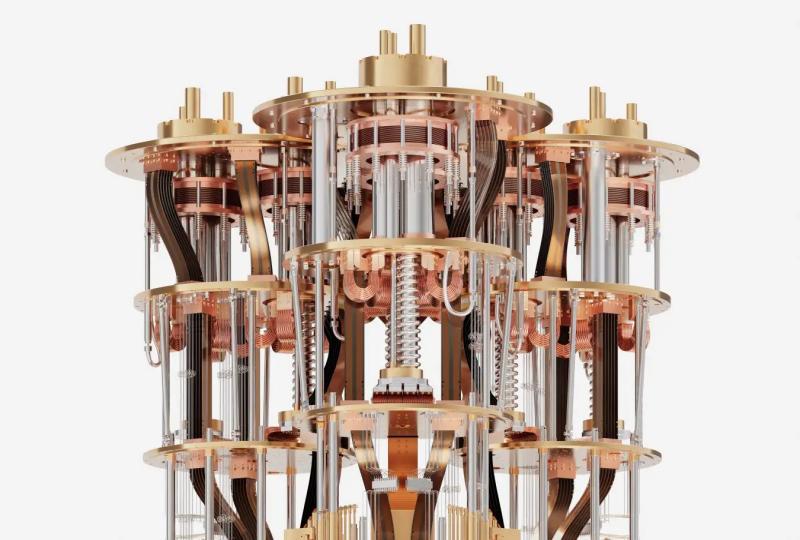
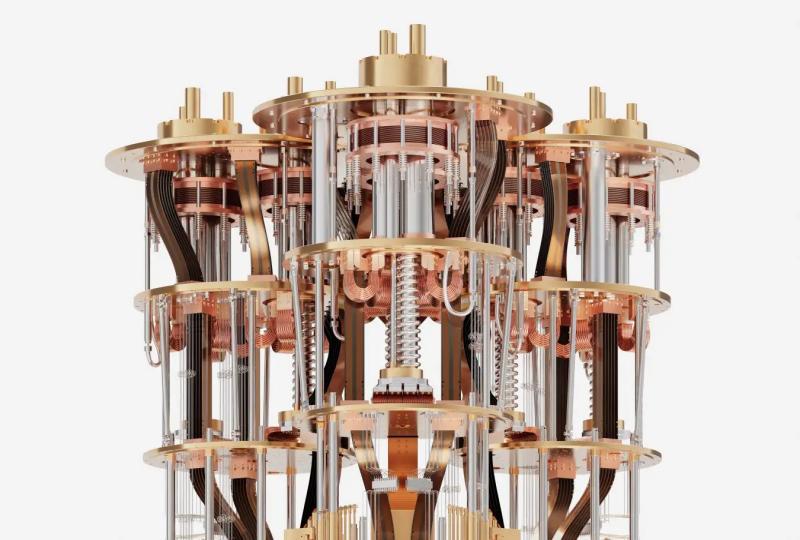
It is important to distinguish a QPU from a complete quantum computer. The QPU performs quantum processing, but it depends on supporting infrastructure, including:
-
Cryogenic systems to maintain extremely low operating temperatures.
-
Microwave control electronics to initialize qubits and execute quantum gates.
-
Readout systems to measure qubit states.
-
Software platforms to program experiments and process measurement results.
These components work together to enable reliable quantum processor operation.
What Determines the Performance of a Superconducting Quantum QPU?
Qubit count is an important specification, but it does not fully describe a processor's capabilities. Researchers need to evaluate several interconnected performance indicators.
Qubit Count and Connectivity
Qubit count refers to the number of physical qubits integrated into a processor. More qubits can provide greater opportunities for quantum experiments, but their arrangement and connectivity are equally important.
Common processor topologies include linear chains and two-dimensional lattices. In a linear chain, qubits are connected in a sequence, while a two-dimensional lattice provides connections across rows and columns.
Connectivity determines which qubits can interact directly and influences how quantum circuits are mapped onto the processor. Limited connectivity may require additional operations, such as SWAP gates, to bring qubits into the required positions.
For this reason, selecting a QPU requires considering both the number of qubits and the topology that best supports the intended research.
Qubit Coherence Time
Coherence time describes how long a qubit can preserve its quantum information before environmental disturbances cause errors.
Two commonly used measurements are:
-
T1: Energy relaxation time, which describes how quickly a qubit loses its excited-state energy.
-
T2: Dephasing time, which describes how quickly the relative phase of a qubit's quantum state becomes randomized.
Longer coherence times generally provide more opportunities to perform quantum operations before information is lost.
However, coherence is only one part of processor performance. Gate duration, control accuracy, and measurement quality also influence how many reliable operations can be completed within the available coherence window.
Single-Qubit and Two-Qubit Gate Fidelity
Quantum gates manipulate qubit states to perform computational operations. Gate fidelity measures how closely an actual operation matches its intended ideal operation.
Single-qubit gates manipulate individual qubits, while two-qubit gates create interactions between pairs of qubits. Two-qubit gates are particularly important because they enable entanglement, a fundamental resource for quantum computation.
Gate errors can accumulate as circuit depth increases. Therefore, high single-qubit and two-qubit gate fidelity is important for executing more complex experiments.
When comparing QPUs, researchers should examine median fidelity, testing conditions, and measurement methods instead of relying only on the highest reported result.
Tunable Couplers and Qubit Interactions
Couplers determine how qubits interact with one another. In superconducting quantum processors, tunable couplers allow the strength of interactions between selected qubits to be adjusted.
This provides greater flexibility in controlling quantum operations and managing unwanted interactions.
Tunable coupling can help reduce residual interactions when qubits are not actively interacting, while enabling controlled coupling during gate operations.
The design of couplers and their integration into the processor topology can therefore influence gate performance, crosstalk, and the flexibility of quantum circuit execution.
Readout and Control Capabilities
A QPU must support accurate initialization, control, and measurement to perform useful experiments.
Microwave control signals are used to manipulate qubit states, while readout circuits convert quantum-state information into measurable signals.
As the number of qubits increases, maintaining precise control and reliable measurement across multiple channels becomes more demanding.
Readout fidelity, signal synchronization, and calibration efficiency are therefore important considerations when evaluating a superconducting quantum processor. The QPU and its supporting control system should be designed to operate as a coordinated platform.
How Is a Superconducting Quantum QPU Used in Research?
Superconducting QPUs provide a hardware platform for exploring quantum information processing, developing algorithms, and studying quantum system behavior.
Quantum Processor Development and Validation
Researchers use QPUs to evaluate qubit characteristics, test quantum gate operations, and study processor architectures.
Experiments may include measuring coherence times, characterizing gate fidelity, and investigating crosstalk between neighboring qubits.
These activities help researchers understand processor performance and identify areas for hardware optimization.
Quantum Simulation and Algorithm Research
Superconducting QPUs can support experiments involving quantum simulation, quantum circuits, and small-scale algorithm development.
For example, researchers can investigate simplified molecular models, spin systems, and other quantum phenomena by mapping their mathematical representations onto available qubits and gate operations.
The processor's connectivity and gate performance influence which experiments can be implemented efficiently.
Quantum Error Correction Experiments
Quantum error correction is an important research direction for improving the reliability of quantum computation.
Researchers use multiple physical qubits to encode logical information and perform repeated measurements to identify errors.
Processor topology, two-qubit gate fidelity, and measurement performance all influence the feasibility of these experiments. A suitable QPU can provide a foundation for studying error-correction circuits and logical qubit architectures, although supporting such experiments does not automatically mean the processor has achieved fault-tolerant operation.
How to Choose the Right Superconducting Quantum Processing Unit
Selecting a superconducting QPU requires matching processor specifications with research objectives and infrastructure requirements.
Match Qubit Configuration to Research Goals
Start by identifying the experiments and quantum circuits the processor needs to support.
Smaller processors may be suitable for basic gate experiments, quantum circuit validation, and introductory processor research. Larger processors can provide more opportunities for studying connectivity, quantum simulation, and error-correction architectures.The topology should also match the research requirements.
Compare Coherence and Gate Fidelity
Review T1, T2, single-qubit gate fidelity, and two-qubit gate fidelity together.
Look for clearly defined testing conditions and representative statistical measurements. Median values can provide a more useful indication of typical processor performance than isolated maximum results.
Evaluate Topology and Coupling Architecture
Consider whether the processor uses a linear or two-dimensional topology and whether its coupling architecture supports the required interactions.
A suitable connectivity structure can reduce circuit overhead and make experimental implementation more efficient.
Consider Integration and Technical Support
A QPU cannot operate independently of its supporting infrastructure. Before selecting a processor, evaluate compatibility with the cryogenic environment, microwave control electronics, readout equipment, and software platform.
Documentation, performance testing, customization options, and technical support are also important for long-term research projects.
Exploring SpinQ Superconducting Quantum QPU Solutions
At SpinQ, we focus on developing superconducting quantum processors and integrated quantum computing hardware for research and development.
Our SPINQ QPU C Series provides processor options with different qubit configurations and connectivity architectures.
The C5 and C25 PRO models offer different approaches to processor development:
-
C5: A 5-qubit processor with a 1D Chain topology, suitable for small-scale quantum processor experiments and gate operation research.
-
C25 PRO: A 25-qubit processor with a 2D Lattice topology, supporting research that requires a larger qubit configuration and more extensive connectivity.
Both models incorporate tunable couplers to support controlled qubit interactions.
Their specifications also address important processor performance indicators, including coherence time and gate fidelity. These characteristics provide researchers with a basis for evaluating hardware configurations against their experimental requirements.
Beyond the processor itself, we recognize that practical quantum research requires coordinated hardware infrastructure. Our superconducting quantum computer solutions integrate the key components needed for processor operation, including cryogenic and quantum control systems.
What Should You Consider Before Investing in a Superconducting QPU?
Choosing a superconducting quantum processor involves more than comparing qubit counts or individual performance specifications.
Researchers should evaluate the relationship between qubit connectivity, coherence time, gate fidelity, readout capabilities, and the supporting hardware environment. These factors collectively determine whether a processor can meet specific experimental requirements.
It is equally important to consider future research needs, system compatibility, documentation, and technical support when selecting a QPU supplier.
As superconducting quantum technology continues to develop, processors with well-designed architectures and reliable system integration will play an important role in advancing quantum computing research.
If you are evaluating superconducting quantum processors for your laboratory or research project, contact SpinQ to discuss your QPU requirements and explore suitable hardware solutions.
.jpg)
Featured Content