
Choosing a Superconducting Quantum Hardware Manufacturer
2026.11.12 · Blog superconducting quantum hardware manufacturer
A superconducting quantum hardware manufacturer develops the physical components and systems that enable superconducting quantum computers to operate. Its capabilities may include quantum chip design, fabrication, packaging, testing, control electronics, and complete system integration.
For universities, research laboratories, and organizations developing quantum computing technologies, choosing a manufacturer involves more than comparing qubit counts. Chip performance, manufacturing consistency, control capabilities, cryogenic compatibility, and technical support all influence whether a hardware platform can meet its research or development goals.
Understanding these capabilities helps buyers evaluate suppliers and identify a superconducting quantum hardware solution that can support both current experiments and future system expansion.
What Does a Superconducting Quantum Hardware Manufacturer Do?
A superconducting quantum hardware manufacturer develops the physical infrastructure required to build and operate superconducting quantum processors. Depending on its technical capabilities, a manufacturer may provide individual chips, control electronics, or integrated quantum computing systems.
Its work generally covers several areas.
Quantum Chip Design and Fabrication
Superconducting quantum processors are built from superconducting circuits, typically using Josephson junctions to create nonlinear quantum energy levels.
Chip design determines important characteristics such as qubit topology, coupling methods, control-line layout, and readout architecture. Fabrication translates these designs into physical devices through processes that require precise material deposition, patterning, and junction formation.
Manufacturing quality can influence qubit coherence, frequency consistency, circuit uniformity, and device yield.
QPU Packaging and Characterization
Fabricating a quantum chip is only one stage of hardware development. The chip must also be packaged and connected to the control and measurement infrastructure.
Manufacturers characterize devices to evaluate parameters such as:
-
Qubit resonance frequencies.
-
Energy relaxation time (T1).
-
Coherence time (T2).
-
Single-qubit and two-qubit gate fidelity.
-
Readout and device behavior.
These measurements help researchers understand whether a processor meets its intended performance requirements.
Control and Measurement Electronics
Superconducting qubits require accurately timed microwave and DC signals for state preparation, gate operations, and measurement.
A manufacturer may develop or integrate arbitrary waveform generators, microwave sources, digitizers, synchronization modules, and signal-processing hardware.
These components connect classical computing instructions with physical operations on quantum processors.
What Should You Look for in a Superconducting Quantum Hardware Manufacturer?
Not all manufacturers provide the same level of technical capability. Some specialize in chip fabrication, while others offer control electronics or complete quantum computing systems.
Evaluating the following areas can help identify a suitable partner.
Chip Architecture and Qubit Connectivity
The architecture of a quantum processor determines how its qubits are arranged and interact.
Important factors include:
-
Qubit topology: Whether the processor uses a linear chain, two-dimensional lattice, or another arrangement.
-
Coupling method: Whether fixed or tunable couplers are used to manage interactions between qubits.
-
Control accessibility: Whether individual qubits can be addressed through dedicated control lines.
-
Readout architecture: How quantum states are measured and converted into classical signals.
A larger qubit count does not automatically mean better performance. Connectivity, coherence, gate fidelity, and the ability to control individual qubits are also important.
For research teams exploring different processor configurations, SpinQ's superconducting quantum processing units include the QPU C Series, with multiple configurations designed for different experimental requirements. Its enhanced two-dimensional lattice architecture supports high-density integration and research into quantum error correction.
Fabrication Quality and Device Consistency
Superconducting quantum hardware requires precise fabrication. Variations in Josephson junction parameters, material properties, and circuit dimensions can affect qubit frequencies and performance.
When evaluating a manufacturer, consider whether it can provide:
-
Established chip design and fabrication processes.
-
Consistent device packaging.
-
Characterization data for individual processors.
-
Testing procedures for coherence and gate performance.
-
Documentation of manufacturing and measurement conditions.
Consistency matters because research teams need to compare experimental results and reproduce device behavior across different processors.
A manufacturer with chip design, fabrication, packaging, and testing capabilities can also help reduce coordination challenges between separate suppliers.
Control and Measurement Compatibility
A quantum processor cannot operate independently of its control and measurement electronics.
The control system must generate accurate pulses, coordinate multiple channels, and process measurement signals. Poor signal quality or timing errors can introduce unwanted operations and reduce gate performance.
Look for a manufacturer that understands the relationship between QPU specifications and the supporting electronics. Compatibility should cover signal frequency, channel count, synchronization, readout requirements, and calibration workflows.
SpinQ's Quantum Control and Measurement System uses modular RF electronics and FPGA-based hardware acceleration. It supports waveform generation, synchronization, signal acquisition, and qubit characterization, providing a control and measurement layer for superconducting quantum processors.
Scalability and System Integration
A processor designed for a small experiment may have different requirements from a system intended for multi-qubit research or quantum error-correction experiments.
Manufacturers should consider how the hardware can expand across several layers:
-
Additional qubits and control channels.
-
Greater readout capacity.
-
More complex synchronization requirements.
-
Cryogenic wiring and thermal management.
-
Software and calibration integration.
A modular architecture can make it easier to expand system capabilities without replacing every component.
From Quantum Chip to Complete Superconducting Quantum Computer
A superconducting quantum computer is a coordinated system, not simply a quantum chip installed inside a refrigerator. Several hardware and software layers must work together.
Superconducting QPU
The quantum processing unit contains the superconducting qubits that perform quantum operations. Its architecture, coherence properties, and gate performance determine the physical capabilities of the processor.
Cryogenic System
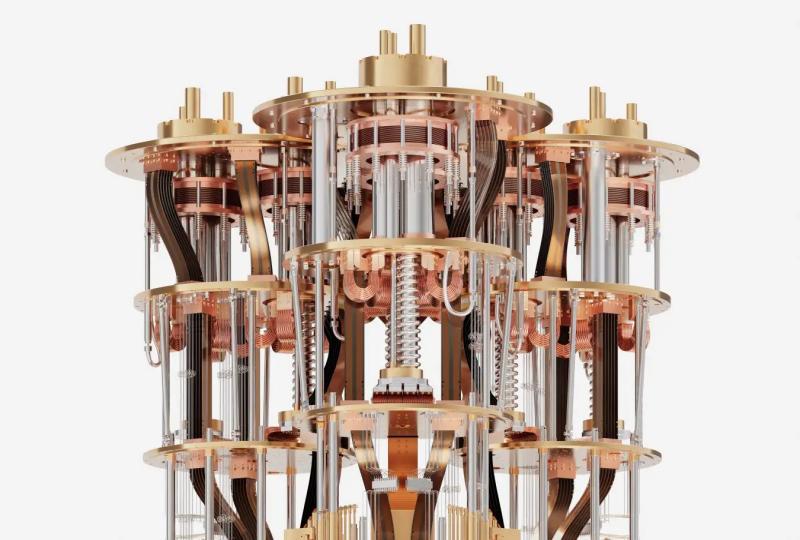
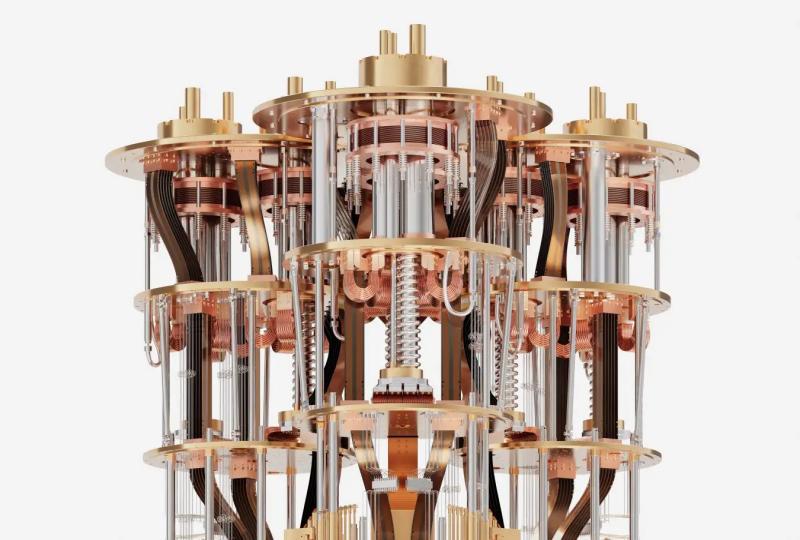
Superconducting qubits generally operate at millikelvin temperatures. A dilution refrigerator provides the low-temperature environment needed to maintain superconductivity and reduce unwanted thermal excitations.
The cryogenic system must also accommodate wiring, filtering, shielding, and signal connections between the processor and room-temperature electronics.
Quantum Control and Measurement
Control electronics generate the microwave and DC signals used to manipulate qubits. Measurement electronics acquire and process readout signals to determine quantum states.
As the processor grows, the number of control channels, synchronization relationships, and calibration parameters also increases.
Software and System Integration
Software connects hardware operations with experiment design, quantum circuit execution, calibration, and data analysis.
A complete solution requires coordination between the QPU, cryogenic infrastructure, control electronics, and software. When these components are designed to work together, research teams can reduce integration complexity and establish a more consistent experimental workflow.
SpinQ's superconducting quantum computer platform brings together quantum processing hardware, millikelvin cryogenic infrastructure, QCM electronics, and quantum software. The Taurus platform is designed as an integrated solution for research and advanced quantum computing development.
How to Evaluate Superconducting Quantum Hardware Performance
Technical specifications help buyers compare hardware, but individual metrics should always be considered in context.
Coherence Time
T1 measures energy relaxation, while T2 characterizes the decay of quantum coherence. Longer coherence times can provide more time for quantum operations, although actual performance also depends on gate duration, connectivity, and control quality.
Gate Fidelity
Gate fidelity measures how closely an implemented quantum operation matches its intended operation.
Single-qubit and two-qubit gate fidelities should be evaluated separately because two-qubit operations involve additional interactions and control challenges.
Qubit Connectivity and Topology
The arrangement of qubits affects which operations can be performed directly and how many additional operations may be required to execute a circuit.
A two-dimensional lattice, for instance, can provide a useful architecture for studying surface-code quantum error correction.
Characterization and Testing Reports
Reliable specifications should be supported by measurement data. Ask manufacturers whether they provide device characterization reports, including qubit frequencies, coherence times, and gate performance.
It is also important to understand the conditions under which measurements were performed. Results can vary with temperature, calibration, control settings, and measurement procedures.
For a closer look at the testing process, our guide to superconducting quantum chip testing explains the infrastructure and measurement practices involved in evaluating quantum processors.
Why Choose an Integrated Superconducting Quantum Hardware Partner?
Working with separate suppliers for chips, cryogenic equipment, control electronics, and software can create integration challenges. Different hardware interfaces and technical requirements may require additional engineering work before a complete system becomes operational.
An integrated hardware partner can coordinate these components from the beginning.
For example, a research institution may need a standalone QPU for device characterization, while another organization may require a complete superconducting quantum computing system for algorithm development and hardware experiments.
A manufacturer with broader engineering capabilities can support different requirements through:
-
QPU design and fabrication.
-
Chip packaging and characterization.
-
Quantum control and measurement electronics.
-
Cryogenic system deployment and integration.
-
Customized hardware configurations.
-
Installation, training, and technical support.
SpinQ develops superconducting quantum hardware across these layers. Its capabilities include the QPU C Series, the QCM System, and the Taurus superconducting quantum computer platform. We also provide related engineering services to support research institutions and organizations developing quantum computing systems.
Conclusion
Choosing a superconducting quantum hardware manufacturer requires evaluating more than processor size or a single performance specification. Chip architecture, fabrication consistency, coherence, gate fidelity, control electronics, cryogenic compatibility, and system integration all contribute to the value of a hardware solution.
For research institutions and organizations developing superconducting quantum technologies, working with a manufacturer that understands the complete hardware stack can simplify procurement, integration, and long-term development.
SpinQ provides superconducting quantum chips, control and measurement systems, and integrated quantum computing solutions. Contact our team to discuss your processor requirements, hardware configuration, or potential system integration needs.
.jpg)
Featured Content