
Why Does a Superconducting Quantum Chip Need Ultra-Low Temperatures?
2026.10.13 · Blog ultra-low-temperature superconducting quantum chip
A superconducting quantum chip needs a carefully controlled environment to perform quantum operations with high precision. Temperature management is closely connected to superconducting behavior, qubit stability, signal quality, and measurement accuracy. Understanding this relationship helps explain why cryogenic technology is an essential part of a superconducting quantum computing system.
Why Ultra-Low Temperature Matters for a Superconducting Quantum Chip
The temperature around a superconducting quantum chip directly affects the physical environment in which its qubits operate. Maintaining suitable cryogenic conditions helps create the stable environment required for quantum control and measurement.
Superconducting quantum computing combines the quantum processor with cryogenic refrigeration, control electronics, measurement systems, and software. Our superconducting quantum computer integrates these key components into a complete platform, helping researchers work with the quantum processor as part of an operational system.
.jpg)
Maintaining Stable Qubit Conditions
Superconducting quantum chips use superconducting circuits to implement qubits. These circuits need a controlled cryogenic environment so that the quantum processor can operate as designed.
Temperature control is therefore part of the core architecture of a superconducting quantum computer. The chip, cryogenic system, control electronics, and measurement system need to work together as one system.
Controlling Thermal Effects
Quantum states are sensitive to environmental disturbances. Thermal effects can introduce unwanted excitations and interfere with qubit operations.
An ultra-low-temperature environment helps control these effects and creates suitable conditions for precise quantum experiments. This is why cryogenic performance needs to be considered together with qubit performance when selecting a superconducting quantum chip.
How Cryogenic Conditions Affect Quantum Chip Performance
Once the temperature is under control, the next consideration is how the cryogenic environment connects with measurable quantum processor performance.
Coherence Time
Coherence time indicates how long a qubit can preserve its quantum state under operating conditions. It is an important specification when evaluating a superconducting quantum chip because quantum operations need sufficient coherence to execute useful circuits.
Our S25 configuration provides T₁ ≥30 μs and T₂ ≥15 μs, while the S25 Pro provides T₁ ≥60 μs and T₂ ≥30 μs. These specifications give researchers clear performance parameters when comparing processor configurations.
Gate Fidelity
Gate fidelity describes how accurately quantum operations are performed. For practical quantum computing, coherence and gate fidelity need to be considered together.
The S25 supports single-qubit gate fidelity of ≥99.5% median and ≥99.9% maximum, with two-qubit gate fidelity of ≥96% median and ≥99% maximum. The S25 Pro reaches ≥99.8% median and ≥99.9% maximum for single-qubit gates, while its two-qubit gate fidelity reaches ≥99% median and ≥99.5% maximum.
These specifications provide a useful basis for evaluating a quantum processor alongside its qubit count, topology, control system, and intended applications.
What Does a Cryogenic System Need to Do?
A superconducting quantum chip depends on a complete cryogenic environment. Cooling performance is only one part of the system; signal transmission, laboratory conditions, and supporting infrastructure also affect deployment.
Millikelvin Cryogenic Environment
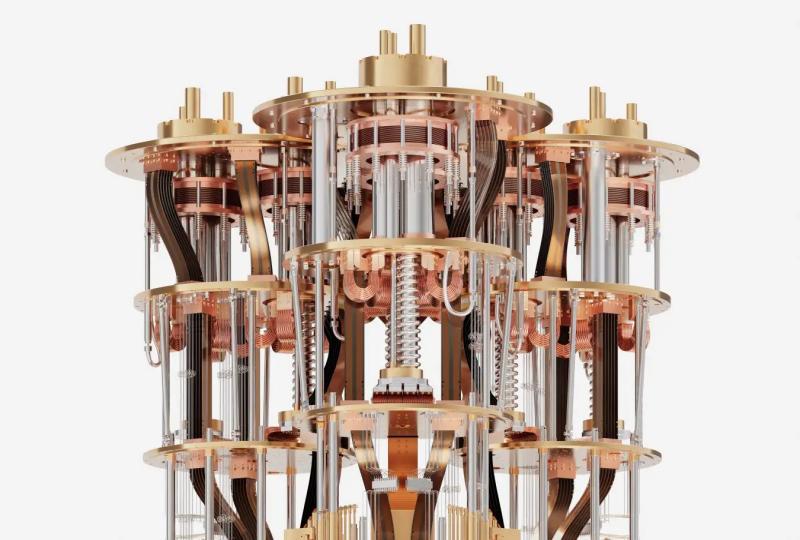
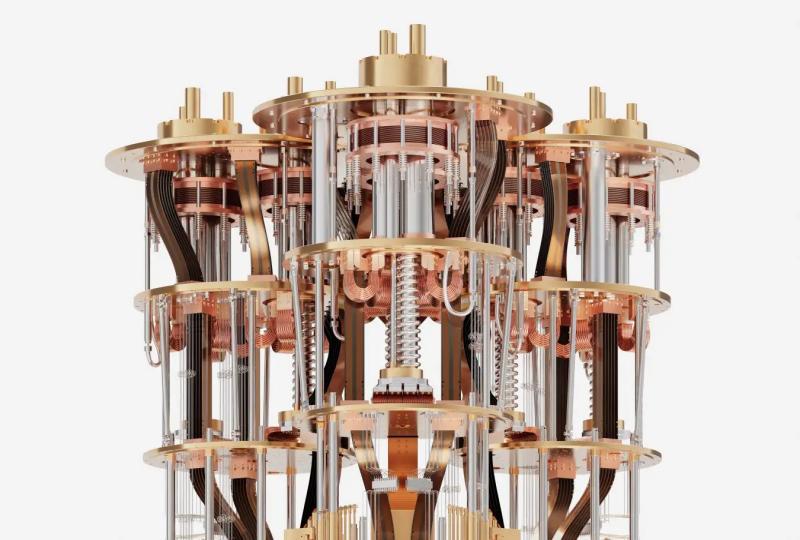
A dilution refrigerator provides the cryogenic environment required for superconducting quantum computing. Our cryogenic quantum computer deployment service covers dilution refrigerator systems, low-vibration design, intelligent monitoring, and visualized cryogenic operation.
A suitable deployment environment also needs to support the practical requirements of quantum experiments, including low-temperature measurements and quantum algorithm verification.
.jpg)
Cryogenic RF Signal Chains
The quantum chip must receive precise control signals through the cryogenic system. Signal quality can therefore affect the accuracy of qubit manipulation.
Cryogenic RF cables and components cover the signal path from room temperature to the mixing chamber. The system supports low-loss microwave transmission while controlling thermal noise ingress, crosstalk, and phase noise.
Laboratory Infrastructure
Cryogenic quantum computing also requires suitable laboratory conditions. Space planning, utility routing, cabling, and supporting cooling equipment need to match the requirements of the system.
Laboratory assessment and retrofitting can therefore be an important part of deployment, especially when existing research facilities need to accommodate a new cryogenic quantum computing system.
How the Quantum Chip Fits Into the Complete System
The quantum chip is the core processing component, but it needs several supporting layers to become a usable quantum computer. This system-level view is especially important when planning a new laboratory or expanding research capabilities.
From Quantum Chip to QPU
Our superconducting quantum computing architecture connects the quantum chip with the QPU, milli-kelvin cryogenic system, quantum control and measurement system, and software framework.
The SPINQ Taurus architecture supports up to 100+ superconducting qubits. Its system architecture covers quantum chip EDA design, chip fabrication, ultra-low-temperature refrigeration, quantum control, measurement, and software.
Connecting Control, Measurement, and Software
A superconducting quantum computer needs accurate control signals, reliable measurement, and software tools that allow researchers to operate the processor efficiently.
This integrated structure connects the physical quantum processor with programming and experimental workflows, helping research teams move from quantum circuit design to execution on real hardware.
Key Specifications When Choosing a Superconducting Quantum Chip
Once the cryogenic environment and system architecture are understood, the next step is to match the quantum processor with the intended research requirements.
Qubit Count and Topology
Qubit count is an important starting point, while topology and coupling also influence how quantum circuits are implemented.
Our S25 and S25 Pro configurations provide 25 qubits arranged in a 5×5 2D lattice and use tunable couplers. They also support d=3 surface-code quantum error correction. Customized superconducting quantum computing solutions are available from 5 to 25 qubits to match different research and application requirements.
Coherence and Gate Performance
T₁, T₂, single-qubit gate fidelity, and two-qubit gate fidelity provide a clearer picture of processor performance.
For research teams, these specifications should be considered alongside planned algorithms, circuit depth, measurement requirements, and experimental goals. A superconducting quantum computer can then be selected according to the actual requirements of the intended experiments.
Deployment Requirements
The physical laboratory also needs to support the cryogenic system and its associated infrastructure. This includes cooling equipment, RF signal paths, utilities, and appropriate space for installation and operation.
Considering these requirements early can make system deployment more straightforward and help ensure that the laboratory environment matches the quantum computer configuration.
Building a Practical Superconducting Quantum Computing Platform
Ultra-low temperature is essential to superconducting quantum computing, but the final system depends on how every layer works together.
Our superconducting quantum computing architecture connects quantum processors with control and measurement systems, milli-kelvin cryogenics, chip design and fabrication, and software. The SPINQ Taurus platform supports up to 100+ superconducting qubits and is designed for academic research and industrial applications.
When planning a new system, the right configuration depends on the required qubit count, processor performance, laboratory conditions, cryogenic infrastructure, and research objectives. Our quantum computing team can discuss these requirements and help define an appropriate configuration.
The complete technology path connects quantum hardware with the tools needed for research and application development, giving teams a practical foundation for working with superconducting quantum computing.
.jpg)
Featured Content