
Global Superconducting Qubit Development and Future Trends
2026.11.17 · Blog global superconducting qubit
Global superconducting qubit development is playing an important role in the advancement of quantum computing. From the United States and Europe to Asia, research institutions and technology companies are working to improve qubit performance, increase processor capacity, and develop more reliable quantum computing systems.
Superconducting qubits are among the most actively developed quantum computing technologies. Their relatively fast gate operations, compatibility with semiconductor fabrication techniques, and potential for integration into larger processors make them an important platform for quantum hardware research.
Why Are Superconducting Qubits Important to Global Quantum Computing?
Superconducting qubits are artificial quantum systems fabricated from superconducting electrical circuits. They typically operate at extremely low temperatures, where electrical resistance disappears and quantum effects can be controlled.
Unlike classical bits, which represent either 0 or 1, qubits can exist in quantum superposition states. Multiple qubits can also become entangled, allowing quantum processors to perform operations that are fundamentally different from conventional computing.
How Do Superconducting Qubits Work?
A superconducting qubit uses a nonlinear circuit element, typically a Josephson junction, to create two distinguishable energy levels that represent the computational states 0 and 1.
Microwave pulses manipulate these states, while measurement circuits read out the qubit's final state. By controlling several qubits and their interactions, researchers can build quantum gates and execute quantum circuits.
This approach provides several advantages for hardware development:
-
Fast control operations using microwave signals.
-
Flexible circuit designs and qubit connectivity.
-
Compatibility with advanced microfabrication processes.
-
Potential for integrating multiple qubits on a single chip.
What Makes This Technology Attractive?
Superconducting qubits have attracted global research and commercial investment because their fabrication and control methods can build on established expertise in semiconductor manufacturing, microwave engineering, and cryogenic electronics.
Their relatively fast operation is also valuable for experiments involving multi-qubit circuits. At the same time, the technology requires sophisticated cryogenic infrastructure and precise control electronics.
These requirements have encouraged the development of an integrated hardware ecosystem covering quantum chips, low-temperature systems, measurement equipment, and software.
.jpg)
How Is Superconducting Qubit Technology Developing Worldwide?
Superconducting quantum computing is a global research and industrial effort. Different regions have developed their own strengths in processor design, fabrication, quantum control, and complete system development.
North America: Advancing Processor Architecture and Quantum Error Correction
The United States has a strong presence in superconducting quantum computing, supported by major technology companies, specialized quantum hardware developers, and university research laboratories.
IBM and Google are two prominent participants in this field. IBM has focused on superconducting processor development, modular system architectures, and the engineering requirements for fault-tolerant quantum computing. Google Quantum AI has made important contributions to superconducting qubit research, particularly in quantum error correction and improving processor performance.
Rigetti Computing represents another important part of the US ecosystem. Its work covers superconducting quantum processors, control electronics, and integrated quantum computing systems.
Several research priorities stand out across North America:
-
Increasing processor capacity while maintaining reliable qubit operations.
-
Improving gate fidelity and reducing errors during quantum circuits.
-
Developing quantum error correction methods.
-
Exploring modular architectures for connecting quantum processors.
-
Building software and hardware systems that support practical experiments.
The region also benefits from a broad supporting ecosystem in microwave electronics, cryogenic equipment, semiconductor fabrication, and quantum software.
Europe: Developing Specialized Quantum Hardware and Integrated Systems
Europe has established a diverse superconducting quantum computing ecosystem, with companies and research institutions pursuing different approaches to processor architecture and system development.
Finland's IQM focuses on superconducting quantum processors and complete quantum computing systems for research institutions and other users. The company has emphasized on-premises quantum computers and processor development.
In the United Kingdom, Oxford Quantum Circuits (OQC) works on superconducting quantum computing systems and quantum hardware accessibility. Its activities connect processor development with system integration and cloud-based access.
France's Alice & Bob is pursuing a different approach through superconducting cat qubits. Its research focuses on hardware-efficient quantum error correction by designing qubits with properties intended to suppress certain types of errors.
Other European participants contribute to the wider ecosystem through quantum chip design, fabrication technology, cryogenic infrastructure, and control electronics.
European development highlights several important priorities:
-
Building quantum processors for research and commercial deployment.
-
Exploring alternative superconducting qubit architectures.
-
Improving hardware efficiency and error suppression.
-
Strengthening regional quantum manufacturing and supply chains.
-
Connecting quantum processors with complete computing infrastructure.
These activities show that European development is not limited to increasing qubit numbers. Processor architecture, hardware efficiency, and practical system deployment are equally important.
Asia: Expanding Quantum Chip Research and Hardware Manufacturing
Asia is another important region in global superconducting qubit development. China, Japan, and South Korea have research programs and industrial participants working on quantum processors, chip fabrication, and supporting technologies.
In China, research institutions and companies are developing superconducting quantum chips and integrated quantum computing systems. Origin Quantum is one of the companies involved in superconducting quantum processor development. SpinQ also contributes to this ecosystem through superconducting quantum processors, control and measurement systems, and integrated quantum computing platforms.
Japan has a strong foundation in advanced electronics and precision engineering. Fujitsu and RIKEN have collaborated on superconducting quantum computing research, combining industrial technology capabilities with academic research.
South Korea is also expanding its quantum technology research through universities and national initiatives, including work on superconducting quantum processors.
Across Asia, several development priorities are becoming increasingly important:
-
Advancing superconducting chip design and fabrication.
-
Improving the performance and consistency of quantum processors.
-
Developing domestic cryogenic and microwave control technologies.
-
Integrating quantum chips into complete experimental systems.
-
Strengthening collaboration between universities, research laboratories, and technology companies.
The regional ecosystem is diverse, with different participants contributing to different stages of the quantum hardware development process.
What Are the Major Trends in Global Superconducting Qubit Development?
Although research strategies vary across regions, several technical priorities are shared by the global superconducting quantum computing industry.
Scaling Up Quantum Processors
Increasing the number of physical qubits is an important step toward building more capable quantum processors. A larger processor can provide more resources for quantum circuits and multi-qubit experiments.
However, simply adding qubits does not guarantee better computational performance. Researchers must also consider how qubits are connected and how reliably they can interact.
Common approaches include:
-
Expanding from one-dimensional to two-dimensional qubit layouts.
-
Improving coupling between neighboring qubits.
-
Exploring tunable couplers for more flexible interactions.
-
Developing modular architectures that connect multiple processor units.
For hardware developers, scalability must be considered from the beginning of chip design. Wiring, packaging, signal routing, and control channel requirements all become more complicated as processor size increases.
SpinQ's superconducting quantum processors address this hardware development direction through different processor configurations and chip architectures for superconducting quantum computing research.
Improving Qubit Coherence and Gate Fidelity
Qubit coherence and gate fidelity are two important indicators of superconducting processor performance.
Coherence describes how long a qubit can preserve its quantum information. Two commonly measured parameters are:
-
T1 relaxation time: How quickly an excited qubit loses energy and returns to its ground state.
-
T2 dephasing time: How long the relative phase of a qubit state remains coherent.
Gate fidelity measures how accurately a quantum operation is implemented compared with its intended operation.
Improving these parameters requires attention to materials, fabrication processes, electromagnetic environments, control pulse design, and measurement techniques.
As quantum circuits become deeper and involve more qubits, even small errors can accumulate. Therefore, improving individual qubit performance remains essential to building reliable processors.
Advancing Quantum Error Correction
Physical qubits are sensitive to environmental disturbances and control imperfections. Quantum error correction addresses this problem by distributing quantum information across multiple physical qubits to create a more robust logical qubit.
This process requires additional physical qubits, repeated measurements, and carefully coordinated operations.
Current research focuses on:
-
Surface codes and other quantum error correction schemes.
-
Reducing the physical qubit overhead required for logical qubits.
-
Improving measurement accuracy and speed.
-
Developing real-time decoding and feedback methods.
-
Demonstrating reliable logical operations.
Quantum error correction is an important milestone in the transition from experimental quantum processors toward fault-tolerant quantum computing.
Building Integrated Quantum Computing Systems
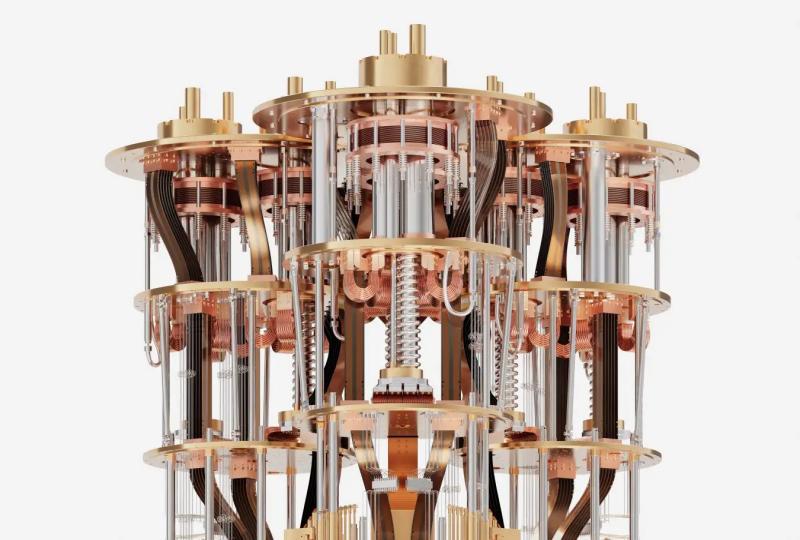
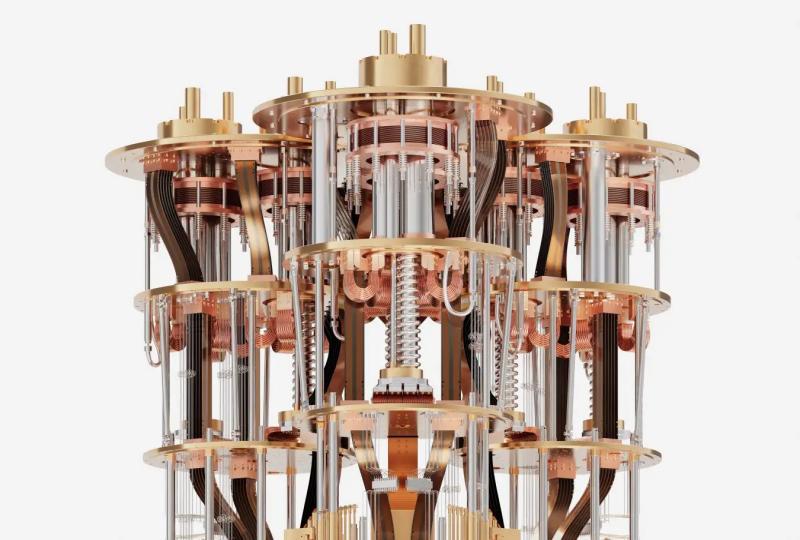
A superconducting quantum processor cannot operate independently. It needs a complete infrastructure that supports cooling, control, measurement, and software execution.
As processor architectures become more complex, system integration is receiving greater attention.
A typical superconducting quantum computing system includes:
-
A quantum processing unit for executing quantum operations.
-
A cryogenic cooling platform to maintain the required low-temperature environment.
-
Microwave control electronics to manipulate qubit states.
-
Measurement electronics to collect quantum readout signals.
-
Software tools to configure experiments and analyze results.
The Quantum Control and Measurement System is an important part of this infrastructure. Precise signal generation, acquisition, and synchronization help researchers operate superconducting processors and conduct repeatable experiments.
.jpg)
What Challenges Are Slowing Global Superconducting Qubit Development?
Despite considerable progress, several engineering challenges still affect the development of superconducting quantum computers.
Maintaining Qubit Coherence
Superconducting qubits are sensitive to noise from their surrounding environment. Material defects, unwanted electromagnetic signals, thermal fluctuations, and other sources of disturbance can cause relaxation and dephasing.
Improving coherence requires better materials, fabrication techniques, shielding, filtering, and cryogenic design.
Managing Chip Fabrication Consistency
As processors grow, maintaining consistent qubit characteristics across a chip becomes more difficult.
Variations in Josephson junction parameters, circuit dimensions, and material properties can lead to differences in qubit frequencies and performance.
Reliable fabrication and chip characterization are therefore important for scaling quantum hardware.
Reducing Control Complexity
A larger processor requires more control and measurement channels. These channels must operate with precise timing and signal quality.
Crosstalk, calibration overhead, wiring complexity, and heat loads can all affect system performance.
Researchers and hardware developers need more efficient control architectures and integrated electronics to address these challenges.
Connecting Physical Qubits to Practical Applications
Quantum hardware development must eventually demonstrate value through useful computational tasks.
This requires more than increasing physical qubit counts. Researchers need to consider circuit depth, error rates, logical qubit performance, software compatibility, and the suitability of quantum algorithms for specific problems.
The transition from laboratory demonstrations to practical applications will depend on progress across the entire hardware and software stack.
How Are Superconducting Qubits Moving Toward Practical Quantum Computing?
Superconducting quantum computing is progressing from individual chip experiments toward increasingly integrated and accessible computing platforms.
Research applications are an important part of this transition. Universities and laboratories use superconducting processors to study quantum algorithms, quantum error correction, quantum simulation, and hardware control techniques.
For example:
-
In quantum chemistry, researchers investigate molecular systems and explore potential quantum simulation methods.
-
In materials science, quantum processors can support studies of interacting quantum systems and complex material models.
-
In optimization research, scientists explore whether quantum algorithms can provide useful approaches to selected computational problems.
-
In quantum information science, researchers investigate entanglement, error correction, and quantum circuit behavior.
These applications are still developing, and practical advantages depend on the capabilities of the hardware and the specific problem being studied.
System accessibility is also important. Research institutions need hardware platforms that allow them to conduct experiments without independently developing every component of a quantum computer.
SpinQ's Taurus superconducting quantum computer integrates key hardware components into a complete system, connecting the quantum processor with cryogenic infrastructure, control and measurement electronics, and software.
This system-level approach supports research teams that need an integrated platform for superconducting quantum computing experiments.
SpinQ's Contribution to Superconducting Quantum Hardware Development
Global progress in superconducting quantum computing depends on collaboration across several technical fields. Quantum chip design, microfabrication, low-temperature engineering, microwave electronics, and software development all contribute to processor performance.
SpinQ focuses on superconducting quantum hardware development, covering quantum processors, control and measurement systems, and integrated quantum computing platforms.
The QPU C Series provides processor-level hardware for research and development. Different configurations support experiments involving qubit architecture, connectivity, and quantum processor performance.
At the system level, SpinQ's control and measurement equipment provides the signal generation and acquisition capabilities required for superconducting qubit experiments. Its Taurus superconducting quantum computer brings these components together into an integrated platform.
By developing both processor hardware and supporting systems, SpinQ contributes to the broader effort to make superconducting quantum computing more accessible to research institutions and technology developers.
Conclusion
Global superconducting qubit development is shaped by contributions from North America, Europe, and Asia. Although regional priorities differ, the overall direction is consistent: increasing processor capabilities, improving coherence and gate fidelity, advancing quantum error correction, and building more integrated quantum computing systems.
The future of superconducting quantum computing will not depend on qubit count alone. Reliable fabrication, precise control, effective error correction, and system-level engineering will all influence how quickly the technology progresses toward practical applications.
As the global ecosystem continues to expand, access to reliable quantum processors and integrated experimental platforms will remain important for research and hardware development. If you are exploring superconducting quantum processors or planning to build a quantum computing research platform, contact SpinQ to discuss suitable hardware and system solutions.
.jpg)
Contenido Destacado