
Building a Prototype Superconducting Quantum Computing System
2026.11.12 · Blog prototype superconducting quantum computing system
A prototype superconducting quantum computing system is an experimental platform that combines a superconducting quantum processor, cryogenic infrastructure, control and measurement electronics, and software. It allows research teams to operate superconducting qubits, test quantum circuits, evaluate hardware performance, and validate system architectures before moving toward larger-scale deployments.
Building this type of prototype involves more than selecting a quantum chip. The processor must operate in a controlled low-temperature environment, receive precisely timed control signals, and produce measurable outputs. Each subsystem needs to work together as part of a functioning experimental platform.
For research institutions and quantum technology developers, a prototype system provides a practical way to evaluate hardware designs, develop experimental workflows, and identify integration challenges at an early stage.
What Is a Prototype Superconducting Quantum Computing System?
A prototype superconducting quantum computing system is an early-stage but operational quantum computing platform designed for hardware development, experimental validation, and proof-of-concept research.
Unlike a standalone superconducting quantum chip, a prototype system includes the supporting infrastructure needed to initialize, control, and measure qubits. Its purpose is to demonstrate that the processor and its supporting components can work together under real operating conditions.
How Is a Prototype Different from a Full-Scale Quantum Computer?
The main difference is the development objective.
A prototype focuses on validating a specific hardware configuration or experimental capability. Researchers may use it to test qubit connectivity, control methods, quantum gate operations, or measurement performance.
A full-scale system has broader requirements, including greater hardware capacity, more extensive control channels, long-term operational stability, and increasingly sophisticated error correction capabilities.
A prototype does not need to reproduce every feature of a large quantum computer. Its configuration should match the research objectives and provide enough functionality to support meaningful experiments.
Why Build a Superconducting Quantum Prototype?
Superconducting qubits are controlled through microwave signals and operate at extremely low temperatures. These characteristics make them suitable for experiments involving quantum gates, coherence, circuit design, and multi-qubit interactions.
A prototype system helps research teams:
-
Evaluate superconducting qubit designs under actual operating conditions.
-
Test single-qubit and two-qubit gate operations.
-
Study coherence times and environmental noise.
-
Develop quantum control and calibration methods.
-
Validate hardware and software integration.
-
Explore system architectures before expanding the processor or control infrastructure.
For universities, laboratories, and quantum technology companies, these capabilities provide a foundation for practical hardware research.
What Components Does a Prototype Superconducting Quantum Computing System Need?
A functional prototype requires several interconnected subsystems. The quantum processor performs quantum operations, while the cryogenic, control, measurement, and software components make those operations possible.
Superconducting Quantum Processor
The quantum processing unit (QPU) is the central component of the prototype. It contains superconducting qubits fabricated on a chip and connected through a defined circuit architecture.
The processor configuration determines several important experimental characteristics:
-
Qubit count: The number of qubits available for experiments.
-
Connectivity: How qubits interact with neighboring qubits.
-
Coupling architecture: How quantum information is transferred between qubits.
-
Coherence performance: How long qubits retain their quantum states.
-
Gate performance: How accurately quantum operations can be performed.
The appropriate QPU depends on the intended experiments. A smaller processor may be sufficient for testing control methods and basic quantum circuits, while a processor with more qubits and richer connectivity can support more complex multi-qubit research.
SpinQ's superconducting quantum processor series provides hardware options for exploring superconducting quantum chip architectures and experimental applications.
Cryogenic Cooling and Thermal Management
Superconducting qubits must operate at temperatures close to absolute zero to maintain their superconducting properties and reduce thermal excitations.
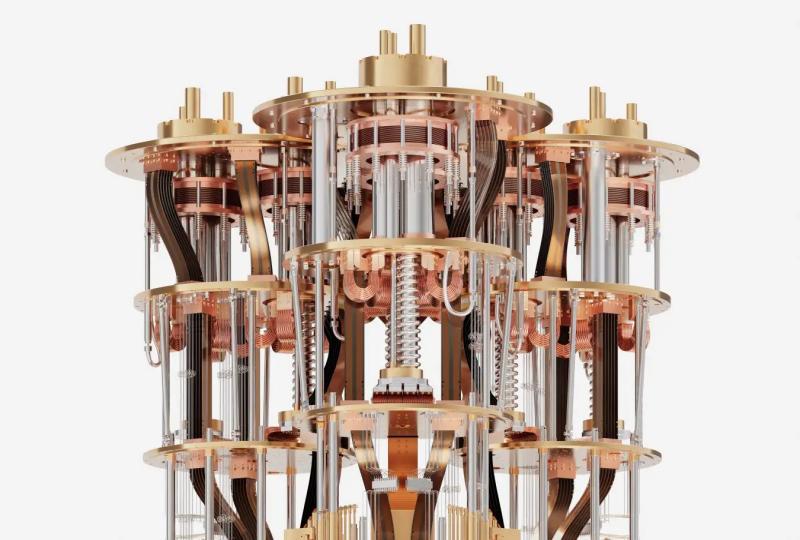
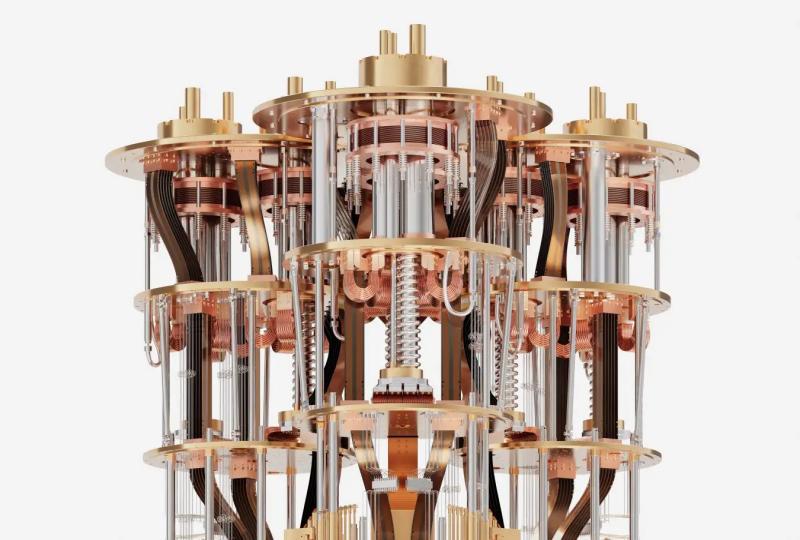
A prototype system therefore needs a cryogenic cooling platform, commonly based on a dilution refrigerator. It provides the low-temperature environment required by the quantum processor.
The cryogenic subsystem must also accommodate:
-
Microwave signal lines connecting room-temperature electronics to the QPU.
-
Attenuators and filters for controlling unwanted noise.
-
Thermal anchoring to manage heat along different temperature stages.
-
Wiring and mechanical structures that support stable operation.
Cryogenic integration is not simply about reaching a sufficiently low temperature. Thermal stability, wiring configuration, and electromagnetic interference can all influence the processor's experimental performance.
Quantum Control and Measurement Electronics
The control and measurement system connects the QPU with the external experimental environment.
Microwave control signals are used to manipulate qubit states and perform quantum gates. Readout signals are used to measure the resulting quantum states. These operations require accurate frequency, amplitude, phase, and timing control.
A prototype may need control capabilities such as:
-
Microwave pulse generation.
-
Qubit frequency and amplitude calibration.
-
Single-qubit and two-qubit gate control.
-
Readout signal generation and acquisition.
-
Multi-channel synchronization.
-
Automated experimental sequencing.
SpinQ's Quantum Control and Measurement System can be considered as part of the control infrastructure for superconducting quantum experiments.
Quantum Software and Programming Tools
Hardware alone cannot provide a complete experimental workflow. Software is needed to configure control sequences, execute quantum circuits, collect measurement results, and analyze system performance.
A prototype system should support the connection between quantum programming tools and the underlying hardware. Researchers need to translate circuit instructions into control signals and convert measured outputs into usable experimental data.
Software integration is particularly important when experiments involve repeated calibration, automated measurements, or comparisons between different processor configurations.
How to Build a Prototype Superconducting Quantum Computing System
Developing a prototype is a process of matching hardware configuration with research objectives and integrating each subsystem into a stable experimental platform.
Step 1: Define the Experimental Goals
Before selecting hardware, identify what the prototype needs to demonstrate.
Different research objectives require different system configurations:
-
Qubit characterization requires reliable control and readout.
-
Quantum gate experiments require precise pulse generation and calibration.
-
Multi-qubit circuit research requires suitable qubit connectivity and synchronized control channels.
-
Error correction experiments require additional qubits, carefully designed connectivity, and repeated measurement capabilities.
Defining these requirements early helps prevent unnecessary hardware complexity.
Step 2: Select the Quantum Processor
The QPU should be selected according to the required qubit count, connectivity, and experimental capabilities.
A small prototype may focus on a limited number of qubits to simplify initial calibration and control. More advanced research may require a larger processor with a two-dimensional layout or tunable couplers.
Researchers should also consider whether the processor can be integrated with the available cryogenic and control infrastructure.
The objective is not simply to maximize qubit count. It is to select a processor that can support the intended experiments with manageable integration requirements.
Step 3: Integrate the Cryogenic and Control Systems
After selecting the processor, the next challenge is connecting it to the cryogenic platform and external control electronics.
This stage involves designing signal paths, configuring microwave lines, managing thermal loads, and ensuring that the control system can address the required qubits.
The QPU and control electronics must also be compatible in terms of frequency range, channel configuration, timing, and readout requirements.
For this reason, system integration should be considered during the initial design stage instead of being treated as a separate task after the hardware has been purchased.
Step 4: Establish the Software and Experimental Workflow
Once the hardware is connected, researchers need a repeatable workflow for running experiments.
A typical process includes:
-
Configure the quantum processor and control parameters.
-
Generate and execute microwave pulse sequences.
-
Collect qubit measurement results.
-
Analyze the experimental data.
-
Calibrate the system based on the results.
-
Repeat measurements to evaluate consistency.
Automating these steps can reduce manual work and make it easier to compare experimental results across different configurations.
How to Test and Validate a Prototype System
A prototype superconducting quantum computing system is useful only when its performance can be measured and evaluated. Validation should cover both individual qubits and the integrated system.
Qubit Initialization and Characterization
The first stage is to confirm that qubits can be initialized and measured reliably.
Researchers typically examine the qubit's transition frequency, readout response, and control behavior. These measurements help establish the baseline parameters needed for subsequent experiments.
T1 and T2 Coherence Measurements
Coherence measurements are essential for understanding how long a superconducting qubit can preserve quantum information.
-
T1 measures energy relaxation time, indicating how quickly an excited qubit returns to its ground state.
-
T2 measures dephasing time, describing how quickly the relative phase of a qubit state becomes uncertain.
These parameters help researchers identify the effects of material defects, environmental noise, and control imperfections.
Single-Qubit and Two-Qubit Gate Testing
Quantum gates are the operations used to manipulate qubit states and build quantum circuits.
Single-qubit gate tests evaluate the accuracy of operations such as rotations around different axes of the Bloch sphere. Two-qubit gate tests examine interactions between qubits and are important for demonstrating entanglement and multi-qubit processing.
Gate fidelity provides a quantitative measure of how closely an implemented operation matches its intended result.
System Stability and Repeatability
A prototype should also be evaluated as an integrated platform.
Researchers need to determine whether the system can maintain stable operating conditions, repeat calibration procedures, and produce consistent measurements over time.
This includes monitoring cryogenic conditions, control signal quality, readout stability, and synchronization between channels.
Reliable operation across repeated experiments is an important step toward making the prototype useful for ongoing research.
Common Challenges in Prototype Development
Integrating a superconducting quantum processor into an operational system involves several engineering challenges.
Maintaining Stable Cryogenic Conditions
Temperature fluctuations and unwanted thermal loads can affect superconducting qubit performance. The cryogenic system must provide a stable environment while accommodating the wiring and components required for control and measurement.
Reducing Noise and Crosstalk
Microwave noise and unwanted coupling between signal channels can interfere with qubit operations. Careful signal routing, filtering, shielding, and calibration help reduce these effects.
Synchronizing Multiple Control Channels
Multi-qubit experiments require coordinated operations across multiple control and readout channels. Timing errors can affect gate sequences and measurement accuracy, making synchronization an important system-level requirement.
Managing Calibration Complexity
As the number of qubits increases, calibration becomes more demanding. Researchers must manage more frequencies, pulse parameters, readout settings, and interactions between qubits.
Automated calibration and systematic experimental procedures can help keep the prototype manageable as its configuration becomes more complex.
Moving from a Prototype to a Scalable Quantum Computing System
A successful prototype provides a foundation for further hardware development. However, expanding it into a larger quantum computing system requires more than adding qubits.
Several areas need to develop together:
-
Processor architecture: More qubits and improved connectivity can support larger quantum circuits.
-
Control infrastructure: Additional qubits require more control and measurement capabilities.
-
Cryogenic integration: Larger systems introduce greater wiring, thermal management, and packaging challenges.
-
Calibration: More complex processors require increasingly efficient calibration methods.
-
Quantum error correction: Larger hardware platforms can support experiments involving logical qubits and error correction protocols.
SpinQ's superconducting hardware portfolio covers both processor-level components and integrated system solutions. The Taurus superconducting quantum computer brings together key subsystems, including the quantum processor, cryogenic infrastructure, control and measurement electronics, and software.
For teams evaluating a prototype or planning a more integrated experimental platform, the appropriate configuration depends on the intended qubit count, research objectives, and available laboratory infrastructure.
Conclusion
A prototype superconducting quantum computing system is an operational research platform that brings together a quantum processor, cryogenic cooling, control and measurement electronics, and software. Its value lies in enabling researchers to test quantum hardware under real operating conditions and validate the integration of different subsystems.
Successful prototype development requires clear experimental goals, compatible hardware selection, reliable system integration, and systematic performance testing. These foundations also help research teams identify the technical requirements for future expansion.
If you are planning to develop a superconducting quantum computing prototype or evaluate QPU and control system options, contact SpinQ to discuss a hardware configuration suited to your research requirements.
.jpg)
Contenido Destacado