
Explore Room-Temperature Quantum Computers for Education
2026.11.18 · Blog room-temperature educational quantum computer
A room-temperature educational quantum computer allows students and researchers to explore real quantum computing hardware without relying on the complex cryogenic cooling systems used by superconducting quantum computers. Nuclear Magnetic Resonance (NMR) technology makes this possible by using nuclear spins as qubits and controlling them with radio-frequency (RF) pulses.
For universities, laboratories, and educational institutions, this approach offers a more accessible way to introduce quantum computing experiments. Students can investigate quantum states, logic gates, quantum circuits, and algorithms using physical hardware in a regular laboratory environment.
But how can a quantum computer work at room temperature? What makes this technology different from cryogenic quantum systems, and what experiments can students perform with it?
How Can a Quantum Computer Operate at Room Temperature?
Quantum computers rely on quantum properties such as superposition and entanglement. However, different hardware technologies use different physical systems to create and control qubits.
Superconducting quantum computers use electrical circuits that must operate at extremely low temperatures to maintain their superconducting properties. NMR quantum computers take a different approach: they use the nuclear spins of atoms in molecules as qubits.
These nuclear spins can be manipulated through magnetic fields and RF pulses at room temperature, making NMR a practical technology for educational quantum computing systems.
The Role of Nuclear Spins in NMR Quantum Computing
Atomic nuclei have an intrinsic property called spin, which gives them a magnetic moment. When placed in an external magnetic field, these nuclear spins can occupy different energy states.
In quantum computing, two selected spin states can represent the logical states of a qubit:
-
|0⟩ represents one spin state.
-
|1⟩ represents another spin state.
-
A quantum superposition combines these states with different probability amplitudes.
By selecting suitable nuclear spins within a molecule, an NMR quantum computer can use them to represent one or more qubits.
The molecular environment helps provide a controlled system in which quantum states can be prepared, manipulated, and measured.
How Magnetic Fields and RF Pulses Control Qubits
An NMR quantum computer uses several important components to manipulate nuclear spins.
-
A magnetic field establishes the energy-level structure of the nuclear spins.
-
RF pulses are applied at selected resonance frequencies to change spin states.
-
Carefully designed pulse sequences perform quantum logic operations.
-
NMR signals are collected and analyzed to obtain experimental results.
The duration, frequency, and phase of RF pulses determine how the qubits are manipulated.
For students, this provides an opportunity to explore the physical operations behind quantum computing rather than interacting only with an abstract programming interface.
Why NMR Quantum Computers Do Not Need Cryogenic Cooling
Nuclear spins can retain quantum coherence at room temperature under suitable experimental conditions. Their relatively weak interaction with the surrounding environment helps preserve quantum information for useful periods.
Unlike superconducting circuits, NMR quantum computers do not need millikelvin cooling to maintain their operating state.
This does not mean that they require no environmental control. Magnetic-field stability, shielding, RF control, and signal quality remain important for reliable experiments.
The key difference is that their quantum operation does not depend on maintaining superconductivity at extremely low temperatures.
Room-Temperature vs. Cryogenic Quantum Computing
Room-temperature and cryogenic quantum computers represent different approaches to quantum hardware. Understanding their differences helps educational institutions choose equipment that matches their teaching and research goals.
Different Qubit Technologies
NMR quantum computers use nuclear spins as qubits. Their operations are based on magnetic resonance and RF pulse control.
Superconducting quantum computers use engineered electrical circuits as qubits. These circuits rely on superconducting properties and carefully designed microwave control systems.
Both technologies can demonstrate quantum principles, but their hardware architectures and engineering requirements are different.
Different Operating Environments
The operating environment is one of the most visible differences.
NMR systems can operate at room temperature without dilution refrigerators. Their laboratory requirements are generally simpler, although magnetic-field stability and RF interference still need attention.
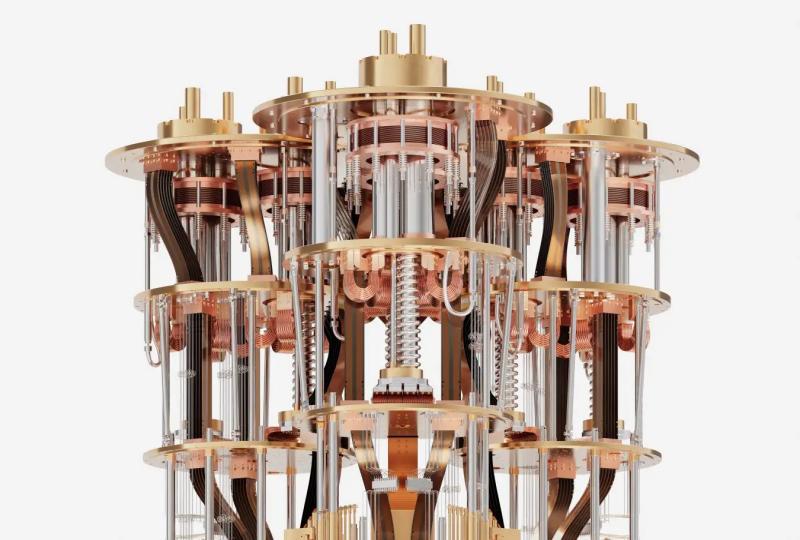
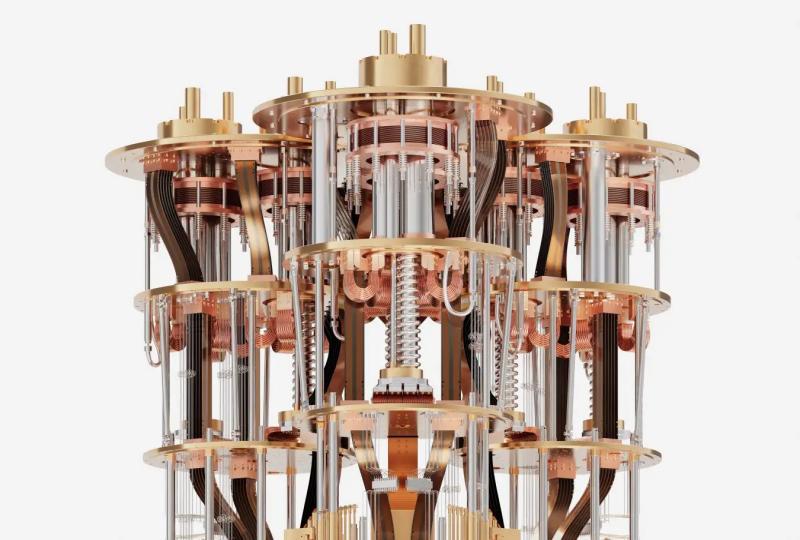
Superconducting systems require cryogenic refrigeration to reach millikelvin temperatures. They also need specialized microwave electronics, cryogenic wiring, and supporting infrastructure.
For institutions introducing quantum computing hardware into existing teaching laboratories, the room-temperature approach can significantly reduce infrastructure complexity.
Different Hardware and Infrastructure Requirements
A superconducting quantum computer typically involves several integrated subsystems:
-
A superconducting quantum processor.
-
A dilution refrigerator.
-
Microwave control and readout electronics.
-
Cryogenic wiring and signal connections.
-
Software for programming and system operation.
An NMR educational quantum computer generally uses a more compact arrangement, including:
-
An NMR sample containing suitable nuclear spins.
-
A magnetic-field system.
-
RF transmission and reception components.
-
Pulse-control electronics.
-
Software for quantum programming and experimental analysis.
Neither technology is universally better. NMR systems are particularly useful for accessible education and foundational experiments, while superconducting platforms support a different range of advanced quantum hardware development and research.
What Makes Room-Temperature Quantum Computing Practical for Education?
The main advantage of room-temperature quantum computing in education is not simply the absence of refrigeration. It is the opportunity to make real quantum hardware more accessible to institutions with limited laboratory infrastructure.
Easier Laboratory Deployment
A room-temperature NMR quantum computer does not require a dilution refrigerator or the supporting cryogenic infrastructure.
This makes it easier for universities and educational institutions to incorporate quantum computing equipment into physics laboratories, teaching facilities, and interdisciplinary research spaces.
Its compact form factor can also make equipment installation and classroom demonstrations more manageable.
However, institutions should still consider laboratory space, power requirements, magnetic-field conditions, and equipment operation when planning deployment.
More Accessible Hands-On Experiments
Students can move beyond simulated quantum circuits and interact with physical quantum hardware.
Depending on the equipment, they can:
-
Prepare and manipulate quantum states.
-
Observe nuclear magnetic resonance signals.
-
Apply RF pulse sequences.
-
Construct and execute quantum circuits.
-
Measure and analyze experimental results.
This connection between physical principles and computational operations helps students understand how quantum information is implemented in real systems.
Lower Infrastructure Complexity
Traditional superconducting quantum computing laboratories require specialized cooling and control equipment. These requirements can make it difficult for institutions to establish independent experimental facilities.
Room-temperature NMR systems provide another route.
They reduce the need for complex cryogenic infrastructure and allow institutions to focus more resources on teaching content, experimental design, and student participation.
For schools developing introductory quantum computing courses, this can make practical hardware-based learning more achievable.
What Can Students Learn With a Room-Temperature Educational Quantum Computer?
A room-temperature system can support more than basic demonstrations. Depending on its qubit configuration and software capabilities, it can provide a structured learning path from quantum mechanics to quantum algorithms.
Explore Quantum Superposition and Entanglement
Students can investigate superposition by preparing quantum states and observing how their measurement results change.
They can also explore entanglement through experiments involving multiple qubits, including the preparation and verification of Bell states.
These experiments help connect abstract quantum mechanics concepts with observable hardware behavior.
Run Quantum Gates and Circuits
Quantum gates are the basic operations used to manipulate qubits.
Students can learn how common gates work, including:
-
Pauli-X, Pauli-Y, and Pauli-Z gates.
-
Hadamard gates.
-
Controlled-NOT gates.
-
Multi-qubit gate operations.
By combining these operations, students can construct quantum circuits and observe how sequences of gates transform quantum states.
Learn Quantum Programming and Experimental Control
Educational quantum computing should connect hardware experiments with software development.
Students can use graphical interfaces or programming tools to design quantum circuits, execute algorithms, and analyze results.
More advanced systems may also provide access to pulse-level control, allowing learners to investigate how software instructions are translated into physical operations on qubits.
This creates a natural progression from quantum programming to quantum hardware engineering.
Choosing a Room-Temperature Quantum Computer for Education
Not every room-temperature quantum computer provides the same experimental capabilities. Institutions should evaluate equipment based on their course objectives, student experience, and laboratory requirements.
Supported Qubits and Experiments
The number of qubits is one consideration, but it should not be the only selection criterion.
A two-qubit system may be sufficient for introductory courses covering superposition, quantum gates, and basic algorithms.
A three-qubit system can provide additional opportunities for multi-qubit operations and more advanced circuit experiments.
For university laboratories, access to quantum-state preparation, measurement, pulse control, and algorithm implementation may be more valuable than qubit count alone.
Hardware and Software Integration
A suitable educational system should connect physical hardware with accessible programming tools.
Look for capabilities such as:
-
Graphical quantum circuit design.
-
Programming interfaces and algorithm development.
-
Hardware execution and result visualization.
-
Pulse-sequence configuration.
-
Experimental data analysis.
These functions help teachers organize practical lessons and allow students to progress from guided exercises to independent experiments.
Laboratory Requirements and Teaching Support
Institutions should also evaluate equipment size, power consumption, installation requirements, operating procedures, and technical support.
Teaching materials are equally important. Experiment manuals, structured learning modules, and software tutorials can help instructors introduce quantum computing without requiring every student to have an advanced background in quantum physics.
SpinQ Room-Temperature Quantum Computing Systems
At SpinQ, our NMR quantum computing systems are designed to make real quantum hardware more accessible to education and experimental research.
Different systems support different levels of learning, from introductory quantum computing demonstrations to more detailed investigations of quantum control.
Gemini Mini and Gemini Mini Pro
The Gemini Mini series provides a compact, portable approach to quantum computing education.
These two-qubit NMR systems feature integrated operation and touchscreen control, making them suitable for introductory quantum computing courses, classroom demonstrations, and hands-on learning.
Their room-temperature operation also reduces the infrastructure requirements associated with cryogenic quantum hardware.
Triangulum II
For institutions looking for more advanced multi-qubit experiments, Triangulum II provides a three-qubit NMR quantum computing platform.
It supports single-, double-, and triple-qubit logic gates, as well as quantum algorithm development and hardware-level pulse-sequence editing.
Students and researchers can investigate quantum circuit operations, experiment with control sequences, and explore how physical pulse operations implement quantum logic.
Gemini Lab
Gemini Lab is designed for more comprehensive quantum computing education and experimental exploration.
Its capabilities cover several levels of experimentation:
-
Quantum principles, including spin resonance and qubit manipulation.
-
Quantum gates, circuit construction, and state reconstruction.
-
Quantum algorithms, including Grover's algorithm and the Quantum Fourier Transform.
-
Advanced pulse design, control, and research-oriented experiments.
Its open architecture also allows users to investigate important hardware components and the relationship between physical quantum systems and computational operations.
Conclusion
A room-temperature educational quantum computer offers a practical way to bring real quantum hardware into universities, schools, and research laboratories. Through NMR technology, students can explore nuclear spin qubits, quantum gates, entanglement, and quantum algorithms without the cryogenic infrastructure required by superconducting systems.
Room-temperature NMR computers are not replacements for large-scale superconducting quantum processors. Instead, they serve a different purpose: making foundational quantum experiments and hardware-level learning more accessible.
For institutions planning to introduce quantum computing into their teaching or research programs, the right system should match the desired experimental depth, programming requirements, and available laboratory resources.
Explore SpinQ's NMR quantum computing solutions or contact our team to discuss the right room-temperature quantum computing platform for your institution.
.jpg)
Contenido Destacado